

Screens are everywhere — tablets, phones, TVs, computers. They’re handy for a quick break, but sometimes we long for something else: play that sparks imagination, builds skills, and actually helps children burn energy without the glow of a screen.
The trouble is, when kids are tired after school or restless on weekends, asking them to “just go play” often leads to blank stares or complaints of boredom. That’s where play prompts come in.
A play prompt is a simple invitation — a setup that sparks curiosity and gets children started without you needing to entertain them. It doesn’t have to be complicated. A cardboard box, a basket of scarves, or a sheet of paper with a few doodles can lead to hours of imaginative fun.
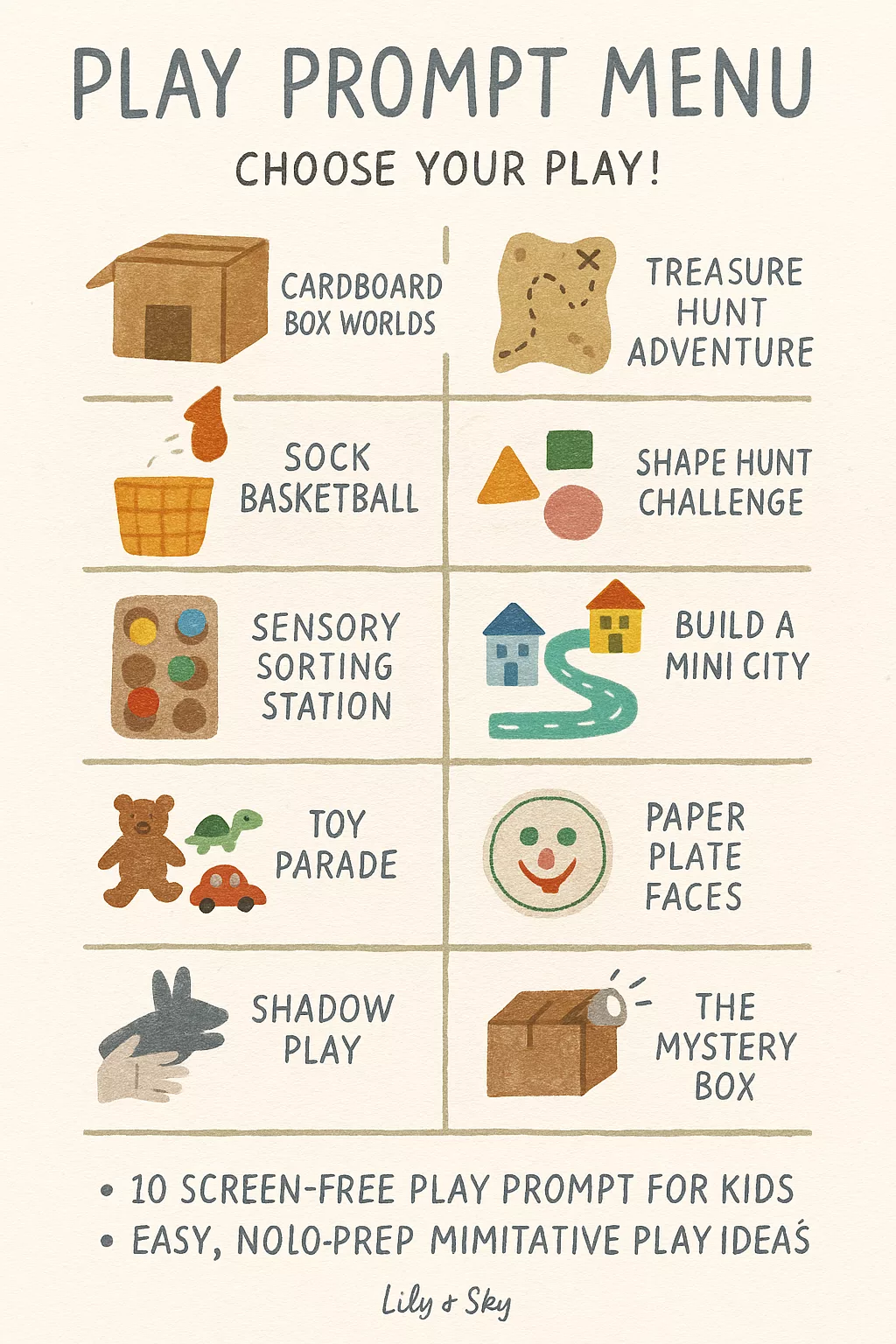
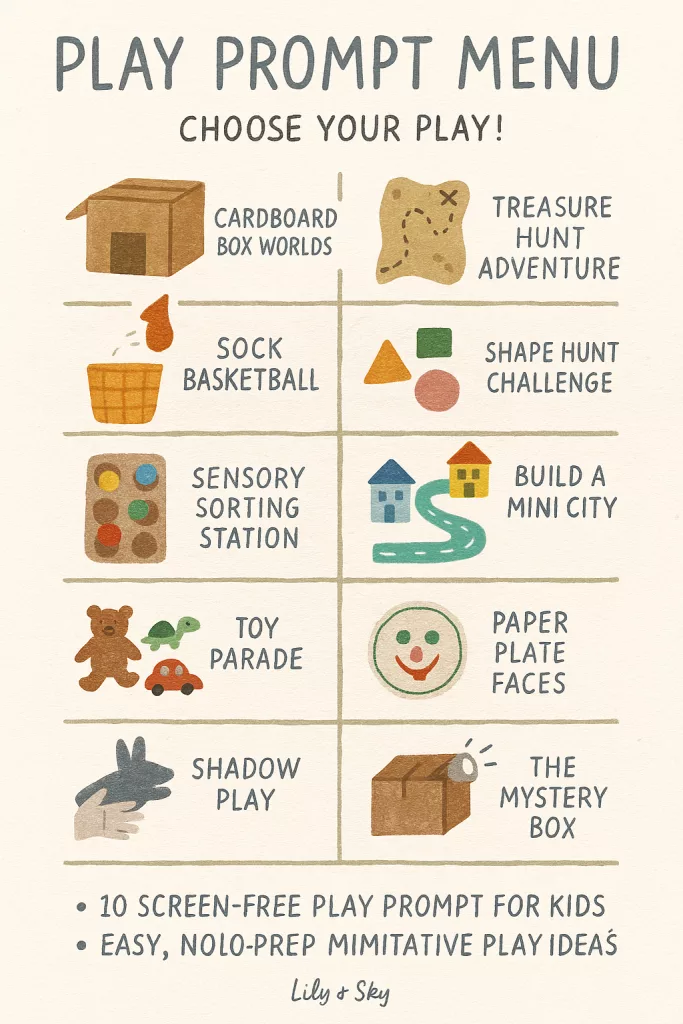
Here are 10 screen-free play prompts for kids ages 3–8. They’re low-prep, mess-friendly, and flexible enough to fit into your family rhythm.
Why Screen-Free Play Prompts Work
- Structure without rigidity: Kids thrive with a nudge, but they don’t need a scripted activity. Prompts give direction without dictating the outcome.
- Build independence: Once kids get started, they often keep going on their own — giving parents a breather.
- Support regulation: After-school restraint collapse is real. Play that engages hands and imagination helps kids reset.
- Foster creativity: Prompts show kids they can turn ordinary items into extraordinary play.
Think of them as jump-starts for imagination. You spark the idea, and they run with it.
10 Easy Screen-Free Play Prompts
1. Cardboard Box Worlds
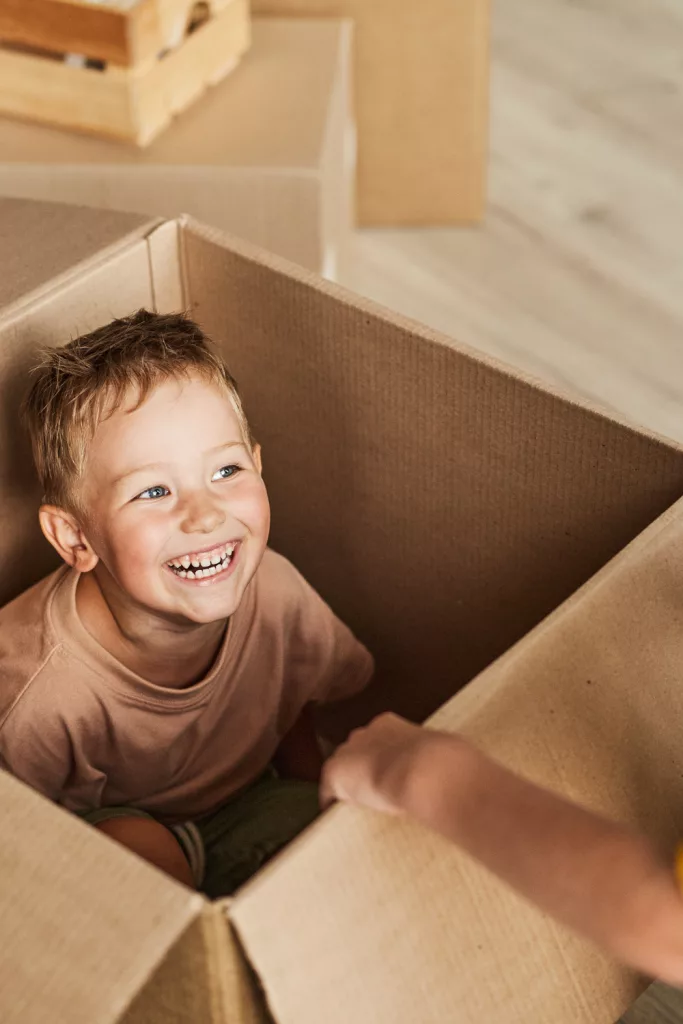
📦 Kids love cardboard. Big or small, boxes become anything: a spaceship, a dollhouse, a cave, or a car.
How to set it up:
- Offer a large box (appliance boxes are gold).
- Add crayons, tape, and scrap paper.
- Prompt: “Is this a shop, a rocket, or something else?”
Variations:
- Make multiple “rooms” by cutting doors and windows.
- Add stuffed animals for “customers” or “crew members.”
👉 Parent tip: Don’t over-direct. The charm is in letting their imagination lead.
2. Treasure Hunt Adventure
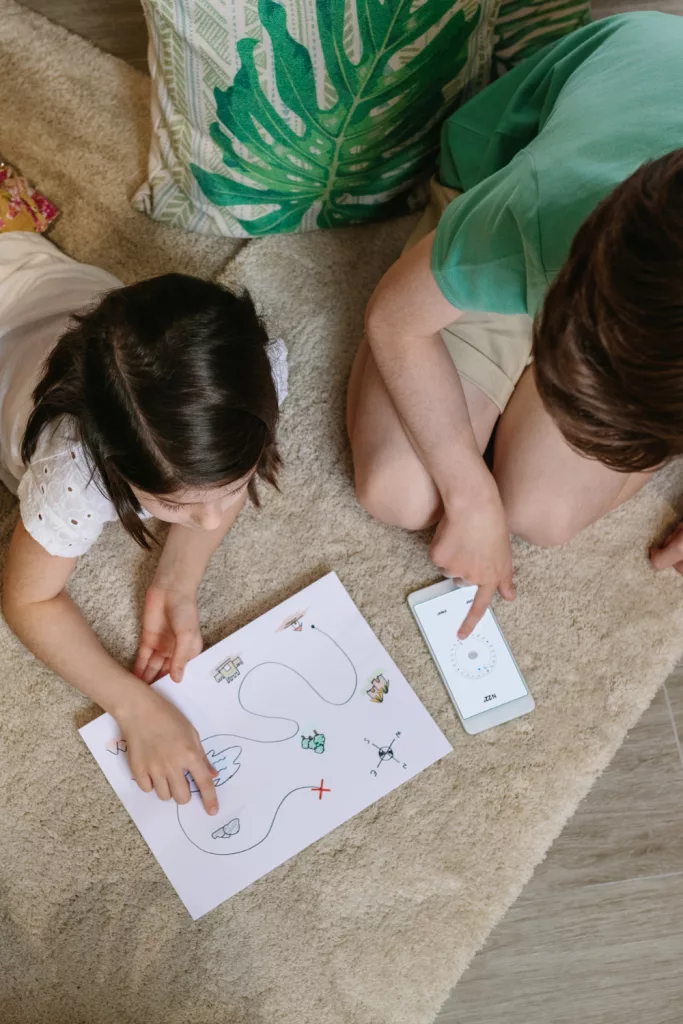
🗺️ Turn your house into a mini-adventure zone.
How to set it up:
- Hide 5–10 small items (toys, blocks, stickers).
- Draw a simple map or write clues.
- Prompt: “The treasure is hidden where we keep the spoons!”
Variations:
- Add riddles for older kids.
- Use themed treasures (gold coins = foil-wrapped chocolates).
👉 Parent perk: You can reset and repeat endlessly with new hiding spots.
3. Sock Basketball
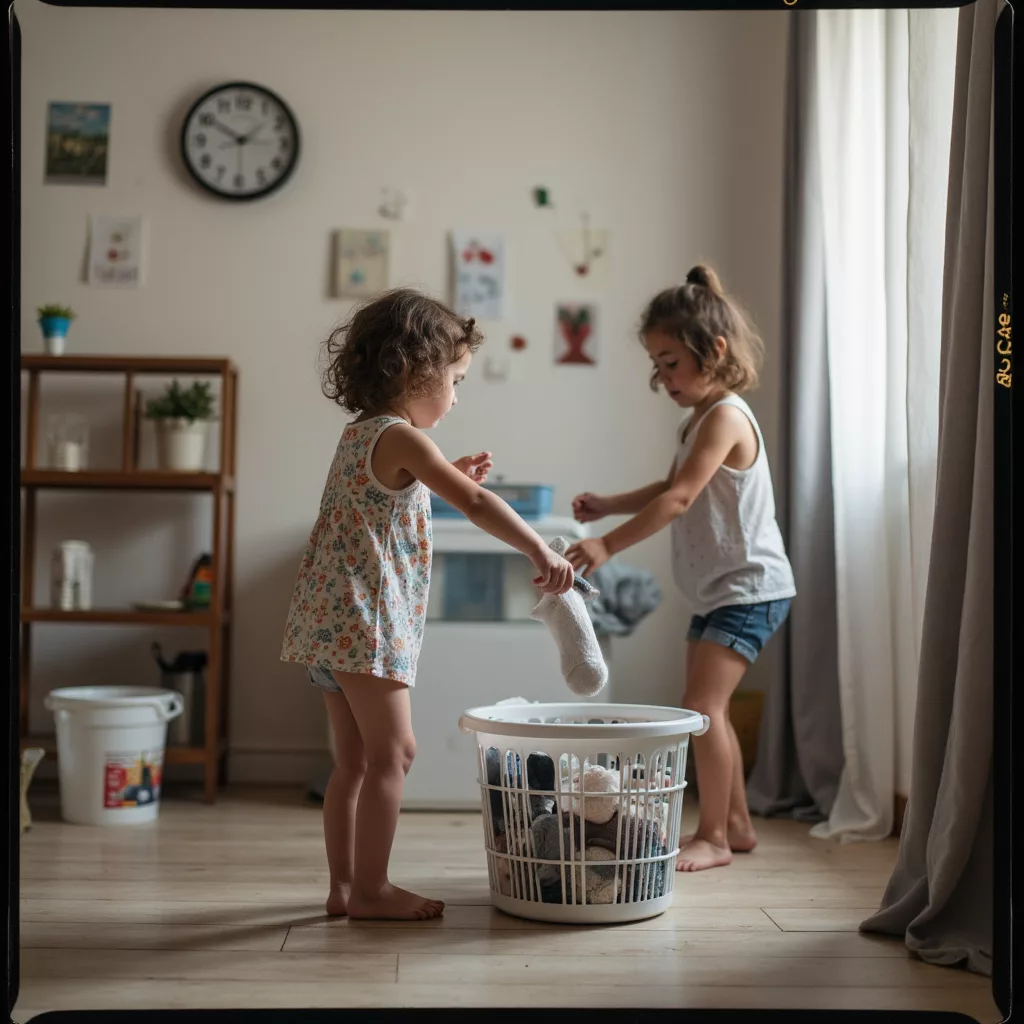
🏀 A rainy-day classic that works in almost any room.
How to set it up:
- Roll up socks into balls.
- Use a laundry basket, bucket, or cardboard box as the hoop.
- Prompt: “How many baskets can you score in one minute?”
Variations:
- Add point zones by moving the basket further away.
- Play “HORSE” by taking turns inventing silly shots (behind the chair, under the table).
👉 Parent perk: Quick setup and even quicker cleanup.
4. Shape Hunt Challenge
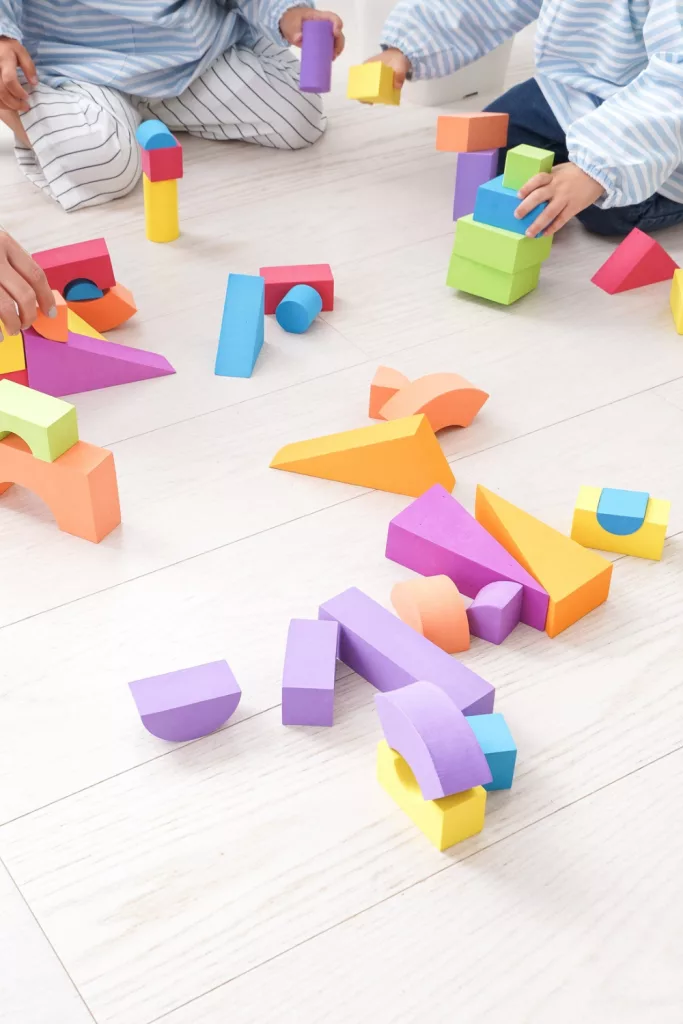
🔺 A fun mix of movement and problem-solving.
How to set it up:
- Call out a shape (“circle,” “square,” “triangle”).
- Kids search the house to find objects with that shape (plate = circle, book = rectangle).
- Prompt: “Can you find three circles in the room?”
Variations:
- Do it with colors instead of shapes.
- Add drawing: once they find the objects, sketch them on paper.
👉 Tip: Great for sneaking in early math skills without worksheets.
5. Sensory Sorting Station
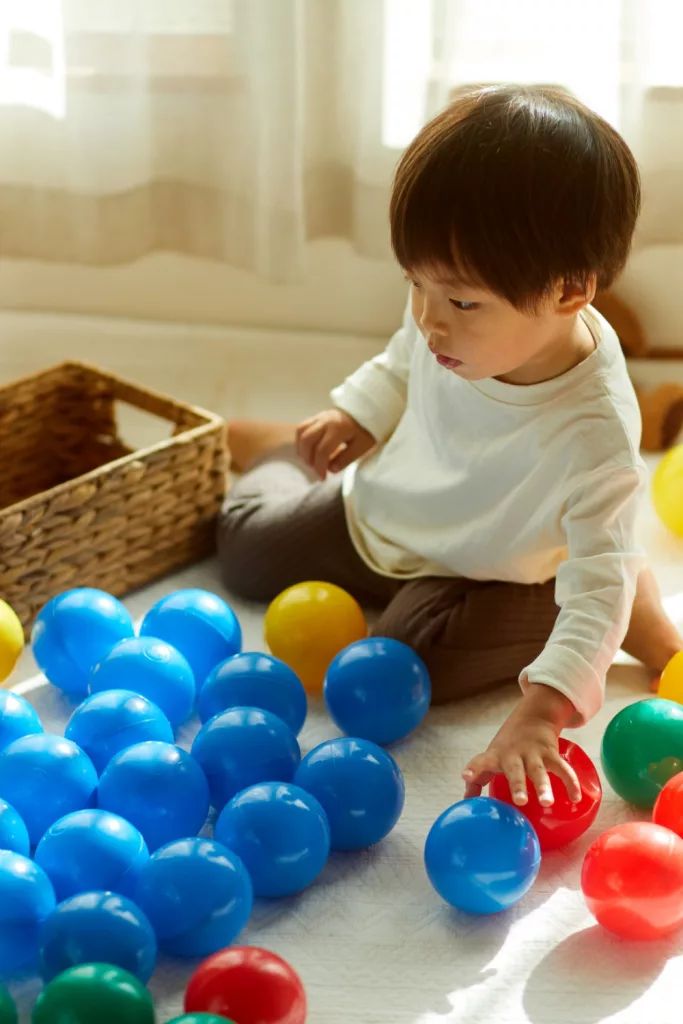
👋 Small items + sorting = endless quiet focus.
How to set it up:
- Offer a tray with buttons, Lego bricks, beads, or pom-poms.
- Add muffin tins or bowls.
- Prompt: “Can you sort these by size, color, or shape?”
Variations:
- Hide small items in rice or dry pasta for a “dig and sort.”
- Add spoons, tweezers, or tongs for extra motor practice.
👉 Tip: Calms restless energy after a busy school day.
6. Build a Mini City
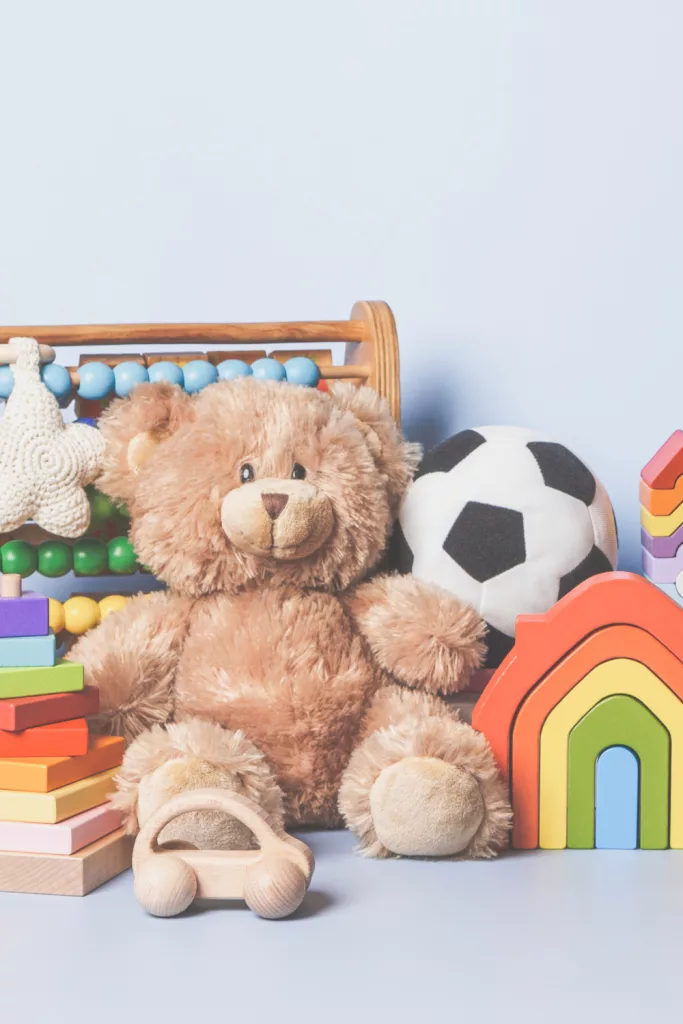
🏙️ Kids love creating whole worlds.
How to set it up:
- Tape out “roads” on the floor.
- Add blocks, Lego, or recycled boxes.
- Prompt: “What shops, houses, or parks does our city need?”
Variations:
- Add toy cars or dolls.
- Draw signs, traffic lights, or bus stops.
👉 Parent perk: This often evolves into hours of imaginative play with minimal input.
7. Toy Parade
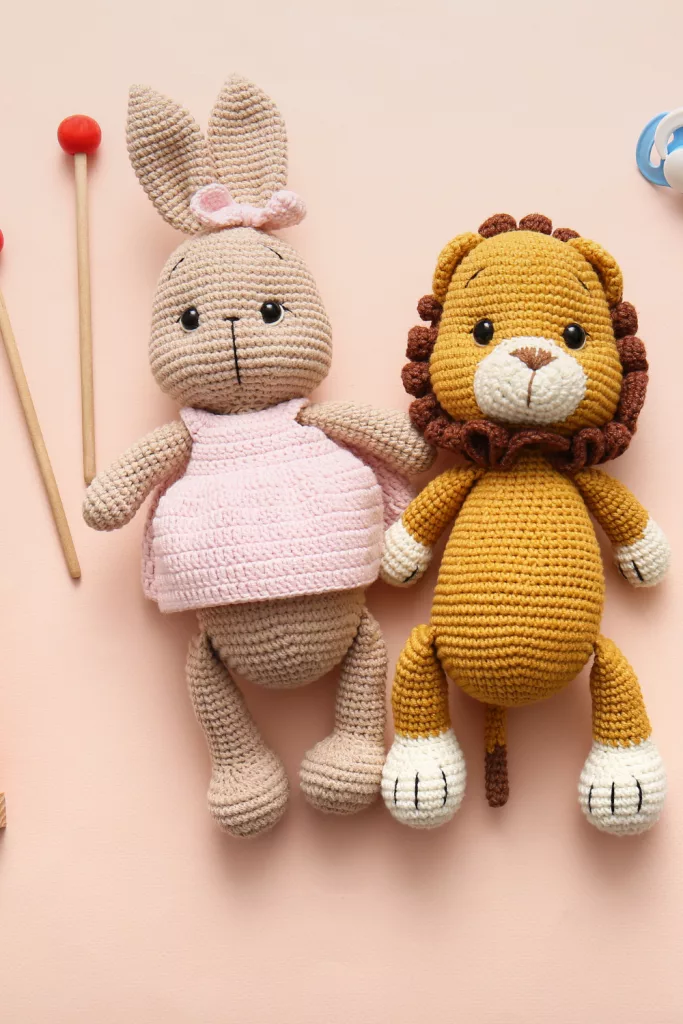
🎺 Kids love a bit of ceremony.
How to set it up:
- Line up favorite toys (cars, dolls, stuffed animals).
- Create a “parade route” with blocks or tape lines.
- Prompt: “Who’s leading today’s parade?”
Variations:
- Make signs or flags out of paper.
- Add music and let kids march along with the toys.
👉 Parent perk: A contained activity that organizes the toy chaos for you.
8. Paper Plate Faces
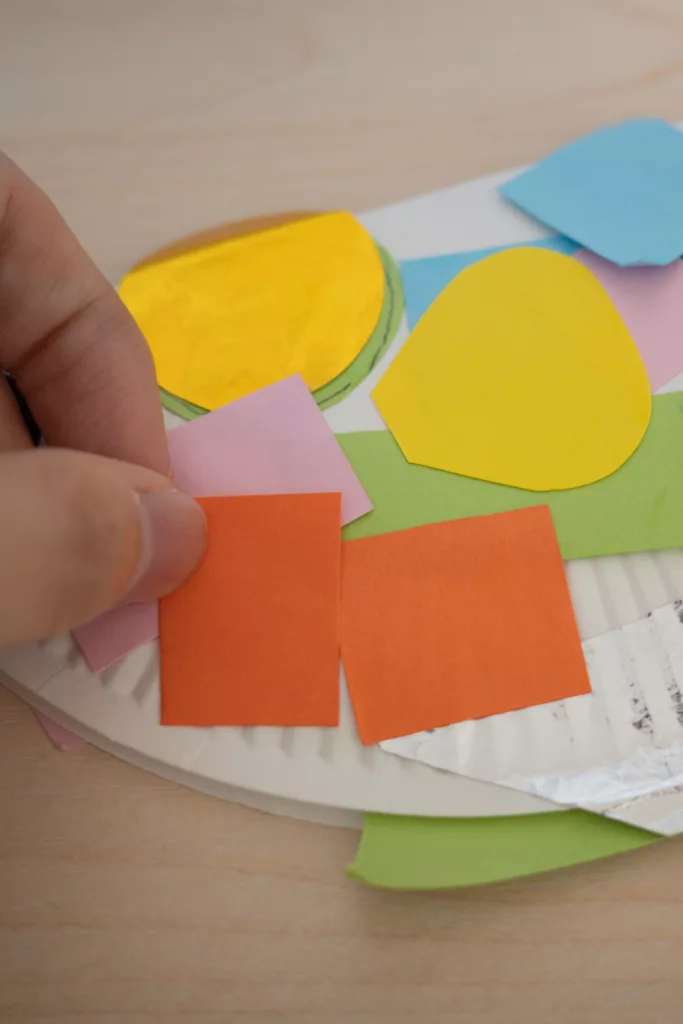
🎭 Quick, easy, and hilarious.
How to set it up:
- Offer paper plates, markers, scissors, and glue.
- Kids design funny, spooky, or silly faces.
- Prompt: “What’s the silliest face you can make?”
Variations:
- Add craft sticks to turn them into masks.
- Create a “guess the emotion” game.
👉 Parent perk: Doubles as decoration for a play corner or party.
9. Shadow Play

🔦 Rainy afternoons + torches = instant magic.
How to set it up:
- Darken a room slightly.
- Use a torch or lamp against a blank wall.
- Prompt: “Can you make a rabbit with your hands? What about a dragon?”
Variations:
- Add cut-out paper shapes (animals, monsters, trees).
- Tell a story using shadows as characters.
👉 Tip: A lovely wind-down activity before bedtime.
10. The Mystery Box

🎁 Curiosity drives play.
How to set it up:
- Fill a box or bag with safe household items (whisk, pinecone, scarf, toy car).
- Kids reach in without looking and guess what it is.
- Prompt: “What could this be in a pretend game?”
Variations:
- Use themes: “Kitchen Box,” “Nature Box,” “Toy Box.”
- Turn into a storytelling challenge: “This whisk is actually a wizard’s wand!”
👉 Parent perk: Zero prep — just grab what’s at hand.
How to Make Screen-Free Play Prompts Work
- Keep supplies handy: A small box of craft basics (scissors, tape, paper) means you’re ready for most prompts anytime.
- Set the stage: A tray, basket, or blanket on the floor signals “play invitation.” Presentation matters!
- Step back: Offer the prompt, then resist the urge to lead. Kids need space to make it their own.
- Rotate ideas: Save a few for another rainy day. Freshness keeps them exciting.
Why Prompts Matter for Parents Too
Play prompts aren’t just about keeping kids busy. They’re about creating breathing room for parents. When children are absorbed in self-directed play, you can sip a warm drink, prep dinner, or even sit quietly for five minutes.
More than that, prompts create shared moments of joy. Watching your child turn a cardboard box into a rocket or a spoon into a dragon reminds us that play is powerful, magical, and worth protecting.
Tools to Support Your Family

If you’d love more structured ways to build screen-free rhythms, check out our Routine Cards Bundle in the Spoon & Sky shop. With illustrated steps for morning, after school, and bedtime, they help children feel empowered while giving parents a break from constant reminders.
Pair them with simple play prompts like these, and you’ll find your days flow with more ease and joy.
Final Thought
Screens have their place, but the magic of childhood lives in the messy, imaginative, hands-on moments. Play prompts are like gentle invitations to step into that magic. They don’t require perfection, just a spark.
So next time the “I’m bored” chorus starts, pull out a box, a few socks, or a flashlight — and see where your child’s imagination takes them.
With scissors on the table, tape stuck to my elbow, and a cardboard rocket ready for launch,
Lily Luz
Spoon & Sky


✨ Get Your Free Printable ✨
Looking for a simple way to bring a little more calm, structure, or creativity into your day?
Enter your email below and get instant access to your free printable from Spoon & Sky — made to spark joy, imagination, and gentle rhythms at home. 🌿
We’ll send your printable and a few kind, helpful ideas to your inbox. No spam — just calm, creative family tools.
Leave a Reply