

Parenting often feels like a constant tug-of-war between giving our children what they need and carving out even the tiniest space for ourselves. We want to nurture, protect, and guide — but we’re also human beings with our own limits, preferences, and rhythms.
Here’s the truth: caring for yourself isn’t selfish. It’s a model. When parents set healthy boundaries, children learn not only how to respect others but also how to respect themselves.
The challenge? Boundaries in family life often get mistaken for either being too authoritarian (“My way or the highway”) or too permissive (“Anything goes”). But there’s another way — a balanced approach that allows children to thrive while keeping parents regulated and supported.
Let’s explore how boundaries can bring more calm into your home, support your own self-care, and teach kids one of life’s most important skills: how to say “yes” and “no” with confidence.
Why Boundaries Matter for Parents
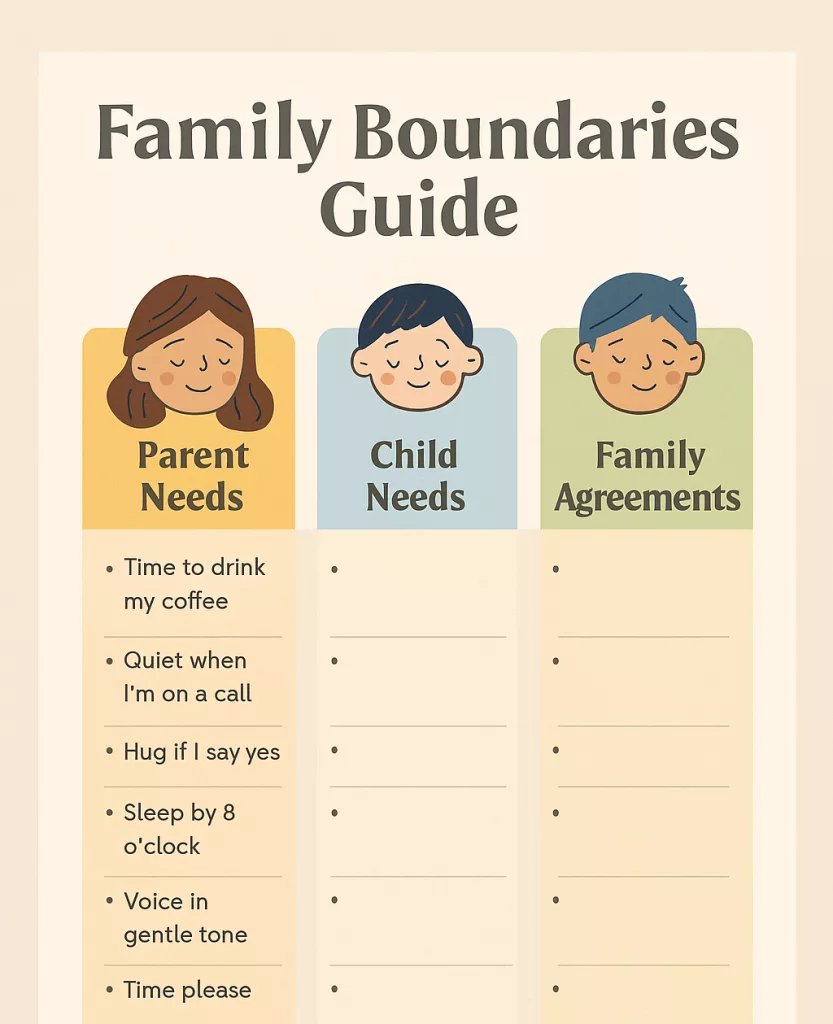
Boundaries aren’t about walls or strict rules. They’re about clarity.
When you say:
- “I need five minutes of quiet before I can answer questions,” you’re showing your child that needs matter.
- “I’ll play with you after I finish this phone call,” you’re teaching patience and respect.
- “I don’t like being climbed on while I drink tea,” you’re giving them a model of how to articulate limits kindly.
Healthy boundaries prevent burnout, resentment, and those boiling-over moments that often lead to guilt afterwards. They remind children that parents are people too, not just endless providers.
Why Boundaries Matter for Kids

Children also need to learn boundaries — not just to follow yours, but to express their own. A child who can say:
- “I don’t like tickling,”
- “That toy is mine right now,”
- “I need a break,”
…is a child who is practicing autonomy, empathy, and communication.
By creating a family culture where boundaries are safe and respected, you’re preparing your child to handle friendships, school life, and eventually adult relationships with confidence.
Finding the Middle Ground: Not Too Strict, Not Too Loose
Many parents struggle with swinging between extremes:
- Authoritarian: “Because I said so.” It may keep order, but it can stifle connection.
- Permissive: “Do whatever you want.” It avoids conflict but leaves kids feeling unanchored.
The middle ground is authoritative parenting — firm but kind, structured but flexible. It says:
- “I’m in charge of keeping you safe and guiding you, but I also listen to your voice.”
This balance gives kids both security and agency.
How to Set Healthy Boundaries (Without Guilt)
1. Start with Self-Awareness

You can’t set boundaries if you don’t know what you need. Ask yourself:
- What moments in the day drain me most?
- When do I feel resentful or overstretched?
- What rhythms help me feel calm?
These clues point to where boundaries need to be clarified.
2. Keep Language Simple and Clear
Children don’t need lectures — they need clarity. Use short, kind statements:
- “I need quiet for five minutes.”
- “That toy isn’t for throwing.”
- “We read one more story, then lights out.”
Consistency is key. If you wobble, children sense the gap and push it.
3. Frame Boundaries as Family Care

Instead of “me vs. you,” frame it as us.
- “I need to finish cooking so we can eat together.”
- “We all take turns talking so everyone feels heard.”
This shows boundaries aren’t punishments — they’re care structures for the whole family.
4. Model Boundaries in Action
Let your children hear you set boundaries with others too:
- Saying “no” to extra commitments.
- Asking a friend for space or time.
- Stopping yourself mid-task to rest.
Children learn more from what we model than what we preach.
5. Create Predictable Rhythms

Boundaries stick best when tied to routines. For example:
- After school = snack, play, quiet time.
- Bedtime = story, cuddle, sleep.
- Parent’s morning tea = no interruptions until the timer beeps.
Visual cues (charts, cards) make boundaries concrete for younger kids.
Helping Children Create Their Own Boundaries
Boundaries aren’t just for parents — kids benefit from learning how to voice theirs. Here’s how to support them:
1. Invite Their Input
Ask questions like:
- “What do you think we should do now?”
- “Is there a snack you’d like to eat today?”
- “Would you like a hug, or space right now?”
Even small choices build self-advocacy.
2. Respect Their “No” (When Safe)
If a child says “No more tickling,” stop. If they refuse a hug, don’t force it. This teaches them their voice matters.
👉 Note: It’s different when safety is at risk. “I know you don’t want your seatbelt, but it keeps you safe.” Firmness here models that some boundaries protect life and health.

3. Teach Them to Rephrase
Children often express boundaries through tantrums or hitting. Show them words:
- “I don’t like that.”
- “Stop, please.”
- “I need a turn.”
Role-play helps them practice.
4. Celebrate Their Efforts
When a child says “I need space,” praise it: “Thank you for telling me with words.” This reinforces that communication is powerful.
Tools for Everyday Boundary Practice

Here are some simple, practical tools you can try at home:
- Quiet Corner: A cozy spot for parents and kids to retreat when they need space.
- Yes/No Cards: Visual cards for younger kids to show when they’re comfortable or not.
- Family Meetings: Weekly check-ins where everyone can voice what’s working or not.
- Routine Cards: Visual prompts that reduce nagging and reinforce rhythms — freeing you from repeating instructions.
Boundary Myths (and Gentle Truths)
- Myth 1: Boundaries make me a “mean” parent.
Truth: Boundaries show kids how love + respect coexist. - Myth 2: If I say no, my child will feel unloved.
Truth: Children thrive on clarity. “No” creates safety. - Myth 3: My child is too young to set boundaries.
Truth: Even toddlers can learn to say “all done” or “no thanks.” - Myth 4: Boundaries will cause conflict.
Truth: Conflict happens regardless. Boundaries actually reduce meltdowns by creating predictability.
When Boundaries Feel Hard

Some days you’ll hold them firmly. Other days you’ll cave for the sake of peace. That’s normal. Parenting is a practice, not a performance.
If you feel guilt creeping in, remind yourself:
- Children don’t need perfect parents — they need present ones.
- Every time you set a kind, clear limit, you’re teaching resilience.
- Boundaries are repairable. If you mess up, you can try again tomorrow.
Bringing It All Together
Boundaries are not about control — they’re about connection. They say:
- I love you enough to keep you safe.
- I love myself enough to honor my needs.
- I trust you enough to listen to your voice too.
When children grow up in homes where boundaries are respected, they learn to carry those tools into friendships, school, and eventually adult life. They learn that caring for others doesn’t mean neglecting themselves.
And when parents create those boundaries, they rediscover breathing space, self-care, and the joy of family life that isn’t run on empty.
Final Thought

The next time you feel stretched thin, pause. Ask yourself: What boundary is needed here? It might be five minutes of quiet, a firm “no” to a messy game before dinner, or reminding your child they can say “stop” too.
Boundaries are not barriers. They’re bridges — to calmer homes, healthier parents, and children who know their voice matters.
With a cup of tea finally finished while it’s still warm,
Lily Luz
Spoon & Sky


✨ Get Your Free Printable ✨
Looking for a simple way to bring a little more calm, structure, or creativity into your day?
Enter your email below and get instant access to your free printable from Spoon & Sky — made to spark joy, imagination, and gentle rhythms at home. 🌿
We’ll send your printable and a few kind, helpful ideas to your inbox. No spam — just calm, creative family tools.
Leave a Reply