

If you’ve ever watched your child go from giggling to melting down in 30 seconds flat, you already know what emotional regulation looks like in progress. It’s the lifelong skill of feeling big emotions — and learning how to manage them without getting lost in the storm.
And here’s the truth: kids aren’t born knowing how to regulate. They learn it from us — through co-regulation, daily routines, and the calm structures we build around them.
At Spoon & Sky, we believe emotional regulation doesn’t have to be complicated. It starts with small, consistent tools woven gently into your day — sensory play, simple routines, movement, and meaningful connection. Together, these create the emotional “anchors” children need to grow resilient, empathetic, and secure.
Let’s explore how you can nurture this at home.
🌿 What Is Self-Regulation (and Why It Matters So Much)?
Self-regulation is the ability to manage thoughts, emotions, and behaviors in healthy ways. For kids, that means being able to:
- Pause before reacting.
- Express feelings with words instead of outbursts.
- Calm their bodies when they’re upset or overstimulated.
- Re-focus after frustration or disappointment.
These are huge skills — and they take years of practice. Emotional regulation begins in infancy and continues developing throughout childhood (and honestly, well into adulthood).
When children can regulate themselves, they’re better able to:
✅ Problem-solve.
✅ Cooperate with others.
✅ Build empathy and resilience.
✅ Thrive in structured settings like school or group play.
And the best part? You don’t need fancy programs or specialized training to help them. Just daily rhythms, safe spaces, and calm modelling.
💛 Co-Regulation Comes First
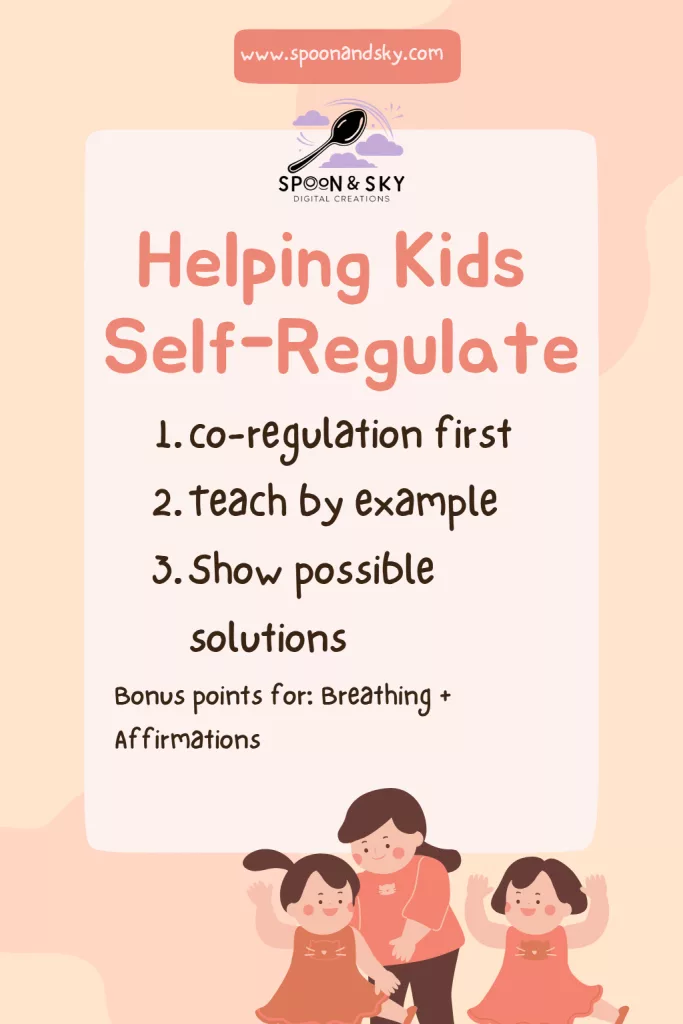
Before children can self-regulate, they need co-regulation — your calm presence when they can’t find theirs.
When your child’s emotions surge, their body is flooded with stress hormones. Logic goes offline. They literally can’t think clearly or follow directions yet. That’s when they borrow your calm.
What this looks like in real life:
- Sitting beside them quietly, without rushing to fix it.
- Saying softly, “You’re safe. I’m here.”
- Matching their breathing until they slow down.
- Offering a grounding hug, squeeze, or rhythmic back rub.
These small moments of calm connection wire your child’s nervous system to associate safety with soothing — building the foundation for self-soothing later.
🌈 Step 1: Build Emotional Vocabulary
Kids can’t regulate what they can’t name.
Start by giving them language for their inner world. Use feeling words often — in your conversations, your stories, your routines.
Try this:
- Label emotions as they happen: “You look frustrated your tower fell.”
- Read books about feelings (like The Color Monster or When Sophie Gets Angry).
- Use a “Feelings Wheel” printable (you can make one together!).
Even for very young children, naming emotions transforms behavior. When they say, “I’m mad,” instead of screaming, that’s emotional progress.
👉Keep a small “Feelings Chart” near your calm space so kids can point instead of shout when words are hard.
🧠 Step 2: Create Predictable Routines
Consistency is the quiet hero of regulation.
A simple daily rhythm — morning flow, after-school reset, evening wind-down — gives kids a sense of safety. When they know what comes next, their nervous system relaxes.
Predictability reduces uncertainty, which reduces meltdowns.
Try building micro-routines into your day:
- A “transition song” when it’s time to clean up.
- Five deep breaths before meals.
- A family gratitude question at bedtime.
These gentle cues become internal signals for calm.
🌀 Step 3: Use Sensory Tools for Regulation
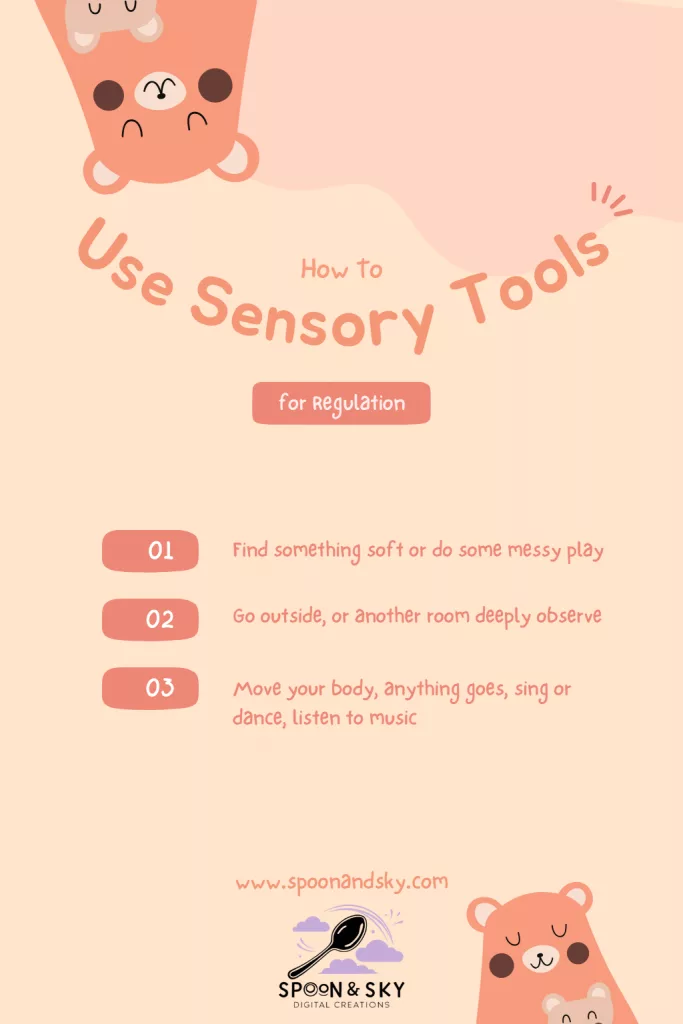
Big feelings live in the body — so the fastest way to calm the mind is often through sensory input.
Each child has different sensory needs. Some crave deep pressure (tight hugs, weighted blankets), while others need movement (spinning, running, bouncing).
Here are some ideas you can use at home:
🔸 Calming Sensory Input
- Wrapping in a cozy blanket “like a burrito.”
- Slow rocking in a chair or on a yoga ball.
- Playing with playdough or kinetic sand.
- Gentle, repetitive drawing or coloring.
🔸 Energizing Sensory Input (when they’re sluggish)
- Jumping jacks or trampoline time.
- Dancing to favorite music.
- Wall push-ups or crawling like animals.
The key is noticing what your child seeks when overwhelmed — that’s their nervous system trying to regulate.
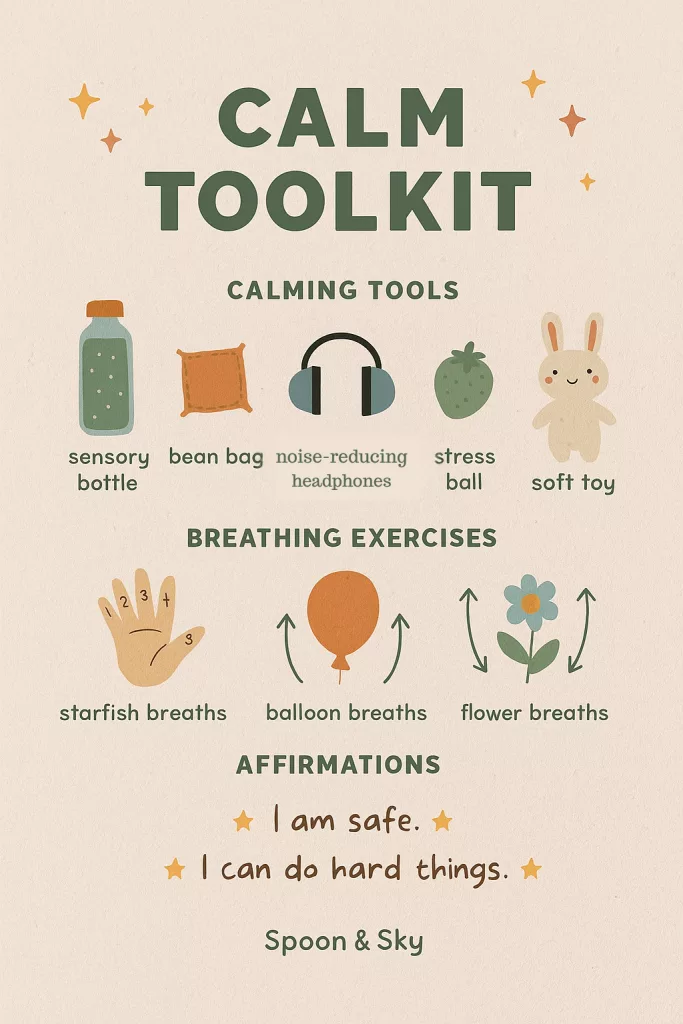
✨ Find out how to build a “Calm Corner” stocked with tactile tools — soft textures, stress balls, noise-reducing headphones, and a cosy light in the blog post on the link above.
🧍 Step 4: Add Movement Breaks Throughout the Day
Movement regulates the brain’s chemistry.
Research shows that rhythmic, repetitive movement — like walking, swinging, or stretching — helps integrate sensory input and calm the nervous system.
Add “movement moments” between transitions:
- Morning: 5 minutes of stretching or dancing.
- Afternoon: Animal walks before homework.
- Evening: Gentle yoga or “starfish breathing.”
You don’t need to call it “exercise.” Just call it “moving our bodies to feel good.”
Your child will learn that movement isn’t just fun — it’s how we reset.
🪴 Step 5: Model Regulation Yourself
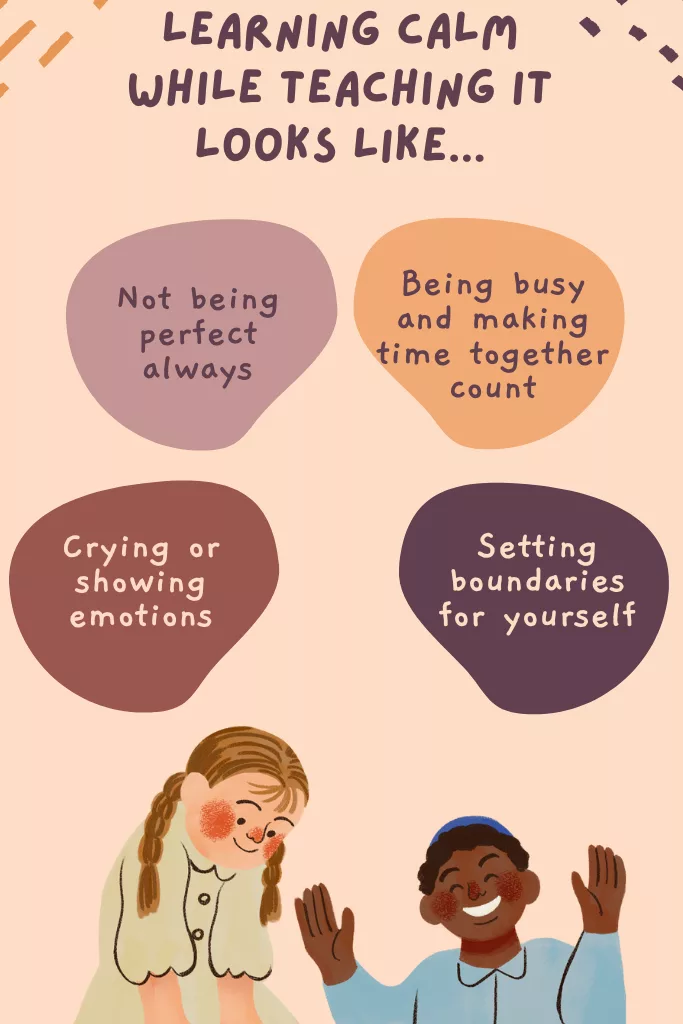
You are your child’s emotional mirror.
When you take deep breaths, speak calmly, and model recovery after frustration, you’re teaching them what emotional resilience looks like.
Say it out loud when you regulate:
- “I’m feeling frustrated, so I’m going to take a deep breath.”
- “That noise is a lot for me — I’ll take a quiet minute.”
Children learn emotional intelligence by watching it in action.
And when you do lose your cool (because we all do), repair quickly:
“Sorry I shouted earlier. I was overwhelmed. Let’s start again.”
That repair moment teaches them accountability and forgiveness — essential regulation tools.
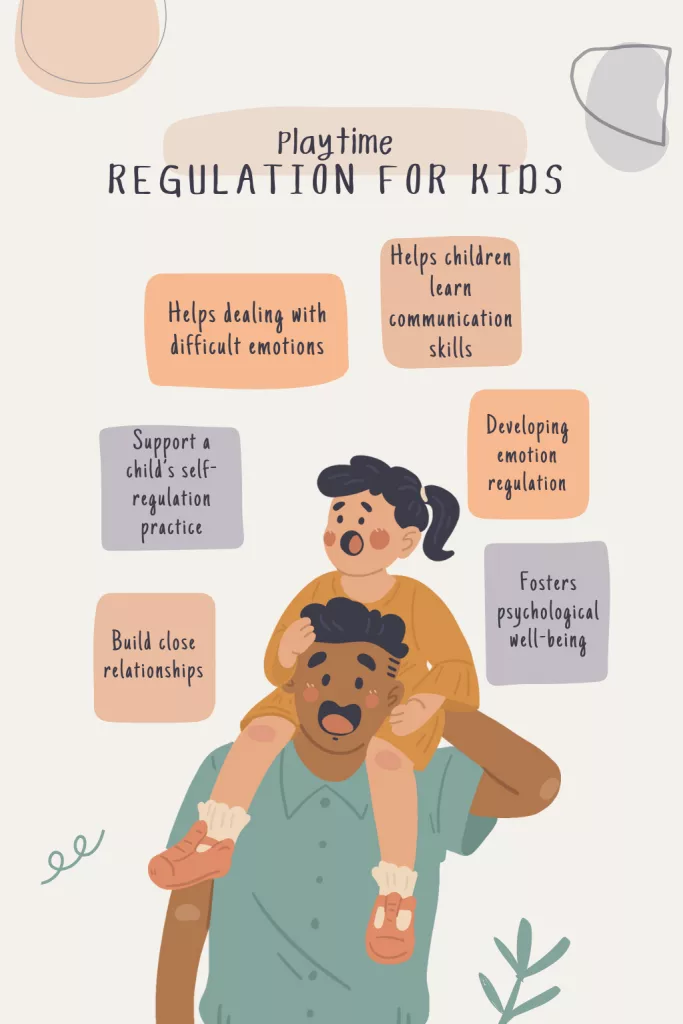
🎨 Step 6: Practice Through Play
Play is the most natural way for kids to learn regulation. Through pretend play, they experiment with roles, emotions, and cause-and-effect.
Try:
- Role-playing calming strategies with toys (“Let’s help the teddy calm down!”).
- Creating “calm down kits” together.
- Using craft time to express emotions (draw your mood, make an “angry monster” collage).
Play allows them to explore emotions safely — without judgment or pressure.
💬 Step 7: Use Connection Over Correction
When children are dysregulated, logic doesn’t work — connection does.
Instead of:
❌ “Stop shouting!”
Try:
✅ “You’re really upset right now. I’m here.”
Once they feel seen, their body starts to settle. Then you can problem-solve together:
“What can we do next time when we feel this mad?”
Connection creates trust. Trust opens the door to teaching.
🌸 Step 8: Teach “Reset Tools” They Can Use Independently
As children grow, give them simple, concrete tools they can use on their own.
Examples:
- Starfish Breathing: Stretch out hand like a star, trace each finger with the other hand while breathing in and out.
- Counting Calm: “Breathe in for 3, out for 4.”
- Calm Corner Routine: Choose one sensory tool, take five deep breaths, then draw or cuddle a toy.
You can even make small visual cards with these steps — part of your Calm Corner setup. If you’re interested, check out my Visual Routine Cards in my shop.
🌼 Step 9: Reinforce Emotional Successes
Celebrate when your child regulates — not just when they behave.
“You took a deep breath instead of shouting — that’s amazing self-control.”
“I saw you calm down after being sad. You really handled that well.”
This builds emotional self-esteem. They begin to see themselves as capable of managing big feelings.
🌙 Step 10: Use Routines as Regulation
Every predictable rhythm — morning, after-school, bedtime — reinforces emotional security.
Transitions are often where dysregulation shows up, so build gentle bridges:
- Play a transition song when it’s time to leave the house.
- Keep “calm cues” consistent — the same light dimming, sound, or scent for bedtime.
- Create rituals like “3 things I’m grateful for” before lights out.
Children thrive when life has a flow. The calmer the structure, the calmer the family.
✨ Gentle Reminders for Parents

- You are not responsible for preventing every meltdown.
- Your calm is the most powerful regulation tool in your home.
- Kids who struggle most often need connection first, not correction.
- Progress happens slowly — and you might not see it every day. But every moment you respond with calm instead of chaos, you’re rewiring something powerful.
🕊️ Bringing It All Together
Teaching self-regulation isn’t about perfection. It’s about consistency, empathy, and the small rituals that tell children: you are safe, you are loved, and you can handle big feelings.
When you model calm, build gentle routines, and offer tools that engage their senses, you give them the lifelong skill of emotional resilience.
And on the hard days — when the meltdowns come anyway — remember that your presence is the lesson.
With soft music playing and playdough crumbs still on the table,
Lily Luz
Spoon & Sky


✨ Get Your Free Printable ✨
Looking for a simple way to bring a little more calm, structure, or creativity into your day?
Enter your email below and get instant access to your free printable from Spoon & Sky — made to spark joy, imagination, and gentle rhythms at home. 🌿
We’ll send your printable and a few kind, helpful ideas to your inbox. No spam — just calm, creative family tools.
Leave a Reply