

The nights come earlier now. The to-do lists grow longer, and the question “What are we going to do this Holiday?” keeps popping up…
And somewhere between wrapping paper, school events, and finding matching socks for the Christmas jumper day… you pause and wonder:
“Isn’t this supposed to be fun?”
You’re not alone.
The autumn-to-winter stretch — with its school transitions, festive noise, and flashing lights — can bring as much tension as it does joy. Children feel it too: excitement mixed with exhaustion, change mixed with overstimulation.
This season, instead of pushing through the overwhelm, what if we slowed it down?
What if holidays could feel simpler — filled with connection instead of chaos, rituals instead of rush?
In this post, we’ll explore gentle, practical ways to reduce seasonal stress for both you and your child — from sensory-friendly holiday planning to emotional anchors that help everyone breathe easier.
Because a calm, joyful season doesn’t come from doing it all. It comes from doing less — with intention.
Why It Matters
For children aged 3–8, the holiday season can feel like a whirlwind. Lights, crowds, loud music, unfamiliar routines, late nights — all exciting, all a lot.
Young nervous systems are still developing, which means they feel stimulation more intensely and regulate emotion less easily. That’s why meltdowns can spike around November and December — not because of naughtiness, but because their emotional “cup” is full.
Parents, meanwhile, face a cocktail of expectations: from family traditions and financial pressure to work events and social obligations. The result? Everyone’s running on too little sleep, too much sugar, and not enough pause.
The good news: small adjustments can create big changes. By prioritising rhythm, sensory calm, and realistic traditions, you can build a season that’s gentle enough for your children and you.
The Practical Framework 🌿

Here are seven calm, compassionate ways to navigate the festive season without losing your peace — or your joy.
🎄 1. Anchor Your Family in Rhythm, Not Routine
In the swirl of seasonal events — parties, school fairs, late bedtimes — structure is the first thing to go. But children thrive on predictability. Knowing what’s next helps them feel safe and settled, even in exciting times.
🪄 Try this:
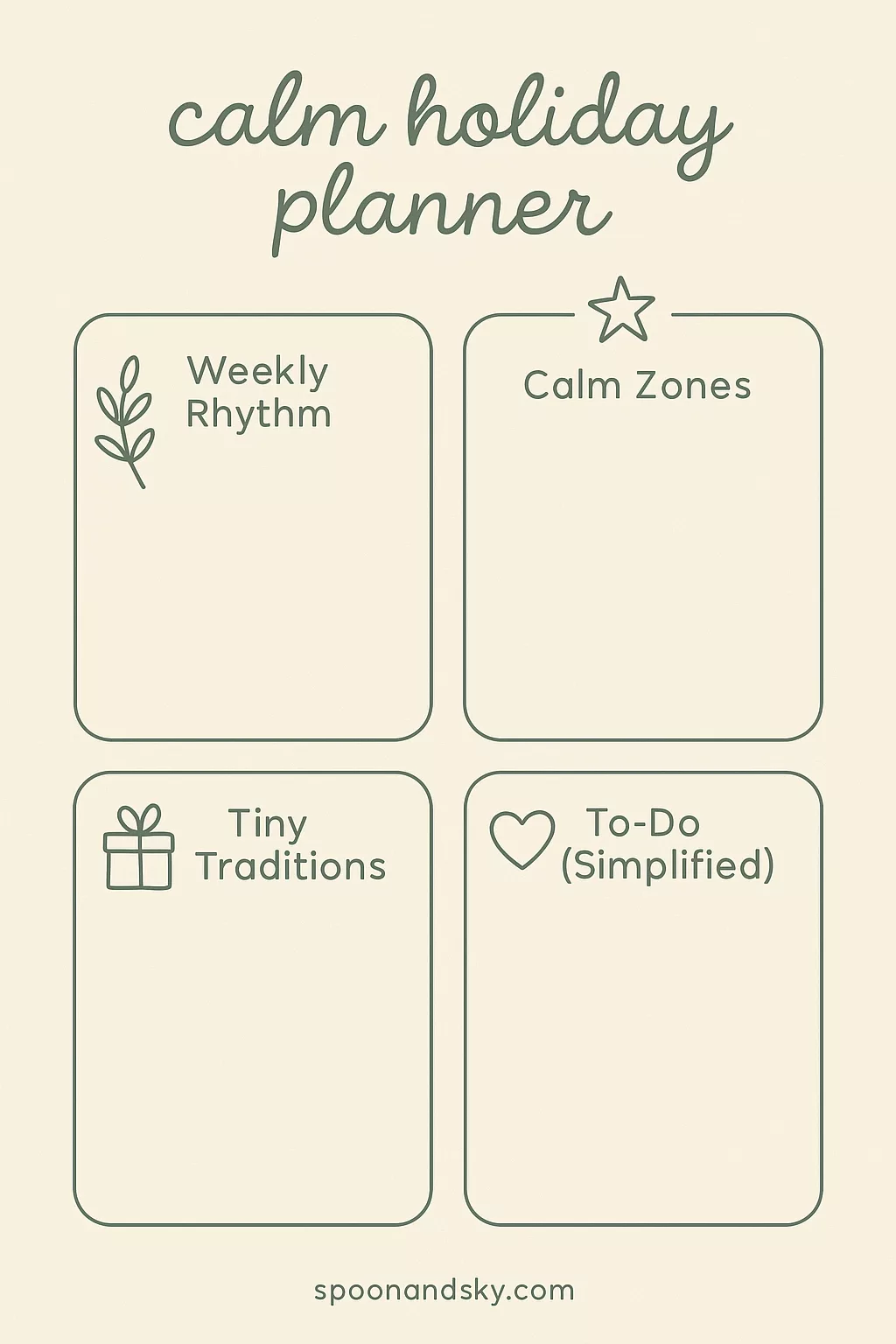
Create a “holiday rhythm chart” for your family — a simple visual calendar showing what’s happening each day (like “home day,” “outing day,” “visit day”). Use stickers or drawings for children to follow.
Keep key anchors steady wherever possible:
- Regular wake-up and bedtime
- Familiar mealtimes
- Predictable daily rituals (like a morning cuddle or bedtime story)
Parent tip: If plans change, communicate early and kindly:
“We’re not going to the lights tonight — we’ll go tomorrow. Tonight is for hot chocolate and story time.”
Predictability soothes more than perfection ever could.
🕯 2. Create Sensory-Friendly Celebrations
Between flashing lights, crowded shops, loud songs, and endless “surprises,” the holidays can overwhelm sensitive systems — children and adults alike.
🪄 Try this:
- Dim the dazzle: Balance bright decorations with quiet corners — fairy lights instead of flashing ones, natural tones mixed with sparkle.
- Keep volume low: Choose soft instrumental playlists or nature sounds during downtime.
- Soothing scents: Try cinnamon, pine, or orange essential oils (sparingly).
- Tactile comfort: Keep cozy textures (blankets, soft clothes) accessible; let children wear comfortable outfits, even to events.
For highly sensitive children, create a “calm zone” — a space where they can retreat for quiet time when things get overwhelming. A small den with soft lights and familiar toys works wonders.
Parent tip: Overstimulation isn’t misbehaviour — it’s a body asking for balance.
🌨 3. Manage Overstimulation in Holiday Venues

Markets, parties, pantomimes — festive magic can quickly tip into sensory overload.
🪄 Try this:
- Plan shorter outings. Two hours of festive fun beats six hours of exhaustion.
- Use “exit cues”: a prearranged signal (like a hand squeeze) your child can use to say “I need a break.”
- Bring comfort objects — a small toy, headphones, or snack pack.
- Practice pre-event prep: “There will be lights, music, and lots of people. If it feels too busy, we can find a quiet spot.”
If you notice your child melting down mid-event, step away without shame. Fresh air and quiet can reset overstimulated senses far faster than reasoning can.
Parent reflection: It’s not about “missing out.” It’s about preserving the joy.
🧤 4. Keep “Tiny Traditions” (and Ditch the Rest)
The holidays often come wrapped in inherited expectations — elaborate meals, matching outfits, endless crafts. But children don’t need perfection; they need presence.
Instead of doing all the things, choose three “tiny traditions” that genuinely bring your family joy.
Examples:
- One special storybook read every Christmas Eve
- Baking together once a week
- A family walk in matching hats
- Writing kindness notes instead of cards
🪄 Try this:
Make a “holiday joy list.” For each family member, write one thing that truly matters to them. Focus your energy there — let the rest go with gratitude.
Parent tip: Traditions don’t have to look Pinterest-perfect to be magical. The magic comes from meaning.
🧘♀️ 5. Model Calm — Even in the Chaos
Children borrow our nervous systems. When we rush, they rush; when we exhale, they soften.
🪄 Try this:
Start each morning with a small “centering ritual.”
- Stretch or breathe for one minute before turning on lights or checking your phone.
- Invite your child to join you: “Let’s stretch like trees before we start the day.”
- When stress spikes, pause, inhale deeply, and name what’s happening aloud:
“It’s a busy day, but we can do one thing at a time.”
This models emotional regulation and gives children language for calm.
Parent reflection: Presence, not perfection, is the calm they’ll remember.
🎁 6. Embrace “Quiet Gifts” and Experience-Based Presents

Children remember how holidays feel more than what they receive. Instead of leaning into plastic piles, consider gifts that foster connection, creativity, or calm.
🪄 Try this:
- Quiet gifts: Art supplies, sensory dough, books, cozy blankets, puzzle sets.
- Experience gifts: Memberships, craft workshops, museum passes, forest walks, baking dates.
- Memory jars: Fill a jar with small notes from family members — kind messages, memories, or “future adventures.”
For younger children, a “play basket” filled with open-ended toys (blocks, figurines, scarves) sparks imaginative flow far more than a noisy gadget.
Parent tip: When relatives ask what to buy, share a short list of gentle, thoughtful options. Most loved ones want to give well — they just need direction.
💞 7. Support Emotional Ups & Downs
As magical as holidays can be, they also stir big feelings — excitement, jealousy, disappointment, fatigue. Helping children navigate this emotional rollercoaster begins with validation, not correction.
🪄 Try this:
When your child cries because a sibling got a bigger gift or because they don’t want to leave a party, pause before explaining. Try:
“You really wanted that toy. That’s hard.”
“It looks like you’re feeling tired after a big day.”
Meeting emotion with empathy diffuses resistance. Once your child feels seen, they can move toward calm and problem-solving.
At bedtime, use “three words check-in”: ask your child to name three feelings from the day — even mixed ones. “Happy, tired, sparkly,” counts perfectly.
Parent reflection: The goal isn’t to prevent every meltdown — it’s to create emotional safety through connection, not control.
✨ Bonus: A Calmer Parent is a Calmer Season
Parent stress is contagious — but so is parent calm. Here are small practices to anchor you in the middle of the madness:
- Simplify your yes. You don’t have to attend every event or bake for every fair. One heartfelt yes is worth ten burnt-out ones.
- Protect recovery days. Block out one “nothing” day per week — pyjamas, leftovers, low expectations, and why not try decompressing: check this post for Parental Self-Care to get more ideas.
- Practice micro-mindfulness. When you feel tension rising, find three sensory anchors: something you see, hear, and feel.
- Ask for help early. Whether it’s shared childcare, simple dinners, or splitting errands, teamwork builds calm.
Remember: your child doesn’t need a perfect Christmas — they need a parent who still smiles by New Year.
Reflection
When the glitter fades and the lights dim, what remains is what mattered all along: the giggle under the blanket, the walk through the cold, the smell of baking filling the house.
Children won’t remember if the wrapping paper matched or the cookies were store-bought. They’ll remember how it felt to belong — to a family that made time for wonder, not just work.
So this year, let’s redefine festive success:
less perfection, more presence.
less noise, more noticing.
less doing, more being.
That’s how magic actually happens.
🪄 Download our “Calm Holiday Planner” — a gentle visual guide with space to note family rhythms, sensory supports, and small traditions that truly matter. Get it here:
This season, let your home be a soft place to land. Say no when it feels heavy, say yes when it feels light, and pause long enough to feel the warmth between it all.
The holidays don’t need to be perfect — they just need to be yours.
🌲 With cocoa on my sleeve and fairy lights still tangled,
Lily Luz – Spoon & Sky Studios


✨ Get Your Free Printable ✨
Looking for a simple way to bring a little more calm, structure, or creativity into your day?
Enter your email below and get instant access to your free printable from Spoon & Sky — made to spark joy, imagination, and gentle rhythms at home. 🌿
We’ll send your printable and a few kind, helpful ideas to your inbox. No spam — just calm, creative family tools.
Leave a Reply