
If your days feel chaotic, overstimulating, or rushed, introducing 5-minute creative moments can completely shift the emotional tone in your home. These tiny rituals take almost no time, yet they build connection, ease transitions, reduce overwhelm, and help your child feel deeply seen.
Most parents imagine connection as something we build in the big moments:
the weekend plans, the big outings, the elaborate crafts, the theme days, the perfect Pinterest setups.
But children don’t live in big moments.
They live in the tiny ones.
The moment they walk in from school.
The second their feelings overflow.
The pause at breakfast.
The wiggle between dinner and bedtime.
The scribble before sleep.
This is where real connection grows.
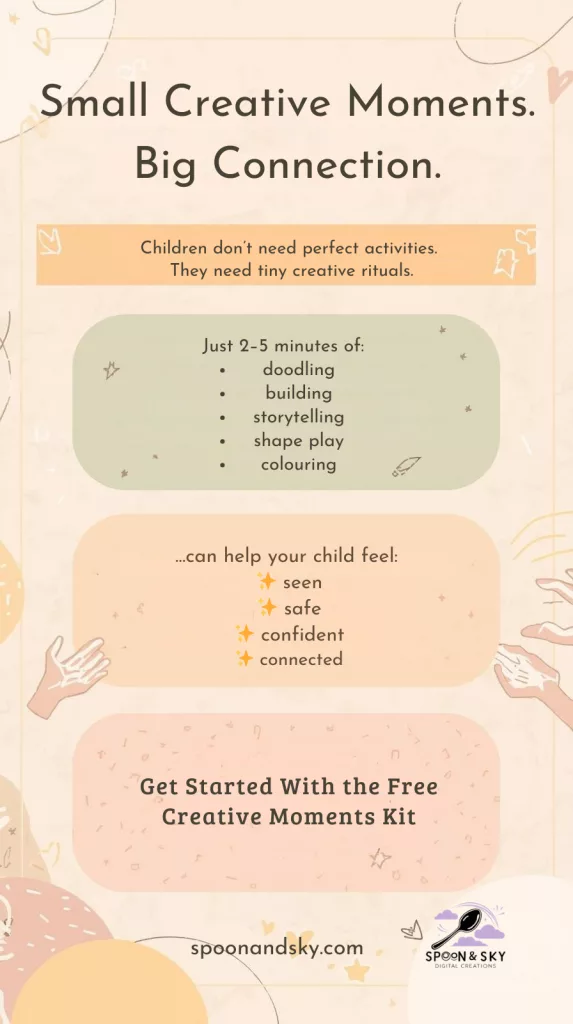
Children experience the world in micro-moments — not in hours, but in bursts. Not in grand gestures, but in small expressions of attention. This is why long activities often fall flat, while tiny creative rituals — just five minutes — leave a lasting emotional imprint.
In this post, I’ll show you exactly how 5-minute creative rituals can transform everyday parenting: calming the chaos, strengthening connection, and helping your child feel deeply seen and understood.
And more importantly: how they fit into your real life, even when you’re tired, overstimulated, or stretched thin.
This is creativity as parenting.
This is connection made simple.
This is the Spoon & Sky way: simple tools for joyful structure.
Why 5 Minutes Works (And Why It Works Better Than “Activities”)
The most liberating truth in parenting is this:
Children don’t need perfection. They need presence.
And presence is far easier to give in five minutes than in forty-five.
Parents often believe connection requires:
- attention
- space
- time
- emotional capacity
- planning
- energy
But connection requires none of these things.
It requires attunement — the moment your child feels, “You see me.”
This can happen in five minutes.
Sometimes it happens faster.
Why 5-Minute Creative Moments Work So Well
Short, simple creative rituals:
- lower stress (for you and your child)
- activate focus in overstimulated brains
- help with transitions (school → home, play → dinner, chaos → calm)
- restore connection after power struggles
- regulate emotions through movement, colour, and sensory grounding
- strengthen the parent-child bond through shared meaning
- build emotional literacy (“This colour feels like today”)
- meet sensory needs in a gentle, accessible way
These rituals are powerful because children experience time differently.
Five minutes of intentional, attuned presence feels like a full moment to a child.
And here’s the secret:
You can transform the emotional tone of an entire day in a single tiny moment.
Let’s look at how this works in real life — in the real rhythms of a real home.
Applying Creative Moments in Everyday Parenting
These 5-minute rituals fit into real routine moments — the ones parents usually rush through but children experience deeply.
Think of these less as “activities” and more as “creative anchors” throughout the day.
1. The After-School Reset Moment
The door opens.
Shoes fly off.
The backpack hits the floor.
Someone is hungry. Someone is overstimulated. Someone wants attention. Someone is emotional and doesn’t know why.
This is not bad behaviour.
This is transition overload.
Children hold so much inside during the school day — rules, expectations, social dynamics, sensory stimulation. When they get home, their nervous system finally drops its guard. And everything spills out.
Instead of rushing into dinner, homework, or “How was your day?”, try a creative micro-ritual.
Try this:
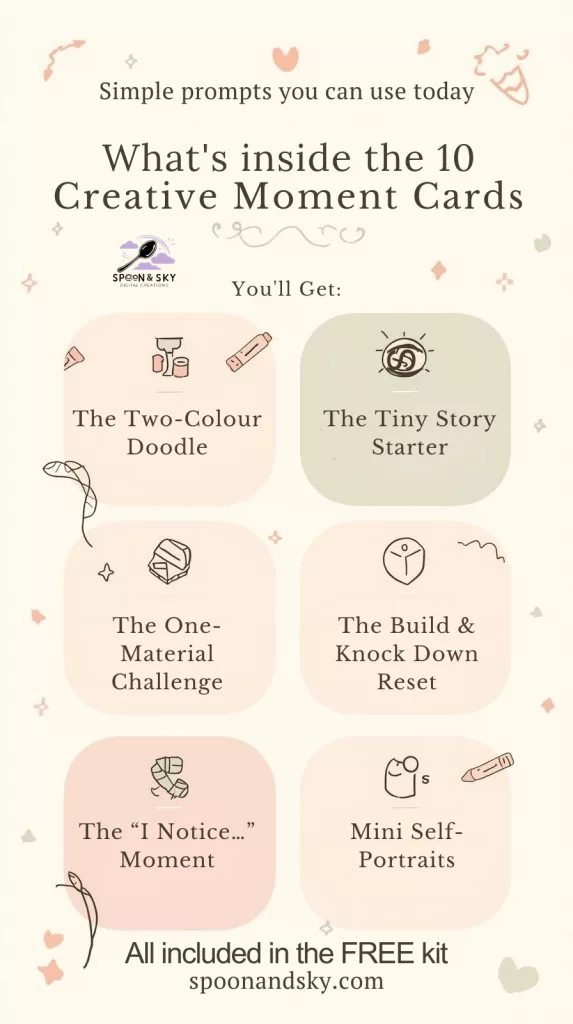
“Let’s do a two-colour doodle. Pick any two crayons.”
Why this works:
- It decompresses their nervous system.
- It grounds their senses.
- It shifts their brain from survival mode to creative mode.
- It regulates their breathing.
- It gives them emotional release without needing words.
You get a calmer evening.
They get a non-verbal expression of everything they carried home.
And in just two minutes, the energy of your home shifts.
2. When They’re Overwhelmed or Melting Down
Meltdowns aren’t misbehaviour.
They’re communication — usually about a feeling too big to express.
Kids ages 3–8 have feelings that exceed the language they possess.
So the feelings spill out of their bodies instead.
Creative rituals create a safe external channel for those feelings.
Try this:
“Let’s draw our feelings. Which colour feels like today?”
Why it works:
- It externalises the emotion (taking it out of their body).
- It gives them a sense of control.
- It turns overwhelm into expression.
- It helps you understand what’s underneath the behaviour.
- It gives the child a safe, non-verbal way to release the overwhelm.
You’re not forcing emotional control.
You’re scaffolding it.
And often, the meltdown softens instantly — because now the emotion has somewhere to go.
3. A Calm Morning Start
Mornings are often the hardest time of day for families.
Not because anyone is “naughty,” but because:
- children wake up mid-dream
- sensory systems reboot slowly
- executive function isn’t online yet
- they’re hungry, stiff, and disoriented
- mornings are full of transitions
- you’re trying to get everyone out the door
Now imagine starting the day with a tiny creative anchor.
Try this:
Place a pencil and paper on the table and say:
“Make one tiny mark while I make breakfast.”
That’s it. One mark.
Why this works:
- It grounds the nervous system.
- It gives the brain a gentle landing.
- It reduces morning chaos.
- It soothes anxiety and morning grumpiness.
- It builds a consistent, predictable ritual.
Mornings take on a completely different tone when they begin with creativity instead of rush.
And five minutes is all it takes.
4. Connection Instead of Correction
Here is one of the most transformative truths in parenting:
Children change their behaviour when they feel connected — not corrected.
When your child draws, builds, writes, colours, or invents, they are showing you their inner world. If you slow down long enough to see it, that moment becomes deeply connecting.
Try observational language:
“I notice you chose a lot of blue today.”
“I see that this part is really big. Tell me about it.”
“You made tiny lines here — what were you thinking about?”
This works because:
- You’re not judging.
- You’re not teaching.
- You’re not assessing.
- You’re simply seeing them.
Children bloom under gentle observation.
It tells their nervous system:
“You matter. Your ideas matter. I see you.”
When behaviour is off-track, connection-first moments like this often do more than any correction could.

5. 1-Minute Story Moments at Bedtime
Bedtime is a vulnerable moment for children:
- fear of the dark
- spiralling thoughts
- unresolved feelings
- sensory fatigue
- anticipation of separation
- emotional overflow from the day
Stories regulate the nervous system.
They also deepen connection in ways nothing else does.
Try this bedtime ritual:
“Let’s tell a 1-minute story about this little scribble.”
Have your child draw a tiny mark on paper.
Then build a story around it:
“This swirly shape looks like a tiny windstorm. One day, the windstorm wanted to…”
Or ask:
“Who lives inside this shape?”
“What happened next?”
“What does this little scribble want tonight?”
Why it works:
- It turns anxiety into imagination.
- It creates routine safety.
- It helps the brain transition into rest.
- It lets children process the day through metaphor.
- It gives them a final moment of connection before sleep.
And the story only needs to be one minute long.
Tiny creativity → deep emotional safety.
Real-Life Results: What Parents Report
When families integrate 5-minute creative moments into their day, they report powerful changes — not dramatic or “Pinterest-worthy,” but deeply meaningful.
Parents tell me they see:
- fewer meltdowns
- softer transitions
- calmer mornings
- quicker after-school decompression
- fewer sibling fights
- more emotional expression
- more conversation
- more willingness to cooperate
- stronger connection
- a more peaceful home atmosphere
- a child who feels “closer”
- a more confident sense of “I can do this”
These tiny creative rituals change family life not because they’re elaborate — but because they’re consistent, attuned, and deeply human.
This is the paradox of parenting:
Tiny moments create big change.
And now you have a way to invite those tiny moments into your home every day — without effort, preparation, or overwhelm.
Want the Easiest Way to Start?
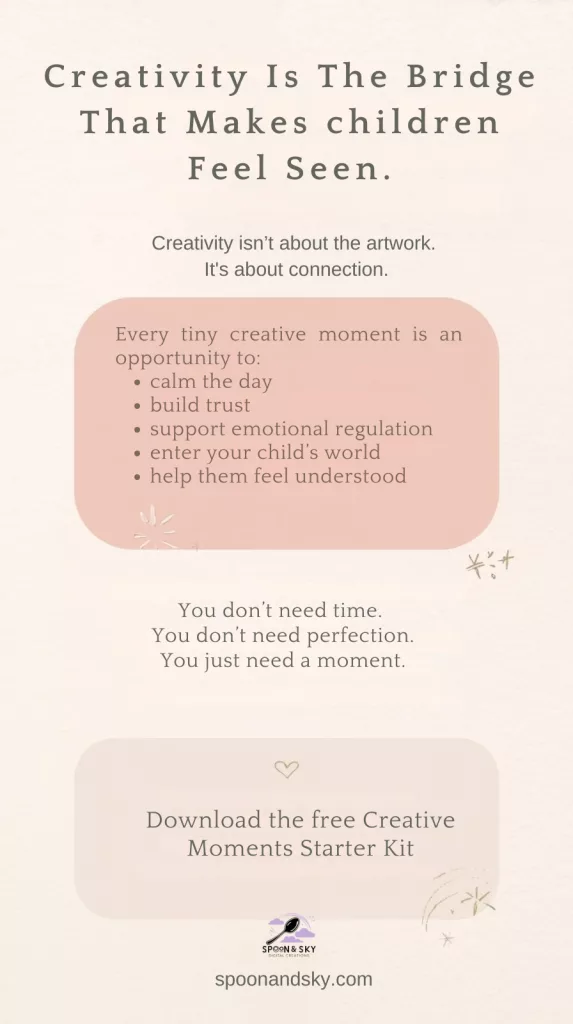
Make it effortless.
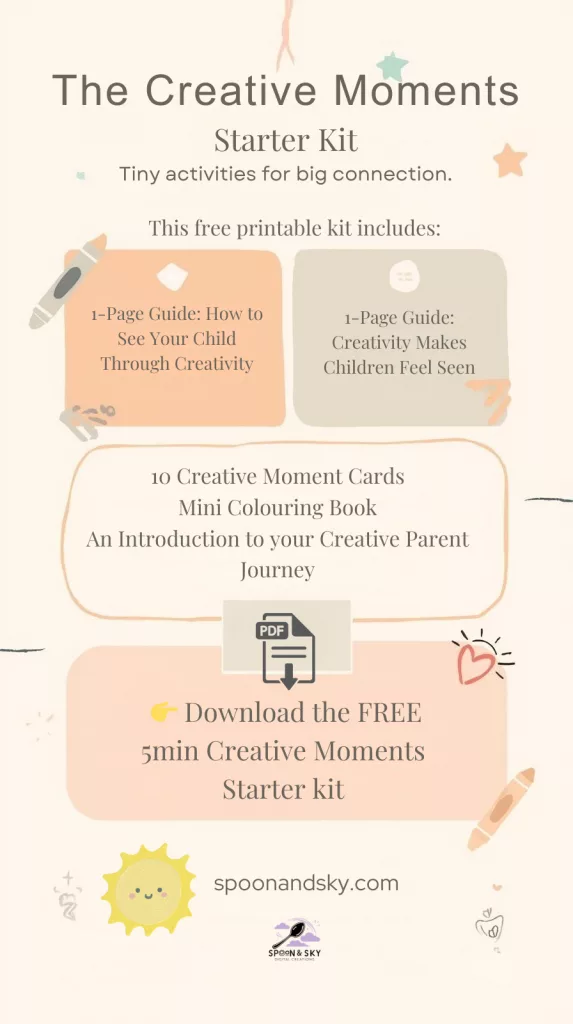
Get the free 5-Minute Creative Moments Kit — 10 beautifully designed creative cards, a seasonal sampler, and a 1-page guide to help you see your child’s inner world through tiny moments of creativity.
👉 Download it here: [Freebie Link]
Start small.
Start today.
It only takes five minutes to transform connection.
With paint on my hands and tea in my mug,
Lily Luz — Spoon & Sky


✨ Get Your Free Printable ✨
Looking for a simple way to bring a little more calm, structure, or creativity into your day?
Enter your email below and get instant access to your free printable from Spoon & Sky — made to spark joy, imagination, and gentle rhythms at home. 🌿
We’ll send your printable and a few kind, helpful ideas to your inbox. No spam — just calm, creative family tools.
Leave a Reply