
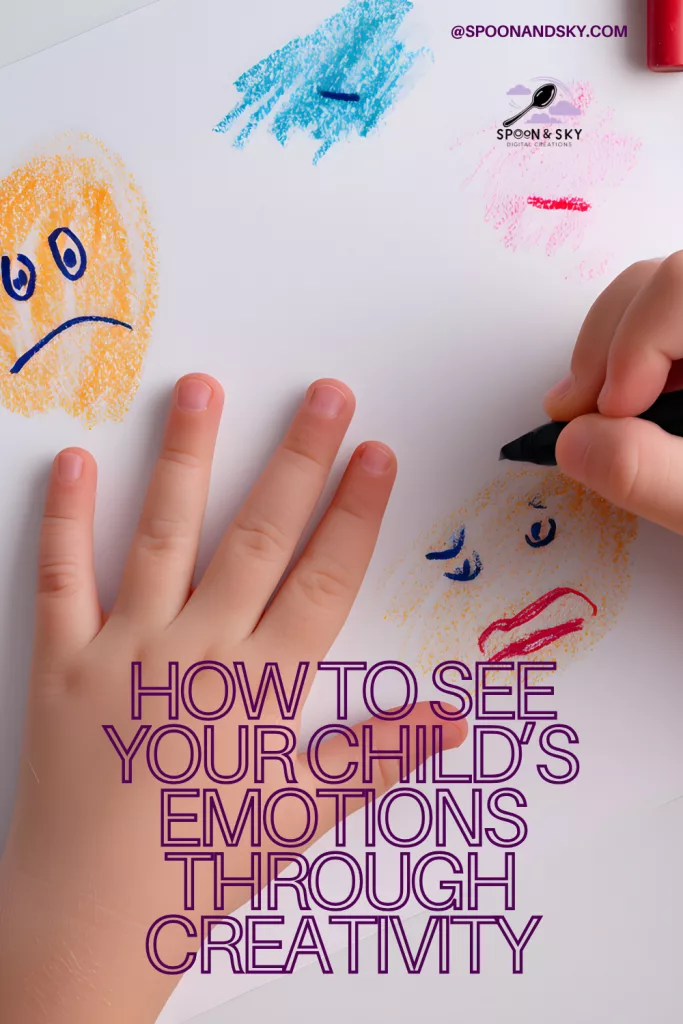
One of the simplest ways to see your child’s emotions is through creativity. Kids naturally express their inner world through colour, movement, story, and play long before they have the words for what they feel. This post shows you exactly how to understand those subtle emotional messages.
Children rarely say:
“I’m stressed.”
“I’m overwhelmed.”
“I’m worried.”
“I don’t know what to do.”
“I need help.”
“I need you.”
Not because they don’t feel these things.
But because they simply don’t have the words yet.
Children communicate in the language they understand best:
They draw.
They build.
They scribble.
They play.
They invent characters.
They tell stories.
They repeat ideas.
They create worlds.
And inside those little worlds?
Their real emotions live there — unfiltered, honest, and easier for them to express than direct speech.
This is why creativity is not “just art.”
It’s not a craft.
It’s not a hobby.
It’s not a distraction.
Creativity is a language.
And when you learn how to listen, you understand your child at a deeper level than ever before.
This post will show you exactly how to interpret the emotional messages embedded in your child’s everyday creativity — and how to respond in ways that help them feel understood, confident, and safe.
And you don’t need to be an artist.
You don’t need to analyse or “decode.”
You definitely don’t need to get it perfect.
All you need is curiosity and presence — and five minutes of creative connection.
The Secret: Creativity Is a Language
Children express feelings through:
- colour
- movement
- scale
- repetition
- story
- symbols
- build-and-destroy play
- imaginary characters
This is not “just play.”
It’s not “cute doodling.”
It’s not meaningless scribbles.
It’s communication.
Creativity is a safe, indirect channel for children to express big things without needing adult-level vocabulary.
They can show you fear without saying “I’m scared.”
They can show you joy without needing the word “excited.”
They can show you overwhelm without melting down completely.
They can show you inner conflict without even realising they’re sharing it.
This is why creative parenting isn’t about crafts —
it’s about connection.
And now, let’s break down the emotional cues to look for — the subtle signals children naturally reveal when they create.
What to Watch For During Creative Moments
These are not diagnoses.
They are invitations.
Clues.
Windows.
Simple prompts that help you tune into your child with gentleness and curiosity — never judgment or assumption.
Let’s explore the five biggest emotional cues.
1. Colour Choices — The Emotional Weather Report
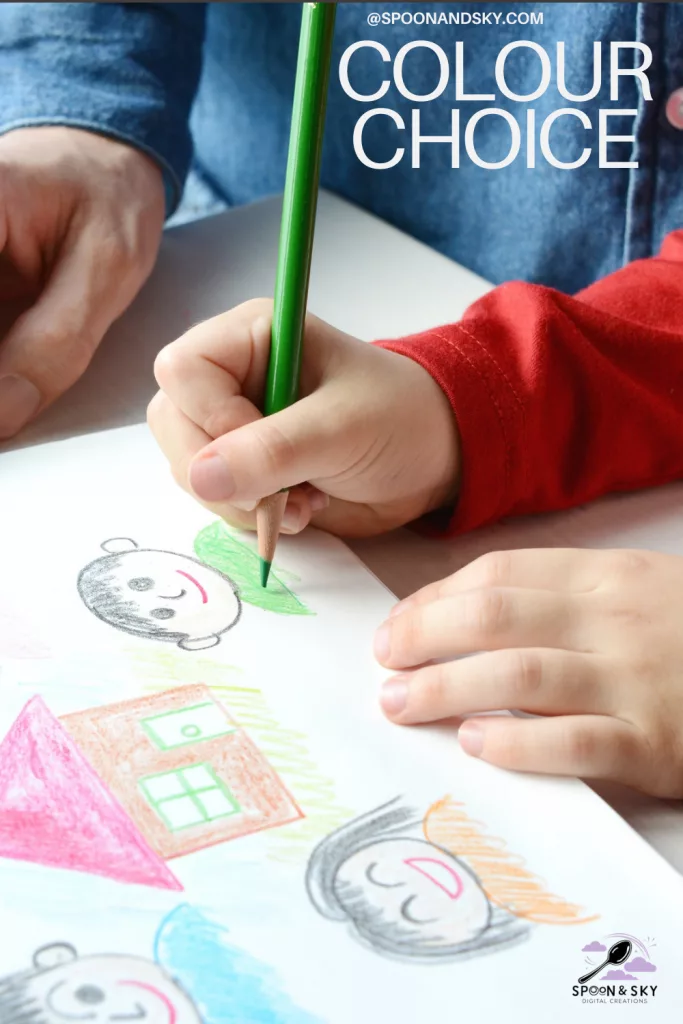
Colour is the fastest, simplest emotional language children use.
Here’s what their choices often signal:
🌈 Bright colours → energy, joy, engagement
Think yellows, bright reds, purples, pinks.
Children often reach for these when feeling open, expressive, or regulated.
🖤 Dark colours → processing big feelings
Black, deep blues, browns, dark purples.
Not negative — simply deeper.
Dark colours often come out when a child is:
- integrating new experiences
- processing school stress
- working through something big internally
- feeling tired or overstimulated
Dark doesn’t mean “bad.”
It means depth.
🎨 One repeated colour → emotional focus
If a child uses one colour over and over, they are often processing one specific emotional theme.
It may be calm. It may be worry. It may be excitement.
🌤 Changing colours → shifting emotional states
When a child swaps colours frequently, it often signals transition — moving from one emotional state to another.
Ask this (gently):
“What made you choose these colours today?”
This is not interrogation.
It’s an invitation.
Often the child shrugs and keeps drawing.
But sometimes?
They say something that lets you glimpse the whole world they’re holding inside.
2. Repetition — The Mind Working Things Out
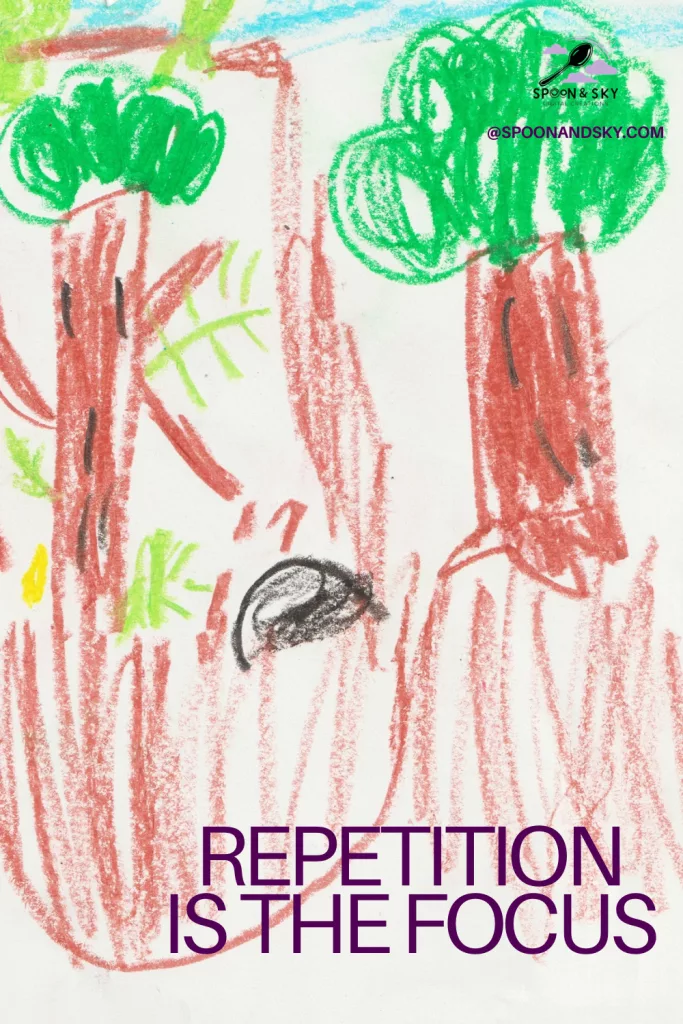
If your child draws the same thing repeatedly — a monster, a house, a rainbow, a character, a symbol — it’s not just habit.
It is emotional processing.
Repetition can mean:
- They’re integrating a new experience
- They’re trying to understand something
- They’re exploring mastery
- They’re soothing themselves
- They’re exploring a recurring worry
- They’re replaying a story emotionally
- They’re expressing a part of themselves safely
Children repeat what matters.
Creativity becomes their rehearsal space.
This is why repeated drawings or repeated play (building the same tower every day, reenacting the same story, drawing the same face) should never be dismissed.
Repetition is emotional integration in action.
3. Scale — The Size of the Feeling
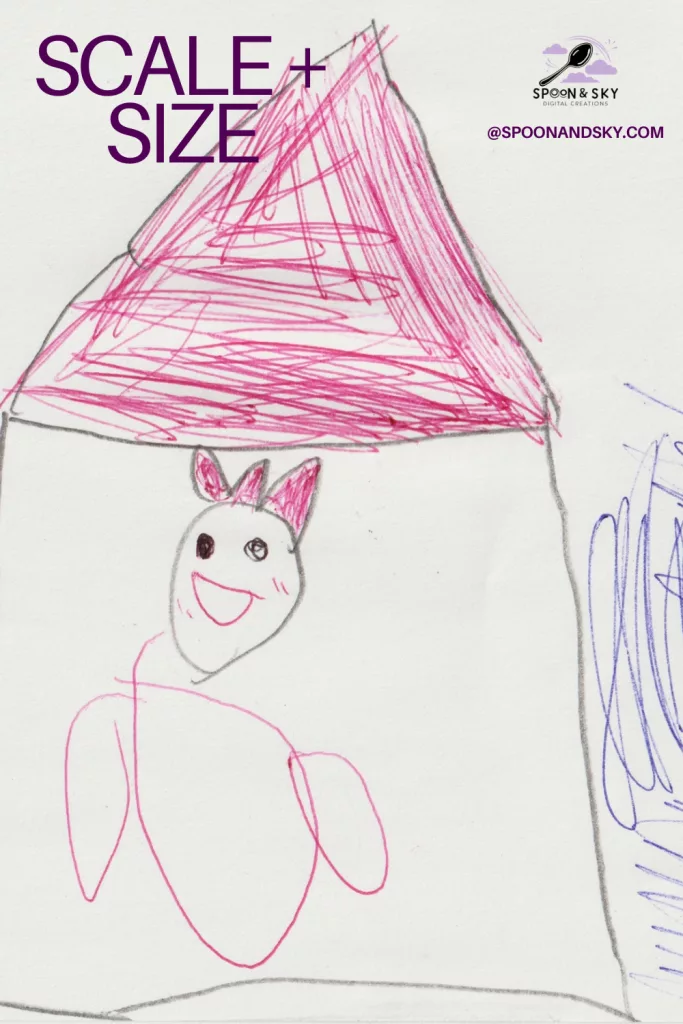
The size of a child’s creation often tells you about the size of the emotion attached to it.
🌱 Very small drawings or tiny characters can signal:
- wanting safety
- wanting containment
- feeling small in a big world
- needing control
- hesitancy or shyness
- emotional caution
Small drawings whisper: “Handle me gently.”
🌋 Very big drawings or huge strokes can signal:
- excitement
- overwhelm
- big emotional energy
- sensory overflow
- a need for physical expression
- enthusiasm bursting out
Big drawings share: “I have more inside than I can hold.”
Remember:
You never need to label.
You simply observe.
“Your drawing is so tiny today.”
“Wow — this part is huge.”
Observation is connection.
Interpretation is optional.
4. The Stories They Tell — Emotional Metaphors
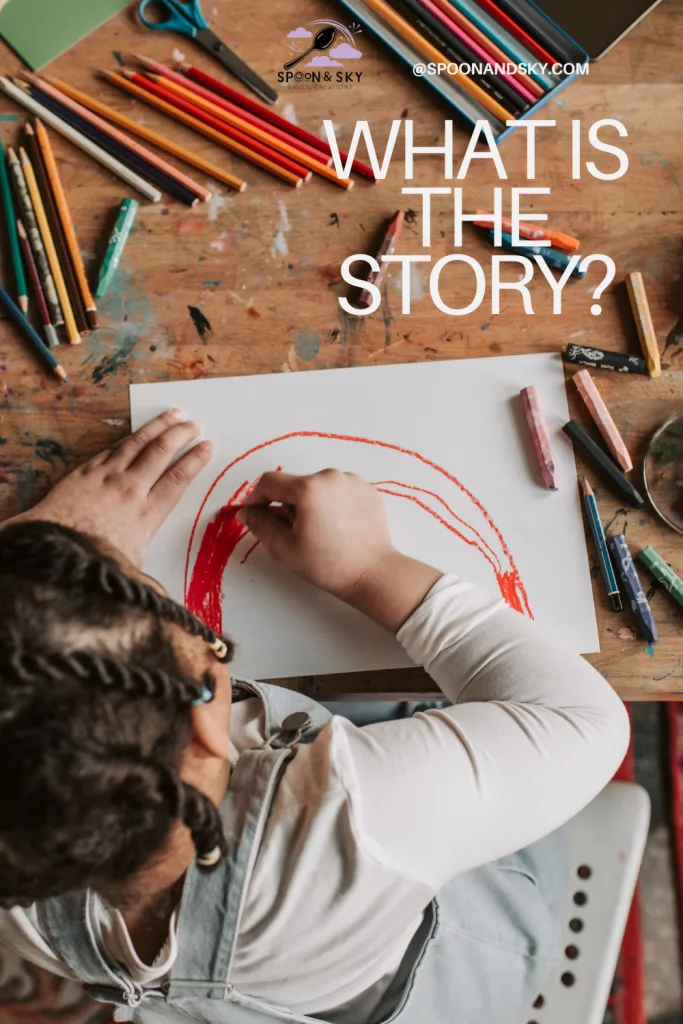
Children reveal their emotional world through the stories they tell:
- who the hero is
- who the villain is
- who gets rescued
- what the problem is
- how the problem is solved
- who is powerful
- who feels small
- who wins
- who escapes
- who feels scared
- who feels brave
These are emotional metaphors — their coping strategies disguised as imagination.
If a child keeps inventing a “small character who can’t climb the mountain,” there’s often a real-world equivalent.
If the villain keeps returning no matter what, something is unresolved.
If the hero transforms, grows, or finds help… that’s emotional progress.
To support them, ask:
“What happens next?”
This question opens the door for the child to reveal their inner coping strategy.
Often they tell you something profound without even realising it.
5. How They Draw — Movement as Emotion
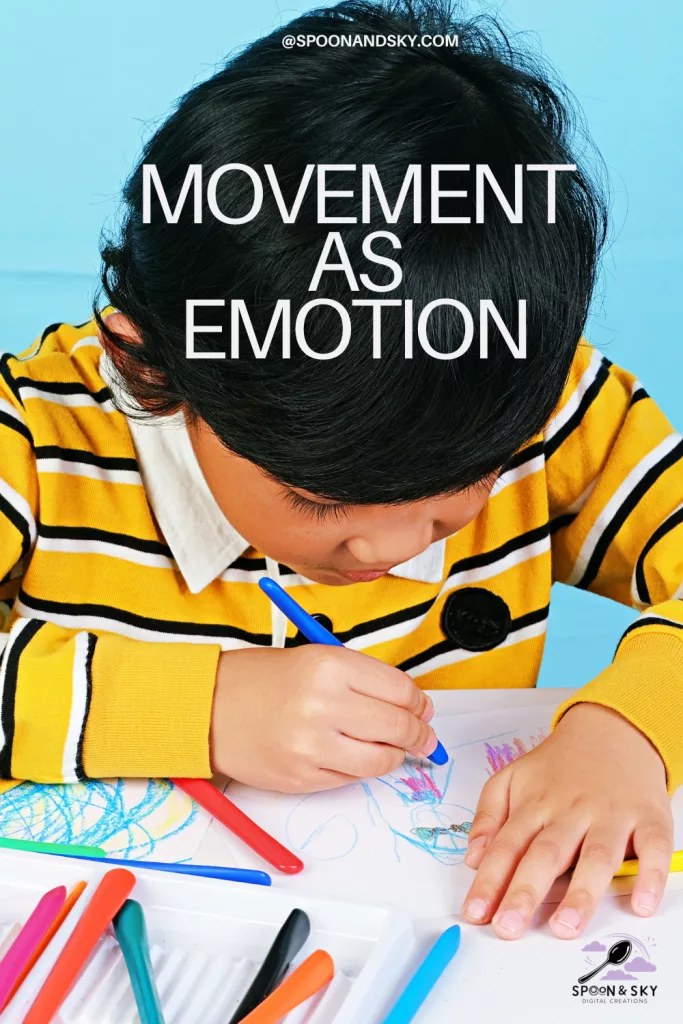
Children’s creative movements reveal more than the drawing itself.
Slow + careful strokes → focus, regulation, contentment
They are grounded.
Their nervous system is settled.
This is a window of calm.
Fast + big strokes → emotional release
The child is letting something out:
energy, frustration, anxiety, excitement, overwhelm.
Scribbles → processing energy or frustration
Not “mess.”
Never meaningless.
Scribbling is emotional expression in its purest form.
These movements help the child regulate what they can’t put into words.
Your job isn’t to correct.
It’s to witness.
3 Simple Ways to Support Your Child’s Emotional Creativity
These three approaches transform how seen, safe, and supported your child feels — without interpreting or analysing their creations.
1. Reflect Without Judging
Instead of:
“What is that supposed to be?”
or
“Good job!”
Use neutral, observational language:
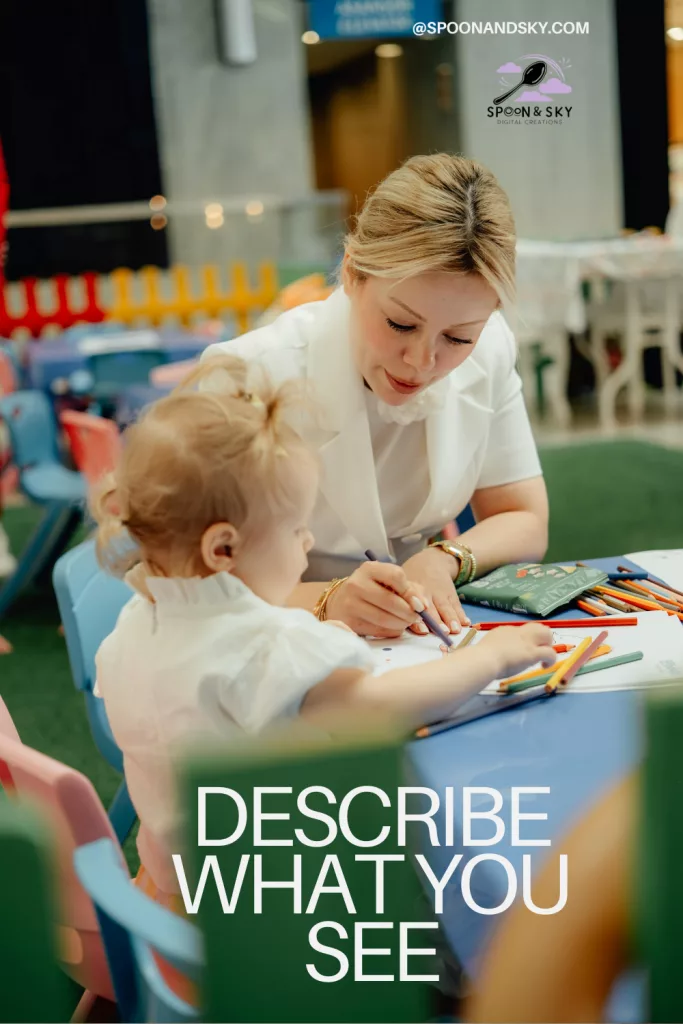
“I notice you used lots of green.”
“This part looks very detailed.”
“You made so many tiny lines here.”
This is powerful because:
- It shows you’re paying attention
- It avoids evaluation
- It validates effort
- It allows the child to feel seen without pressure
- It strengthens trust and emotional openness
2. Invite Them to Share (Without Pressure)
A gentle, open-ended question encourages expression:
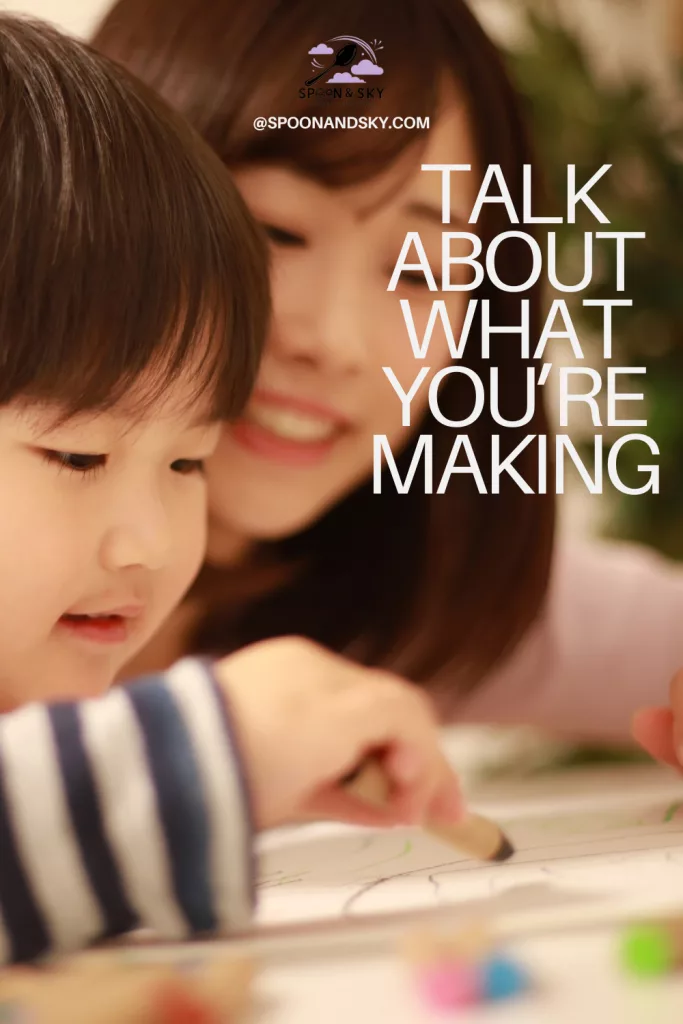
“Tell me more about this shape.”
or
“What’s happening here?”
Ask once.
Then pause.
Silence is a space children fill naturally if they want to.
Some days they’ll talk.
Some days they won’t.
Both are okay.
You are inviting connection, not forcing it.
3. Create Beside Them — Not Above Them
This is one of the most powerful parenting tools:
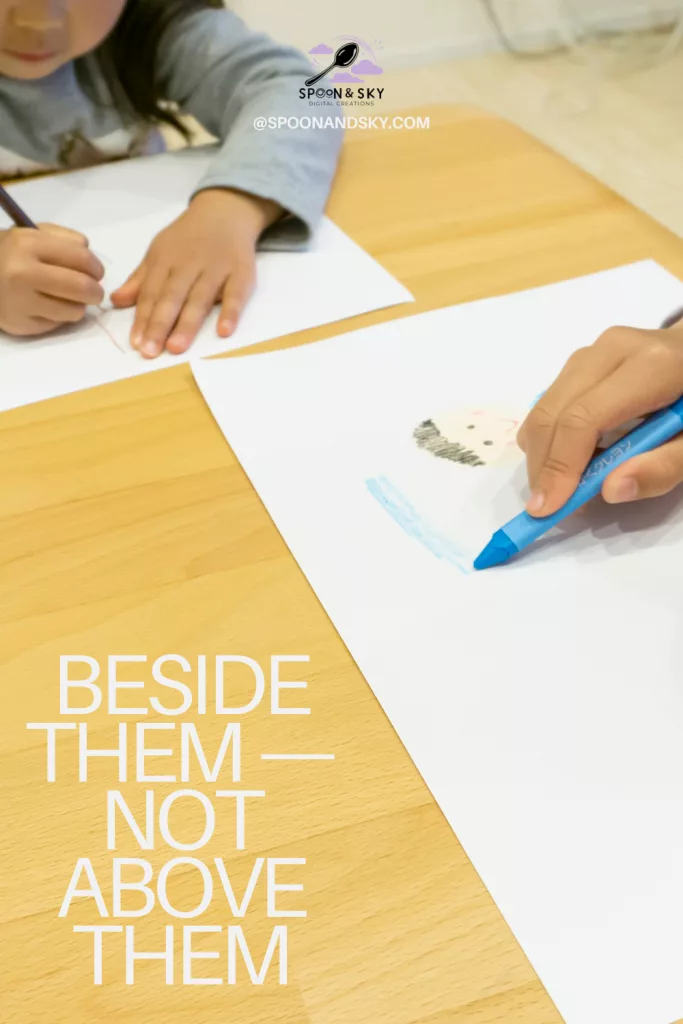
Create beside your child.
Not teaching.
Not correcting.
Not instructing.
Just creating alongside them.
Your presence becomes the emotional bridge.
When they see you draw, scribble, fold, colour, or doodle, they feel:
- safe
- curious
- connected
- invited
- regulated
- not alone
You don’t have to make anything “good.”
You just have to be there.
Children follow emotional energy, not artistic skill.
Want a Simple Way to Begin?
Start with something effortless.
Download the free Creative Moments Kit and begin in under five minutes.
It includes:
- 10 printable creative prompt cards
- a seasonal sampler
- a 1-page guide to understanding your child through creativity
- simple ways to add micro-moments into your routine
This is creativity made simple.
Connection made easy.
Parenting made softer.
With understanding, warmth, and a hand on your shoulder,
Lily Luz — Spoon & Sky


✨ Get Your Free Printable ✨
Looking for a simple way to bring a little more calm, structure, or creativity into your day?
Enter your email below and get instant access to your free printable from Spoon & Sky — made to spark joy, imagination, and gentle rhythms at home. 🌿
We’ll send your printable and a few kind, helpful ideas to your inbox. No spam — just calm, creative family tools.
Leave a Reply