
If you’ve ever noticed your child completely absorbed in stacking blocks, twirling around in a cape, or quietly flipping through a book, you’ve witnessed the power of play stations.
Play stations are simply zones — small, intentional spaces that encourage kids to dive deep into different types of play. They don’t require fancy playrooms or Pinterest-worthy makeovers. With a little planning and a few smart anchors (like a table, mat, or basket), you can create play stations in any corner of your home.
For children ages 3–8, these stations help balance their energy, spark creativity, and reduce the “I’m bored” blues. Let’s explore the categories that make a great play area — plus simple ways to bring them to life in real homes.
Why Play Stations Work
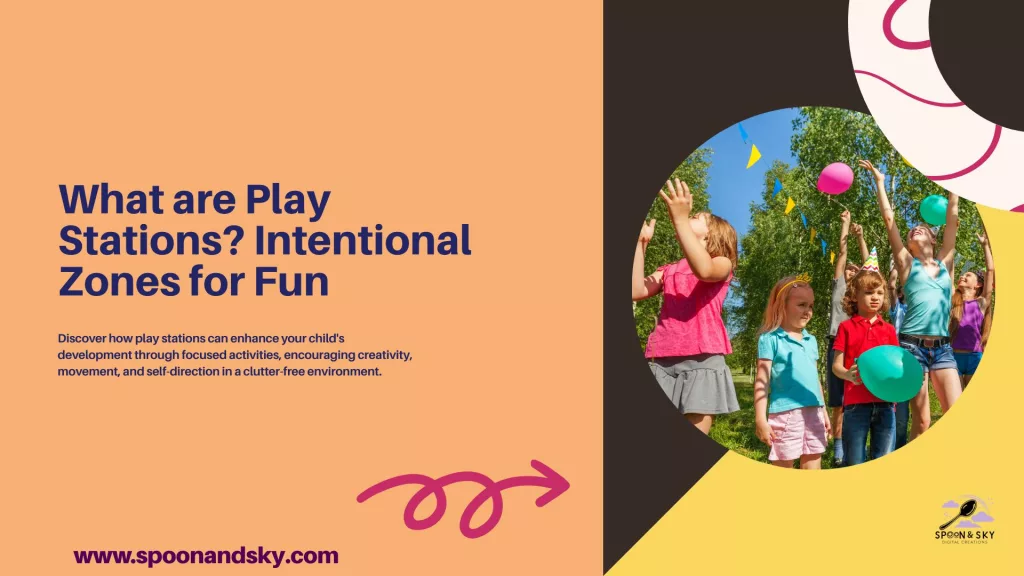
Play stations encourage kids to:
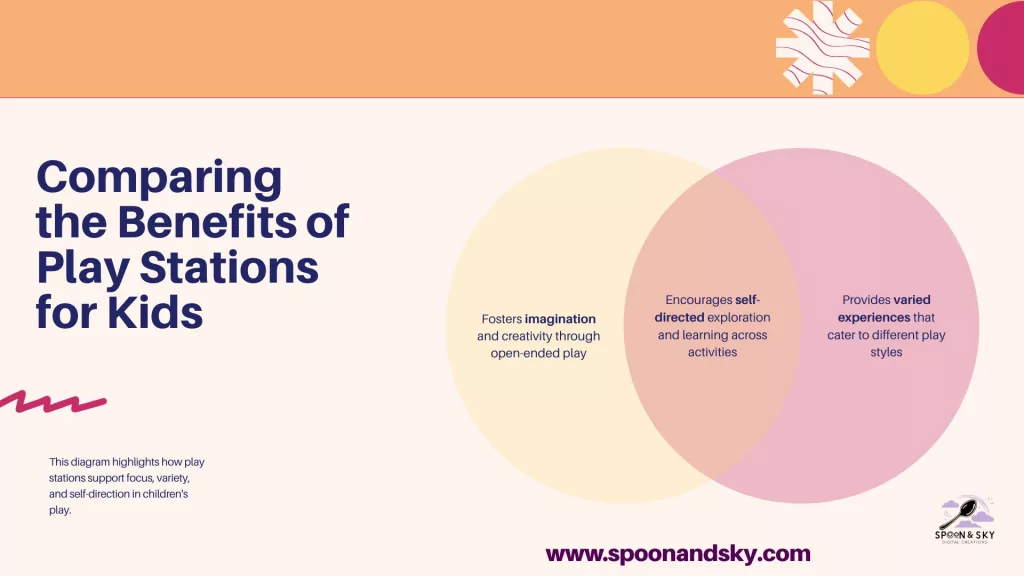
- Focus: Clear boundaries help kids settle into an activity longer.
- Explore variety: Stations offer different kinds of play — active, calm, creative, imaginative.
- Self-direct: Kids learn independence by moving between stations on their own.
- Keep clutter contained: Toys and activities can have a “home” instead of being spread everywhere.
And for parents? Stations make it easier to guide play, manage messes, and keep balance between high-energy activities and calming ones.
Core Play Station Categories
Here are five tried-and-true play zones that work beautifully for kids ages 3–8.
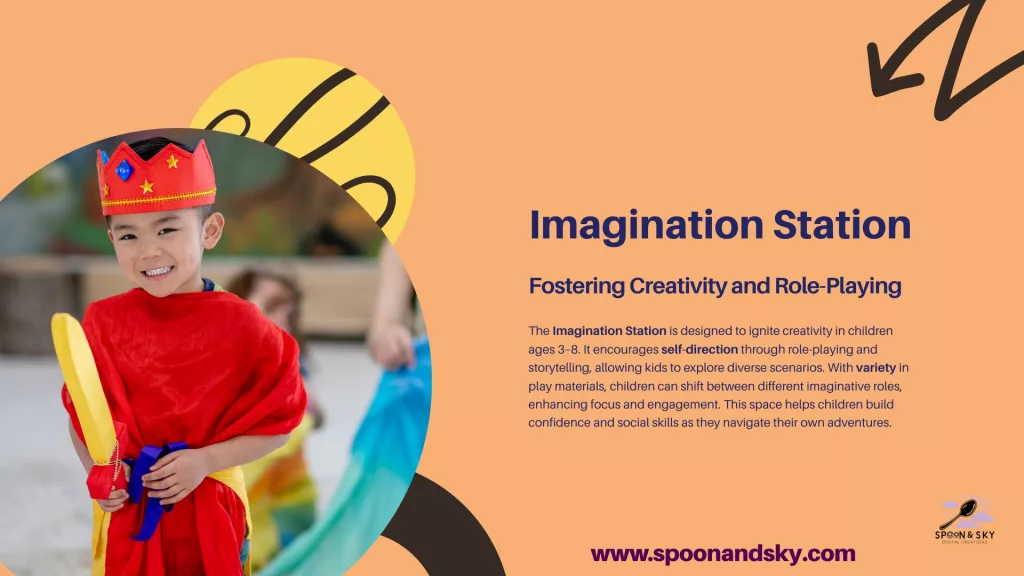
1. Imagination Station
What it is: A space for role-play and pretend adventures.
What to include:
- Dress-up costumes (capes, hats, scarves, vests — thrift stores are treasure troves).
- Pretend play props: play kitchen, doctor kit, tool set, magic wands, dolls.
- Accessories to spark scenarios: play food, grocery bags, cardboard boxes for “cars” or “spaceships.”
Anchor idea: A dress-up rack or a trunk keeps costumes tidy. Even a single basket with props can spark big play.
💡 Tip: Rotate costumes or props by theme — chef week, superhero week, explorer week.
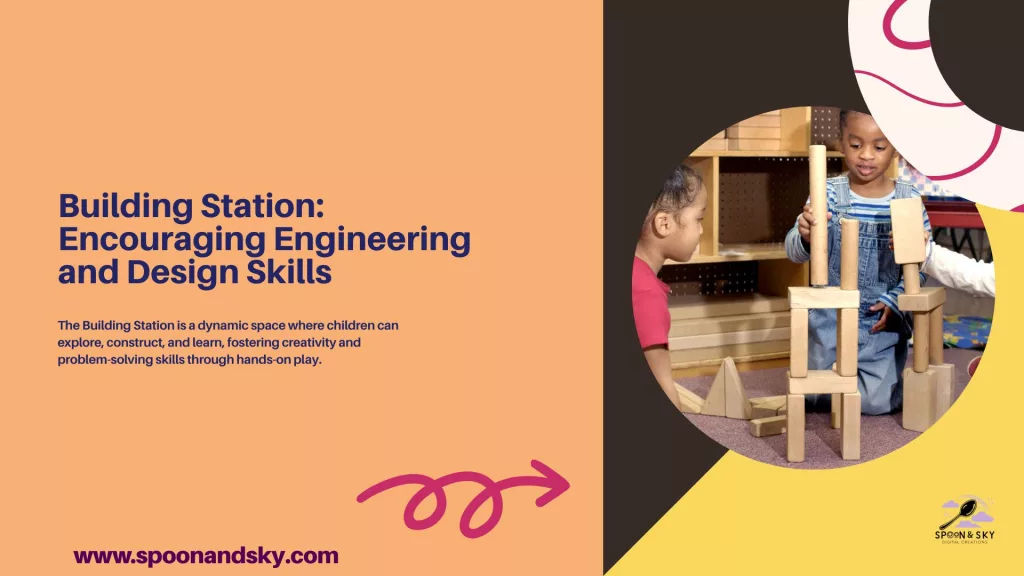
2. Building Station
What it is: A zone for constructing, stacking, designing, and problem-solving.
What to include:
- Building blocks (wooden, Lego, magnetic tiles, Duplo).
- Train tracks or marble runs.
- Small-world play figures to complement structures.
Anchor idea: Use a playmat, low table, or even a large tray as a boundary so blocks don’t sprawl across the room.
💡 Tip: Add picture books or challenge cards nearby for building inspiration.
3. Calm Corner
What it is: A cozy nook for rest, quiet, and emotional reset.
What to include:
- A basket of books (rotate regularly).
- Soft seating (pillows, beanbags, cushions).
- Comfort items like soft toys or blankets.
- Optional extras: a nightlight, sensory bottles, or noise-reducing headphones.
Anchor idea: Use a rug, canopy, or tent to visually define the space and make it feel special.
💡 Tip: Encourage kids to use the calm corner as a self-soothing tool, not a “time out.”
4. Craft & Creative Station
What it is: A spot for messy, hands-on expression.
What to include:
- Crayons, markers, paints, chalk, paper rolls, coloring books.
- Stickers, stamps, tape, child-safe scissors, glue sticks.
- Optional extras: clay, playdough, beads.
Anchor idea: A small table or even a mat on the floor sets a clear boundary for “messy play.” Keep supplies in labeled bins, trays, or mesh folders.
💡 Tip: Store supplies in a caddy or rolling cart so you can tuck them away when not in use.
5. Movement Zone
What it is: A safe area for kids to wiggle, stretch, and burn off energy.
What to include:
- Playmat, tumbling mat, or open floor space.
- Indoor movement tools: hula hoop, jump rope, balance beam (or tape line).
- Optional extras: tunnel, mini trampoline, yoga cards.
Anchor idea: Outdoors? A section of the yard works. Indoors? A rolled-up mat you can bring out when needed defines the zone without taking over the room.
💡 Tip: Use music for dance parties or simple challenges (“hop like a bunny,” “balance on one foot”).
Making Play Stations Work in Small Spaces
Not everyone has a spare playroom — and the good news is, you don’t need one. Here’s how to create stations in apartments, small homes, or shared spaces:
- Think vertical: Use wall hooks, shelves, or over-the-door organizers for costumes, books, or supplies.
- Use anchor points: A table, rug, or mat signals “this is the play space” even if it’s in the living room.
- Multi-use furniture: Ottomans, benches, or storage cubes double as seating and toy storage.
- Rolling carts: Move stations in and out as needed.
- Fold-away props: Pop-up tents, collapsible tunnels, or nesting bins keep things flexible.
💡 Tip: Even a single basket or tray can define a station. For example, a tray with crayons and paper instantly becomes a craft station.
Balancing the Stations

Play is richer when kids can move between different modes:
- After high-energy play in the movement zone, they might naturally gravitate toward the calm corner.
- Pretend cooking in the imagination station often leads to building a “restaurant” in the building zone.
- Craft time sparks storytelling that can flow into pretend play.
Encourage your child to explore freely while gently guiding them to balance active, creative, and calming play.
Extra Parent Hacks
- Label stations: Use photos or icons so kids can recognize where things go.
- Limit what’s out: Too many materials in one station can overwhelm (pair with toy rotation hacks).
- Set rhythms: Some families create a “morning station” (movement or building) and a “wind-down station” (calm corner or books).
- Join in: Even five minutes of shared play can model how to use a station and deepen your child’s engagement.
Why Play Stations Matter
Play stations aren’t just about neat spaces — they’re about nurturing children’s growth.
- Imagination stations build social and emotional intelligence.
- Building stations strengthen problem-solving and spatial awareness.
- Calm corners help kids regulate big feelings.
- Craft zones encourage creativity and fine motor skills.
- Movement spaces support physical health and coordination.
Together, they form a balanced ecosystem of play — helping kids grow into confident, curious, and resilient little humans.

Conclusion: Creating Spaces that Grow with Your Child
You don’t need a huge house or expensive toys to set up play stations. All it takes is a little intention, a few anchor points, and some creativity.
Over time, these zones will evolve with your child — from toddler dress-up corners to school-age reading nooks. The key is flexibility and balance.
So start small: maybe a basket of costumes by the couch, a building tray under the coffee table, or a cozy pillow pile by the bookshelf. Watch how your child lights up when they realize the whole house is a playground waiting to be discovered.
With zones for joy, calm, and creativity,
Lily.


✨ Get Your Free Printable ✨
Looking for a simple way to bring a little more calm, structure, or creativity into your day?
Enter your email below and get instant access to your free printable from Spoon & Sky — made to spark joy, imagination, and gentle rhythms at home. 🌿
We’ll send your printable and a few kind, helpful ideas to your inbox. No spam — just calm, creative family tools.
Leave a Reply