
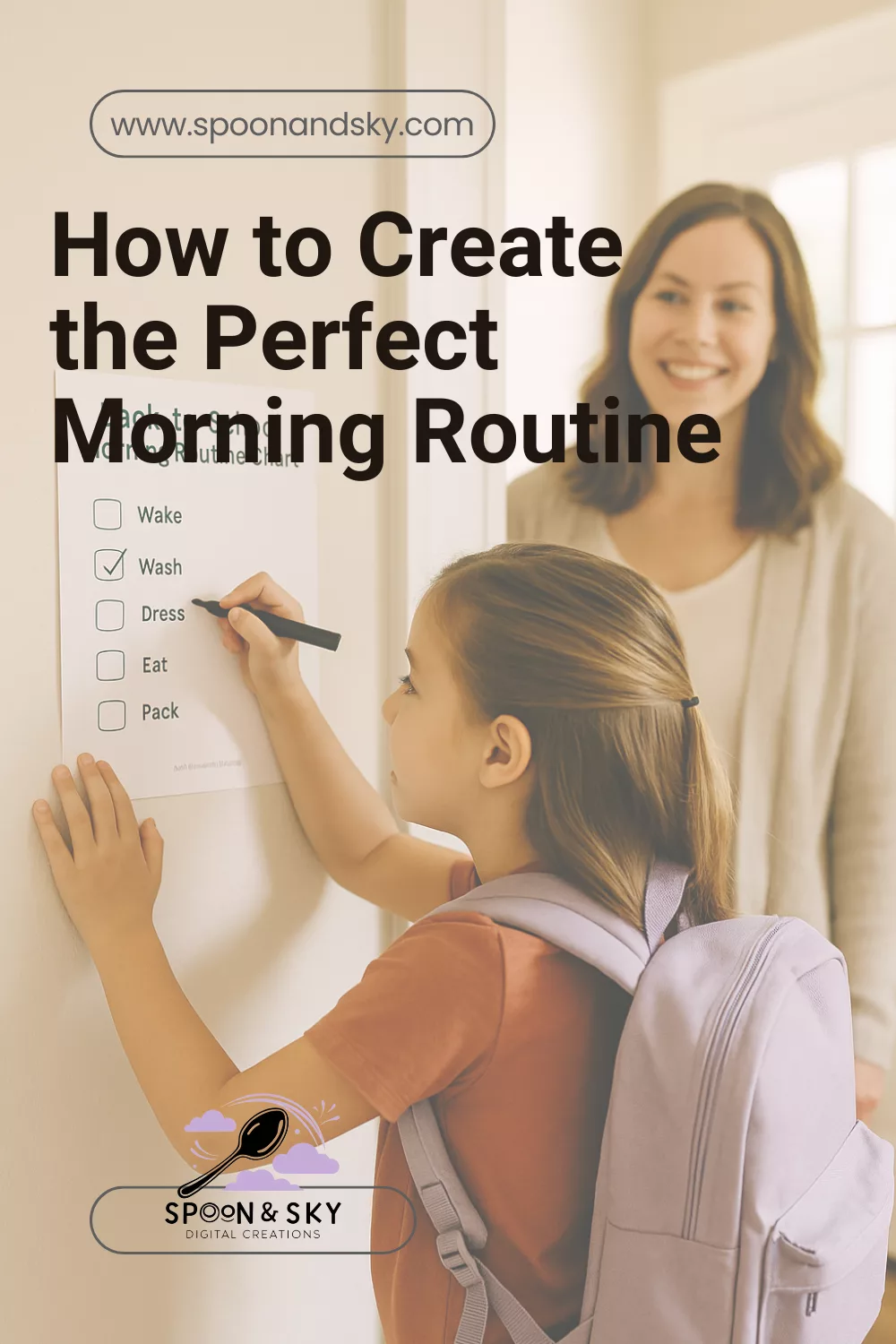
Mornings Don’t Have to Be a Rush of Lost Shoes and Missing Lunchboxes

The alarm goes off. Someone yells that they can’t find their left shoe. The cereal box spills across the counter. You glance at the clock, knowing you should have left five minutes ago, but the lunchbox is still empty. By the time you make it out the door, you’re sweaty, frazzled, and already wishing it were bedtime.
Sound familiar? You’re not alone. Back-to-school mornings are one of the biggest stress points for families. But here’s the good news: mornings don’t have to feel like a chaotic race.
For kids ages 3–8, visual routines can turn the rush into rhythm. With a simple printable chart, children know what to do, when to do it, and — best of all — they begin to feel proud of doing it themselves.
And for parents? It means fewer reminders, less nagging, and maybe even a hot sip of coffee before school drop-off.
Why Visual Routines Work for Kids 3–8

Young kids are natural dreamers, not natural timekeepers. They live in the moment: building towers, singing songs, asking big questions. That’s wonderful — but when you need them dressed and out the door at 8:00 a.m., it’s tricky.
A visual routine bridges the gap between a child’s imagination and the day’s practical needs. Here’s why they work so well:
- Clear expectations: Kids can see the steps, which removes guesswork.
- Independence: They don’t need constant reminders — the chart “tells” them what’s next.
- Easier transitions: Moving from play to brushing teeth is smoother when it’s part of a routine, not a surprise.
- Less conflict: Parents shift from “the nag” to “the coach.” The chart becomes the “boss.”
- Skill building: Visual routines support sequencing, early literacy, and self-regulation.
💡 Parent insight: Many teachers use visual schedules in classrooms because they help kids focus and transition smoothly. Bringing this tool home creates consistency between school and family life.
Step-by-Step Morning Rhythm

Every family’s morning looks different, but kids thrive when steps stay consistent. A predictable order helps them move through the morning without constant battles. Here’s a rhythm that works beautifully for ages 3–8:
1. Wake & Stretch
- Gently wake your child with a cuddle, song, or soft light.
- Encourage a quick stretch or yawn to help the body “wake up.”
2. Wash Up
- Bathroom trip: toilet, teeth brushed, face washed, hair brushed.
- Keep kid-friendly supplies at their height: a stool by the sink, a labeled basket for toothbrush and hairbrush.
3. Get Dressed
- Lay out clothes the night before to avoid the “I can’t find my socks” scramble.
- Give younger kids two outfit options so they feel empowered without being overwhelmed.
4. Eat Breakfast
- Keep it simple and predictable:
- Yogurt + fruit cups
- Whole-grain toast + peanut butter
- Overnight oats jars
- Smoothie prepped in the fridge
- A short list of “school morning foods” cuts down on decision fatigue.
5. Pack & Prep
- Lunchbox, water bottle, homework folder all into the backpack.
- Use a “launch pad” (a basket, cubby, or hook by the door) for items that go to school daily.
6. Shoes On & Ready to Go
- Keep shoes in one consistent spot. A low bin or shelf near the door works wonders.
- For young kids, add a photo label (“shoes here”) for visual reinforcement.
⏱️ Timing tip: Each step can be 10–15 minutes. Build in a little buffer so you’re not racing.
Adding Fun to the Routine

Routines don’t need to be rigid — they can feel playful and motivating. The more enjoyable it feels, the more kids want to participate.
- Sticker system: Kids add a sticker for each completed step. By Friday, the chart becomes a little “achievement board.”
- Check-off boxes: Use dry-erase markers on laminated charts for kids to tick boxes themselves.
- Morning affirmations: End with a positive phrase: “I am ready. I am strong. I’ll have a great day.”
- Music cues: Play a favorite 2-minute song for toothbrushing or a “get dressed” playlist for energy.
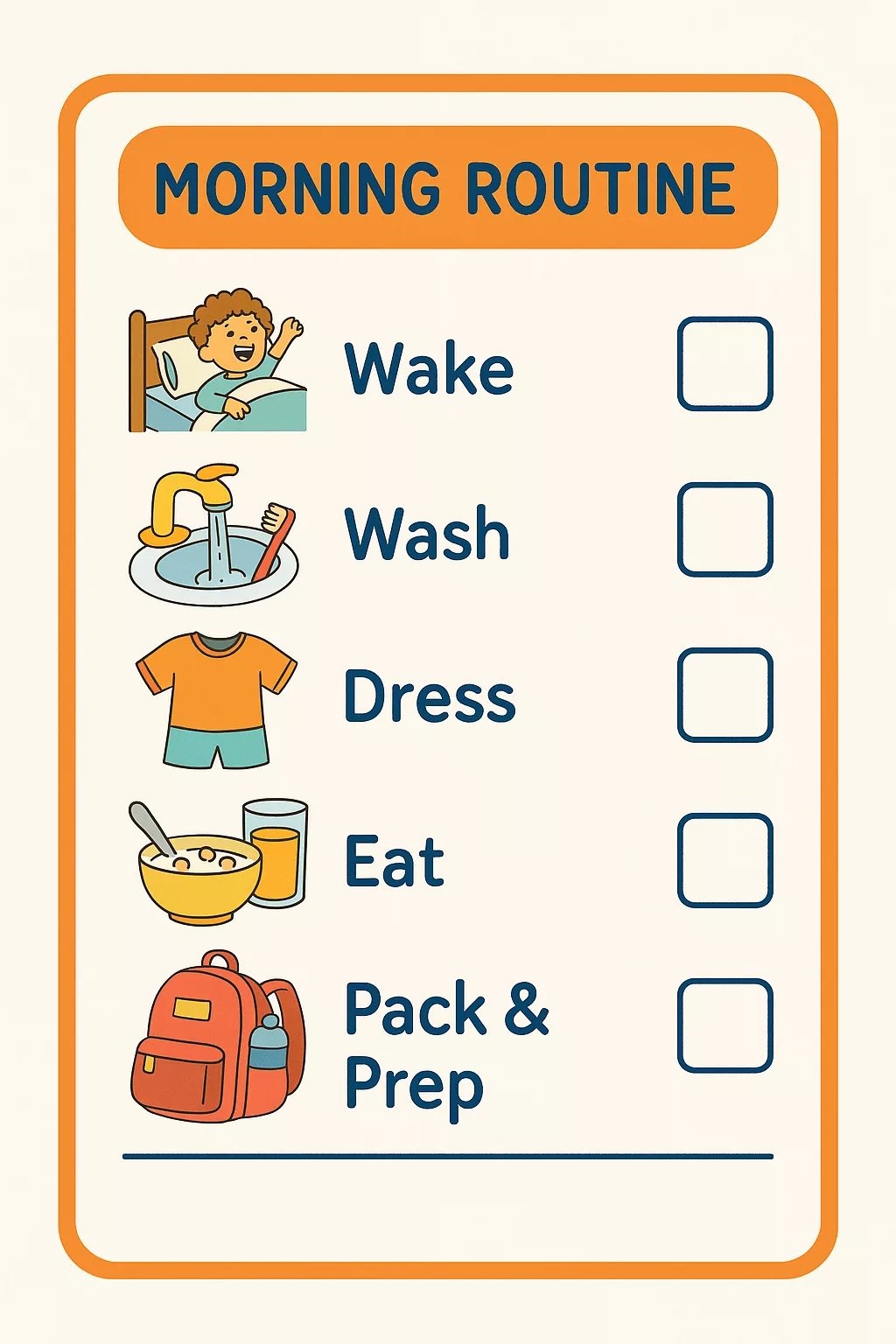
- Illustrated icons: Pictures of a toothbrush, shirt, bowl of cereal make the chart accessible for pre-readers.
💡 Pro tip: Let your child decorate their chart with stickers or colors — ownership makes them more likely to use it.
Tips for Parents: Keeping It Flexible

Here’s the truth: no chart will make mornings perfect. Kids spill milk. Permission slips get lost. Tempers flare. The goal isn’t perfection; it’s creating a rhythm that reduces stress most days.
- Build in buffer time. Plan to leave 5–10 minutes earlier than needed.
- Praise effort, not just completion. “I love how you started brushing without me asking!”
- Adjust for growth. Preschoolers might need picture charts; older kids can manage checklists.
- Expect setbacks. Rough mornings don’t mean the chart isn’t working — it’s about consistency over time.
- Keep it visible. Post charts at kid-eye level in the bathroom, kitchen, or by the door.
✨ Remember: routines are tools, not rules. They should support your family, not stress you out.
Free Printable Routine Chart
To make mornings even smoother, I’ve created a free Back-to-School Morning Routine Chart you can download and print at home. It’s bright, kid-friendly, and designed for ages 3–8.
- Includes simple icons for each step.
- Space for stickers, checkmarks, or affirmations.
- Flexible enough to adapt to your family’s flow.
👉
Print one for each child, laminate for reuse, or stick on the fridge as a family “morning command center.”
Reflection for Parents
Take a moment to reflect:
- Which part of the morning creates the biggest stress (clothes, breakfast, finding items)?
- What can you prep the night before to reduce that stress?
- How can you give your child more ownership (checking off, decorating the chart)?
When kids feel empowered to follow their own chart, mornings shift from nagging and chasing to confidence and calm.

Conclusion: Starting the Day with Calm & Connection
Back-to-school mornings don’t need to be chaos wrapped in cereal boxes and missing shoes. With a simple printable chart, children gain independence, parents stress less, and the day begins with connection instead of conflict.
It’s not about perfect mornings — it’s about predictable, playful habits that create calmer starts and happier days.
So tomorrow, instead of rushing and repeating yourself, point to the chart, pour your coffee hot, and let your child take the lead.
With backpacks by the door and stickers on the chart,
Lily.


✨ Get Your Free Printable ✨
Looking for a simple way to bring a little more calm, structure, or creativity into your day?
Enter your email below and get instant access to your free printable from Spoon & Sky — made to spark joy, imagination, and gentle rhythms at home. 🌿
We’ll send your printable and a few kind, helpful ideas to your inbox. No spam — just calm, creative family tools.
Leave a Reply