
Introduction: When Homework Time Feels Like Herding Cats

The scene is familiar in many homes: the backpack gets dumped on the floor, papers scatter like autumn leaves, and someone is already whining, “I can’t do it!” Meanwhile, the TV hums in the background, a sibling is singing loudly, and the dining table is buried under crayons, snack bowls, and laundry.
Homework time can quickly spiral into a battle — and not because kids don’t want to learn. Often, it’s because they don’t have a space that helps them focus, settle, and feel confident.
The good news? You don’t need a Pinterest-worthy study room to fix this. With a few thoughtful tweaks, you can create a calm, organized homework station that makes after-school routines smoother — whether it’s a cozy corner, a kitchen table setup, or a portable caddy.
Let’s walk through simple, practical ways to set up a space your child will actually enjoy using.
Why Kids Need a Dedicated Homework Spot
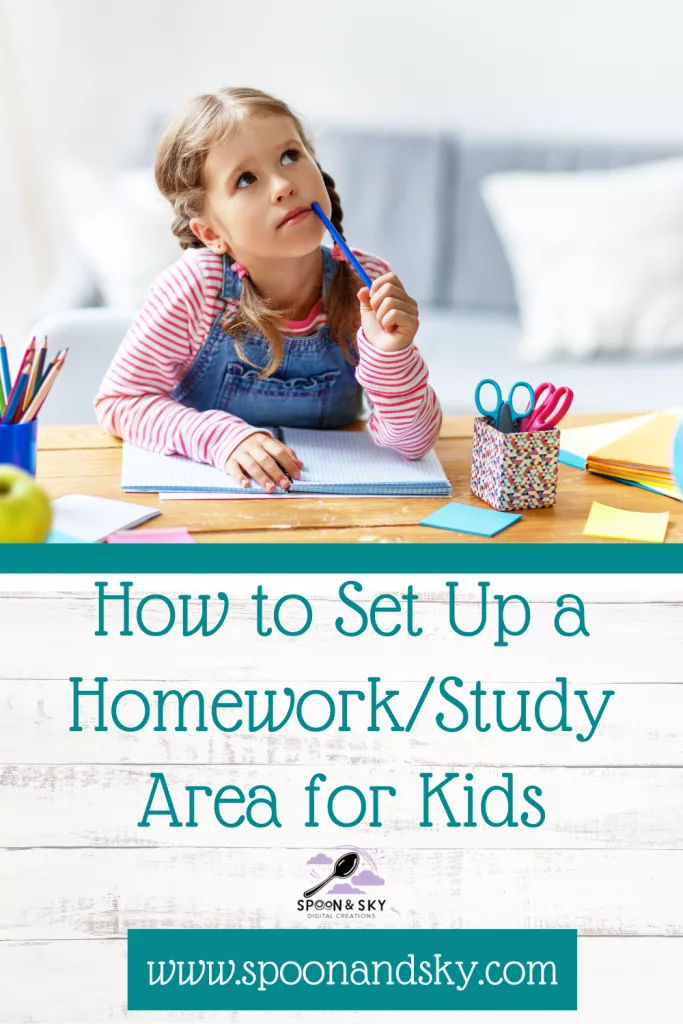
For children ages 3–8, routines and environments send powerful signals. When they have a dedicated space for homework, their brain learns to associate that space with focus and calm.
Here’s why a homework station helps:
- Predictability = comfort. Kids thrive on routine. Sitting in the same spot every day reduces resistance.
- Fewer distractions. A designated area signals “this is homework time,” not “playtime.”
- Confidence builder. Kids feel proud having a special space just for their “big kid” work.
- Boundaries for clutter. Supplies and papers stay contained instead of spreading through the house.
💡 Think of it like a bedtime routine for the brain — a homework station is the cue that it’s time to switch gears.
The Essentials of a Homework Station
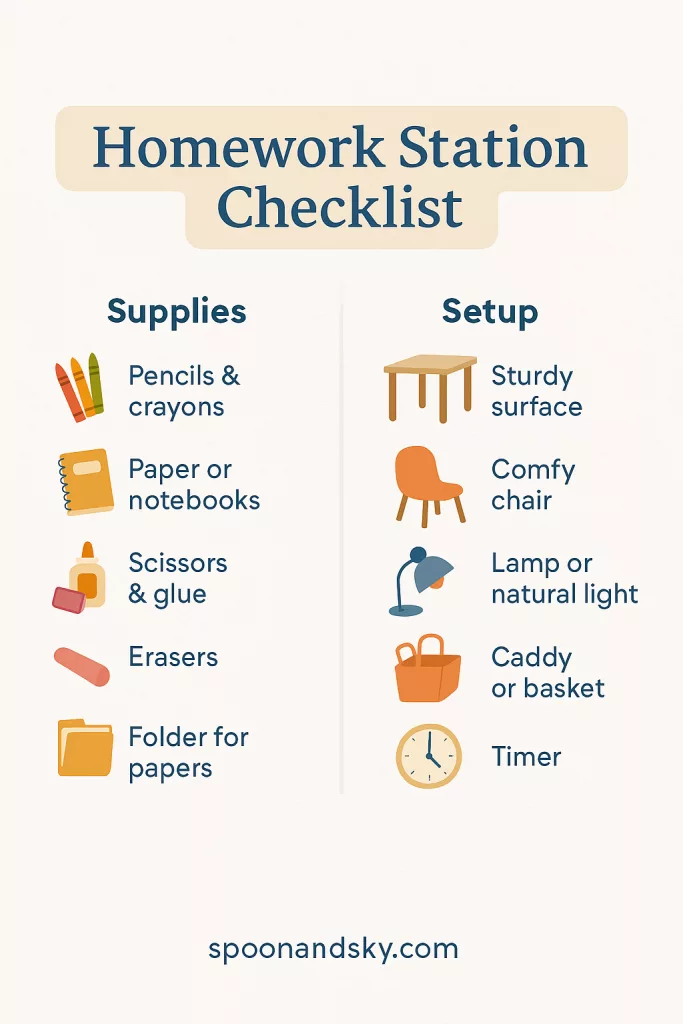
A homework station doesn’t have to be fancy or expensive. Start with the basics:
1. A Sturdy Surface
- A child-sized desk, a small table, or even a repurposed corner of the dining table.
- Add a desk mat or placemat to define the space if it’s shared.
2. Comfortable Seating
- A supportive chair (no wobbly stools).
- Feet should touch the floor or a footrest — it makes a huge difference for focus.
3. Good Lighting
- Natural light if possible.
- Otherwise, a small desk lamp with a warm bulb. Bright enough to prevent squinting, cozy enough to feel inviting.
4. Supplies Within Reach
- Pencils, crayons, scissors, glue sticks, erasers.
- A stack of plain paper or notebooks.
- For older kids: rulers, calculators, highlighters.
5. Simple Storage
- Baskets or caddies for supplies.
- A folder or mesh file for papers (in-progress, completed).
- A drawer, shelf, or labeled bin nearby to reduce clutter.
✨ Tip: Keep extras stocked out of sight. Handing kids one sharp pencil feels less overwhelming than staring at a jar of 50.
Organization Hacks Parents Swear By
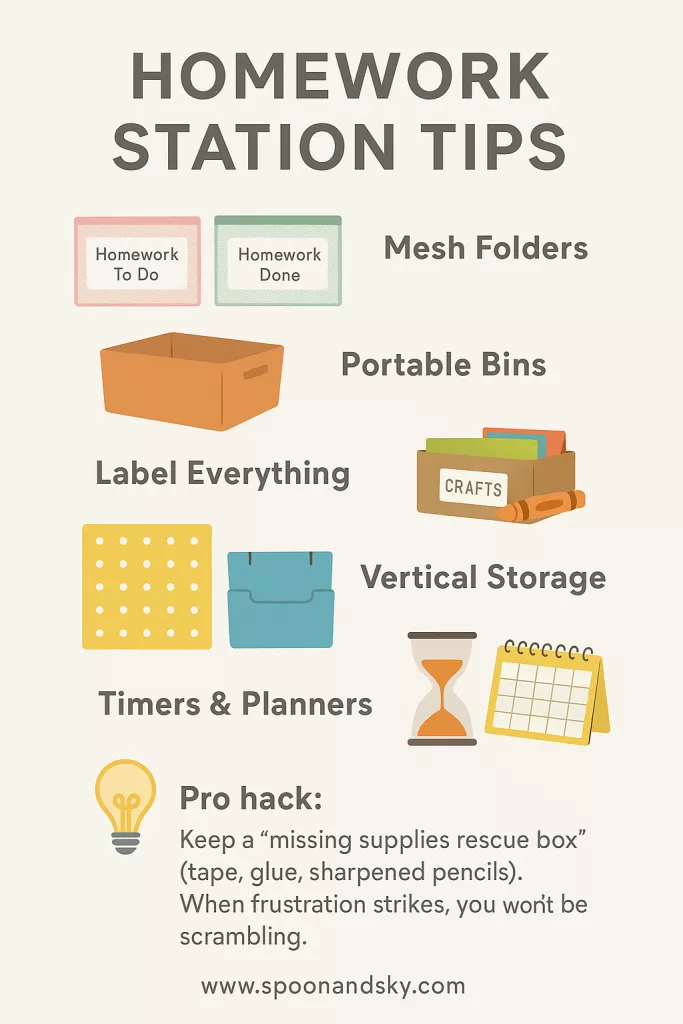
Once the basics are in place, these little systems make all the difference:
- Mesh folders: Label for “Homework To Do” and “Homework Done” — helps kids learn responsibility.
- Portable bins: If homework happens at the kitchen table, use a bin or basket that comes out at homework time and tucks away after.
- Label everything: Use pictures or color-coding for younger kids who can’t read yet.
- Vertical storage: Pegboards, hanging file folders, or wall organizers keep the surface clear.
- Timers & planners: A simple sand timer or visual clock can help with time awareness.
💡 Pro hack: Keep a “missing supplies rescue box” (tape, glue, sharpened pencils). When frustration strikes, you won’t be scrambling.
Adding Calm & Focus Cues
Homework is about more than pencils and paper — it’s about creating an environment that helps kids focus.
- Visual timers: A 15-minute sand timer or child-friendly clock shows time passing in a tangible way.
- Noise management: Some kids focus best with quiet, others with gentle background. Try soft instrumental music, white noise, or noise-reducing headphones.
- Sensory helpers: A stress ball, fidget toy, or small weighted lap pad can calm busy hands and bodies.
- Personal touches: A framed drawing, motivational phrase (“I can do hard things”), or small plant makes the space feel cozy and theirs.
✨ Tip: Keep the space uncluttered. One or two personal items add charm without distraction.
Making It Flexible for Small Spaces
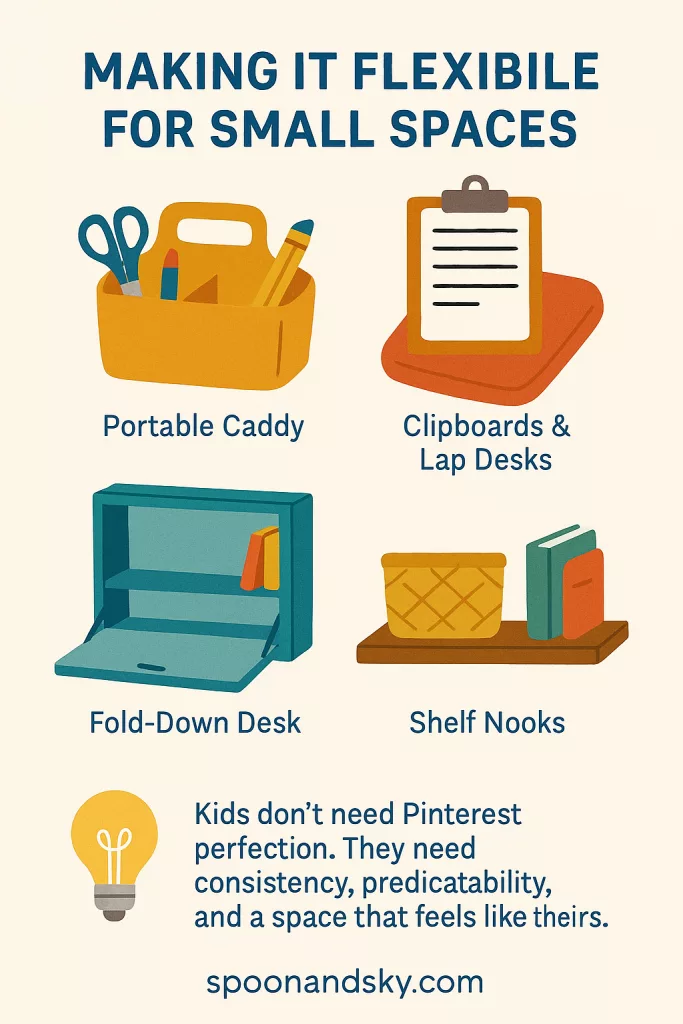
Not everyone has room for a desk — and that’s okay. Homework stations can be flexible:
- Portable caddy: Fill with supplies and move to wherever your child is working.
- Clipboards & lap desks: Great for cozy corners, beds, or couches.
- Fold-down desk: A wall-mounted fold-away desk creates a homework nook without taking up floor space.
- Shelf nooks: Clear a single shelf in a bookcase for homework supplies — sometimes all you need is a flat surface and a basket.
💡 Tip: Kids don’t need Pinterest perfection. They need consistency, predictability, and a space that feels like theirs.
Parent Tips for Smooth Homework Time
Even with the best setup, homework can still be tricky. These strategies keep things calm:
- Keep sessions short. Young kids focus best in 10–20 minute chunks.
- Add breaks. Wiggle dances, stretching, or a snack can reset energy.
- Avoid hovering. Be available but let kids attempt independently.
- Praise effort. “I love how hard you worked on that,” instead of focusing only on right answers.
- Visual checklist. Break tasks into steps: “Read → Answer → Check.” Crossing them off builds confidence.
- Snacks & water nearby. A hungry child = a distracted child.
✨ Mantra for parents: Progress, not perfection.
Reflection for Parents

Pause for a moment and ask yourself:
- Where does my child usually sit for homework? Does it help or hinder focus?
- What small tweak could reduce stress — a caddy, a lamp, a timer?
- How can I involve my child in setting up their space so they feel ownership?
Sometimes the smallest shift — like moving supplies into a labeled bin — makes the biggest difference.
Conclusion: Creating Calm, One Homework Station at a Time
Homework doesn’t have to mean meltdowns at the kitchen table. With a calm, organized space — whether it’s a full desk, a corner nook, or a portable bin — you’re giving your child the tools to focus, build independence, and feel confident in their learning.
And remember, it doesn’t have to look perfect. The goal isn’t matching organizers or color-coded shelves. The goal is creating a rhythm that supports your child, reduces stress, and makes after-school life a little more joyful.
So tonight, instead of dreading the homework battle, try setting up a calm corner with a few thoughtful touches. Watch how your child settles in — and how the whole family breathes a little easier.
With sharpened pencils in a jar and calm in the corner,
Lily.


✨ Get Your Free Printable ✨
Looking for a simple way to bring a little more calm, structure, or creativity into your day?
Enter your email below and get instant access to your free printable from Spoon & Sky — made to spark joy, imagination, and gentle rhythms at home. 🌿
We’ll send your printable and a few kind, helpful ideas to your inbox. No spam — just calm, creative family tools.
Leave a Reply