
Introduction: When Kids Just Need to Move
If you’ve ever watched your child bounce from couch to chair like a kangaroo on espresso, you know this truth: kids are wired to move. Movement isn’t just about “burning energy” — it’s how children process big feelings, strengthen their bodies, and explore the world.
But here’s the magic: when you combine movement with animal-inspired play, you add imagination, sensory stimulation, and laughter. Suddenly “jumping” isn’t just jumping — it’s frog hopping in a pond or slithering like a snake through the jungle.
For children ages 3–8, short bursts of movement throughout the day are more effective than long workouts. And when those bursts are tied to animals, they become instantly engaging. These simple prompts can:
- Help with focus and cooperation (“Let’s do 5 kangaroo jumps before homework”).
- Support sensory regulation (“Slither like a snake when your body feels wiggly”).
- Aid in bedtime readiness (“Stretch tall like a giraffe, curl small like a mouse”).
Let’s explore 10 animal play activities — each designed to get kids moving, laughing, and building sensory skills along the way.
1. Kangaroo Hops
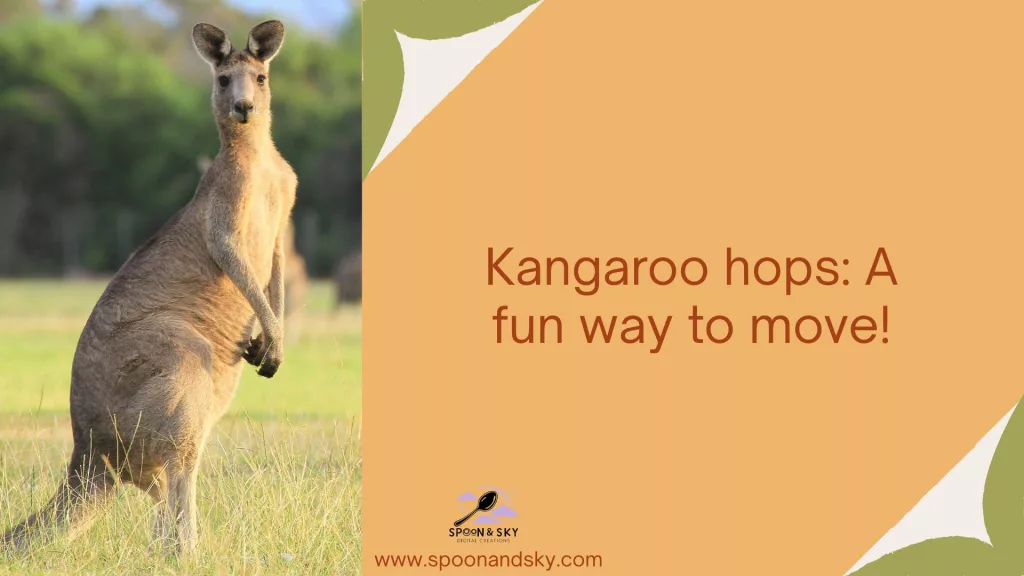
How to play: Kids squat low, tuck hands like paws, and hop forward in big, springy jumps.
Sensory benefit: Builds leg strength, balance, and proprioception (the body’s sense of where it is in space). The impact of landing gives grounding feedback to joints and muscles.
When to use:
- After long car rides or screen time to release wiggles.
- Before dinner to reset focus and cooperation.
Variation: Count how many “jumps to the food patch” it takes to reach the sofa or a set marker.
2. Slithering Snakes

How to play: Lie on the tummy, arms by the sides. Wiggle the whole body forward across the floor like a snake sliding in the grass.
Sensory benefit: Deep pressure and core engagement from moving against the ground. Calming for kids who need grounding.
When to use:
- Transition activity when shifting from playtime to quieter tasks.
- Pre-bed wind-down (slows the body).
Variation: Place a scarf or rope as a “log” and challenge snakes to slither under it.
3. Elephant Stomps
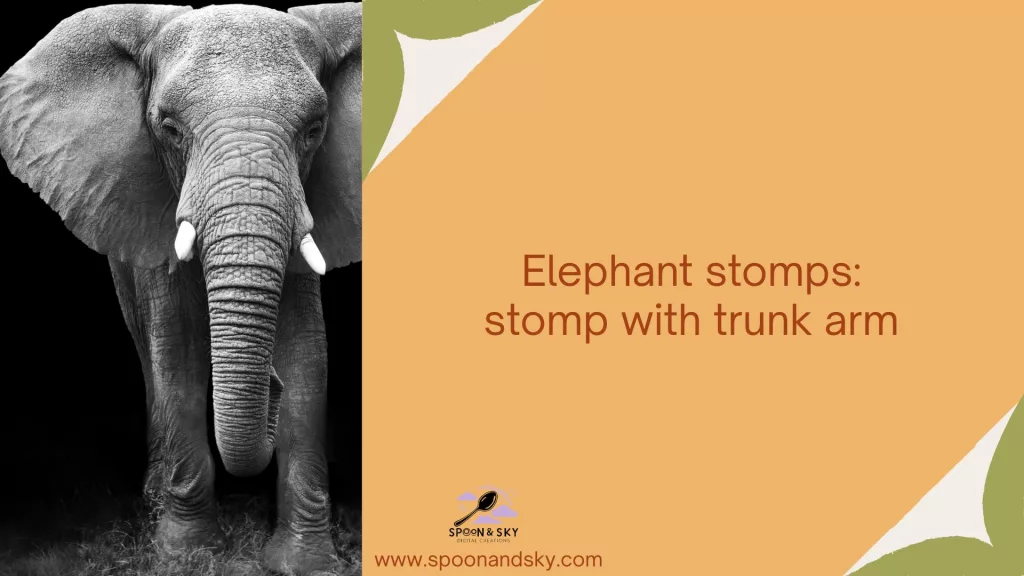
How to play: Swing one arm like a trunk and stomp heavy feet around the room. Add trumpet sounds for fun!
Sensory benefit: Provides strong proprioceptive input through stomping, which helps kids regulate big emotions. Boosts coordination by swinging arms and legs together.
When to use:
- After tantrums or big feelings to “stomp it out.”
- Midday movement break to re-energize.
Variation: March like a parade of elephants — slow, loud, and strong.
4. Butterfly Flutters
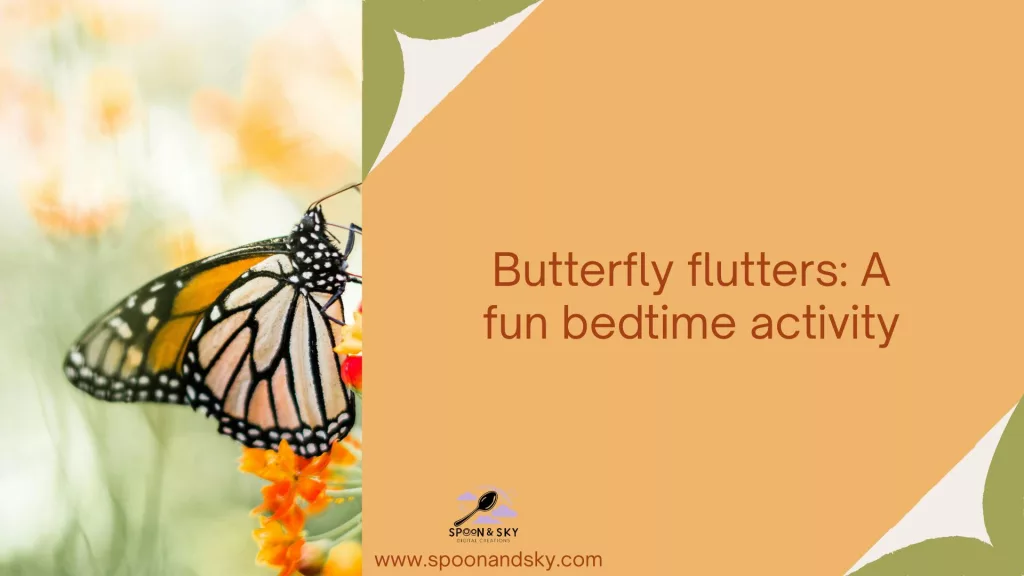
How to play: Sit on the floor with feet pressed together and knees bent out to the sides. Gently flap knees like wings. Add hand-flapping for extra fun.
Sensory benefit: Hip-opening stretch, calming rhythmic movement, bilateral coordination (both sides of body working together).
When to use:
- Bedtime routine (soothing before sleep).
- Calm-down corner activity when emotions are high.
Variation: Pretend to fly around the room slowly, landing on “flowers” (pillows).
5. Bear Crawls
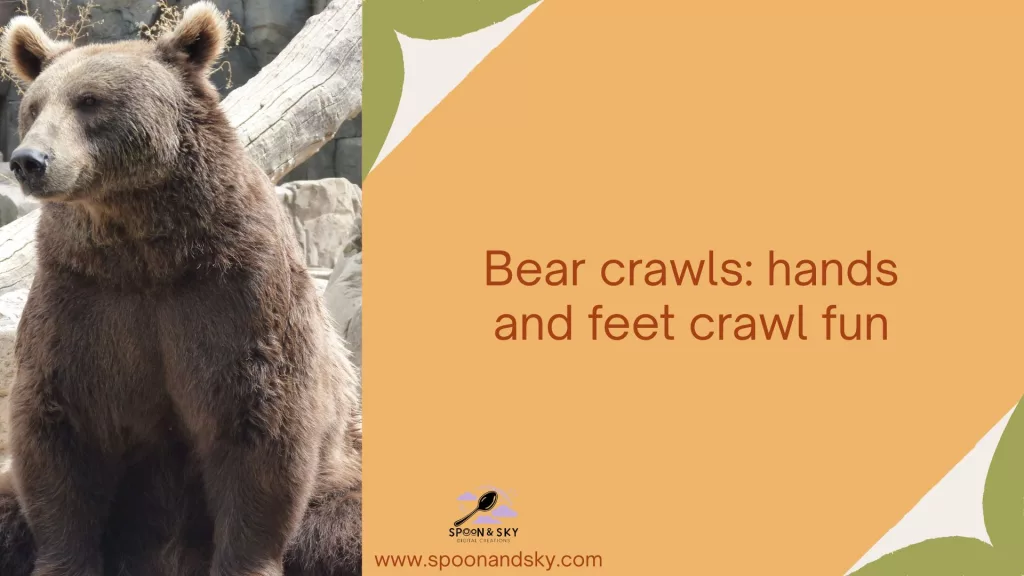
How to play: Walk on hands and feet with hips up, moving slowly like a lumbering bear.
Sensory benefit: Strengthens arms, shoulders, and core. Provides heavy work that organizes the nervous system and supports focus.
When to use:
- Before homework or table activities to boost alertness.
- Transition between activities (“crawl like a bear to wash hands”).
Variation: Create a “bear cave” (blanket fort) that kids crawl in and out of.
6. Giraffe Stretches
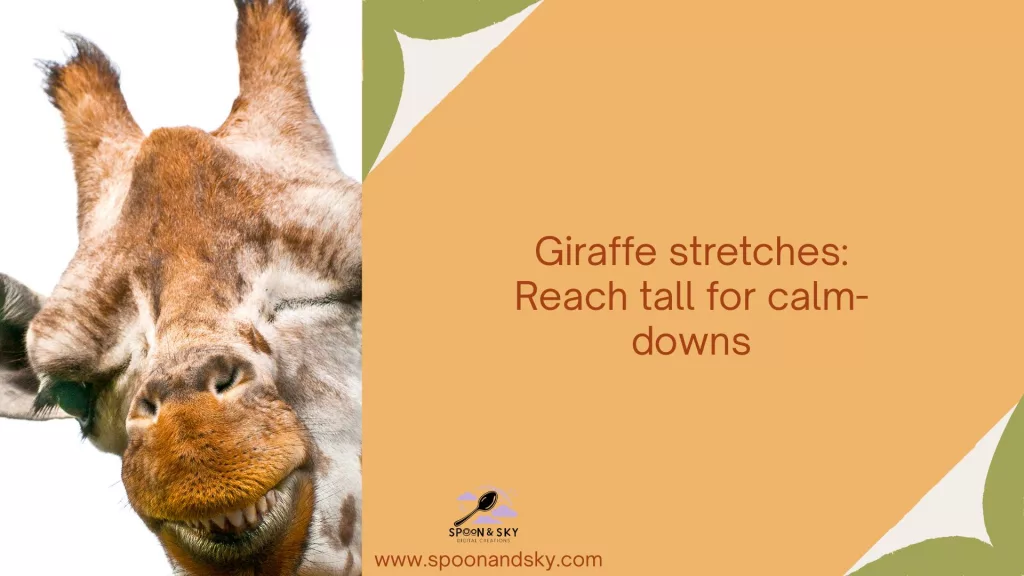
How to play: Stand tall on tiptoes, arms reaching high like a giraffe stretching for leaves.
Sensory benefit: Improves balance, posture, and body awareness. Elongating stretch supports calming and flexibility.
When to use:
- Bedtime stretch to ease into pajamas and reading.
- Transition from noisy play to calmer activity.
Variation: Add “leaf picking” — pretend to grab leaves from high branches and munch.
7. Crab Walks
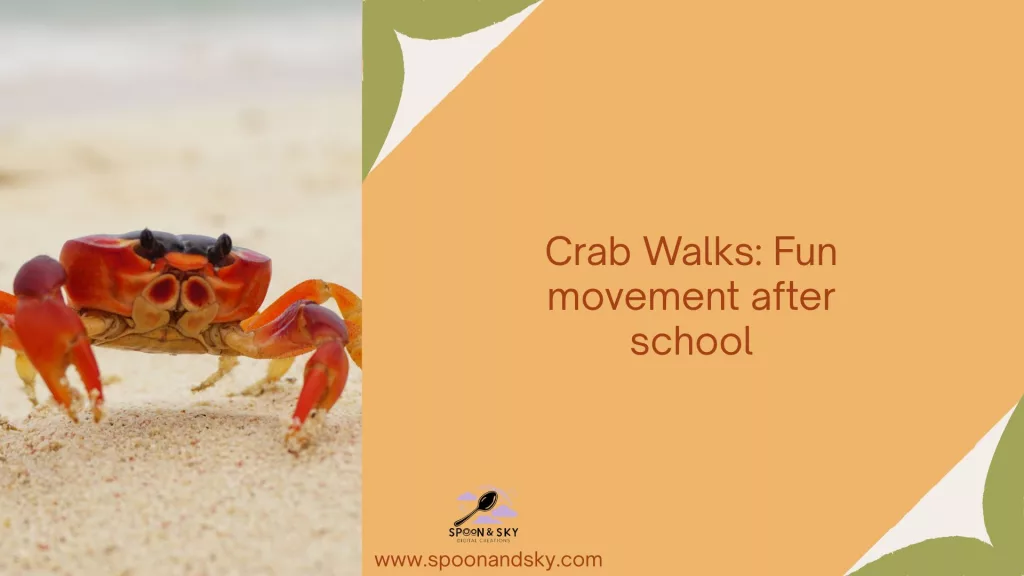
How to play: Sit on the floor, hands and feet down, tummy lifted. Walk backward or sideways like a crab.
Sensory benefit: Builds arm strength, coordination, and midline crossing. The inverted position challenges balance.
When to use:
- Fun movement game after school to release energy.
- Before screen time as a way to “earn” the sit-down.
Variation: Balance a beanbag or stuffed animal on the tummy while walking.
8. Bunny Hops
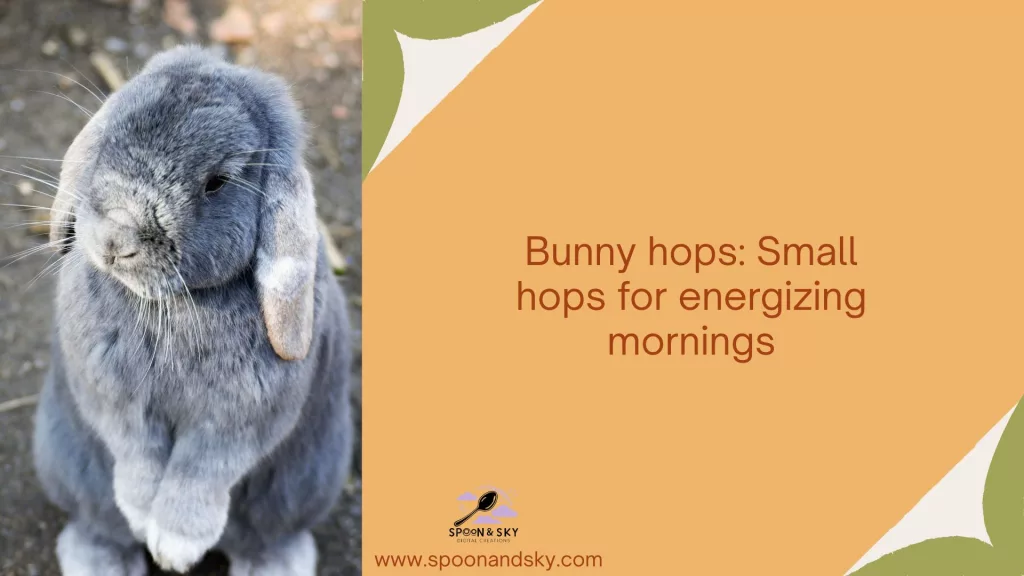
How to play: Place hands on the floor, crouch, and hop forward like a bunny.
Sensory benefit: Small repetitive jumps help regulate energy levels, strengthen legs, and improve motor planning.
When to use:
- Quick bursts to reset mood when kids resist tasks.
- Morning routine warm-up to get the body moving.
Variation: Hop between “carrots” (use blocks, socks, or pillows).
9. Flamingo Balances
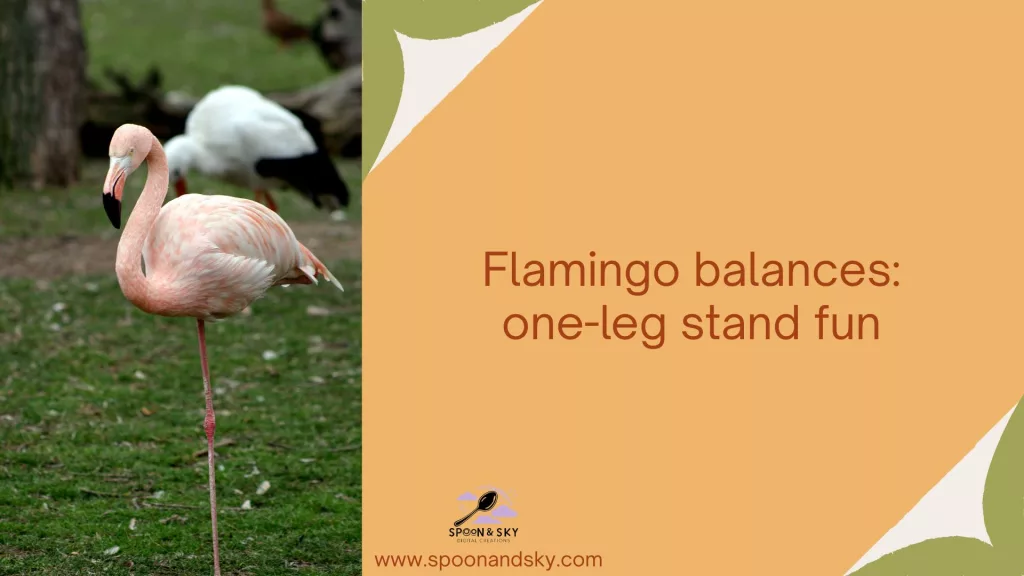
How to play: Stand on one leg like a flamingo, arms out for balance. Switch legs after a few seconds.
Sensory benefit: Strengthens balance, focus, and concentration. Helps kids develop postural control.
When to use:
- During homework breaks for quick refocus.
- Before bed as a calming balance challenge.
Variation: Add a “pond” (mat or pillow) and have kids balance only inside the pond.
10. Lion Roars & Crawls
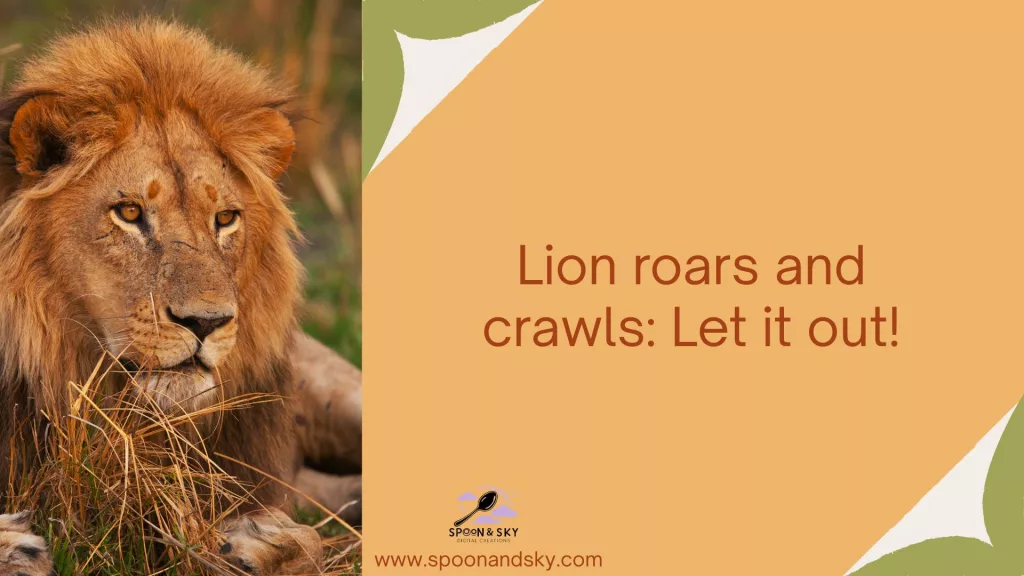
How to play: Crawl on all fours, then pause to roar like a lion. Add dramatic pouncing for extra fun.
Sensory benefit: Heavy work crawling plus vocal play helps with deep breathing and emotional release. Great for practicing big-to-calm transitions.
When to use:
- Release frustration after school.
- Pre-bed “roar out the day” → then transition to quiet lion resting.
Variation: Lion pride game: One child roars, others freeze until called.
When & How to Use Animal Movement Prompts
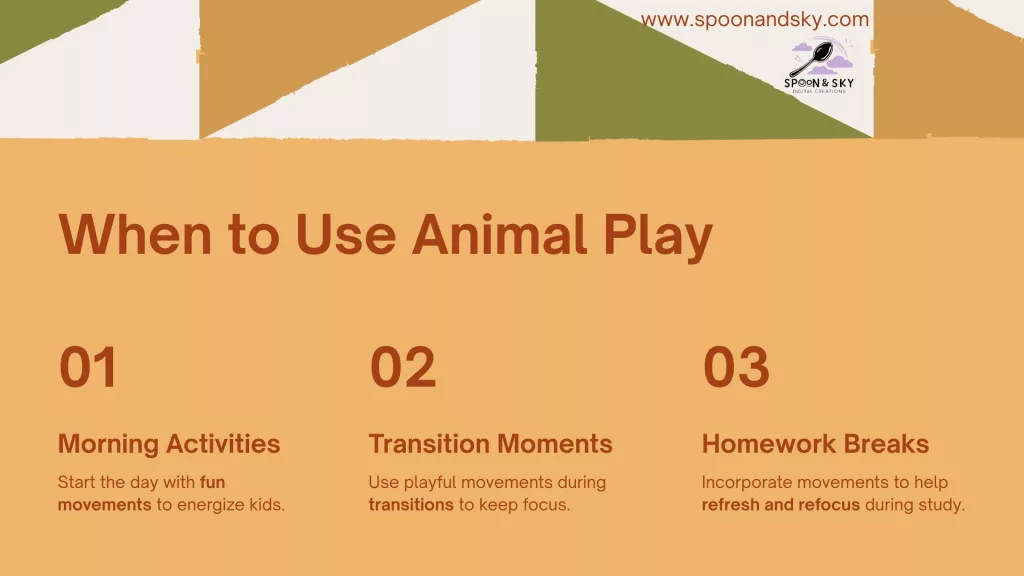
These animal play bursts can be sprinkled throughout the day:
- Morning: Use short hops, stomps, or stretches to wake up the body.
- Transitions: Snakes, bears, or crabs help kids shift between activities.
- Homework time: Quick flamingo balance or elephant stomp breaks reset focus.
- Tantrum recovery: Stomps, crawls, and roars channel big emotions.
- Bedtime: Butterflies, giraffes, and snakes calm and stretch the body before rest.
💡 Parent tip: Keep a “movement jar” — write each animal on a slip of paper. When kids need a reset, pull one out.
Reflection for Parents
Movement isn’t just exercise — it’s a language. When kids hop, crawl, stomp, and roar, they’re learning to regulate their bodies and emotions. You don’t need fancy equipment or a big space. You just need a little imagination, a playful spirit, and willingness to join in.
Ask yourself:
- When does my child seem most restless? Could an animal play break help?
- How can I use these prompts as invitations instead of commands?
- Which animal activity makes my child laugh the most?
Because laughter + movement = magic.
Conclusion: Wild Play, Calm Kids
Kids don’t just need to sit still — they need to move, stomp, wiggle, and roar. With these 10 animal-inspired prompts, you can guide them into play that strengthens their bodies, soothes their senses, and makes transitions easier.
So next time your child resists bedtime, homework, or brushing teeth, try this: “Can you slither like a snake to the bathroom?” You might be surprised how quickly cooperation follows.
With lion roars fading into butterfly flutters,
Lily.


✨ Get Your Free Printable ✨
Looking for a simple way to bring a little more calm, structure, or creativity into your day?
Enter your email below and get instant access to your free printable from Spoon & Sky — made to spark joy, imagination, and gentle rhythms at home. 🌿
We’ll send your printable and a few kind, helpful ideas to your inbox. No spam — just calm, creative family tools.
Leave a Reply