


Autumn has its own kind of magic — the rustle of leaves, the first pull of sweaters, the cosy evenings when the sky darkens early. But for parents of young children, it can also feel like the season of overwhelm.
New school terms, endless laundry, muddy boots, and a sudden drop in sunshine often collide with tired, restless kids and frazzled parents. Add in the fact that most little ones (ages 3–8 especially) are still learning how to manage big emotions, and you’ve got the perfect recipe for meltdowns — theirs and ours.
The good news? With a little planning, a dash of creativity, and a gentle mindset shift, autumn can transform from “just survive it” to “let’s actually enjoy this.”
This guide shares practical tips for navigating after-school meltdowns, managing the darker afternoons, and creating family rhythms that bring more calm into your home.
Why Autumn Feels So Hard (For Parents and Kids)

Let’s start with honesty: the struggle is real.
- After-School Meltdowns: Many children hold it together all day at nursery or school — following rules, being polite, navigating friendships. By the time they get home, they’re running on fumes. Cue the tears, shouting, or hiding under the sofa. (Experts call this after-school restraint collapse.)
- New Routines, Big Shifts: Summer was free-flowing. Now it’s wake-up alarms, packed lunches, homework sheets, drop-offs and pick-ups. Kids feel the whiplash, and so do we.
- Weather Woes: Rain, early sunsets, and chilly evenings mean less outdoor play. Children still have all that energy, but no wide field to burn it off. Cue indoor chaos.
- Parent Burnout: Between housework, jobs, after-school activities, and dinner prep, autumn can feel like juggling while walking uphill in the dark.
Sound familiar? You’re not alone.
Small Shifts That Make a Big Difference
The key to a smoother autumn isn’t doing more, it’s building little supports into your day that keep everyone steadier. Think of them as anchors — small but mighty points of predictability.
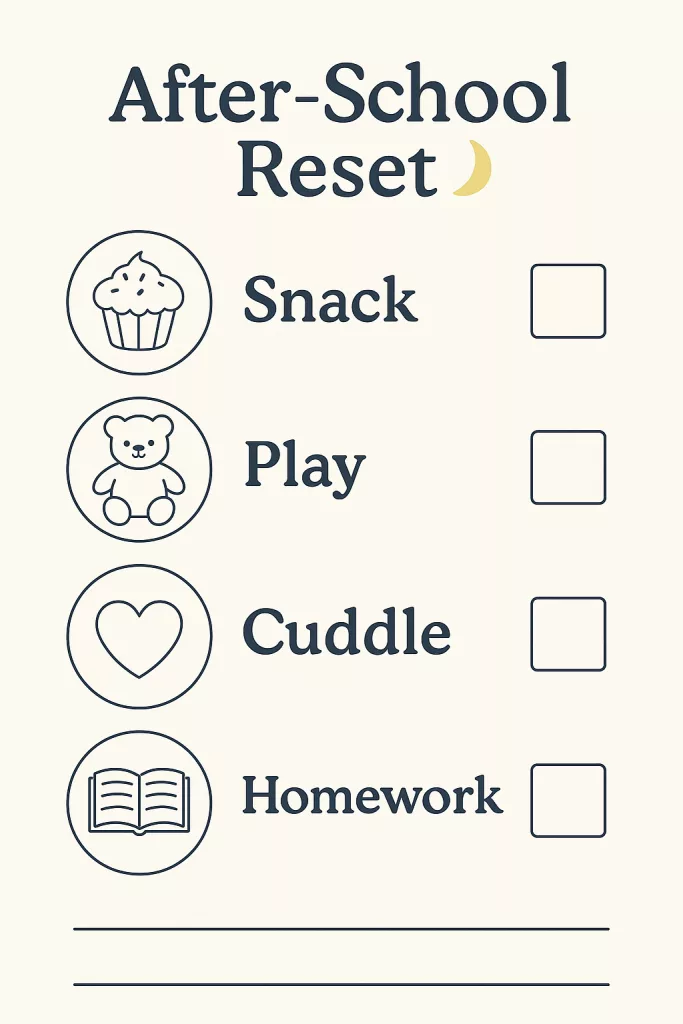
1. Create a Gentle After-School Reset
Children don’t just need food after school; they need decompression. A simple routine can prevent meltdowns before they erupt.
- Snack + Silence: Offer a snack and allow quiet. Resist bombarding them with questions about their day.
- Transition Activity: Something physical (jumping, yoga, a quick obstacle course) or sensory (sand, playdough, water beads) helps shift gears.
- Connection Cue: After they’ve settled, invite them into connection — a cuddle, a chat, or a shared game.
📝 Tip: Use a visual chart so kids know the “home sequence.” Picture cues like snack → play → cuddle → homework give them control and predictability.
2. Build Cozy Autumn Rituals
Dark evenings don’t have to mean doom. They can signal warmth and connection if you build tiny rituals.
- Story Lanterns: Dim the lights, light a small lamp or fairy lights, and read aloud together.
- Warm Drink Together: Herbal tea, warm milk, or even hot chocolate once a week becomes a bonding treat.
- Gratitude Rounds: At dinner, each person shares one small joy from the day.
These rituals become the heartbeats of family life — the tiny things kids remember.
3. Plan for Indoor Energy Outlets
Children still need to move, even if it’s pouring outside. Have a few go-to activities for rainy days:
- Sock Basketball: Rolled-up socks + laundry basket.
- Obstacle Course: Cushions, chairs, tape lines on the floor.
- Freeze Dance: Five minutes of silly dancing, then “freeze!” when the music stops.
- Scavenger Hunt: Hide small objects around the house; give clues.
It doesn’t take long, but it channels that wild energy before it explodes at bedtime.
4. Simplify the Mental Load
Parents often carry the invisible weight of everything. A few tricks can lighten it:
- Batch Meals: Cook double portions and freeze. Future-you will be grateful.
- Set Up Stations: Keep baskets by the door for shoes, coats, bags. No more morning scrambles.
- Delegate: Even little ones can help — sorting socks, putting toys back, wiping the table.
- Visual Planners: Use charts for the week so everyone knows what’s coming. (Less “Muuum, what’s next?” every five minutes.)
5. Name and Validate Feelings
When kids melt down, they’re not being “bad.” They’re showing the day’s overwhelm. Instead of correcting straight away, try:
- “It looks like today felt really big for you.”
- “I can see you’re tired and cross. That’s okay. Let’s rest first, then talk.”
Naming emotions helps children learn that feelings aren’t scary — they’re manageable. And often, just being seen is all they need.
6. Weatherproof Your Mindset
Autumn is often associated with stress because we fight the season instead of leaning into it. Instead of lamenting dark nights, frame them as an invitation to slow down. Instead of dreading rainy days, stockpile “rainy day play” ideas.
Remember: children don’t see the weather as an obstacle; they see it as an adventure. (Yes, even muddy puddles.)
Practical Play & Craft Ideas for Autumn

Here are a few simple prompts using things you probably already have:
- Leaf Collage: Gather leaves and press them between paper with glue sticks.
- Nature Tray: Collect pinecones, acorns, and conkers — let children sort, count, or build with them.
- Autumn Bingo: Draw a quick bingo sheet (pumpkin, umbrella, leaf, boots) and cross off what you see on a walk.
- Kitchen Science: Bake simple biscuits or mix food coloring into water for experiments.
Play doesn’t have to be perfect or planned. It just needs space. And if you don’t know where to start have a look at this blog post.
For Parents: Finding Your Own Rhythm
Children pick up on our energy. When we’re constantly rushing or frazzled, they feel it too. But when we slow down, even for a few minutes, they learn calmness is possible.
- Take five minutes for tea before the pick-up.
- Light a candle while cooking dinner.
- Write a tiny gratitude note before bed.
These moments aren’t luxuries — they’re survival strategies.
Tools to Support Your Family
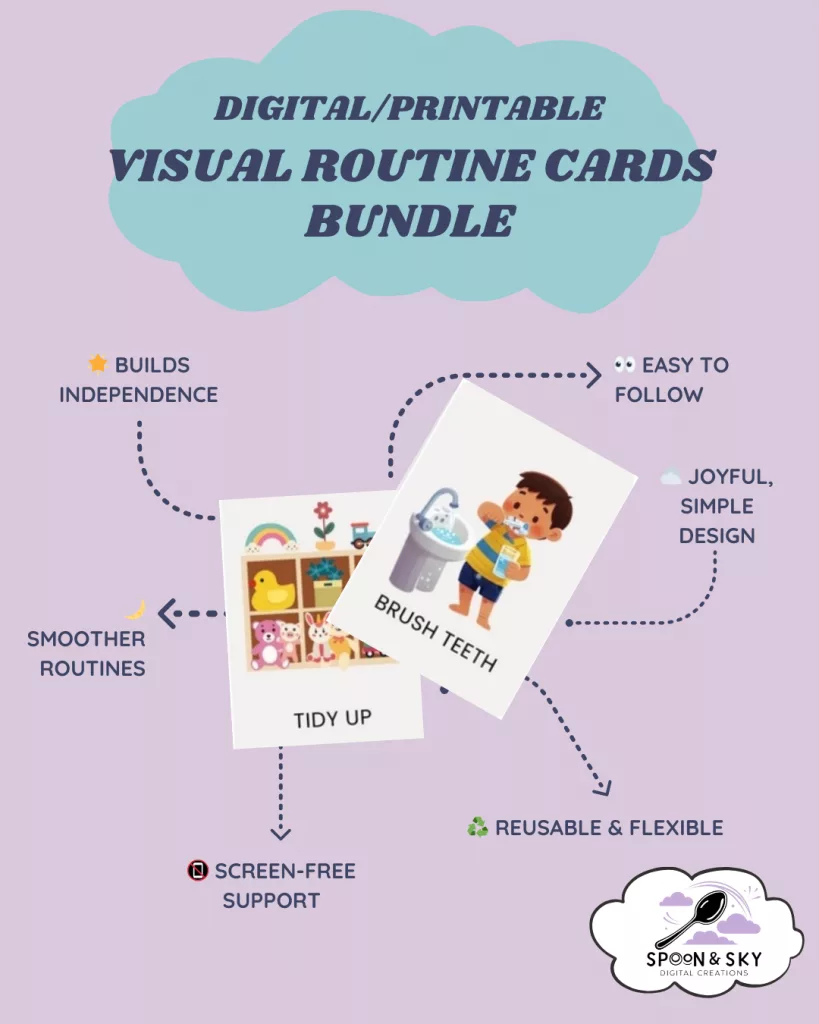
If you’re looking for a little extra structure, my Routine Cards Bundle (available in the Spoon & Sky shop) can help. They’re designed for families just like ours — visual, simple, and gentle tools to guide children through daily rhythms like after-school reset, bedtime prep, or morning routines.
Sometimes having a card that says “Snack Time” or “Story Time” does the heavy lifting so you don’t have to repeat yourself a hundred times. It also empowers children to feel in control of what’s happening next.
Final Thought
Autumn will always bring a certain amount of chaos. There will be muddy shoes, lost hats, last-minute homework crises, and occasional tears (from everyone). But woven into that mess are opportunities — to reset, to connect, to create rituals that give your family both structure and joy.
So next time the rain pours and the day feels heavy, try one small shift: a quiet snack, a silly sock game, a moment of gratitude at dinner. Those tiny choices build the rhythm that makes family life not just manageable, but magical.
With a mug of tea in hand and pinecones in my pocket,
Lily Luz
Spoon & Sky


✨ Get Your Free Printable ✨
Looking for a simple way to bring a little more calm, structure, or creativity into your day?
Enter your email below and get instant access to your free printable from Spoon & Sky — made to spark joy, imagination, and gentle rhythms at home. 🌿
We’ll send your printable and a few kind, helpful ideas to your inbox. No spam — just calm, creative family tools.
Leave a Reply