
If you’ve ever watched your child squeeze playdough for ten quiet minutes after a busy day, you’ve witnessed the magic of sensory regulation.
That deep sigh.
That slowing down.
That tiny shift from “wild energy” to “peaceful focus.”
It’s not a coincidence. It’s science.
And it’s one of the most powerful — and beautifully simple — ways we can help children (and ourselves) regulate emotions.
At Spoon & Sky, I call it sensory calm in action — hands-on, low-prep play that meets children where they are and helps them find their balance again.
Whether your little one is feeling tired, overstimulated, anxious, or just “off,” sensory play offers a bridge between emotion and calm.
It gives their body what their brain needs to reset.
💡 What Is Sensory Play (and Why It Matters)?
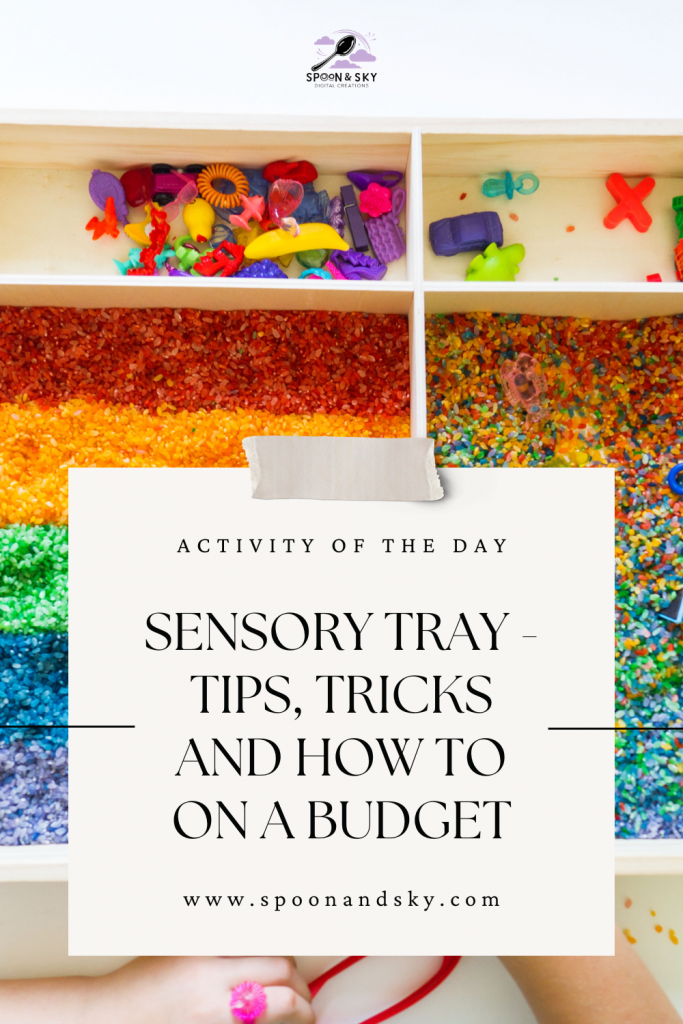
Sensory play engages one or more of the senses — touch, sight, sound, smell, or movement. Check out this blog post for more ideas.
When a child touches, squeezes, scoops, or swings, their nervous system gets feedback that helps them organize their feelings.
Think of it like this:
- Big feelings are energy.
- Sensory play gives that energy a safe place to go.
And it doesn’t have to be complicated or messy. A single tray of rice, a bowl of water, or a lump of playdough can do more for emotional regulation than any lecture ever could.
🌿 The Science Behind Sensory Calm
Children’s brains are still learning how to balance emotions. When they feel frustrated or overwhelmed, they often don’t have the words to explain — but their bodies know.
Sensory activities work because they provide proprioceptive (deep pressure) and vestibular (movement) input, helping to:
- Reduce anxiety and restlessness
- Improve focus and self-awareness
- Increase serotonin and dopamine (the brain’s “feel good” chemicals)
- Build resilience and problem-solving
It’s the same reason adults knit, doodle, bake, or fidget — we all use sensory input to regulate.
Children just need more opportunities — and a little guidance — to find what works best for their bodies.
🧺 Setting Up a Calm Sensory Space
You don’t need a sensory room. You need a sensory moment.
A sensory setup can be as simple as:
- A basket of playdough and tools on the kitchen table
- A tray of rice or lentils on a towel
- A corner with cushions, a blanket, and a few fidget toys
- A “movement zone” with a balance board or yoga mat
✨ Parent tip: Choose a spot your child already loves to play. The goal is accessibility, not perfection.
Add a few textures — soft, smooth, squishy, bumpy — and let curiosity do the rest.
🎨 6 Easy DIY Sensory Play Ideas for Emotional Regulation
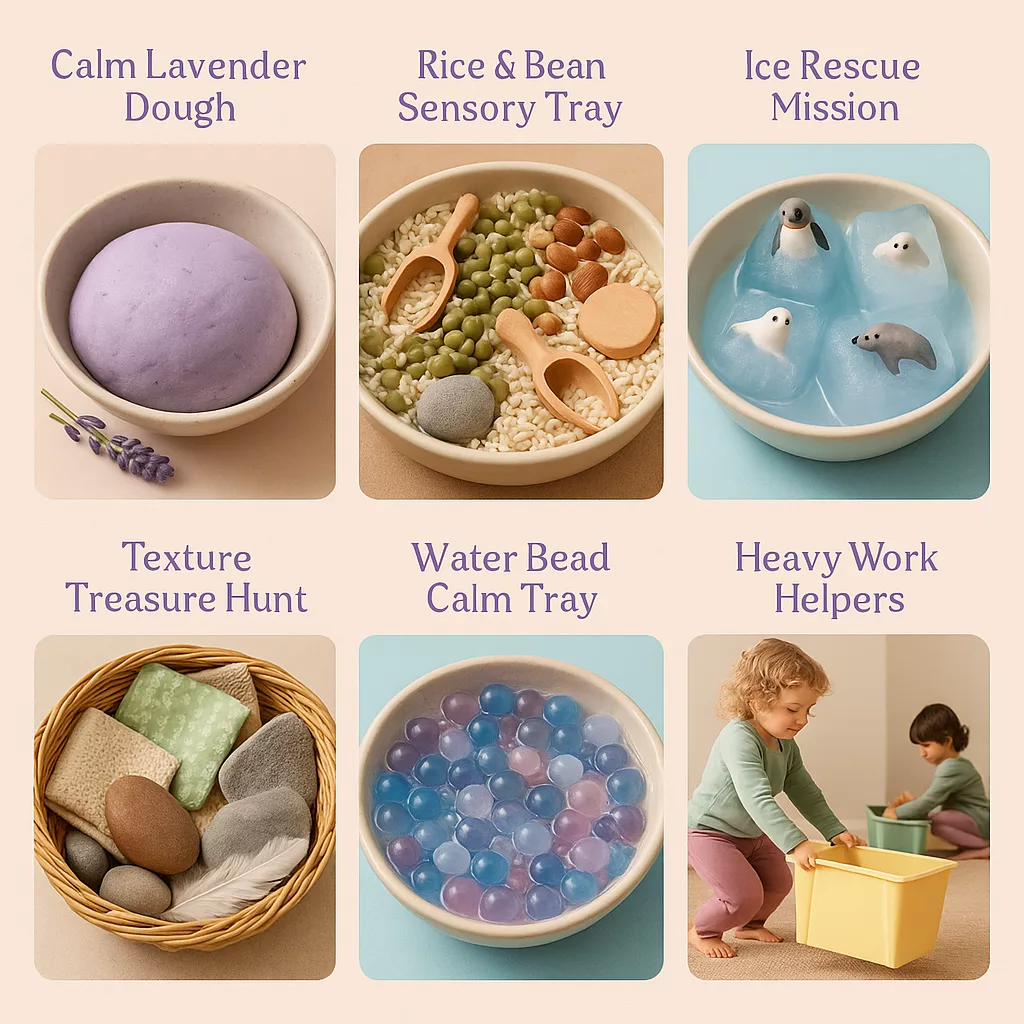
Each of these activities is designed to soothe, reset, and regulate — using simple household materials.
1. Calm Dough (Lavender Playdough)
What you need:
- 2 cups flour
- 1 cup salt
- 1 cup warm water
- 2 tbsp oil
- A few drops of lavender essential oil (optional)
How it helps:
The kneading action gives deep pressure input that releases tension. The lavender scent promotes calm and focus.
💬 Prompt: “Let’s squish out our worries and roll in some calm.”
2. Rice & Bean Tray
What you need:
- Uncooked rice, lentils, or dried beans
- Spoons, cups, funnels, and small toys
How it helps:
Scooping and pouring rhythmically helps children find internal rhythm — it’s like mindfulness in motion.
💬 Prompt: “Can you listen to the sound your scoop makes?”
Tip: Keep a lidded container nearby — quick to tidy and reuse.
3. Ice Rescue Mission
What you need:
- Freeze small toys or pom-poms in an ice cube tray.
- Give children warm water, droppers, or salt to “rescue” them.
How it helps:
Combines temperature play with problem-solving — great for frustration tolerance and focus.
💬 Prompt: “Your job is to melt the ice and save the penguins!”
4. Texture Treasure Hunt
What you need:
- A list or visual chart of textures (smooth, rough, soft, bumpy).
- Ask your child to find one object in the house for each texture.
How it helps:
Brings awareness to sensory detail and builds descriptive language.
💬 Prompt: “Can you find something as soft as a cloud?”
5. Water Bead Calm Tray
What you need:
- Pre-soaked water beads
- Muffin tin or shallow tray
- Spoons and small bowls
How it helps:
Tactile and visually soothing — squeezing and scooping releases stress and improves fine motor skills. Please supervise this activity if your child is under 3 years old, as the water beads are small.
💬 Prompt: “How many colors can you count while you scoop?”
6. Heavy Work Helpers
What you need:
Everyday chores like pushing laundry baskets, carrying books, or wiping tables.
How it helps:
Heavy work gives deep proprioceptive input — one of the strongest regulators for children.
💬 Prompt: “Can you push this basket like a superhero?”
🧘♀️ Movement-Based Sensory Regulation
Not all sensory play involves touch — sometimes, movement is what the body craves.
Try a short “Reset in Motion” routine:
- Jumping 10 times (shake out tension).
- Slow rocking in a chair or hammock.
- Crawling under a blanket fort.
- Rolling a yoga ball over the back gently.
- Deep hugs (from you or a weighted pillow).
💡 Use these before bed, after school, or any time emotions feel “too big.”
💬 How to Use Sensory Play for Emotional Coaching
Here’s where it becomes powerful:
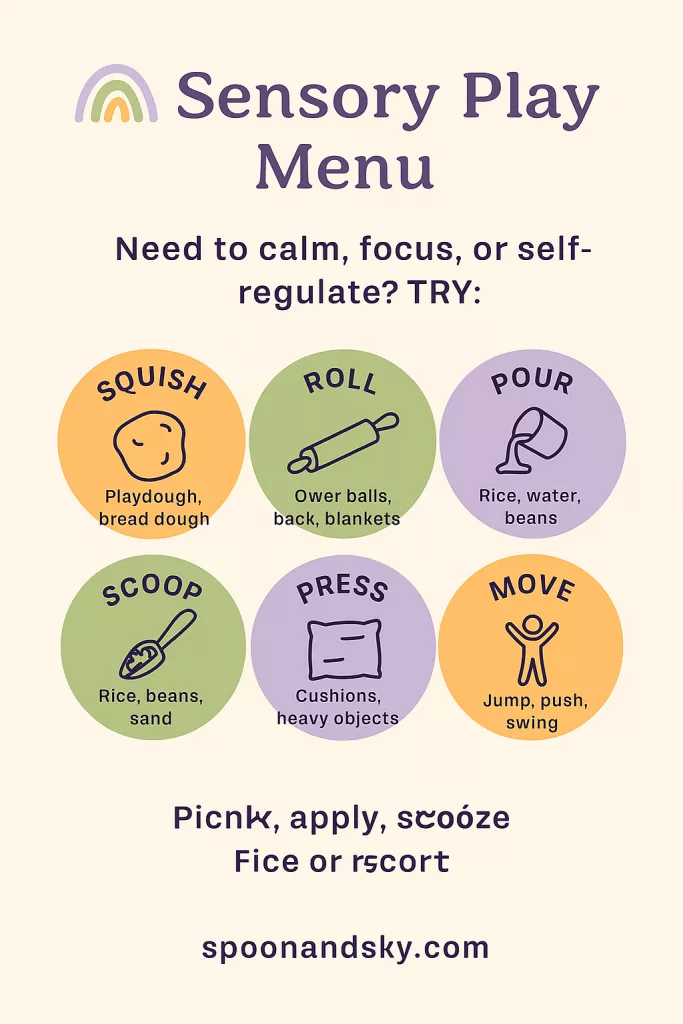
Instead of saying “calm down,” say “let’s find something to help your body feel better.”
Then, offer two choices:
“Would you like to squeeze your dough or scoop the rice?”
This empowers children to choose their own regulation strategy — a life skill that grows with them.
🧩 Tips for Making Sensory Play Work for You
✔️ Keep it simple — 10 minutes is enough.
✔️ Have materials prepped in small boxes for quick access.
✔️ Use visual cues (“quiet hands,” “big scoop”) for young children.
✔️ Rotate materials every few weeks to keep it interesting.
✔️ Join in! Your calm presence amplifies the effect.
💡 Parent Insight: Some kids need movement before sensory calm. If your child resists sitting, try jumping or dancing first — then settle with playdough or rice.
🕊️ When to Use Sensory Play
Sensory play fits beautifully into everyday routines:
- After school — to decompress from busy days.
- Before meals — to help transition into calm family time.
- Before bed — to replace screens with soothing activity.
- During meltdowns — as a bridge to communication.
It’s not about “fixing” behavior — it’s about supporting regulation so your child can access calm again.
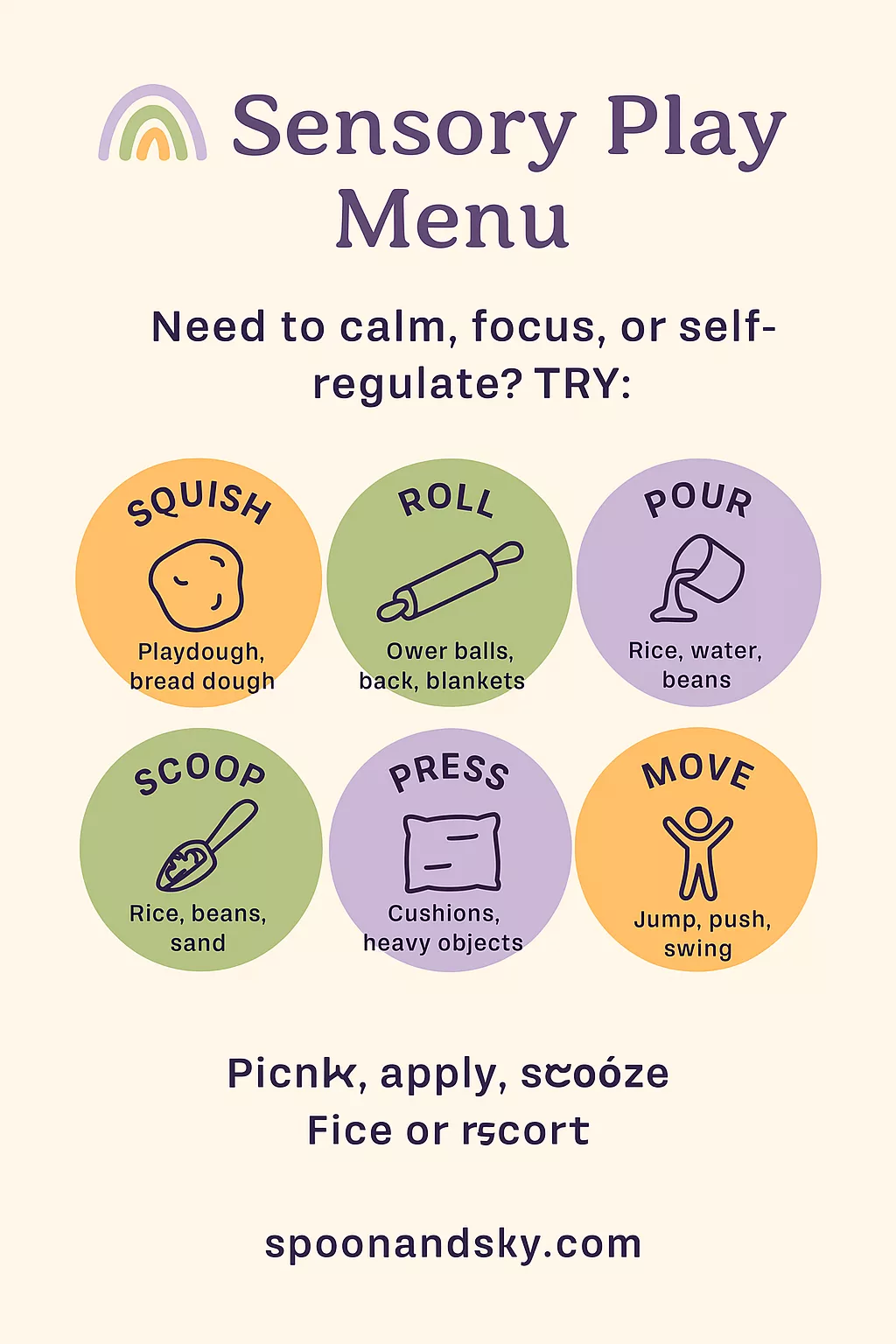
🪶 The Spoon & Sky Sensory Play Menu (Free Printable)
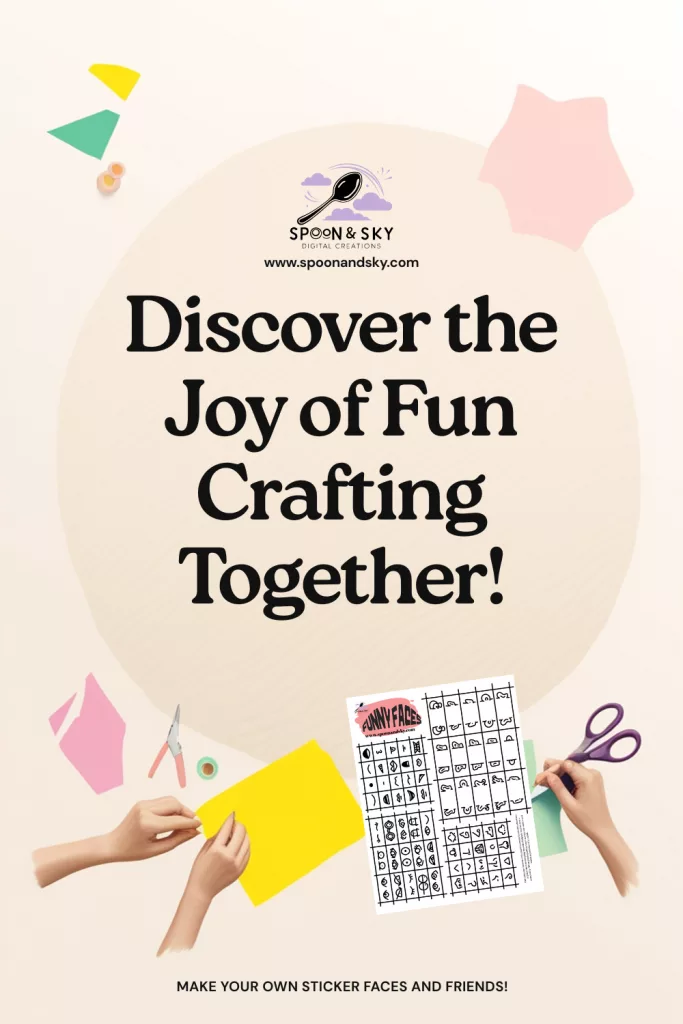
To help you get started, I’ve created a Sensory Play Menu — a simple visual guide of activities that match your child’s needs:
- Need calm? → Try dough or deep pressure play.
- Need focus? → Pour, scoop, or sort.
- Need energy? → Crawl, jump, or push.
It’s printable, pastel, and designed to hang on your fridge for easy reference.
🖨️ Get it below:
🌈 The Bigger Picture: Building Lifelong Regulation
When children learn to identify what helps their bodies calm down, they’re building emotional intelligence — quietly, through play.
They begin to notice patterns:
“When I’m angry, squishing dough helps.”
“When I’m sad, rocking feels good.”
And one day, those sensory tools evolve into grown-up strategies — like journaling, walking, or deep breathing.
That’s the magic of early regulation.
It’s not about preventing big feelings — it’s about teaching children they can handle them.
🌿 Final Thoughts
Sensory play isn’t just an activity — it’s communication.
It’s the language of self-awareness.
Through touch, movement, and exploration, children learn to connect with their bodies and emotions in a way that words can’t always reach.
So next time your child is bouncing off the walls or on the verge of tears, try offering texture, weight, or rhythm instead of correction.
A handful of rice.
A squishy ball.
A place to pour, scoop, or squeeze.
You’re not just giving them something to do — you’re teaching them how to find peace in their own bodies.
And that skill?
That’s something they’ll carry for life.
With sand in my hair and sensory calm in the air,
Lily Luz — Spoon & Sky


✨ Get Your Free Printable ✨
Looking for a simple way to bring a little more calm, structure, or creativity into your day?
Enter your email below and get instant access to your free printable from Spoon & Sky — made to spark joy, imagination, and gentle rhythms at home. 🌿
We’ll send your printable and a few kind, helpful ideas to your inbox. No spam — just calm, creative family tools.
Leave a Reply