

Evenings with children are often painted in dreamy tones: stories by lamplight, warm baths, cuddles before bed. In reality, many families know the other version: kids bouncing off the walls, squabbles over toothbrushes, cries of “I’m not tired!” and parents counting down the minutes until quiet finally arrives.
If this sounds familiar, you’re not alone. The transition from the high energy of the day to the calm of bedtime can be one of the trickiest times for parents. But here’s the good news: evenings don’t have to feel like a battlefield. With a few gentle rhythms, some practical tools, and a shift in how we guide children, evenings can transform into peaceful anchors that close the day with connection instead of chaos.
At Spoon & Sky, I believe in creating simple tools for joyful structure — and evenings are one of the best places to put that philosophy into practice. Let’s explore how to create an evening family flow that works for kids (even the wild ones!) and parents alike.
Why Evenings Are Hard for Kids

By the end of the day, children’s systems are overloaded. Think about it:
- They’ve managed school or nursery expectations.
- They’ve followed rules, sat still, and practiced self-control.
- Their bodies are tired, but their minds are still buzzing.
This often leads to “after-dinner hyper” or bedtime resistance. Children are not misbehaving to drive us mad — they’re processing, releasing, and testing boundaries after holding it together all day.
That’s why evening routines are so powerful. They provide a safe, predictable rhythm that helps children move from wild to rested.
What Is an Evening Family Flow?

An evening flow isn’t about a rigid schedule. It’s about a sequence of familiar steps that guide kids gently toward rest. Think of it as a dance: the same moves, in the same order, each night.
The flow might look like this:
- Dinner together (when possible)
- Gentle play or movement to release energy
- Bath or wash-up
- Wind-down activity (reading, puzzles, quiet play)
- Connection ritual (story, song, gratitude)
- Bedtime
This predictability signals to children’s bodies and brains: the day is ending, it’s time to slow down.
How to Build Your Evening Flow

Here are some simple steps and strategies to create evenings that feel calmer and more connected.
1. Start with Connection at Dinner
Even if family meals can’t happen every night, try to share at least part of dinner together. Use it as a chance to connect, not just fuel up.
- Ask a simple daily question: “What was your favorite part of the day?”
- Keep it light — avoid heavy corrections or nagging over food.
- Let kids help set the table, even if it’s just putting out napkins.
👉 Tip: Dim the lights or light a candle — it signals to everyone that the evening has begun.
2. Allow for Movement After Dinner
It might seem counterintuitive, but giving kids a short burst of active play after dinner actually helps them settle better.
Ideas:
- Family dance-off to one silly song.
- Animal walks across the room.
- Outdoor dash in the garden for five minutes of fresh air (weather permitting).
This helps release the last of the “wiggles” before winding down.
3. Shift into Soothing Activities
After movement, transition into calming play:
- Puzzles
- Coloring
- Lego building
- Playdough squishing
Keep the environment quieter: softer voices, warmer lighting, maybe gentle background music.
4. Make Bath (or Wash-Up) Predictable
Baths can be wild play zones or soothing rituals depending on how you frame them. Keep bath time simple and predictable:
- Limit toys to a small set.
- Use warm lighting instead of harsh bathroom lights.
- Add lavender-scented bubble bath for extra calm.
👉 Variation: For nights when a full bath feels like too much, a warm flannel wash-up and clean pajamas do the trick.
5. Create a Wind-Down Zone
This is where the evening really shifts gear. Create a space in the living room or bedroom that says: It’s time to slow down.
Options:
- A cozy corner with cushions and books.
- A basket of bedtime-only toys (soft animals, magnetic tiles, wooden blocks).
- Soft lamps or fairy lights to signal “calm mode.”
6. Add a Connection Ritual
Children crave one last deep connection before sleep. Create a ritual that works for your family:
- Reading a story together.
- Sharing three things you’re grateful for.
- Singing a song or saying a prayer.
- Gentle massage on hands or back.
This small pocket of presence reassures children and often makes bedtime smoother.
7. Stick to a Clear Bedtime Cue
Whether it’s a lullaby, a nightlight switch, or a special phrase (“Goodnight, sleep tight”), a consistent cue helps kids accept the final step.
👉 Tip: Keep goodbyes short and sweet. Lingering often re-triggers energy.
Common Bedtime Battles (and Gentle Solutions)

1. “I’m not tired!”
Acknowledge the feeling: “I hear you. Your body says it’s not tired, but our routine says it’s bedtime.” Offer a quiet option in bed (reading, cuddling a toy).
2. “Just one more story!”
Set a limit but frame it kindly: “We read two stories every night. You choose which ones.” The structure feels secure.
3. Endless Requests (water, snacks, toilet)
Preempt with a “bedtime basket”: water bottle, comfort toy, and toilet trip before lights out. Keeps excuses to a minimum.
4. Nighttime Fears
Validate (“That does sound scary”) and offer tools: a nightlight, dream spray (lavender water in a spray bottle), or a stuffed animal “protector.”
How Evening Routines Help Parents Too
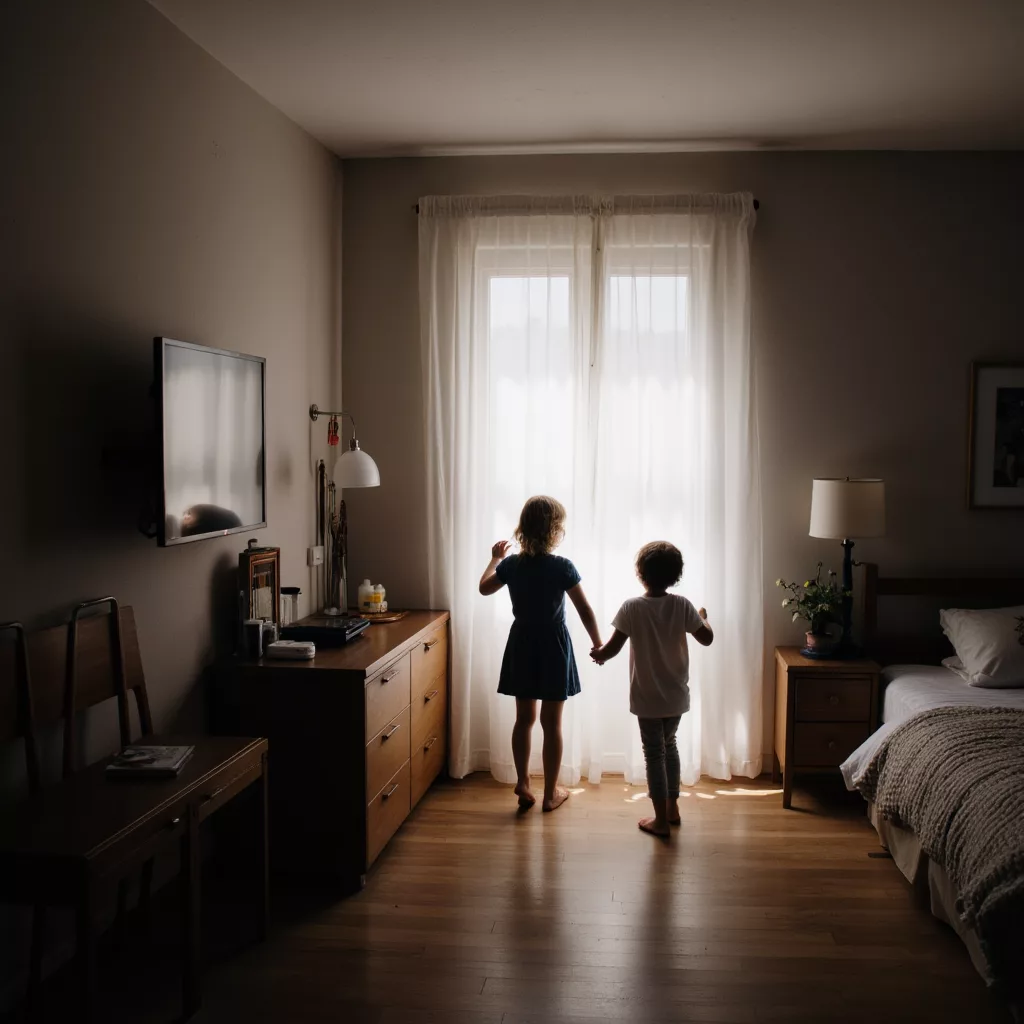
Evening flow isn’t just for kids. It’s for you.
- Predictability: Less nagging and negotiating.
- Calm energy: Your nervous system slows down with the rhythm.
- Space: Once children are settled, you get your own precious evening back.
Boundaries around evening routines are a form of parental self-care. They ensure you’re not still chasing wild children at 10pm — you’re sipping tea, catching up with your partner, or simply resting.
Tools That Help
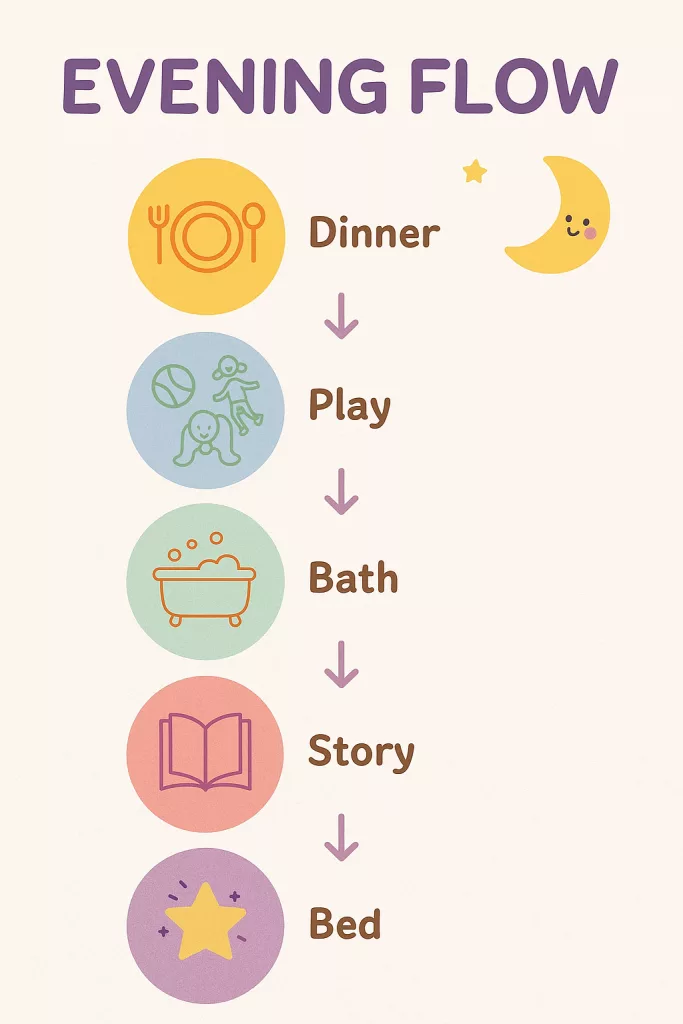
- Visual Routine Cards → Kids see the sequence for themselves.
- Timers → A sand timer for bath or story transitions.
- Routine Basket → Keep pajamas, bedtime books, and toys in one place.
👉 If you’d like ready-to-print resources, check out the Routine Cards Bundle in the Spoon & Sky shop. With colorful illustrations for evening steps, they make bedtime less about repeating yourself and more about letting kids take the lead.
A Note on Flexibility

Not every evening will go smoothly. Some nights routines will wobble. That’s okay. Children thrive on rhythm, not rigidity. Think of your evening flow as a flexible guide — one you can return to when things go off track.
Final Thought
Evenings can feel wild, but they don’t have to end in stress. With a gentle sequence, a few cues, and consistent connection, you can transform bedtime from battle to bonding.
Start small. Add one ritual tonight — maybe a “calm corner” after dinner or a gratitude question before lights out. Over time, these little anchors become the family rhythm you’ve been longing for.
With fairy lights glowing and a child finally tucked in with a satisfied sigh,
Lily Luz
Spoon & Sky


✨ Get Your Free Printable ✨
Looking for a simple way to bring a little more calm, structure, or creativity into your day?
Enter your email below and get instant access to your free printable from Spoon & Sky — made to spark joy, imagination, and gentle rhythms at home. 🌿
We’ll send your printable and a few kind, helpful ideas to your inbox. No spam — just calm, creative family tools.
Leave a Reply