
Morning to Bedtime Made Simple
As parents, we know that children thrive on rhythm and predictability. A little one may not be able to read the clock or manage time like we do, but they know what comes next in their day by how it feels. And when the world feels big, confusing, or overwhelming, visual routines act like a gentle compass: they guide children through daily life with clarity, confidence, and calm.
You might already use words like “Time to brush your teeth!” or “Shoes on, please!” dozens of times a day. But what if, instead of repeating yourself, your child had a visual anchor — a chart, picture, or set of icons — that showed them exactly what to expect?
That’s the beauty of visual routines. They’re not just cute charts; they’re tools that help children gain independence, regulate emotions, and feel empowered in their everyday world.
What Are Visual Routines?
A visual routine is simply a sequence of images, icons, or cues that represent steps in a daily rhythm. Think of them as a child’s version of a calendar or planner. They don’t rely on reading skills, so even toddlers and preschoolers can use them.
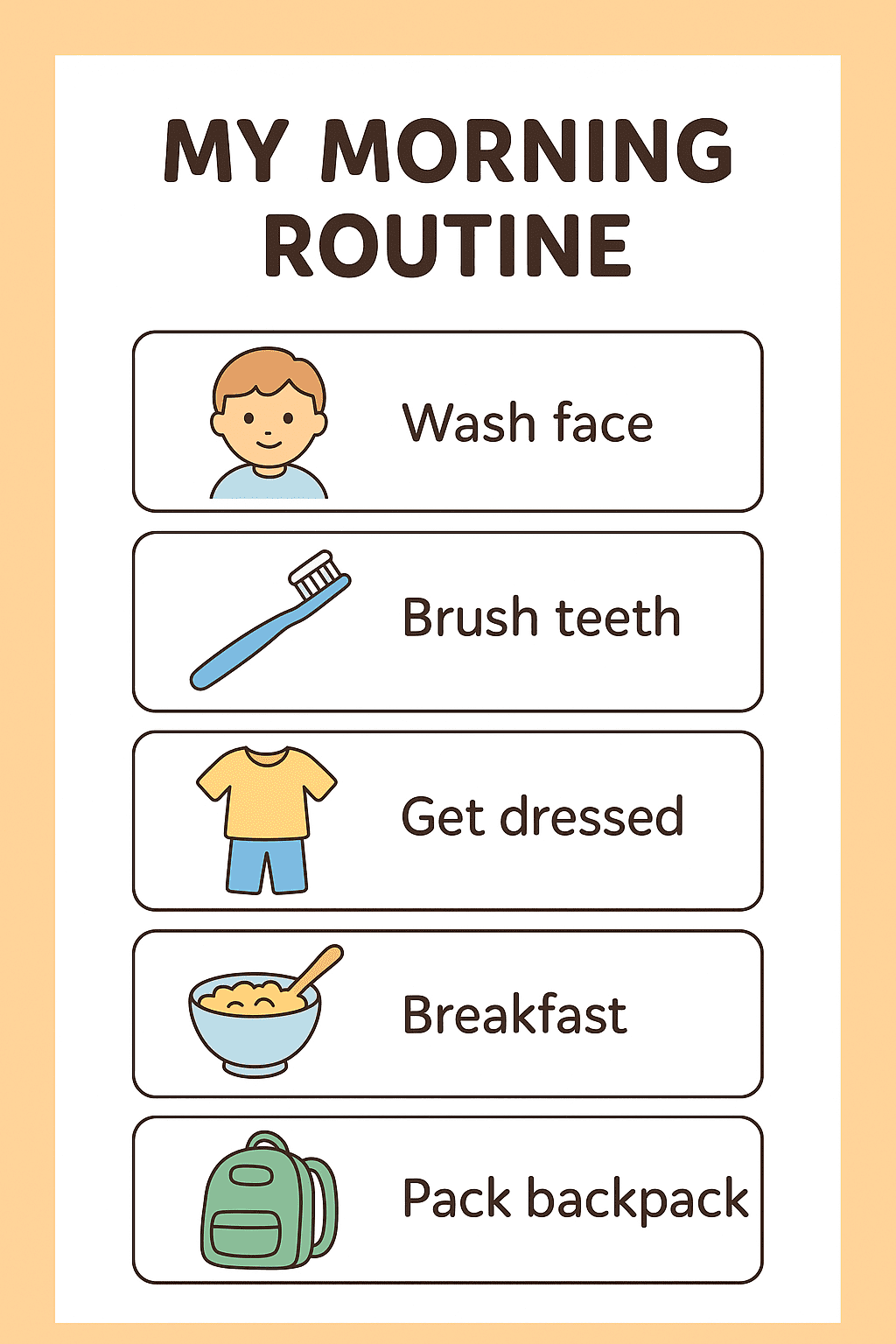
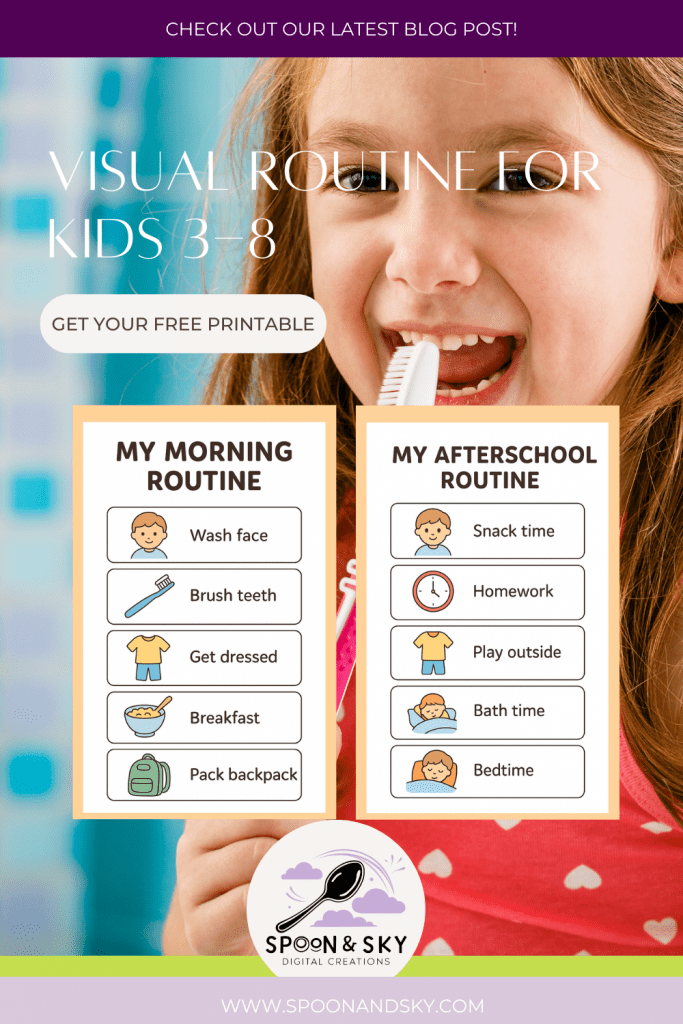
A morning routine chart might show:
- 🛏 Bed → 🚿 Wash face → 🪥 Brush teeth → 🧦 Get dressed → 🥣 Breakfast → 🎒 Backpack ready
An evening routine might look like:
- 🛁 Bath → 🪥 Brush teeth → 📖 Storytime → 🌙 Lights out
Instead of telling children what to do at every step, a visual routine gives them ownership. They can see what comes next, tick off what they’ve done, and feel a sense of progress.
Why Visual Routines Work So Well
Visual routines are more than handy reminders; they work because they connect with how children’s brains process the world:
- Predictability builds safety
When kids know what to expect, their nervous systems relax. Predictable steps reduce power struggles, tantrums, and the fear of the unknown. - Visual memory is stronger than auditory memory
Young children often forget multi-step instructions, but they can see a chart and follow along without constant reminders. - Encourages independence and responsibility
A child can take pride in “reading” their chart and doing the next step themselves. It’s a simple way to say, I trust you to take charge of your day. - Reduces nagging and repeating
Parents get to shift from “the boss” to “the guide.” Instead of saying, “I told you to put your shoes on!” you can simply ask, “What’s next on your chart?” - Supports neurodivergent children
Kids with ADHD, autism, or sensory needs often find transitions hard. Visual routines create clarity and structure that feel grounding and kind.
How to Create Visual Routines
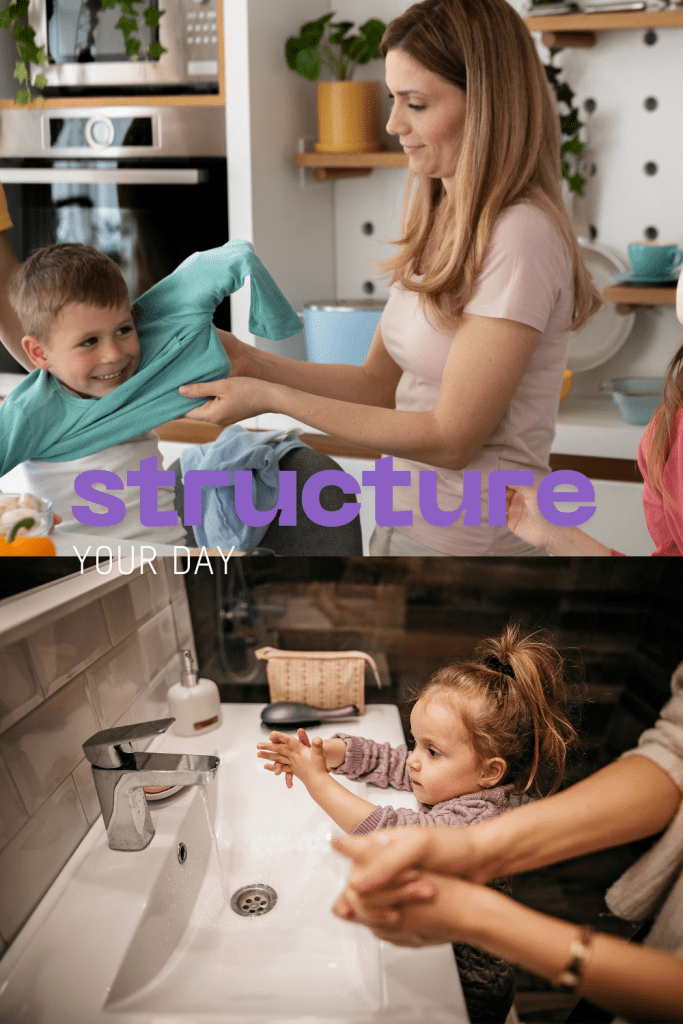
You don’t need to be a graphic designer or spend lots of money to get started. Here are a few simple ways:
- Printables: Download pre-made routine cards (many are free online). Cut, laminate, and arrange them in order. I’ve made this freebie for you here:
- DIY drawings: If you’re crafty, draw pictures with your child so they feel invested in using them.
- Photos of your child: Take photos of your child doing each step — brushing teeth, putting on shoes, reading a book. Kids love seeing themselves represented!
- Magnetic boards or Velcro charts: Make steps interactive so children can move or flip a card when they’ve completed it.
💡 Tip: Place visual routines where they’re needed. A morning chart near the bathroom mirror, a bedtime chart on the bedroom wall, a snack/meal chart on the fridge.
Visual Routines as a Daily Compass

When children have their own visual guide, it becomes like a compass that points them through the day. Just like adults rely on to-do lists or calendars, children find comfort in knowing what’s ahead.
Here’s how visual routines can act as beacons of calm:
- Morning Routine Compass
Helps transition from sleepy to ready-for-school without constant battles. - After-School Reset Routine
Offers clear steps for snack, play, homework, calm-down, and dinner. - Bedtime Routine
Sets the stage for good sleep with predictable wind-down rituals. - Weekly Anchors
Visual schedules can also show big-picture rhythms: ballet on Mondays, library on Wednesdays, family pizza night on Fridays.
The key is not to overload children with every possible step — keep it simple and clear, with 5–7 main icons per routine.
Tips and Tricks for Using Visual Routines
- Start with one routine at a time
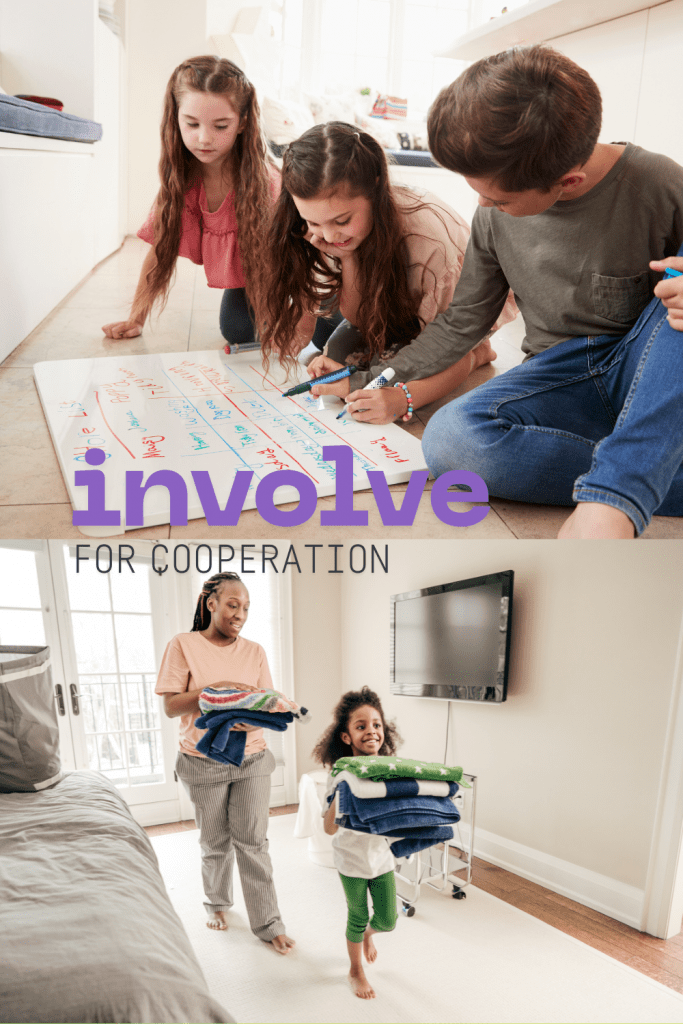
Don’t overhaul your whole day. Begin with mornings or bedtime and build from there. - Let kids help design it
Give them a choice in pictures, colors, or the order. The more ownership, the more likely they’ll use it. - Keep it visible
Routines should be at eye level, not hidden in a drawer. - Make it interactive
Allow children to flip, move, or check off tasks. Tangible progress feels rewarding. - Be flexible
Visual routines guide, not dictate. Life happens — if you skip one step, adjust without guilt. - Celebrate progress
High-five, smile, or give a gentle “I’m proud of you for following your chart” — positive reinforcement helps routines stick.
The Benefits of Visual Routines
By weaving visual routines into family life, you’re giving your child:
- A greater sense of control
- Reduced anxiety during transitions
- Independence and confidence in daily skills
- Less reliance on parental reminders
- Space to practice responsibility in a safe, guided way
And for parents? You get fewer battles, less nagging, and more energy for connection instead of correction.
Are There Downsides?
Like any tool, visual routines can have limits:
- If they’re too detailed, kids may lose interest.
- Over-reliance can make some children resistant to change or flexibility.
- They need occasional updating as children grow and routines evolve.
But with balance — using them as guides, not rigid rules — the benefits far outweigh the cons.

A Gentle Invitation
Creating a visual routine isn’t about perfection; it’s about offering your child a beacon of clarity in their day. It’s about empowering them to move from “being told” what to do, to choosing and doing on their own.
Think of it as gifting them their first compass: small, simple, but powerful enough to help them find their way.
🌟 So tonight, perhaps grab some paper, sit with your child, and sketch tomorrow’s steps together. You may find that in giving them structure, you also create space for more calm, joy, and connection in your family life.
With encouragement and a steady compass,
Lily Luz
Spoon & Sky


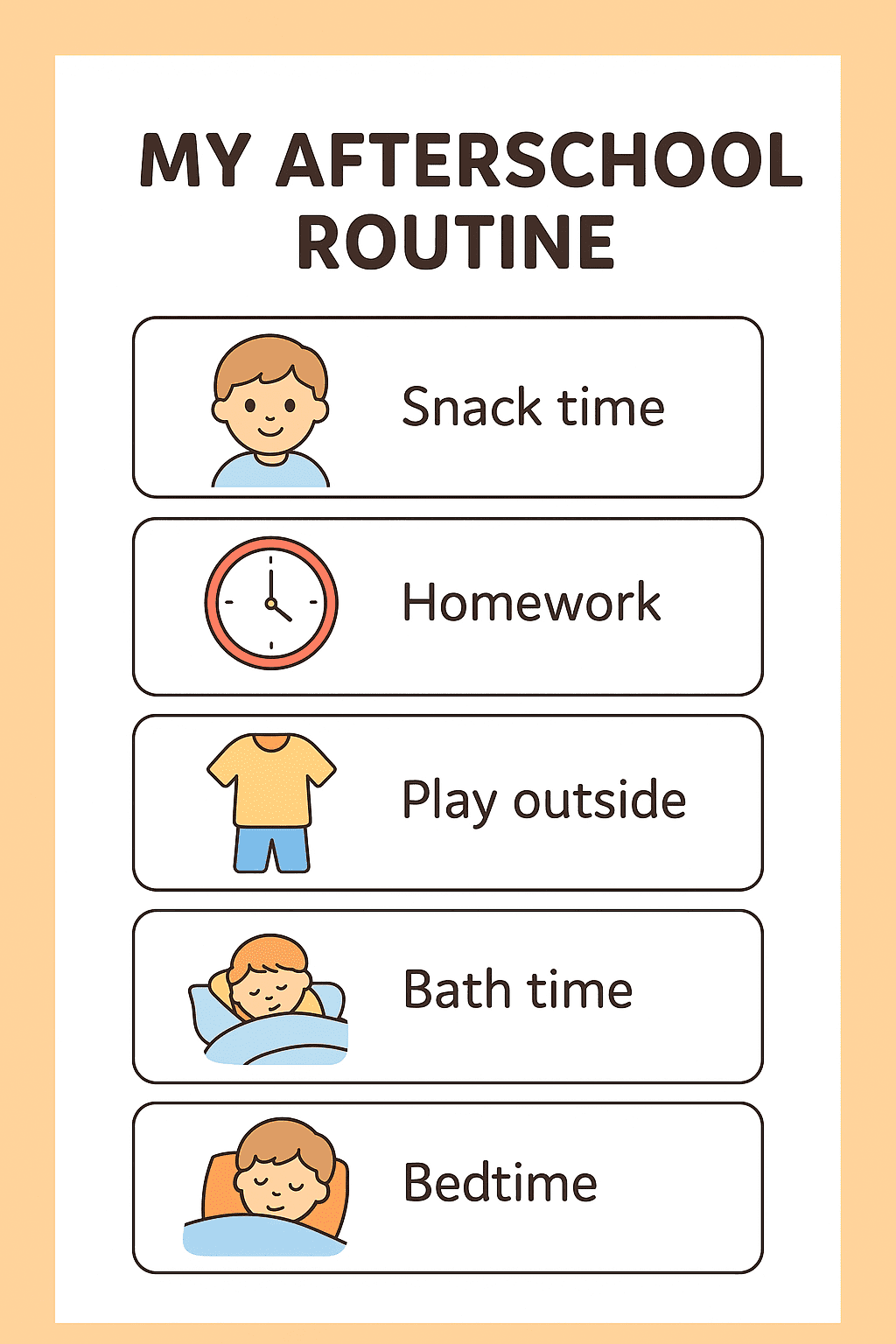
✨ Get Your Free Printable ✨
Looking for a simple way to bring a little more calm, structure, or creativity into your day?
Enter your email below and get instant access to your free printable from Spoon & Sky — made to spark joy, imagination, and gentle rhythms at home. 🌿
We’ll send your printable and a few kind, helpful ideas to your inbox. No spam — just calm, creative family tools.
Leave a Reply