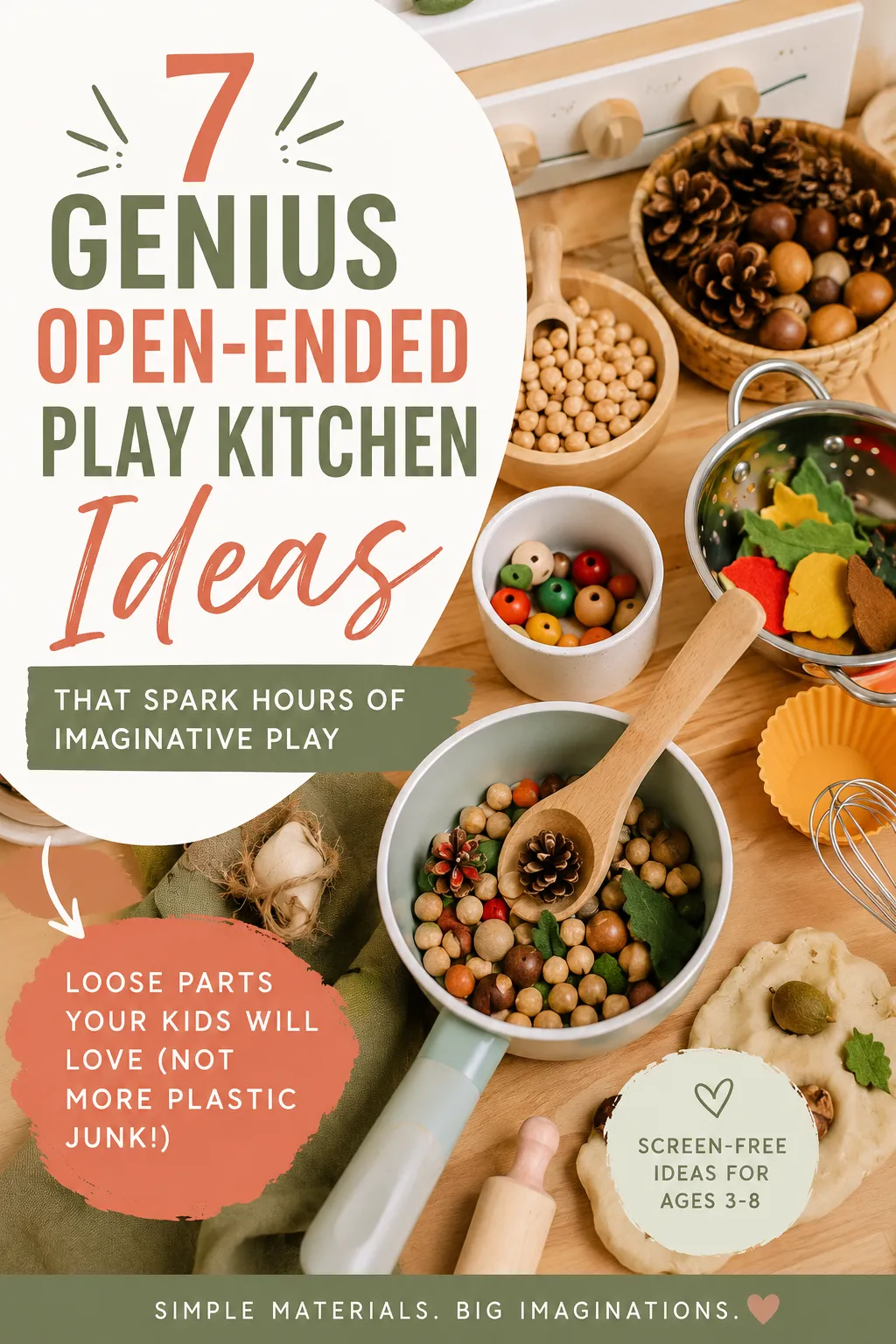
Open-Ended Play Kitchen Ideas: 7 Loose Parts That Keep Kids Playing Longer
Beyond Toy Food: 7 Open-Ended Play Kitchen Ideas That Keep Kids Playing Longer
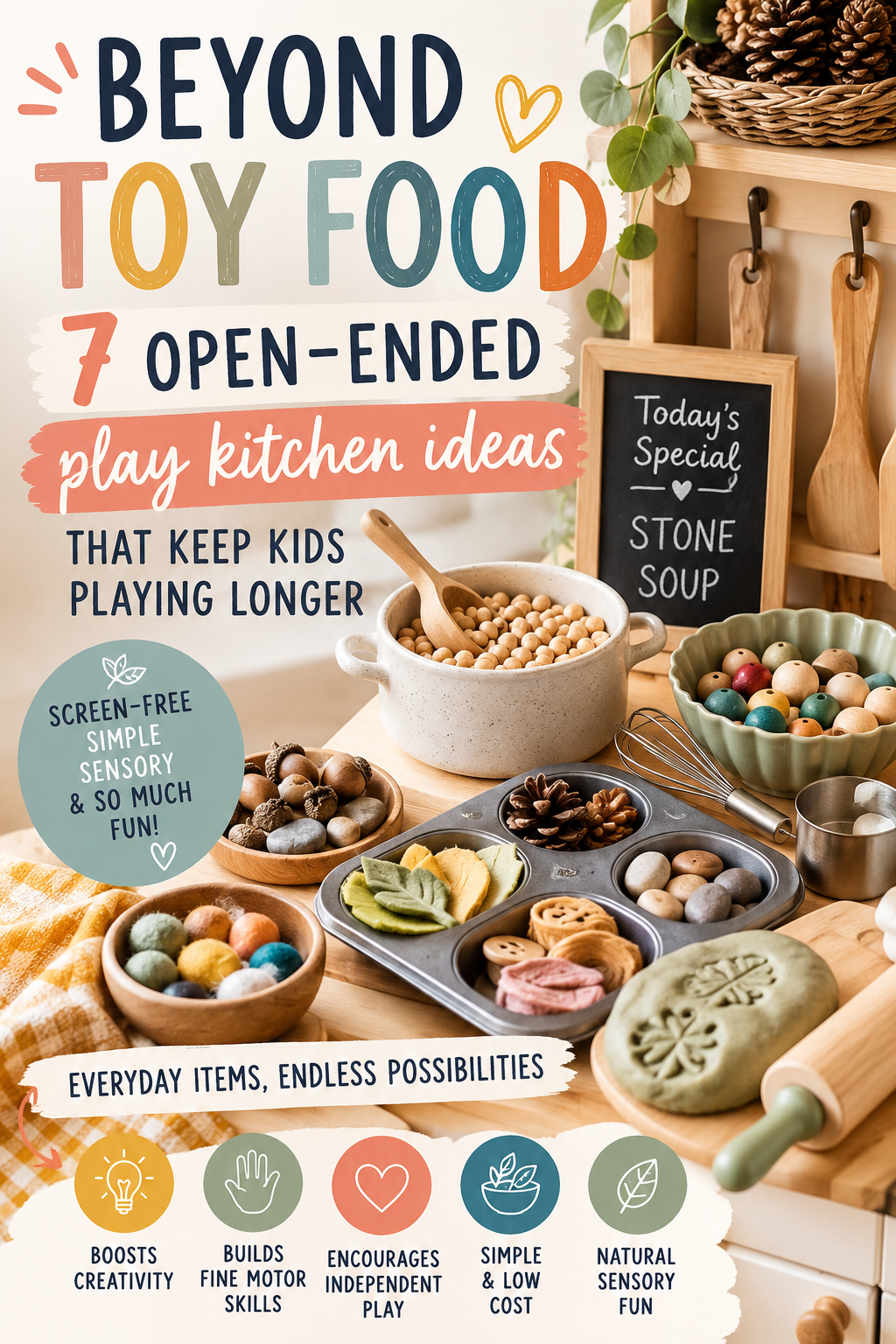
Your child doesn't need more toys. They need more possibilities.
If you've ever bought a beautiful toy kitchen for your child, you're not alone.
Maybe it came with tiny plastic carrots, velcro tomatoes, pretend cupcakes, and a matching set of miniature utensils. At first, it was exciting. The food was chopped, served, sorted, and proudly delivered to every member of the family.
Then, after a few days—or sometimes a few minutes—the novelty wore off.
The plastic carrot was still a carrot.
The cupcake was still a cupcake.
And suddenly that carefully chosen toy kitchen wasn't getting much attention at all.
Many parents assume this means their child needs more accessories, more pretend food, or more elaborate toys.
But often the opposite is true.
The secret to longer-lasting independent play isn't adding more things. It's introducing less defined things.
This is where loose parts play comes in.
Loose parts are materials that can be moved, combined, redesigned, sorted, carried, stacked, poured, mixed, and transformed in countless ways. They don't come with instructions. They don't have a single purpose. They invite children to become the creator rather than the consumer.
A plastic carrot will always be a carrot.
A handful of wooden beads might become soup ingredients, café currency, magical gems, dinosaur eggs, or fuel for a rocket ship.
The less a material tells a child what it should be, the more imagination has room to grow.
The best part?
Many of the most engaging loose parts are things you already have at home.
Here are seven simple additions that can completely transform your play kitchen into a space for deeper, longer-lasting, screen-free play.
1. Wooden Beads & Large Buttons: The Chameleons
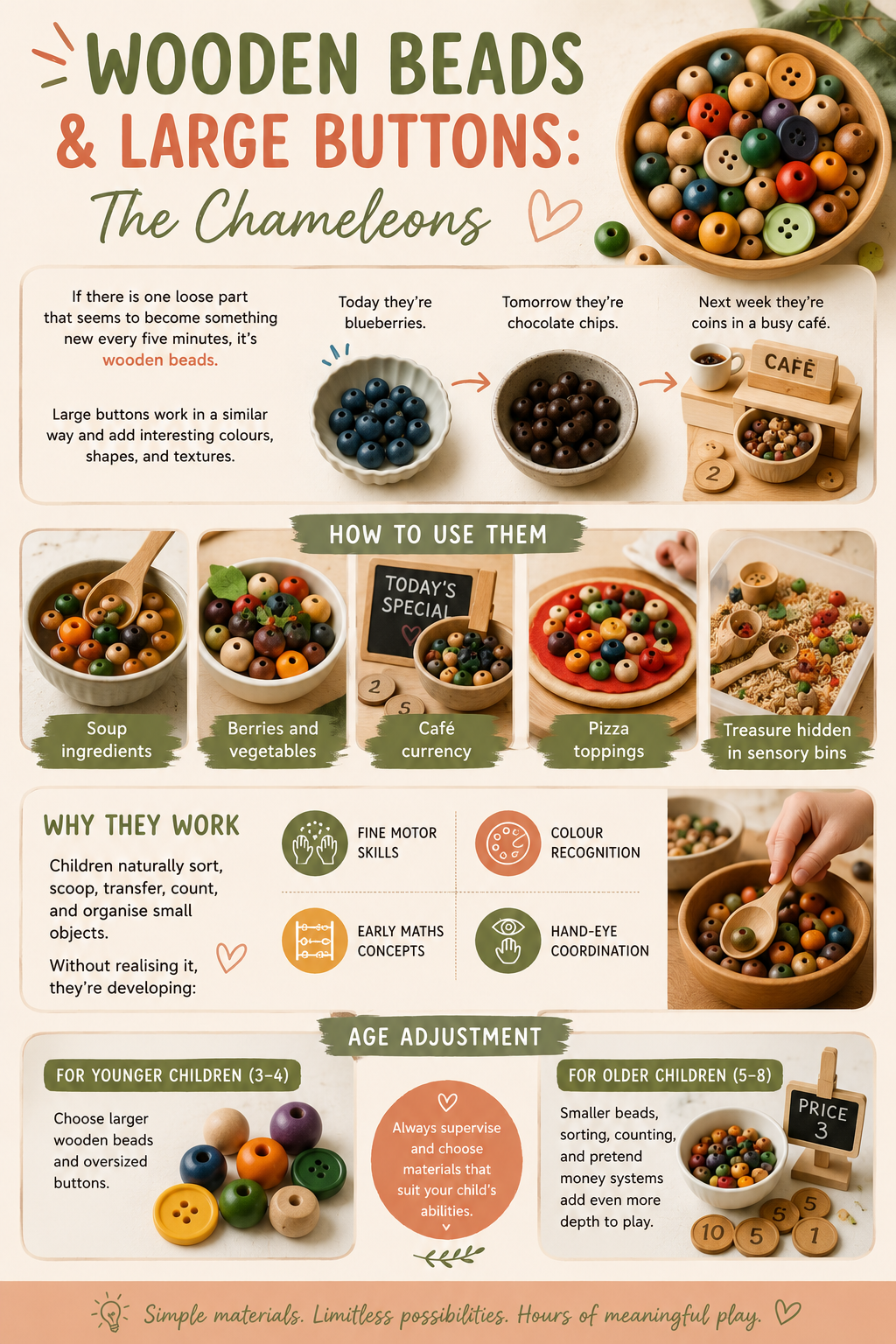
If there is one loose part that seems to become something new every five minutes, it's wooden beads.
Today they're blueberries.
Tomorrow they're chocolate chips.
Next week they're coins in a busy café.
Large buttons work in a similar way and add interesting colours, shapes, and textures.
How To Use Them
Soup ingredients
Berries and vegetables
Café currency
Pizza toppings
Treasure hidden in sensory bins
Why They Work
Children naturally sort, scoop, transfer, count, and organise small objects.
Without realising it, they're developing:
Fine motor skills
Colour recognition
Early maths concepts
Hand-eye coordination
Age Adjustment
For younger children, choose larger wooden beads and oversized buttons. Older children often enjoy adding sorting, counting, and pretend money systems into their play.
2. Dried Chickpeas or Beans: The Sensory Base
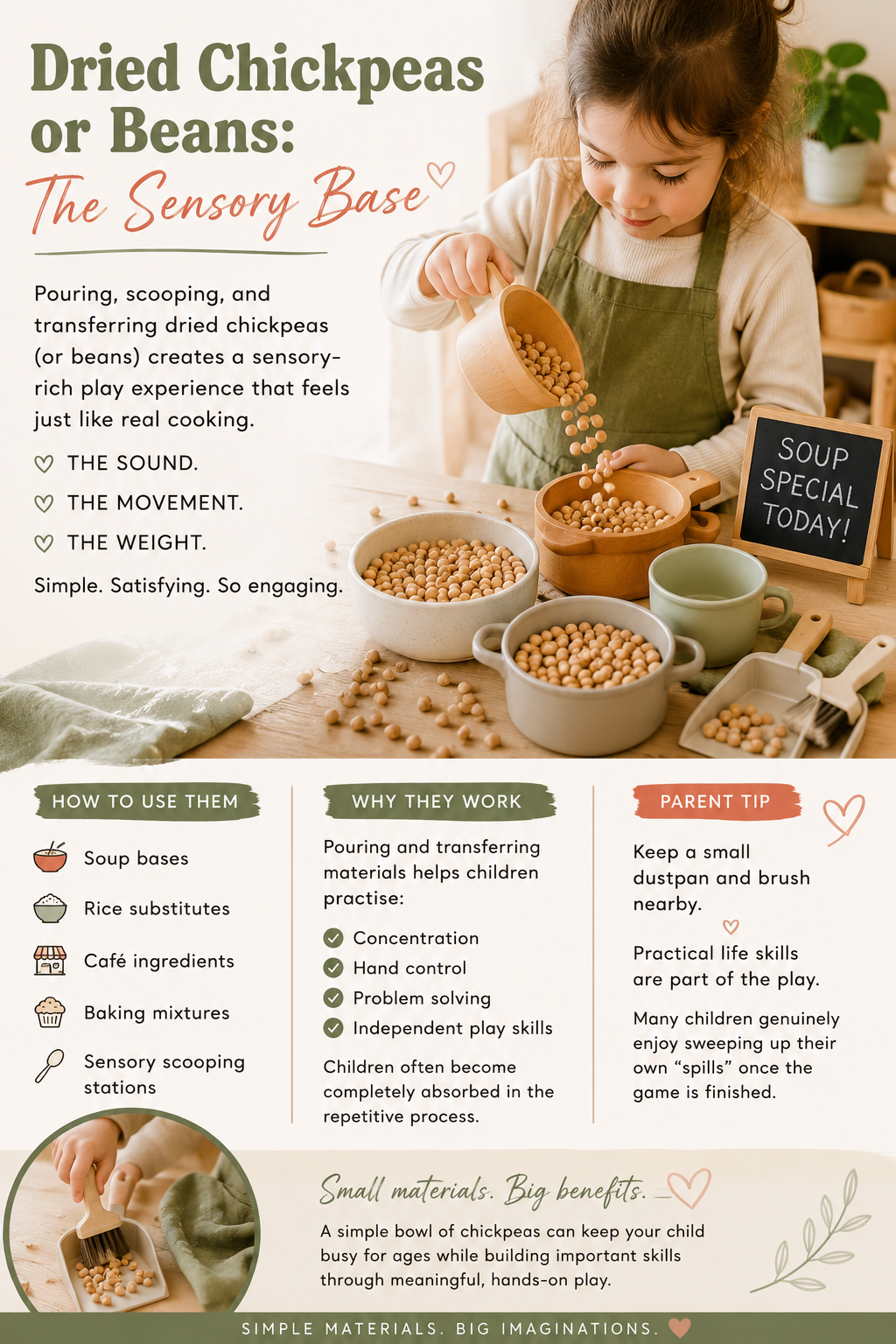
There is something surprisingly satisfying about pouring dried chickpeas from one container to another.
The sound.
The movement.
The weight.
It feels remarkably similar to real cooking.
This simple addition can instantly turn a toy kitchen into a sensory-rich cooking experience.
How To Use Them
Soup bases
Rice substitutes
Café ingredients
Baking mixtures
Sensory scooping stations
Why They Work
Pouring and transferring materials helps children practise:
Concentration
Hand control
Problem solving
Independent play skills
Children often become completely absorbed in the repetitive process.
Parent Tip
Keep a small dustpan and brush nearby.
Practical life skills are part of the play.
Many children genuinely enjoy sweeping up their own "spills" once the game is finished.
3. Pinecones, Acorns & Smooth River Stones: Bringing Nature Into Play
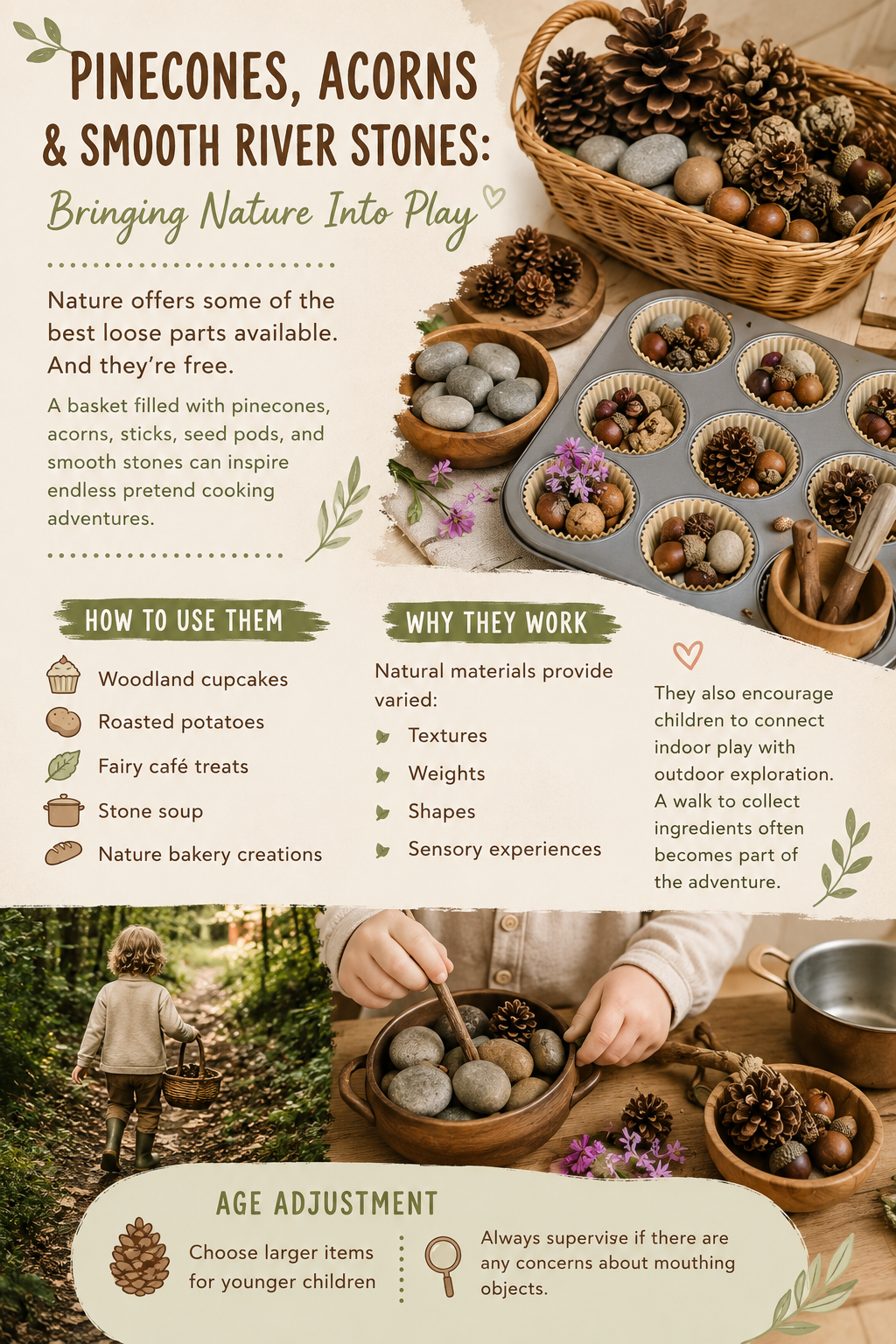
Nature offers some of the best loose parts available.
And they're free.
A basket filled with pinecones, acorns, sticks, seed pods, and smooth stones can inspire endless pretend cooking adventures.
How To Use Them
Woodland cupcakes
Roasted potatoes
Fairy café treats
Stone soup
Nature bakery creations
Why They Work
Natural materials provide varied:
Textures
Weights
Shapes
Sensory experiences
They also encourage children to connect indoor play with outdoor exploration.
A walk to collect ingredients often becomes part of the adventure.
Age Adjustment
Choose larger items for younger children and always supervise if there are any concerns about mouthing objects.
4. Felt Scraps & Fabric Squares
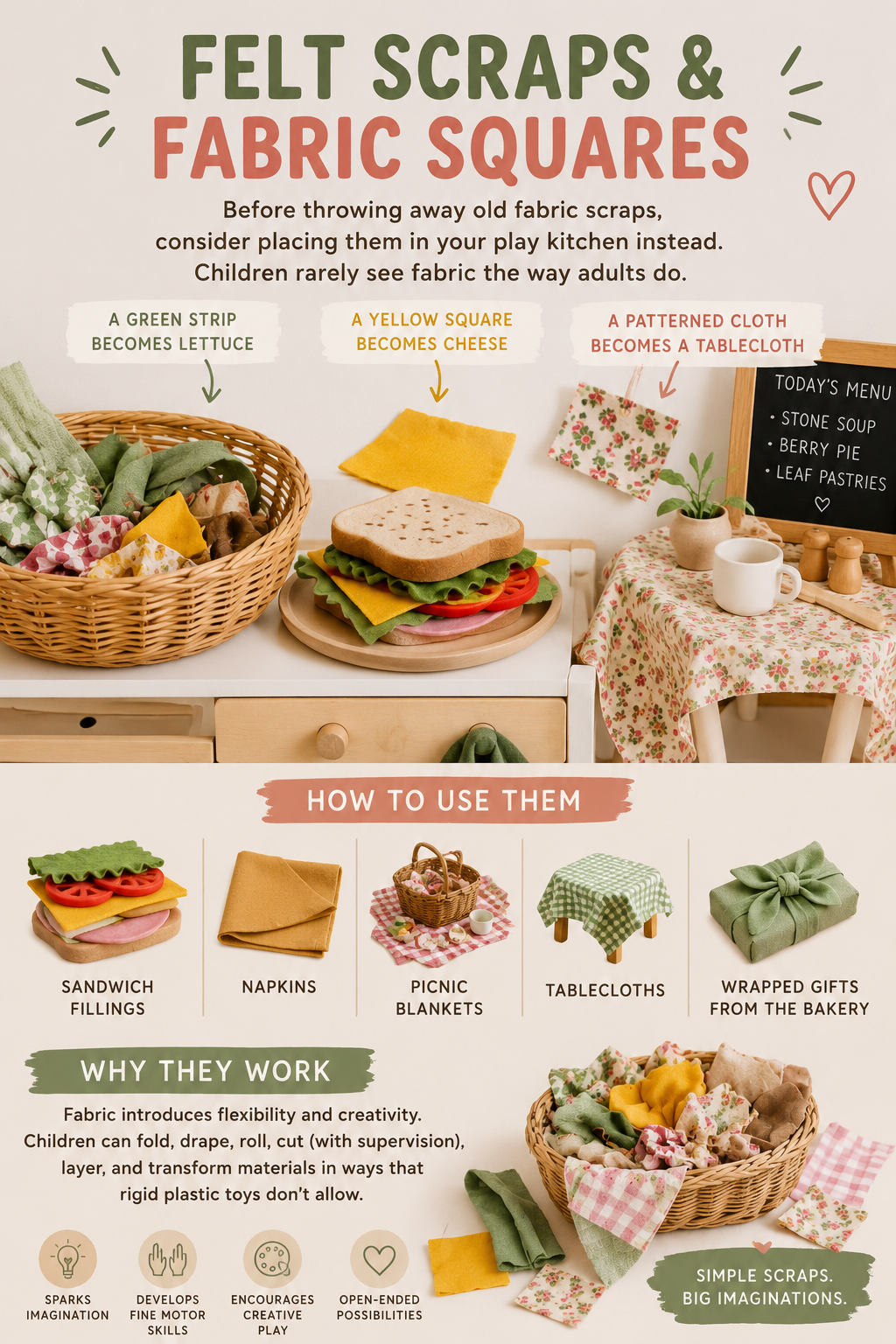
Before throwing away old fabric scraps, consider placing them in your play kitchen instead.
Children rarely see fabric the way adults do.
A green strip becomes lettuce.
A yellow square becomes cheese.
A patterned cloth becomes a restaurant tablecloth.
How To Use Them
Sandwich fillings
Napkins
Picnic blankets
Tablecloths
Wrapped gifts from the bakery
Why They Work
Fabric introduces flexibility and creativity.
Children can fold, drape, roll, cut (with supervision), layer, and transform materials in ways that rigid plastic toys don't allow.
5. Homemade Playdough or Clay
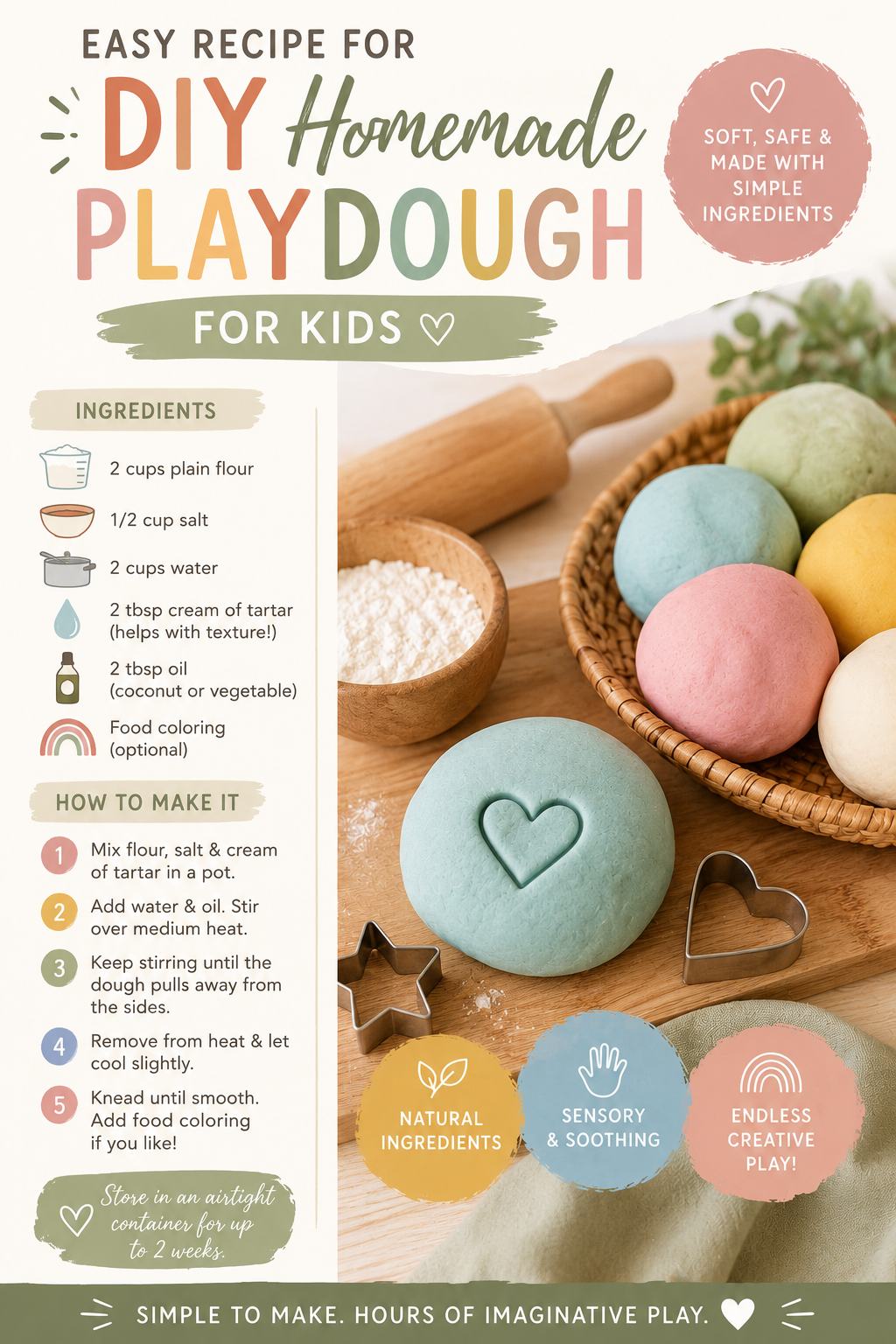
If loose parts are the ingredients, playdough is often the glue that holds everything together.
It can become dough, icing, pastry, pizza bases, cakes, pies, or even the soil in a miniature garden café.
How To Use It
Bake pretend pies
Create cupcakes
Press pinecones into pastry
Build fantasy foods
Construct tiny food displays
Why It Works
Playdough supports:
Fine motor development
Hand strength
Creativity
Sensory exploration
Children can create something completely unique every time they play.
No two bakery displays ever need to look the same.
6. Yarn Strands & Twine: The Endless Spaghetti
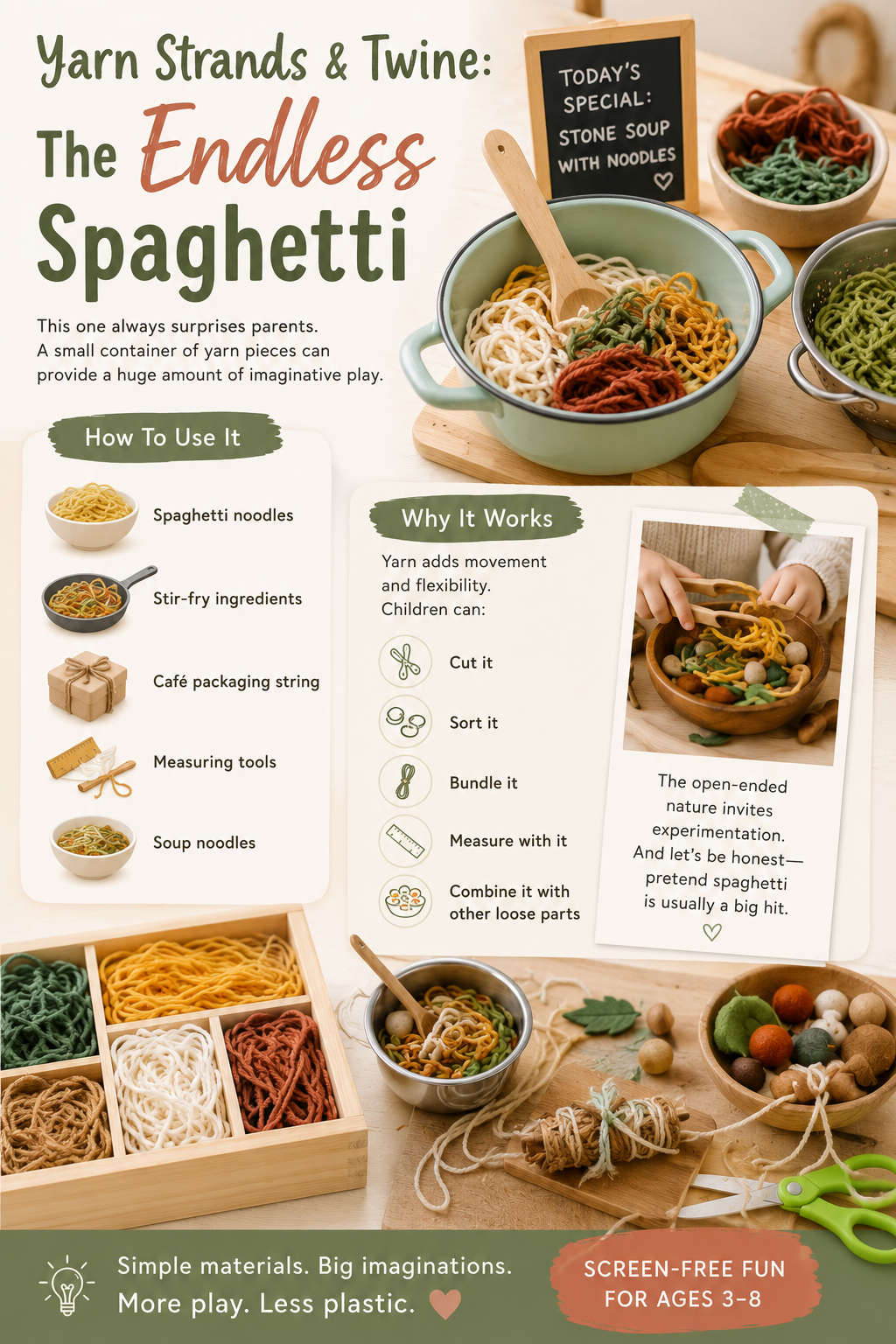
This one always surprises parents.
A small container of yarn pieces can provide a huge amount of imaginative play.
How To Use It
Spaghetti noodles
Stir-fry ingredients
Café packaging string
Measuring tools
Soup noodles
Why It Works
Yarn adds movement and flexibility.
Children can:
Cut it
Sort it
Bundle it
Measure with it
Combine it with other loose parts
The open-ended nature invites experimentation.
And let's be honest—pretend spaghetti is usually a big hit.
7. Real Recycled Kitchenware: The Secret Sauce
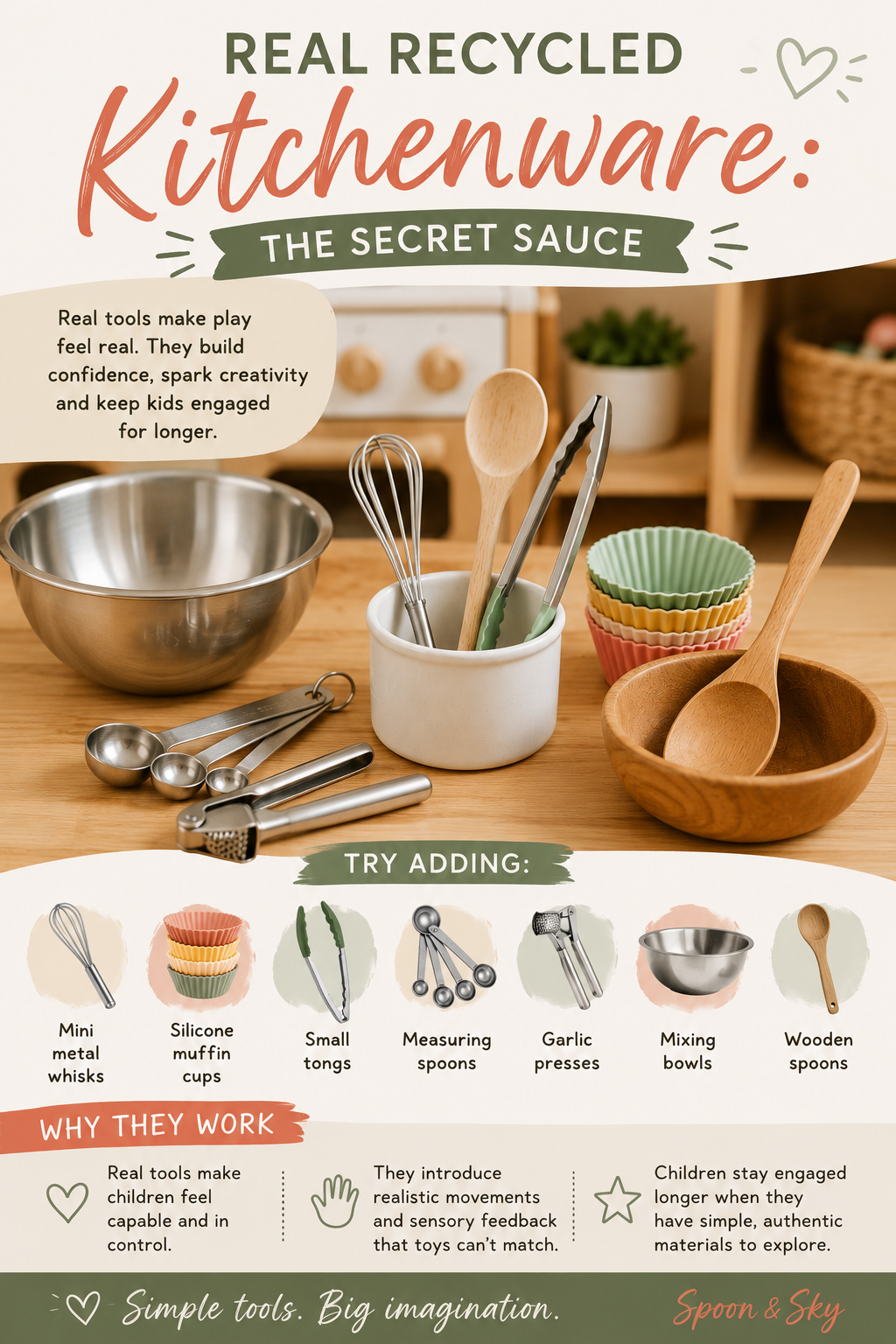
If you want to instantly increase engagement, skip the miniature plastic utensils.
Children are naturally drawn to real tools.
Not sharp or dangerous tools.
Just authentic ones.
A small whisk often feels far more exciting than a toy version.
Try Adding
Mini metal whisks
Silicone muffin cups
Small tongs
Measuring spoons
Garlic presses
Mixing bowls
Wooden spoons
Why They Work
Real tools make children feel capable.
They introduce realistic movements and sensory feedback that toy versions often lack.
Many parents are surprised by how much longer children stay engaged when they have access to simple, authentic materials.
A Quick Safety Note
Loose parts play should always be adapted to your child's age and stage.
For younger children around age three:
Choose larger objects
Use oversized river stones
Use large wooden pieces
Consider large pom-poms instead of small beads
For older children ages six to eight:
Smaller beads
More detailed sorting activities
Play money systems
Menu writing
More complex setups
Always supervise appropriately and choose materials that suit your child's abilities.
Three Easy Play Kitchen Setups
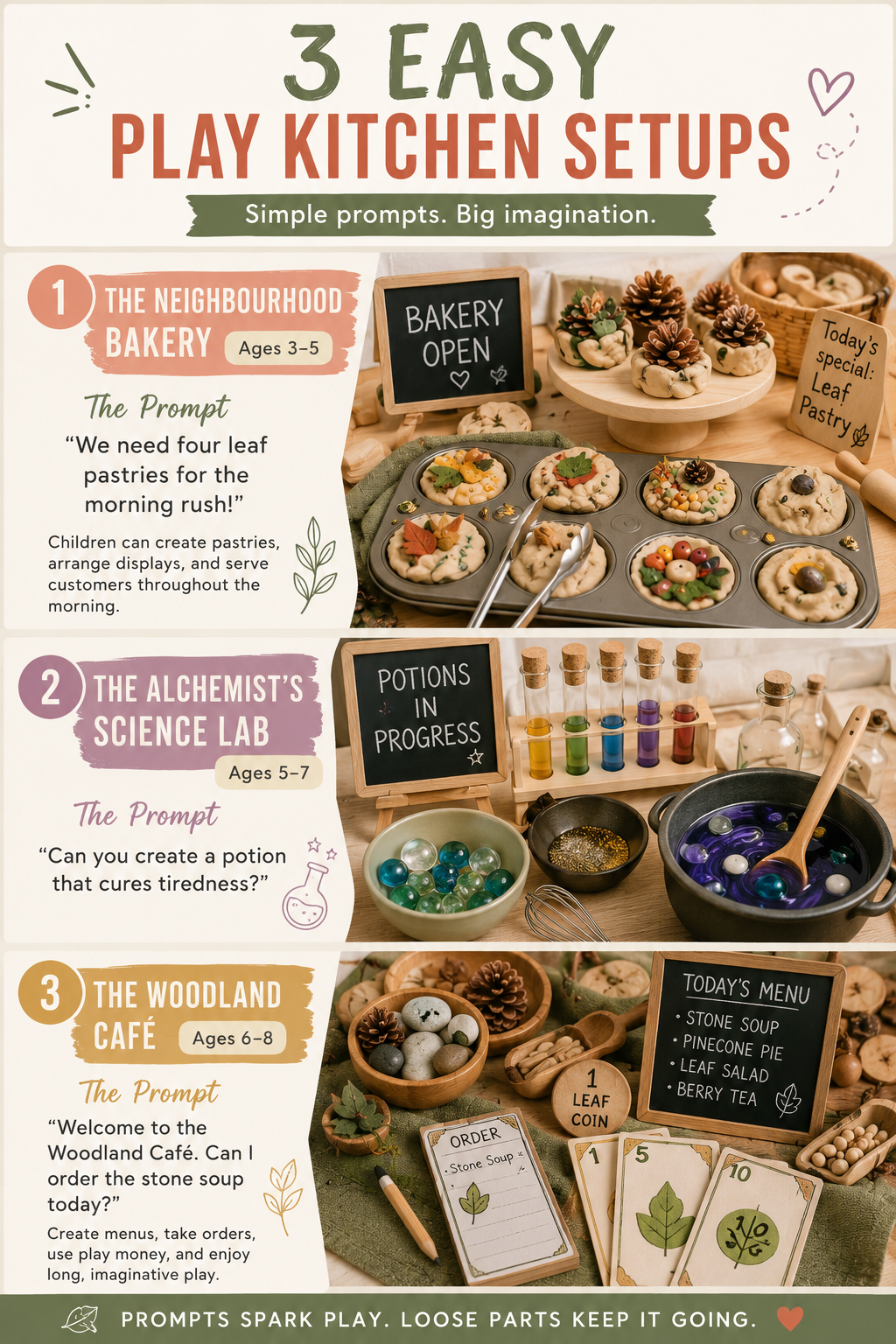
One of the best ways to refresh a play kitchen is to change the story rather than buying new toys.
A simple cardboard sign can completely transform the experience.
Setup 1: The Neighbourhood Bakery (Ages 3–5)
The Prompt
"We need four leaf pastries for the morning rush!"
Materials
Muffin tins
Playdough
Pinecones
Leaves
Wooden spoons
Children can create pastries, arrange displays, and serve customers throughout the morning.
Setup 2: The Alchemist's Science Lab (Ages 5–7)
The Prompt
"Can you create a potion that cures tiredness?"
Materials
Water
Food colouring
Glass pebbles
Whisks
Containers
Eyedroppers
Suddenly the kitchen becomes a magical laboratory full of experiments and discoveries.
Setup 3: The Woodland Café (Ages 6–8)
The Prompt
"Welcome to the Woodland Café. Can I order the stone soup today?"
Materials
Loose parts
Paper
Pencils
Homemade menus
Play money
Older children often enjoy adding writing, maths, and storytelling into their pretend play.
This setup can easily occupy them for long stretches of independent play.
The Parent Sanity Check: What About The Mess?
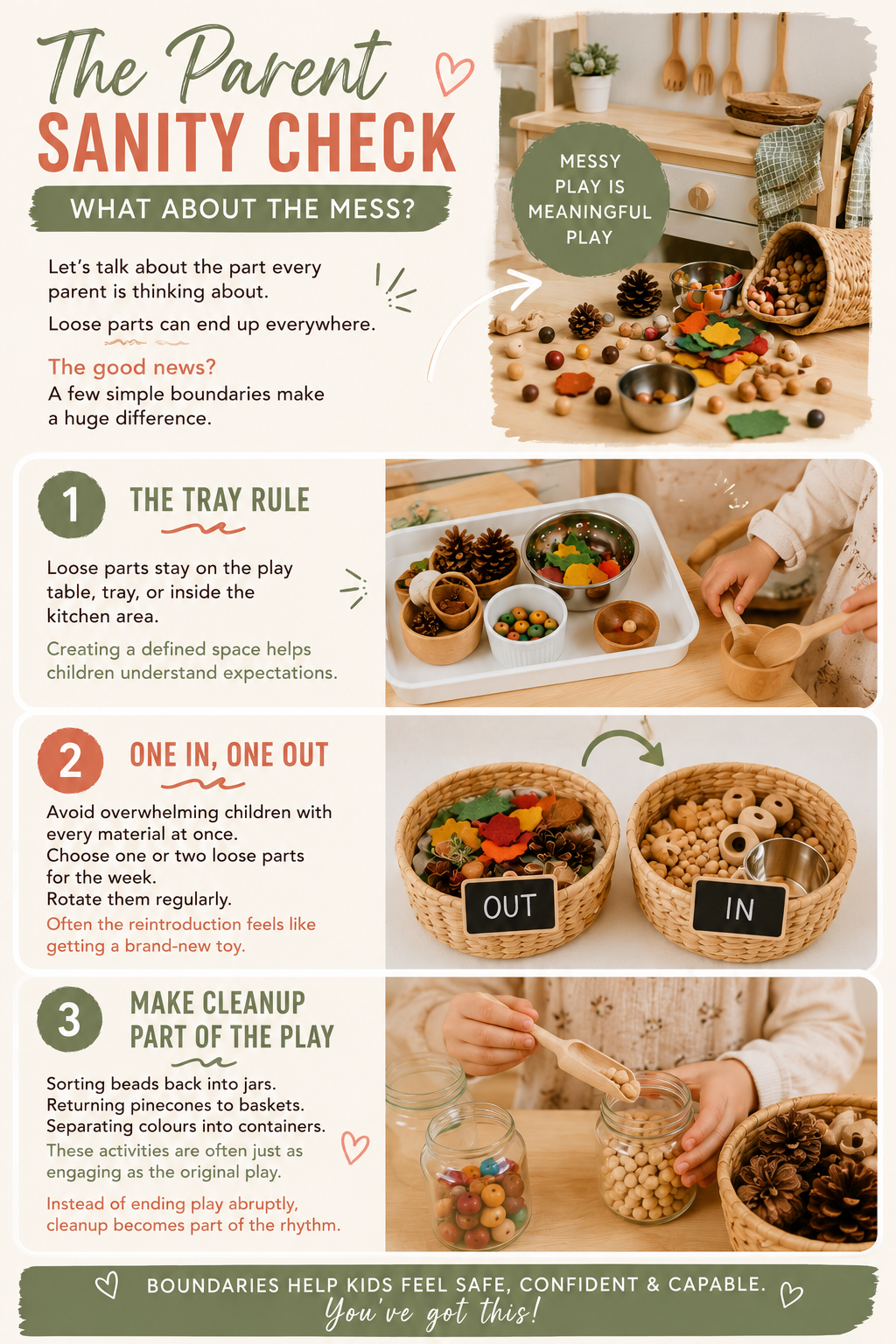
Let's talk about the part every parent is thinking about.
Loose parts can end up everywhere.
The good news?
A few simple boundaries make a huge difference.
1. The Tray Rule
Loose parts stay on the play table, tray, or inside the kitchen area.
Creating a defined space helps children understand expectations.
2. One In, One Out
Avoid overwhelming children with every material at once.
Choose one or two loose parts for the week.
Rotate them regularly.
Often the reintroduction feels like getting a brand-new toy.
3. Make Cleanup Part Of The Play
Sorting beads back into jars.
Returning pinecones to baskets.
Separating colours into containers.
These activities are often just as engaging as the original play.
Instead of ending play abruptly, cleanup becomes part of the rhythm.
A Simpler Way To Encourage Independent Play
One of the biggest myths about play is that children need more toys to stay engaged.
In reality, they often need fewer instructions.
A perfect playroom isn't what sparks imagination.
A collection of simple materials, a little freedom, and permission to experiment can go much further than shelves filled with plastic accessories.
So before buying another set of pretend cupcakes, try adding a basket of pinecones, a handful of beads, or a few fabric scraps instead.
You might be surprised by how long your child stays busy when they get to decide what everything becomes.
Because the most meaningful play doesn't come from having the right toy.
It comes from having the freedom to imagine something new.
I'd love to hear from you.
What's the strangest household item your child has ever turned into food in their play kitchen?
Share it in the comments below—we're always looking for new ideas!
And while they're busy cooking up stone soup and woodland cupcakes, don't miss our guide to easy batch cooking for busy families, where you'll learn how to fill your own freezer while the kids fill their café with customers.