The Calm Back-to-School Reset: 12 Small Changes for Easier School Mornings | Spoon & Sky
The Calm Back-to-School Reset: 12 Small Changes That Make School Mornings Easier
Because calmer mornings don't happen by accident—they're created one small habit at a time.
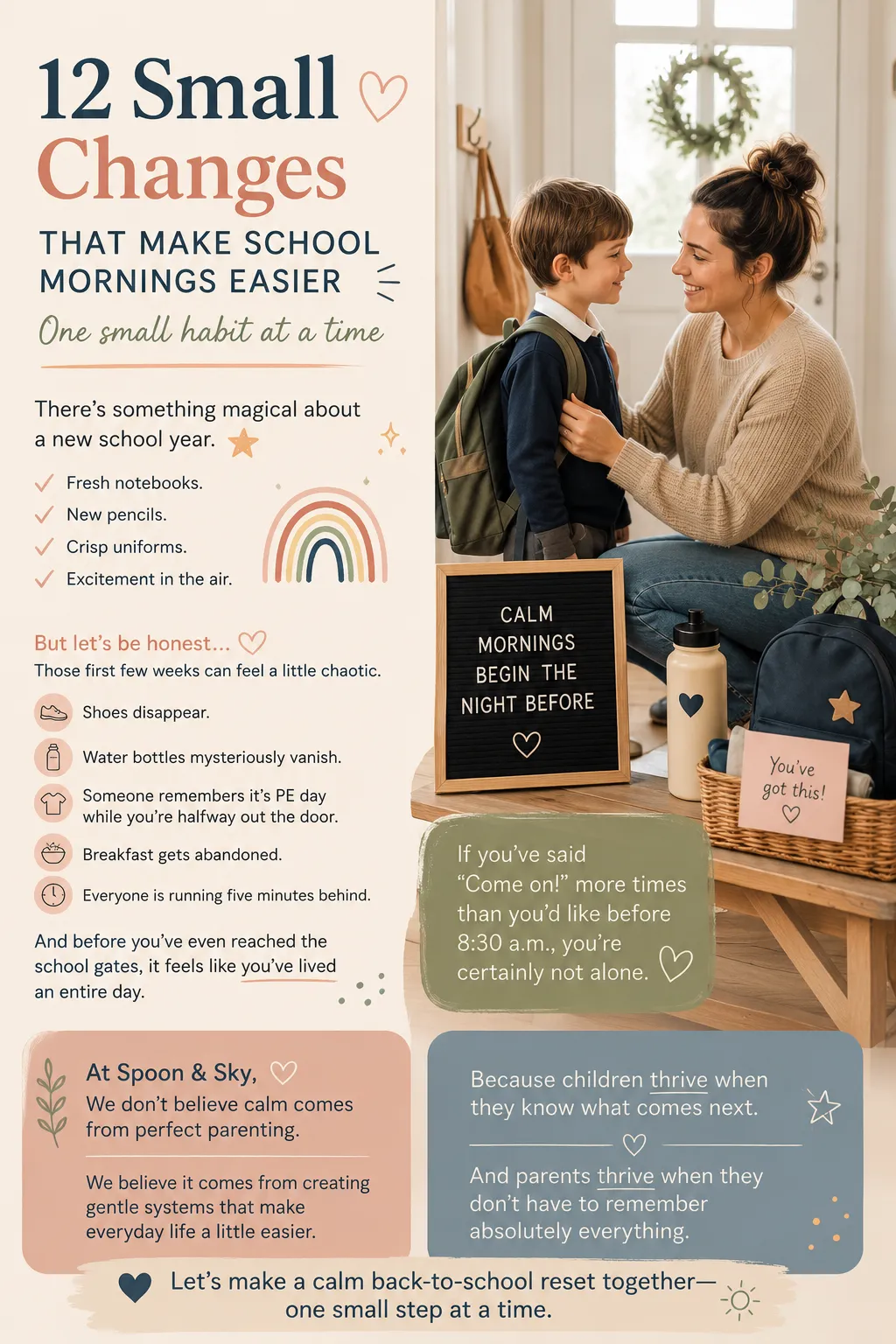
There’s something magical about a new school year.
Fresh notebooks.
New pencils.
Crisp uniforms.
Excitement hanging in the air.
But if we're honest, those first few weeks can also feel... a little chaotic.
Shoes disappear.
Water bottles mysteriously vanish.
Someone suddenly remembers it's PE day while you're halfway out the door.
Breakfast gets abandoned.
Everyone is running five minutes behind.
And before you've even reached the school gates, it feels like you've lived an entire day.
If you've ever found yourself saying "Come on!" more times than you'd like before 8:30 a.m., you're certainly not alone.
At Spoon & Sky, we don't believe calm comes from perfect parenting.
We believe it comes from creating gentle systems that make everyday life just a little easier.
Because children thrive when they know what comes next.
And parents thrive when they don't have to remember absolutely everything.
So instead of trying to become a "more organised parent" overnight, let's make a calm back-to-school reset together—one small step at a time.
Why School Mornings Feel So Stressful
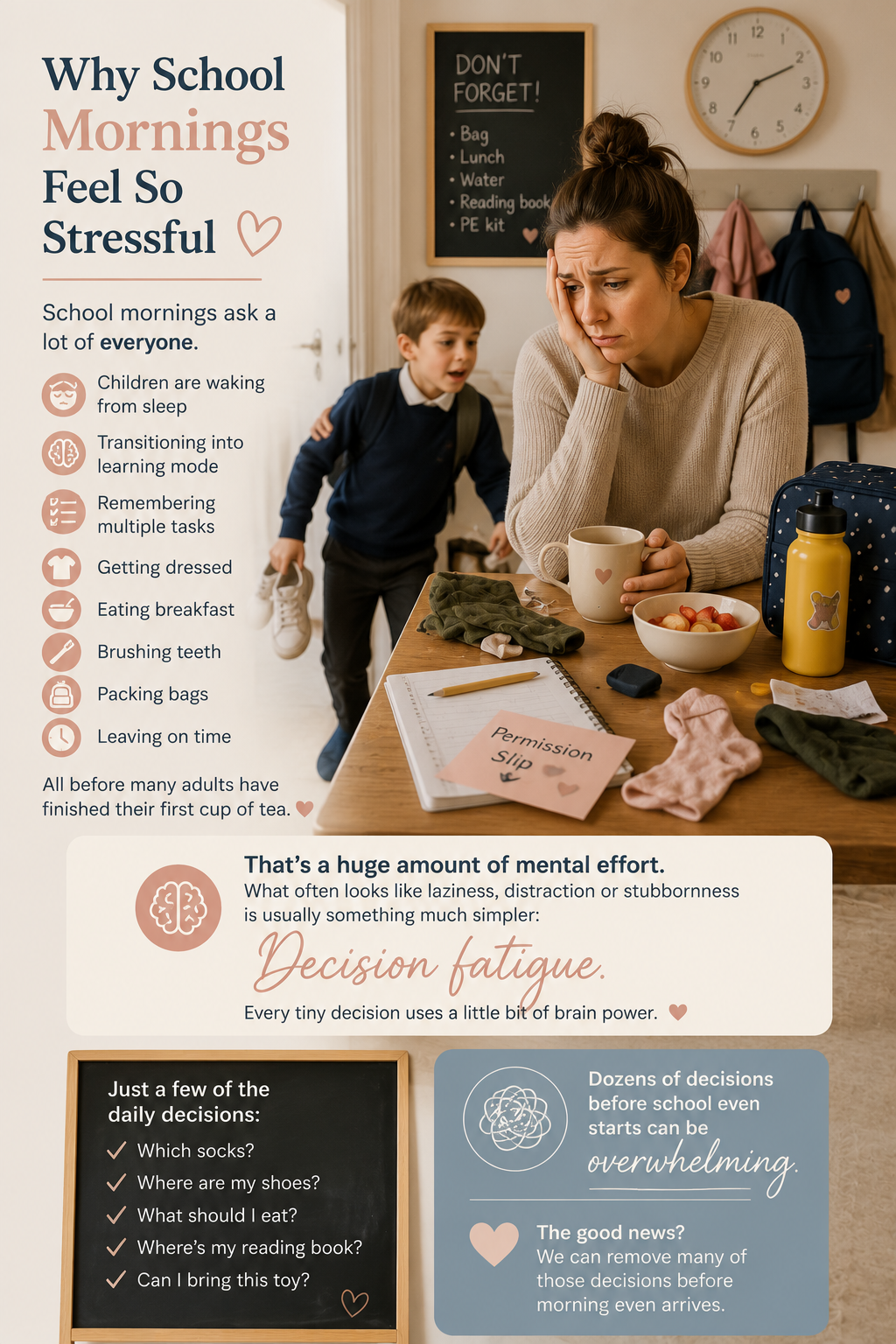
School mornings ask a lot of everyone.
Children are waking from sleep, transitioning into learning mode, remembering multiple tasks, following instructions, getting dressed, eating breakfast, brushing teeth, packing bags and leaving on time—all before many adults have finished their first cup of tea.
That's a huge amount of mental effort.
What often looks like laziness, distraction or stubbornness is usually something much simpler:
Decision fatigue.
Every tiny decision uses a little bit of brain power.
Which socks?
Where are my shoes?
What should I eat?
Where's my reading book?
Can I bring this toy?
When children have to make dozens of decisions before school even starts, it's no surprise they become overwhelmed.
The good news?
We can remove many of those decisions before morning even arrives.
1. Prepare the Night Before
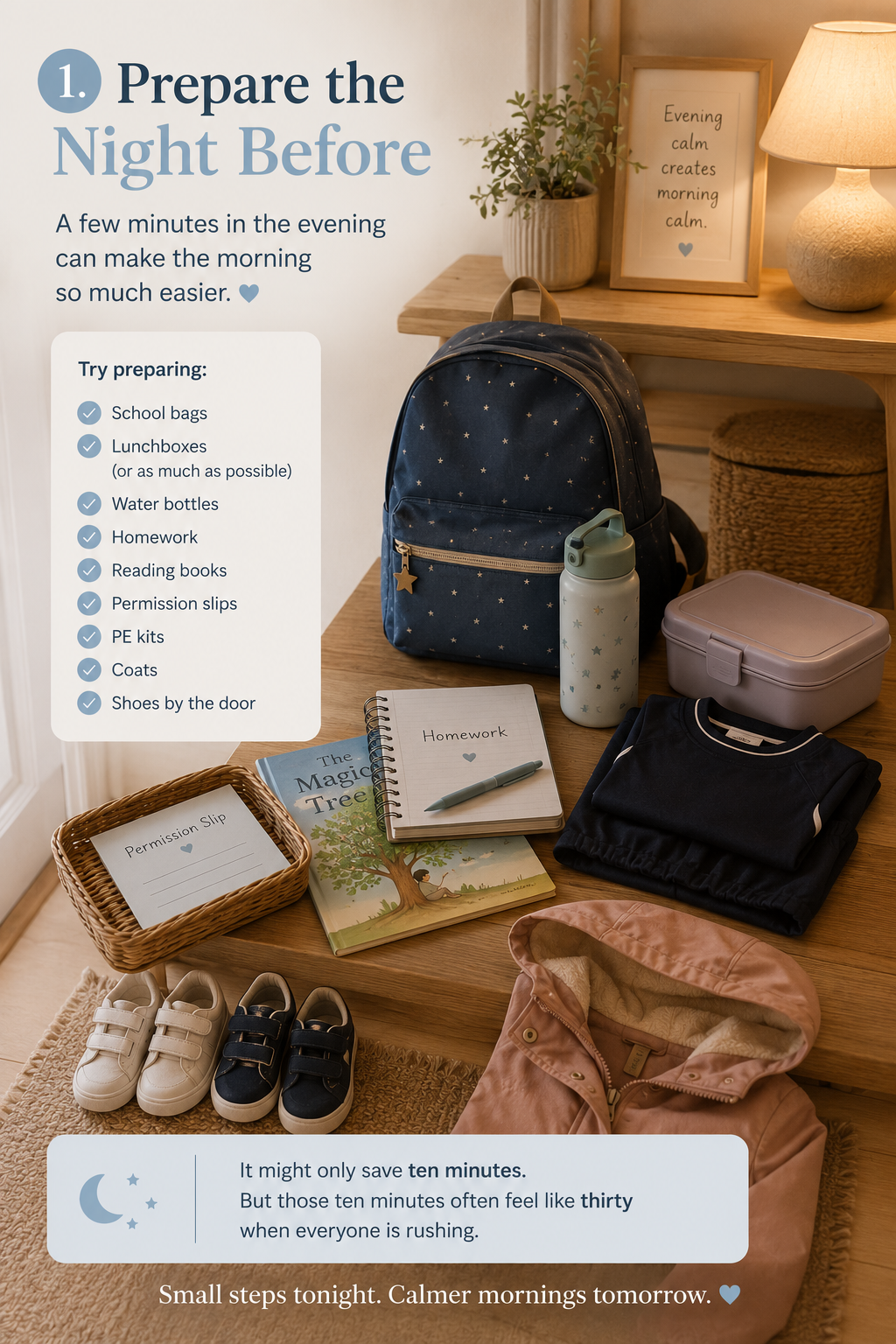
One of the simplest ways to create calmer mornings is to move small jobs into the evening.
Instead of trying to do everything between waking up and leaving the house, spread those jobs across the previous day.
Try preparing:
school bags
lunchboxes (or as much as possible)
water bottles
homework
reading books
permission slips
PE kits
coats
shoes by the door
It might only save ten minutes.
But those ten minutes often feel like thirty when everyone is rushing.
Remember:
Evening calm creates morning calm.
2. Create a Simple Launch Station
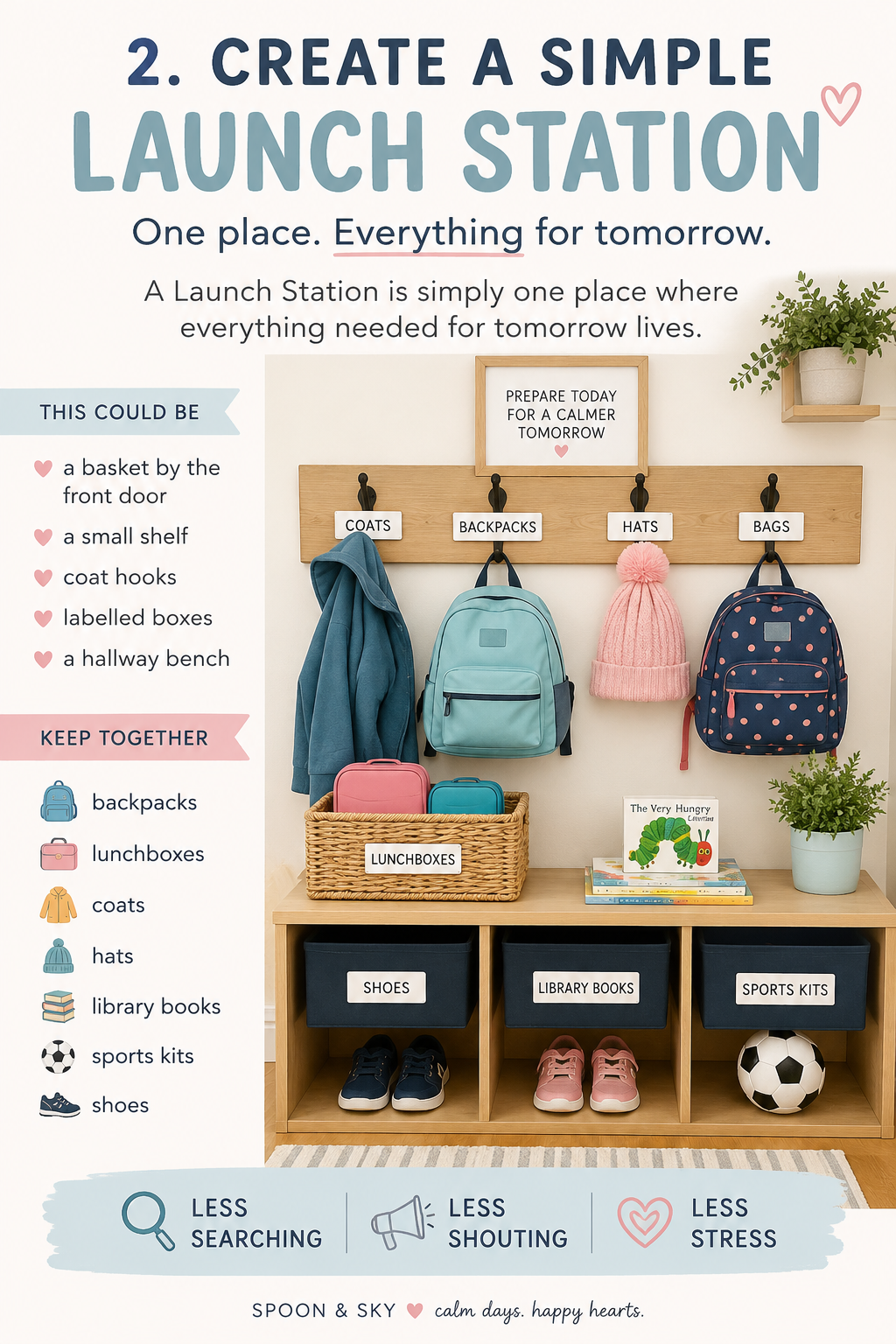
One of our favourite family organisation ideas is something we call a Launch Station.
It's simply one place where everything needed for tomorrow lives.
This could be:
a basket by the front door
a small shelf
coat hooks
labelled boxes
a hallway bench
Keep together:
backpacks
shoes
lunchboxes
coats
hats
library books
sports kits
Instead of searching around the house every morning, children begin learning that everything has one predictable home.
Less searching.
Less shouting.
Less stress.
3. Use a School Bag Checklist
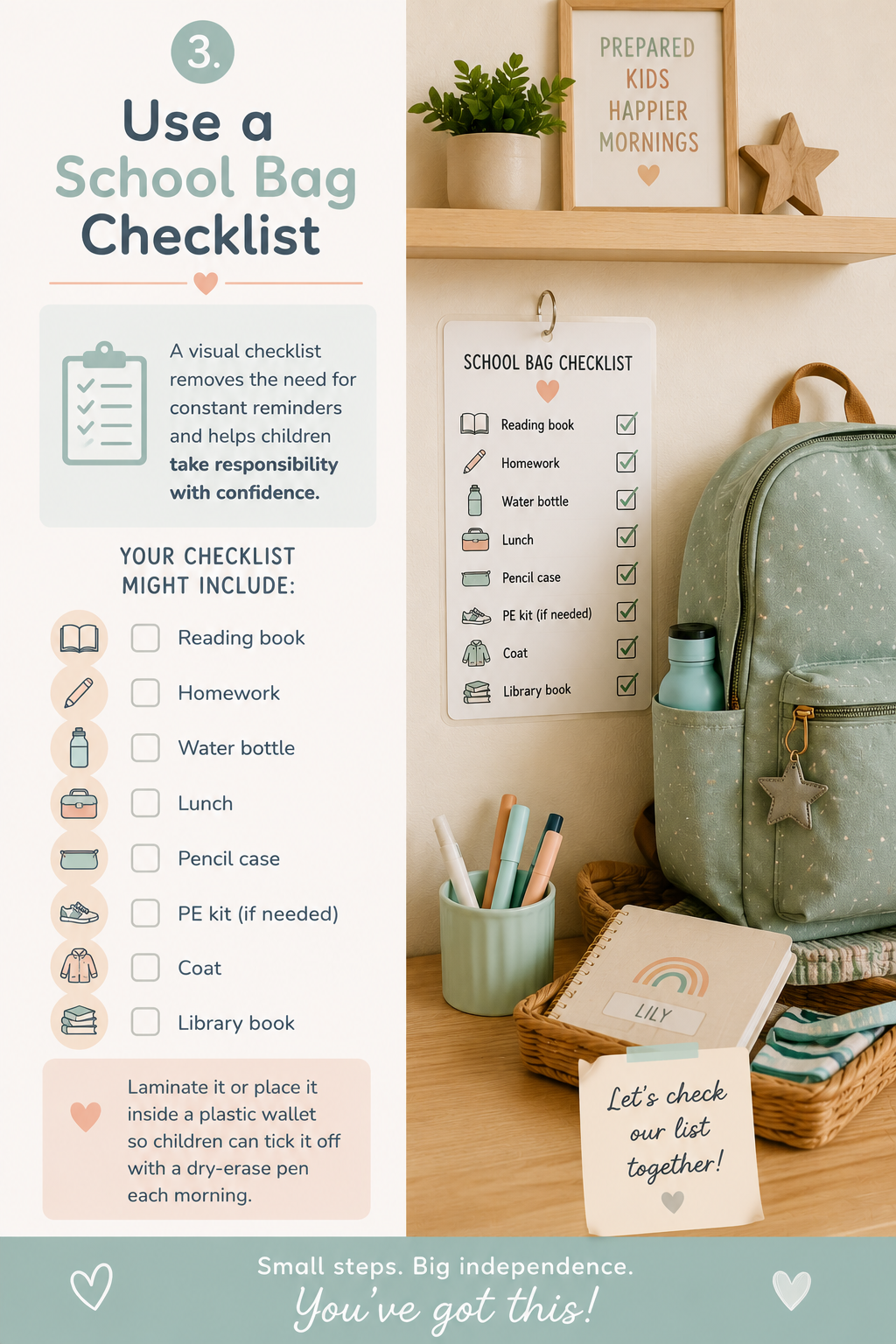
Children love independence—but remembering every item isn't always easy.
A visual checklist removes the need for constant reminders.
Your checklist might include:
✓ Reading book
✓ Homework
✓ Water bottle
✓ Lunch
✓ Pencil case
✓ PE kit (if needed)
✓ Coat
✓ Library book
Laminate it or place it inside a plastic wallet so children can tick it off with a dry-erase pen each morning.
Rather than asking,
"Did you pack your water bottle?"
you can simply say,
"Let's check your list together."
It's a tiny shift that encourages responsibility without pressure.
4. Lay Out Tomorrow's Clothes
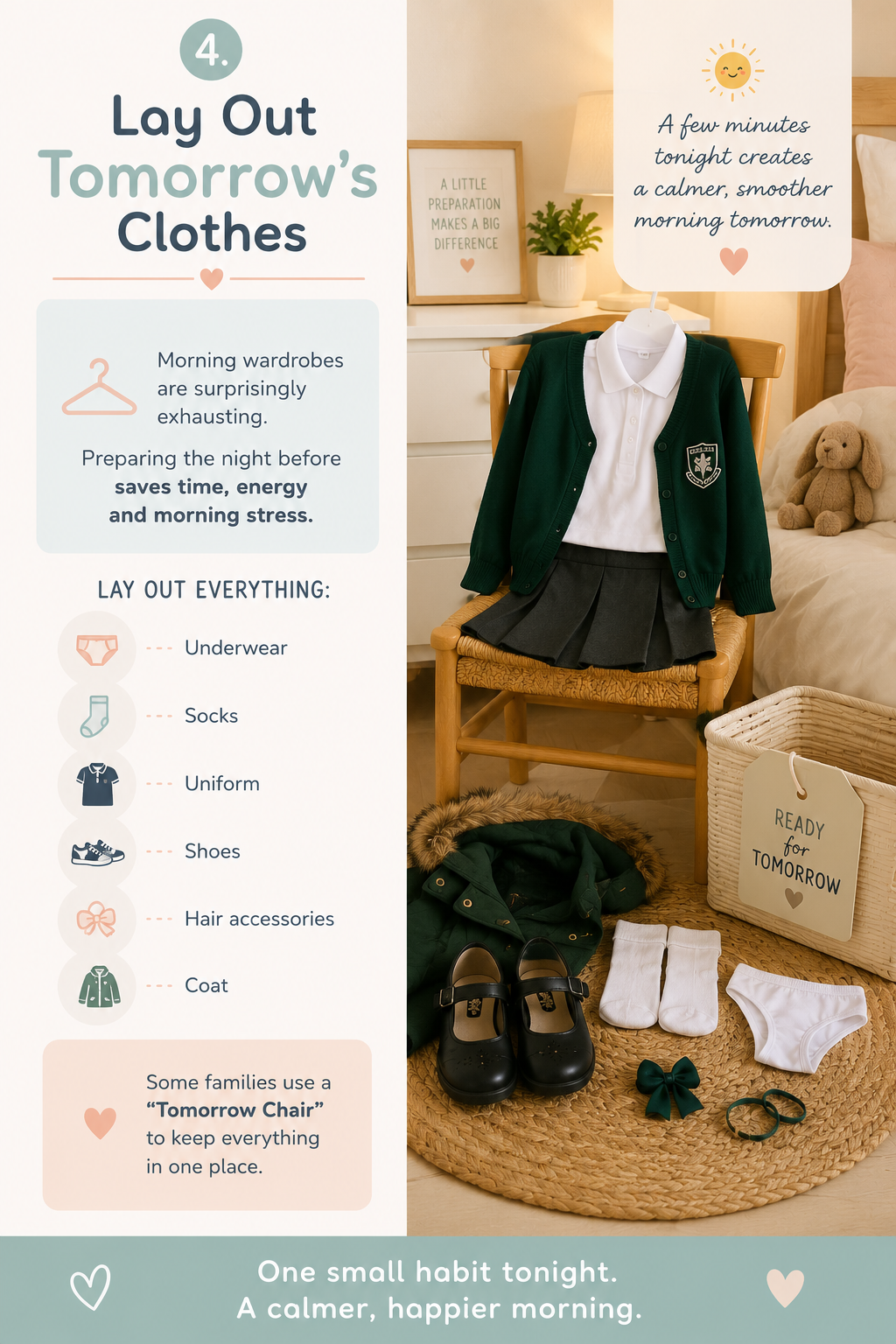
Morning wardrobes are surprisingly exhausting.
Children often change their minds multiple times before settling on an outfit.
Uniform makes this easier, but socks, shoes, jumpers, cardigans and PE days can still create confusion.
Each evening, lay everything out together.
Include:
underwear
socks
uniform
shoes
hair accessories
coat
Some families even create a "Tomorrow Chair" where everything waits ready.
It may seem simple.
But removing one decision often changes the tone of the whole morning.
5. Make Breakfast Easy
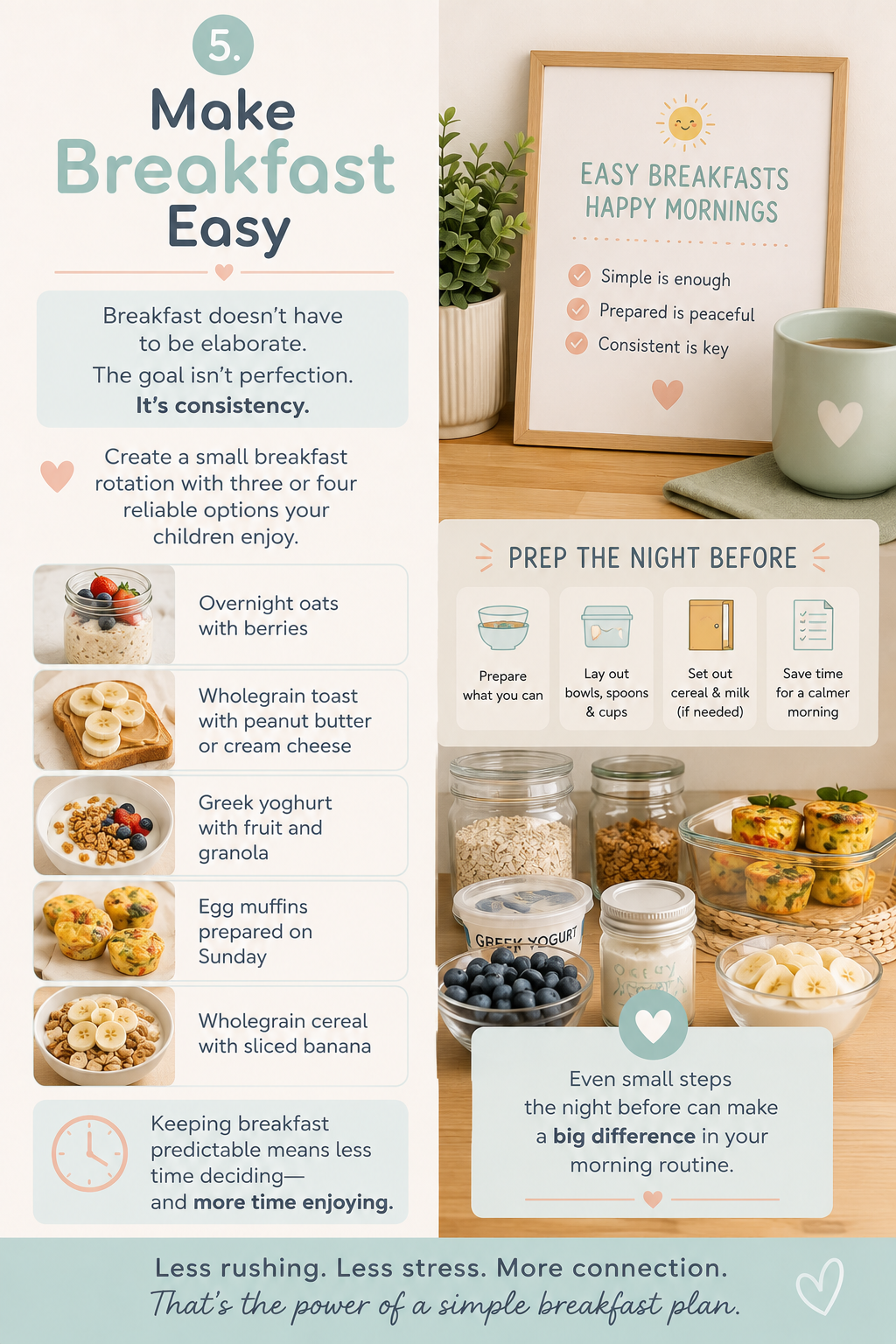
Breakfast doesn't have to be elaborate.
The goal isn't perfection.
It's consistency.
Create a small breakfast rotation with three or four reliable options your children enjoy.
For example:
Overnight oats with berries
Wholegrain toast with peanut butter or cream cheese
Greek yoghurt with fruit and granola
Egg muffins prepared on Sunday
Wholegrain cereal with sliced banana
Keeping breakfast predictable means less time deciding—and more time enjoying.
If mornings are particularly rushed, prepare as much as possible the evening before.
Even placing bowls, spoons and cereal together can make everything feel smoother.
6. Use Visual Routine Cards
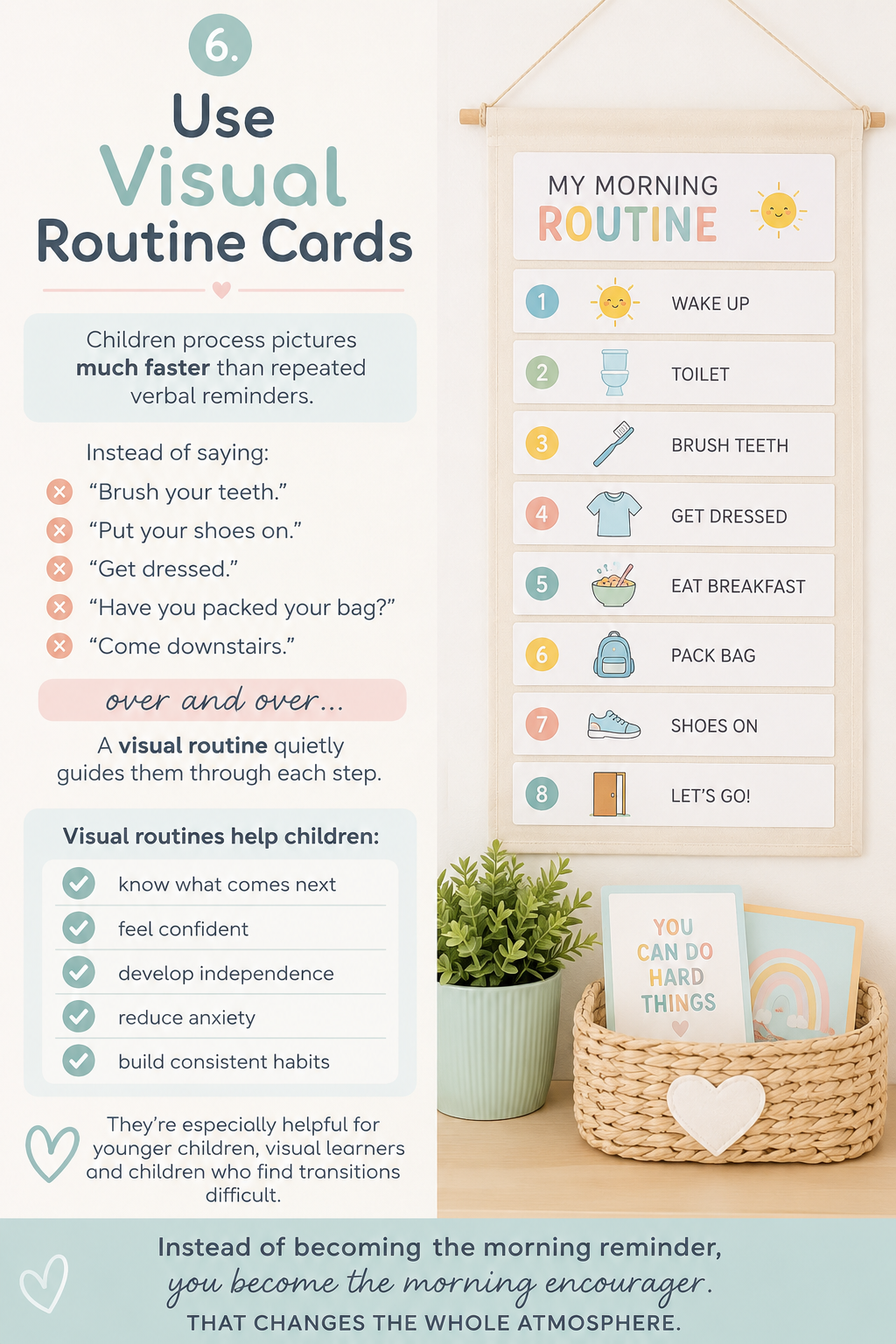
Children process pictures much faster than repeated verbal reminders.
Instead of saying:
"Brush your teeth."
"Put your shoes on."
"Get dressed."
"Have you packed your bag?"
"Come downstairs."
over and over...
A visual routine quietly guides them through each step.
Visual routines help children:
know what comes next
feel confident
develop independence
reduce anxiety
build consistent habits
They're especially helpful for younger children, visual learners and children who find transitions difficult.
Instead of becoming the morning reminder, you become the morning encourager.
That changes the whole atmosphere.
7. Build in a 10-Minute Buffer
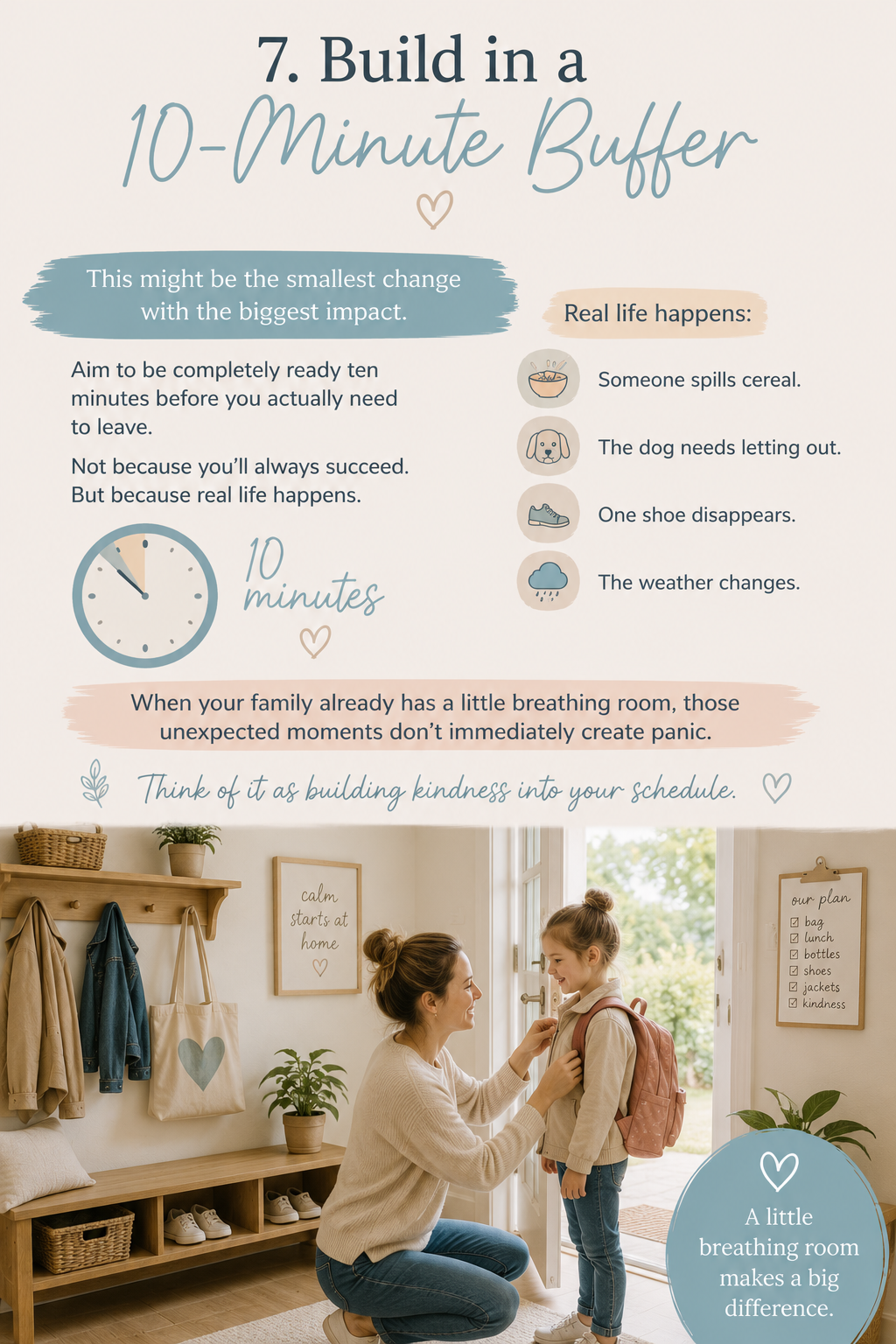
This might be the smallest change with the biggest impact.
Aim to be completely ready ten minutes before you actually need to leave.
Not because you'll always succeed.
But because real life happens.
Someone spills cereal.
The dog needs letting out.
One shoe disappears.
The weather changes.
When your family already has a little breathing room, those unexpected moments don't immediately create panic.
Think of it as building kindness into your schedule.
8. Give Children Ownership
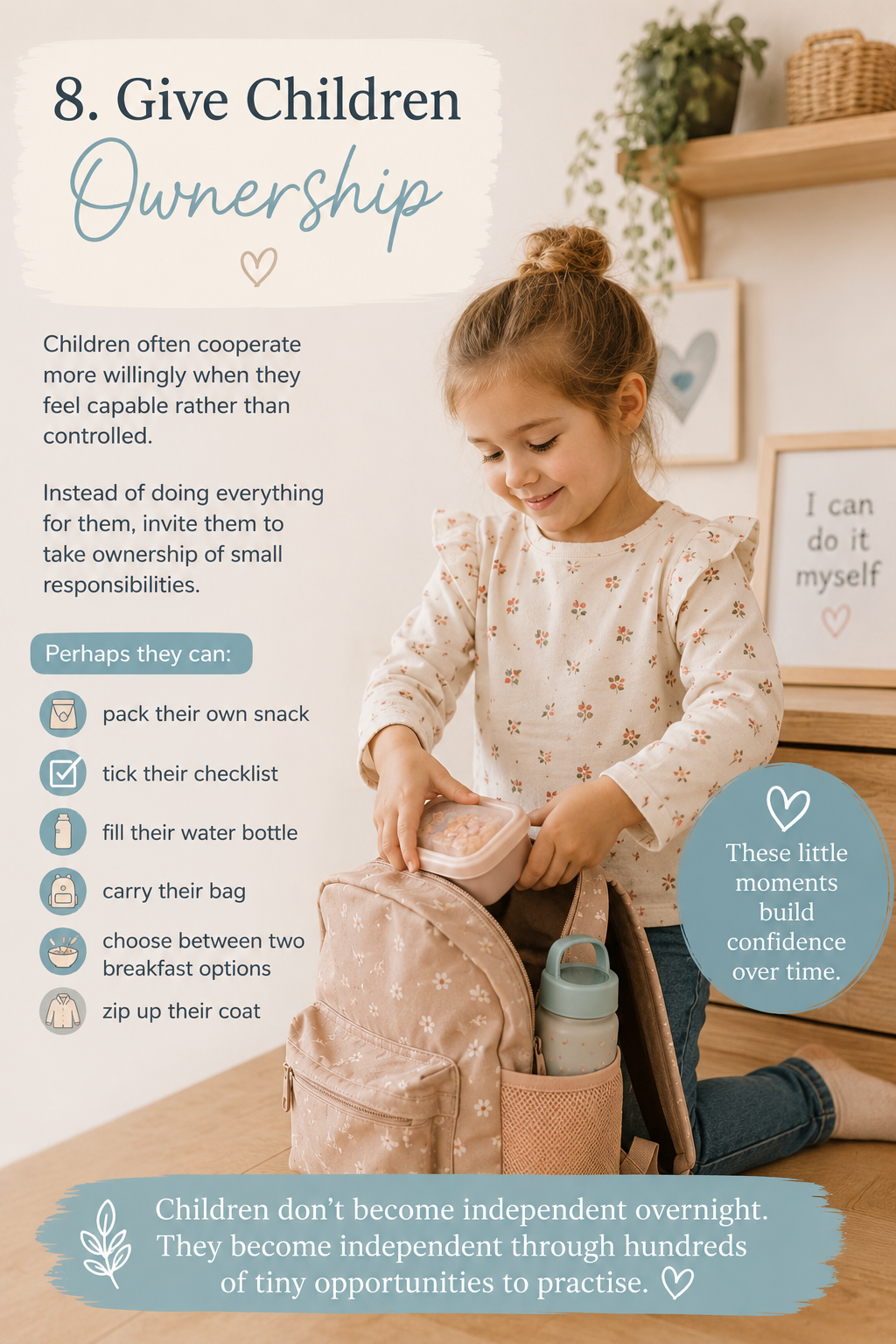
Children often cooperate more willingly when they feel capable rather than controlled.
Instead of doing everything for them, invite them to take ownership of small responsibilities.
Perhaps they can:
pack their own snack
tick their checklist
fill their water bottle
carry their bag
choose between two breakfast options
zip up their coat
These little moments build confidence over time.
Children don't become independent overnight.
They become independent through hundreds of tiny opportunities to practise.
9. Keep One Routine the Same
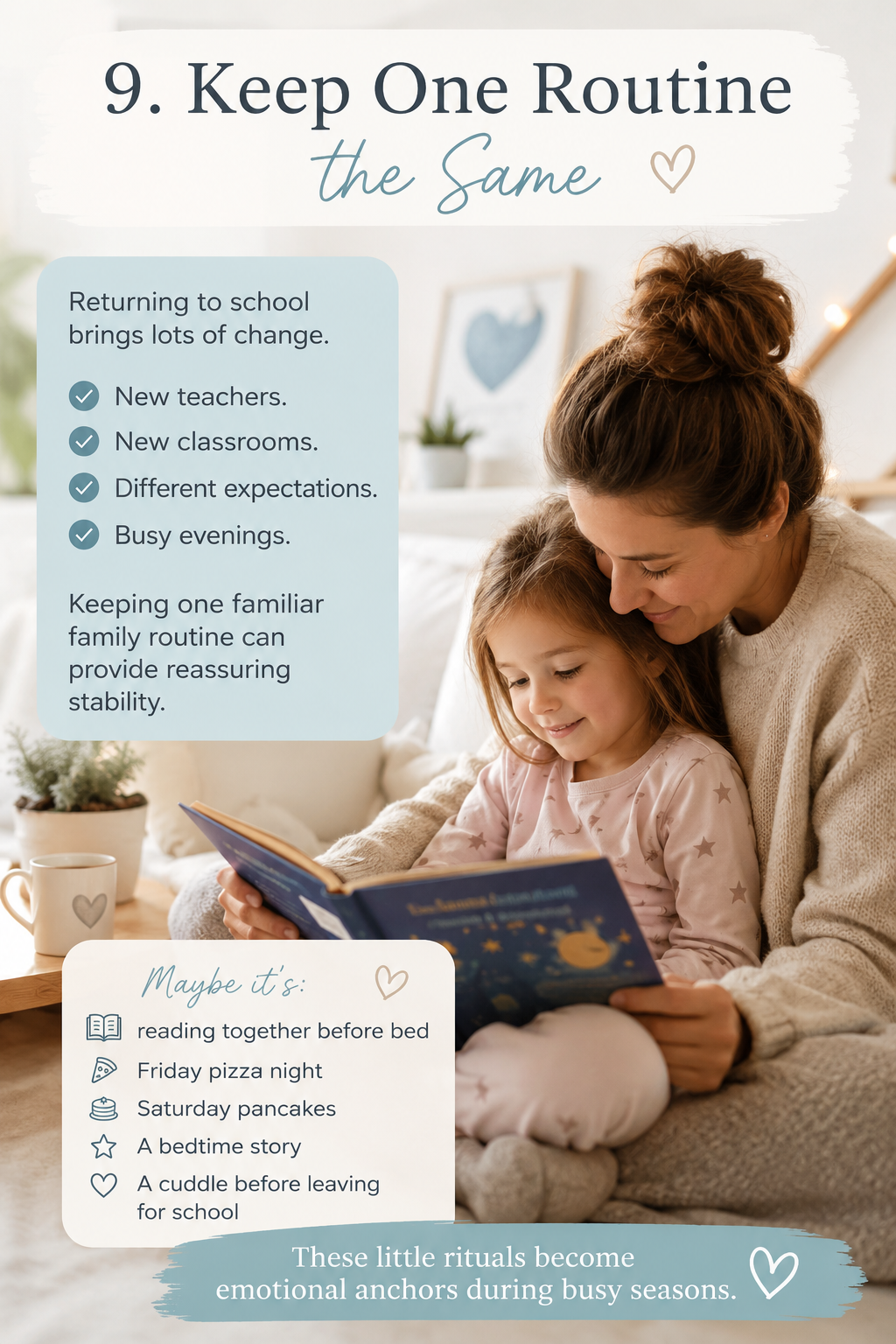
Returning to school brings lots of change.
New teachers.
New classrooms.
Different expectations.
Busy evenings.
Keeping one familiar family routine can provide reassuring stability.
Maybe it's:
reading together before bed
Friday pizza night
Saturday pancakes
A bedtime story
A cuddle before leaving for school
These little rituals become emotional anchors during busy seasons.
10. Expect Wobbles
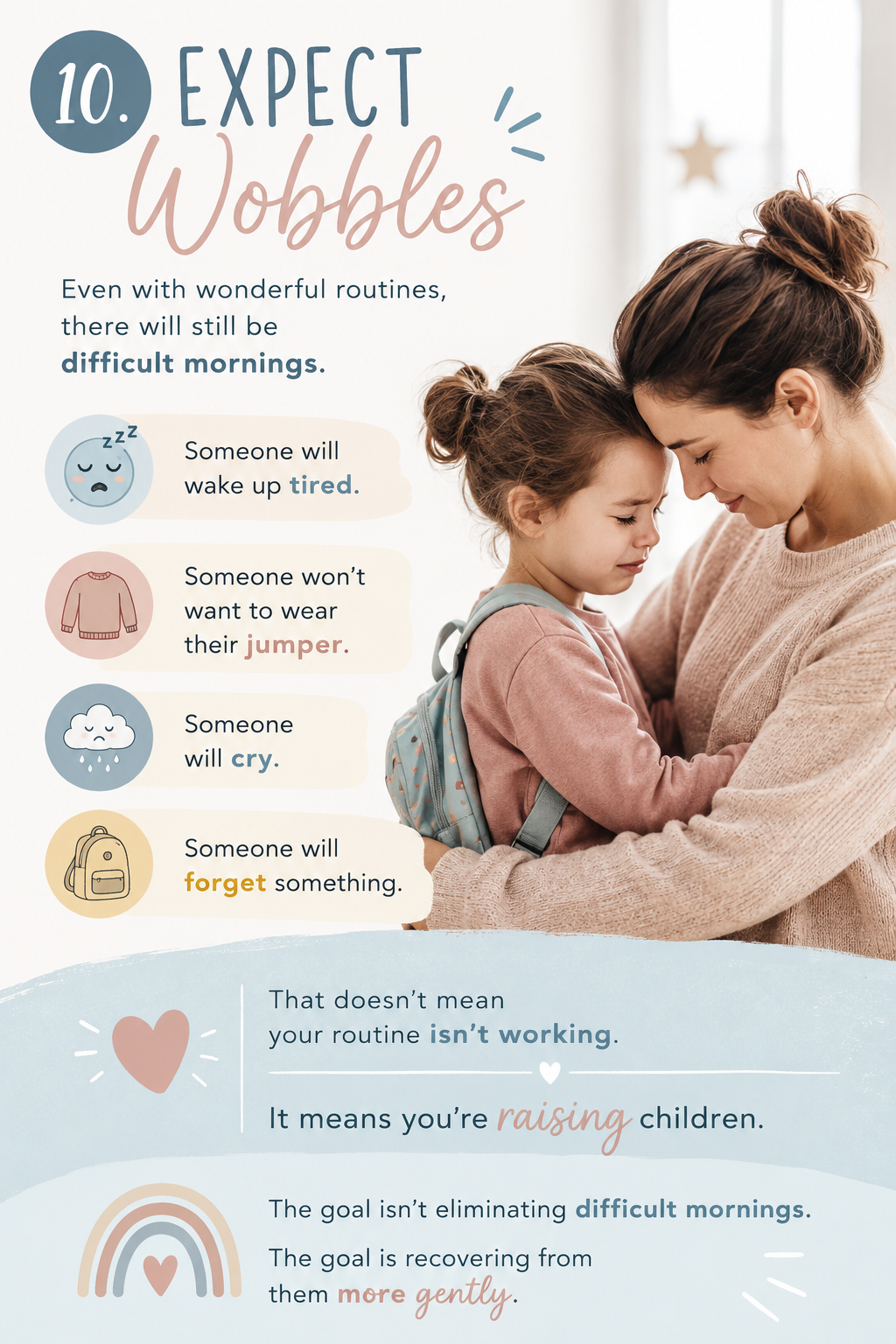
Even with wonderful routines, there will still be difficult mornings.
Someone will wake up tired.
Someone won't want to wear their jumper.
Someone will cry.
Someone will forget something.
That doesn't mean your routine isn't working.
It means you're raising children.
The goal isn't eliminating difficult mornings.
The goal is recovering from them more gently.
11. When Everything Goes Wrong
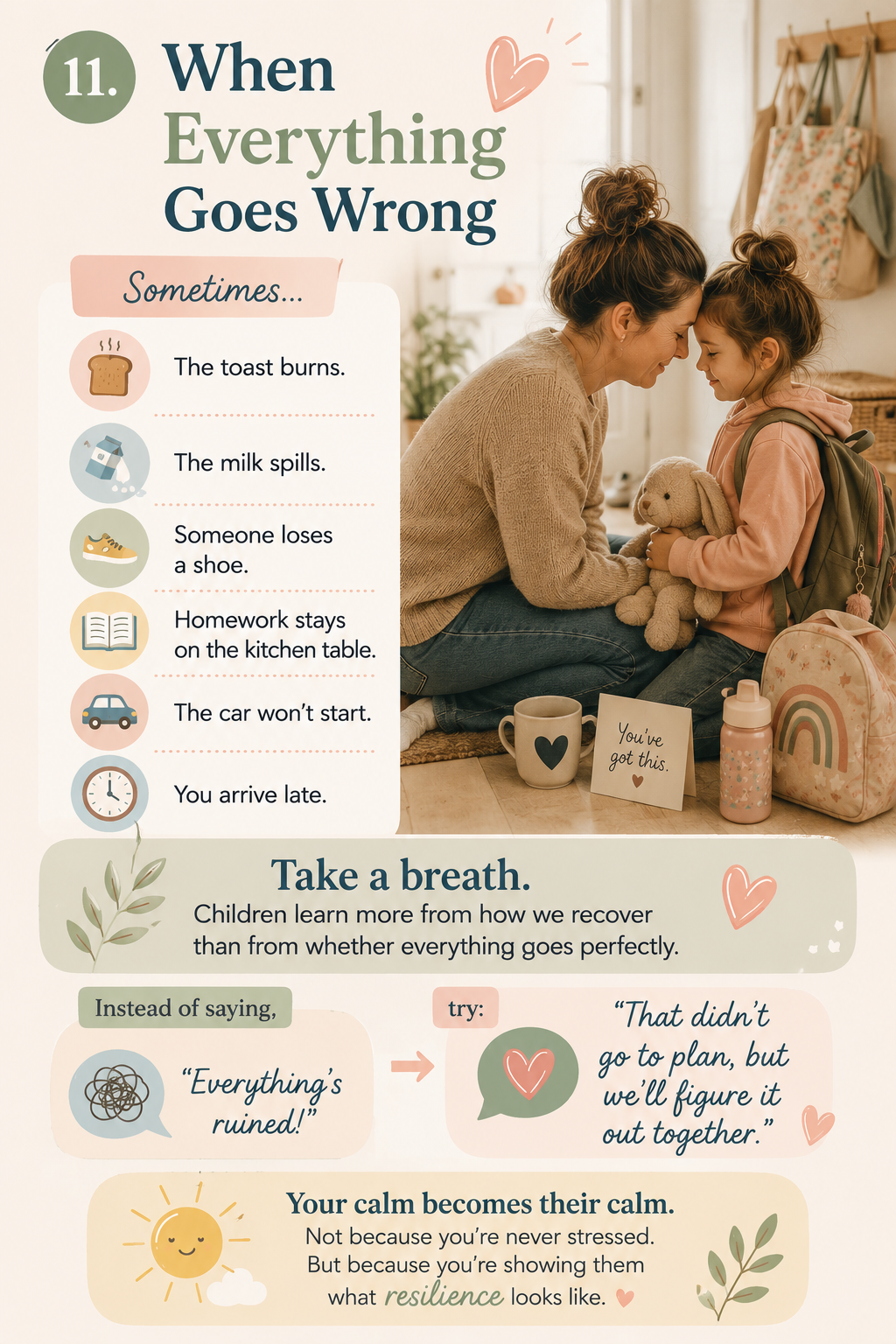
Sometimes...
The toast burns.
The milk spills.
Someone loses a shoe.
Homework stays on the kitchen table.
The car won't start.
You arrive late.
Take a breath.
Children learn more from how we recover than from whether everything goes perfectly.
Instead of saying,
"Everything's ruined!"
try:
"That didn't go to plan, but we'll figure it out together."
Your calm becomes their calm.
Not because you're never stressed.
But because you're showing them what resilience looks like.
12. Celebrate Progress, Not Perfection
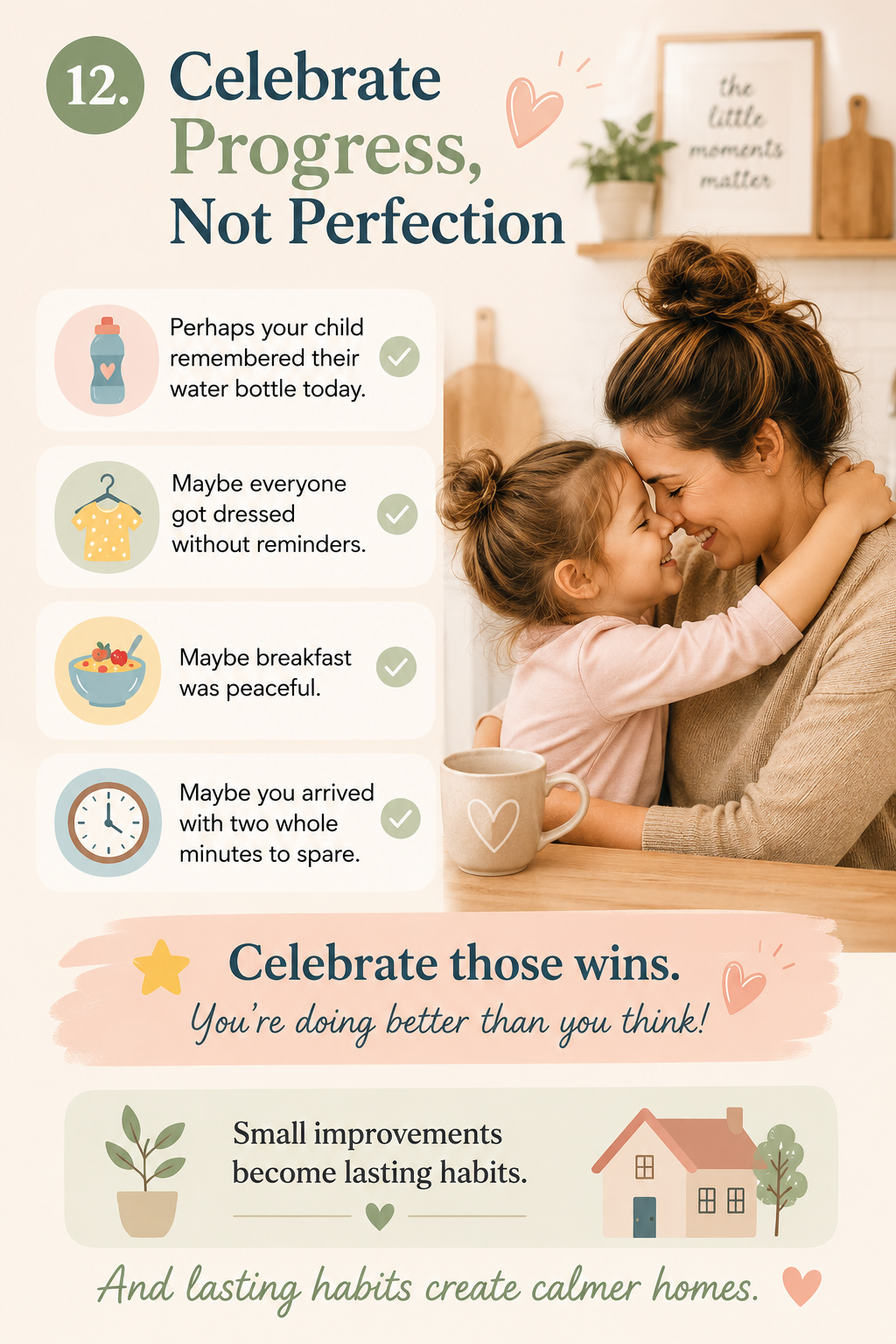
Perhaps your child remembered their water bottle today.
Maybe everyone got dressed without reminders.
Maybe breakfast was peaceful.
Maybe you arrived with two whole minutes to spare.
Celebrate those wins.
Small improvements become lasting habits.
And lasting habits create calmer homes.
Your Printable School Morning Checklist
Try placing this somewhere everyone can see.
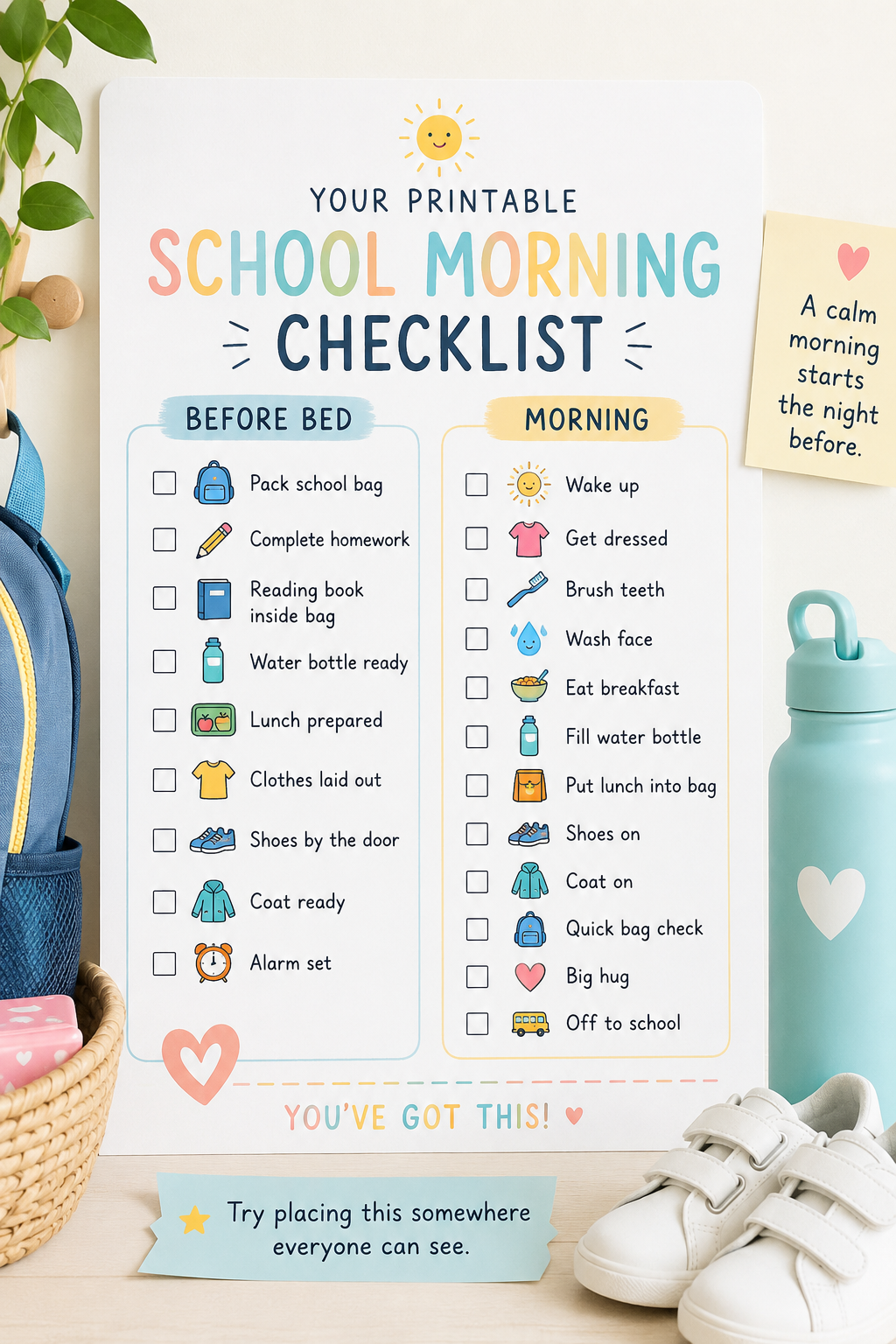
Before Bed
□ Pack school bag
□ Complete homework
□ Reading book inside bag
□ Water bottle ready
□ Lunch prepared
□ Clothes laid out
□ Shoes by the door
□ Coat ready
□ Alarm set
Morning
□ Wake up
□ Get dressed
□ Brush teeth
□ Wash face
□ Eat breakfast
□ Fill water bottle
□ Put lunch into bag
□ Shoes on
□ Coat on
□ Quick bag check
□ Big hug
□ Off to school
A Final Thought
School mornings don't have to feel like a race.
They don't have to begin with raised voices, forgotten shoes or constant reminders.
They can become something gentler.
A rhythm.
A routine.
A collection of tiny habits that quietly support your family every day.
At Spoon & Sky, we believe calm isn't something we stumble across.
It's something we build—one small, intentional moment at a time.
If this September feels overwhelming, don't try to change everything.
Choose just one idea from this list.
Practise it for a week.
Then add another.
Before long, you'll discover that the calm you've been looking for wasn't hidden somewhere far away.
It was waiting inside the little routines you created together.