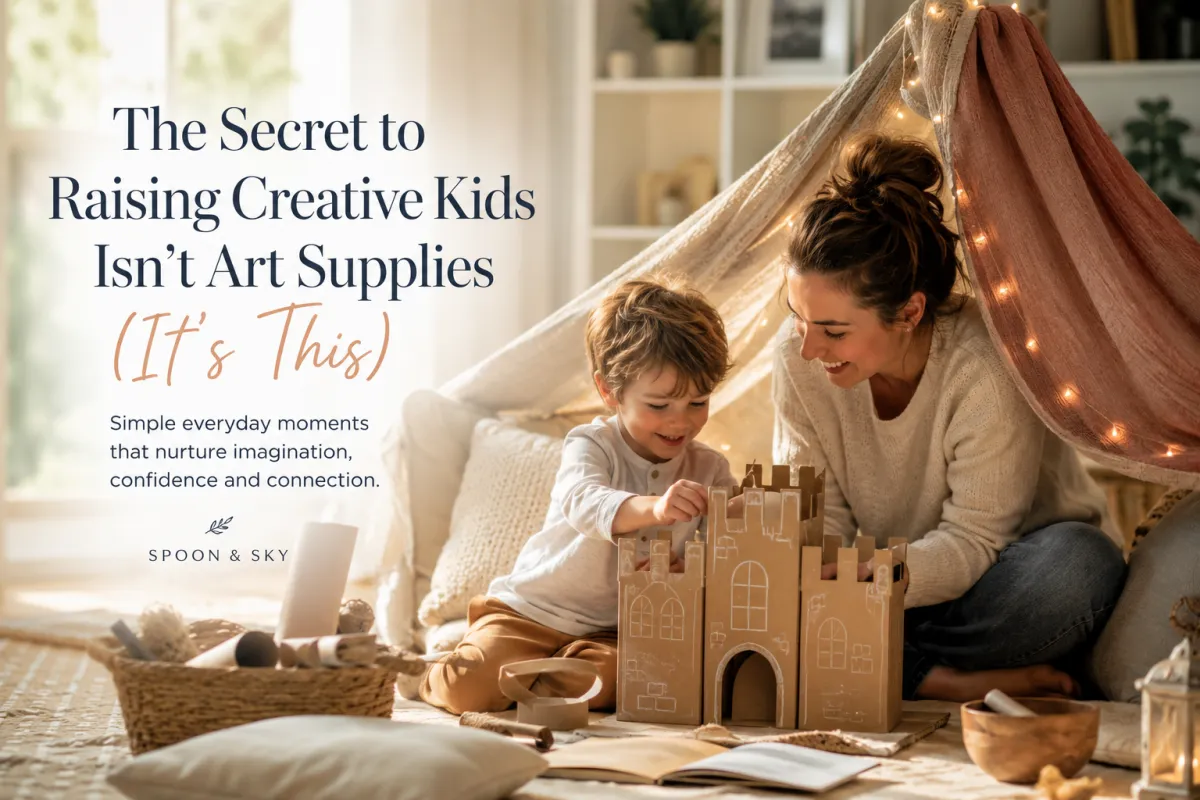
How to Encourage Creativity in Children Without Extra Work
The Secret to Raising Creative Kids Isn't Art Supplies (It's This)
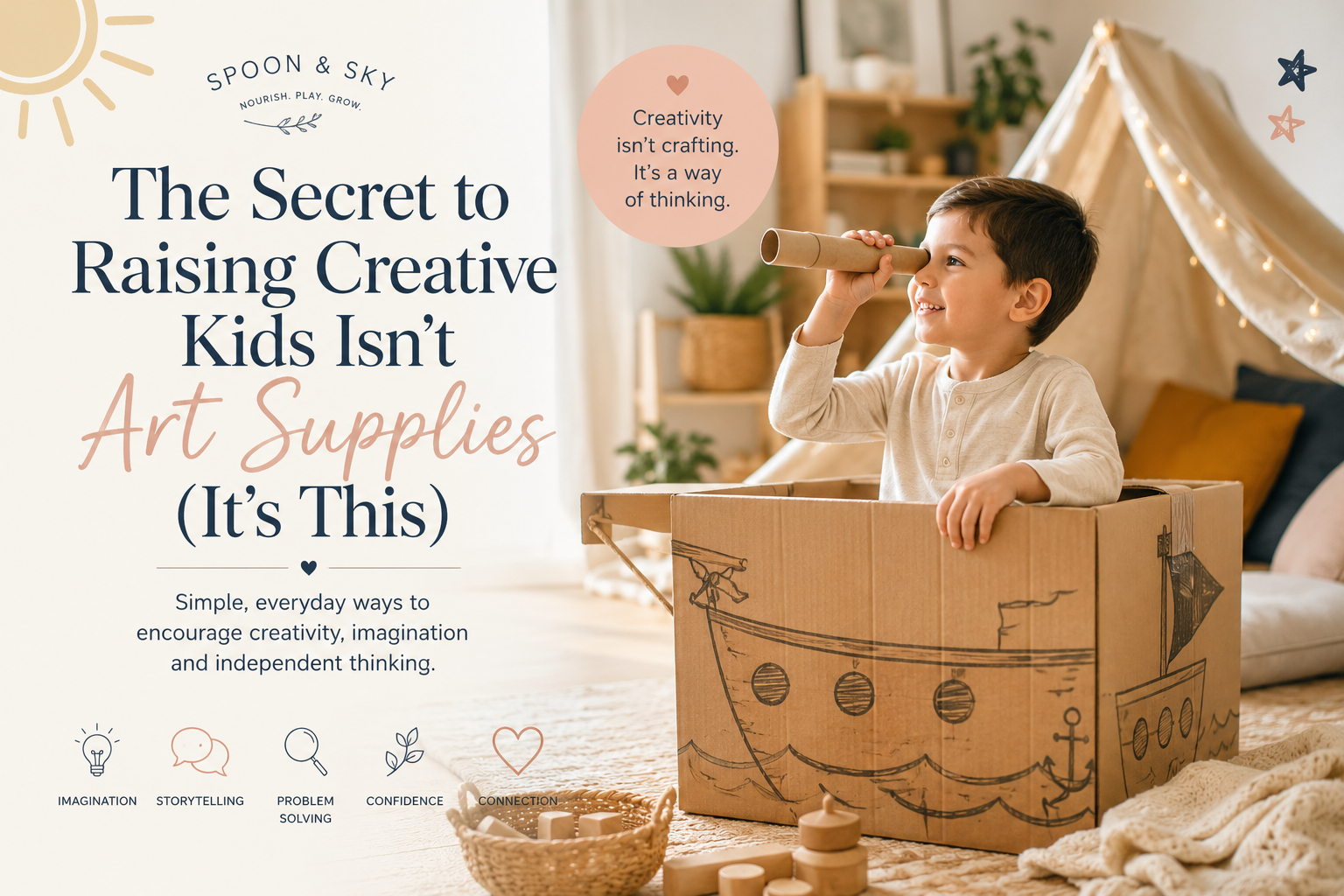
How to encourage creativity in children without adding more to your already full plate.
When many parents think about creativity, they picture paint-covered tables, craft cupboards bursting with supplies, and elaborate Pinterest projects that somehow require seventeen different materials and an entire afternoon.
But here's something I wish more parents knew:
Creativity isn't crafting.
Creativity is much bigger than art.
It's the child who turns a cardboard box into a pirate ship.
It's the little one who invents a story while eating lunch.
It's the child who figures out how to build a blanket fort that somehow reaches across the entire living room.
It's problem-solving.
It's imagination.
It's curiosity.
It's confidence.
And the good news?
You don't need to be artistic, crafty, or particularly creative yourself to nurture it.
In fact, some of the most creative moments happen during ordinary everyday activities.
Let's explore what creativity really looks like and how you can encourage more of it in your home—without adding more pressure to your day.
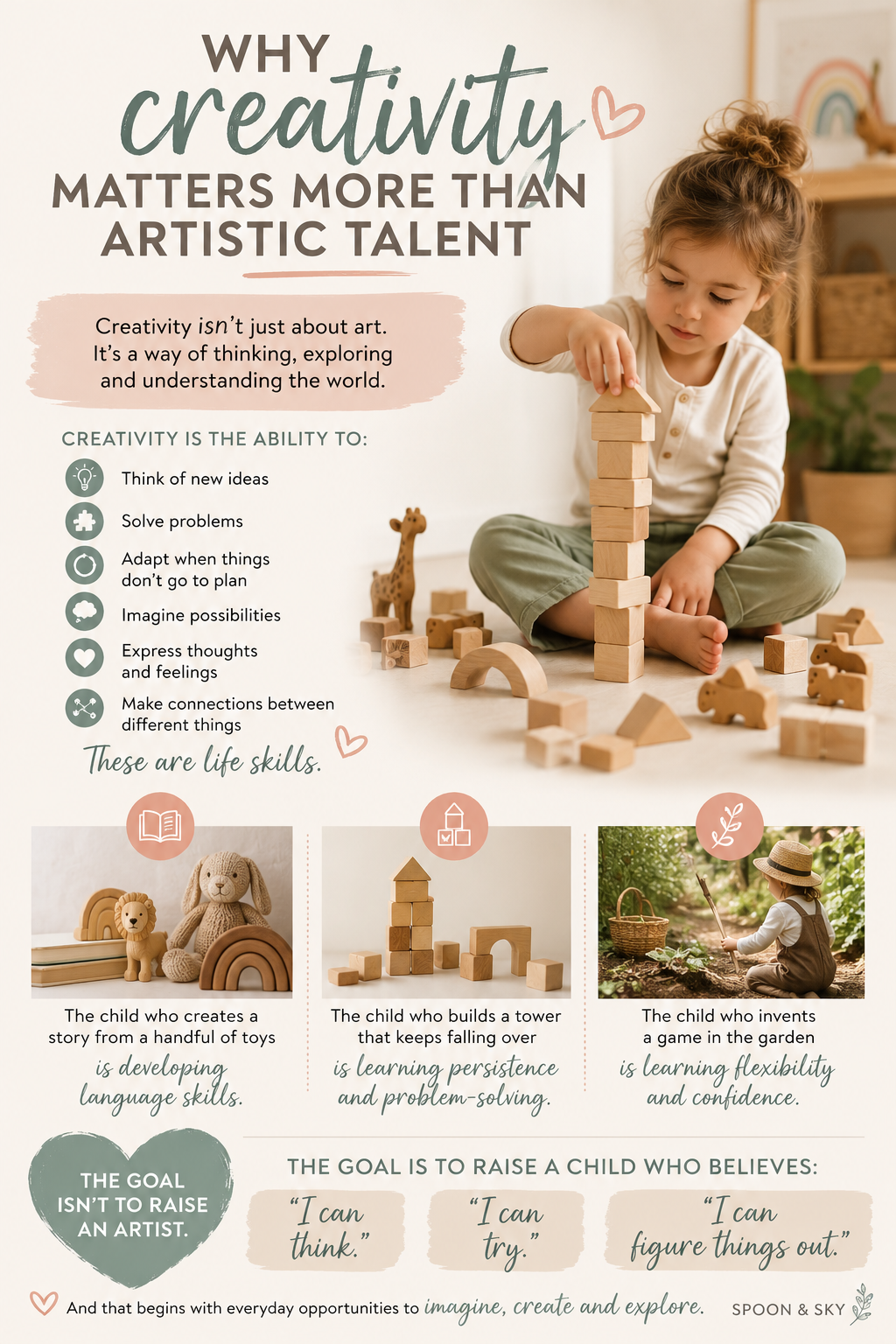
Why Creativity Matters More Than Artistic Talent
When we hear the word "creative," we often think of drawing, painting, music, or crafts.
Those things certainly count.
But creativity goes much deeper.
Creativity is the ability to:
Think of new ideas
Solve problems
Adapt when things don't go to plan
Imagine possibilities
Express thoughts and feelings
Make connections between different things
These are life skills.
The child who learns to create a story from a handful of toys is developing language skills.
The child who builds a tower that keeps falling over is learning persistence and problem-solving.
The child who invents a game in the garden is learning flexibility and confidence.
The goal isn't to raise an artist.
The goal is to raise a child who believes:
"I can think."
"I can try."
"I can figure things out."
And that begins with everyday opportunities to imagine, create, and explore.
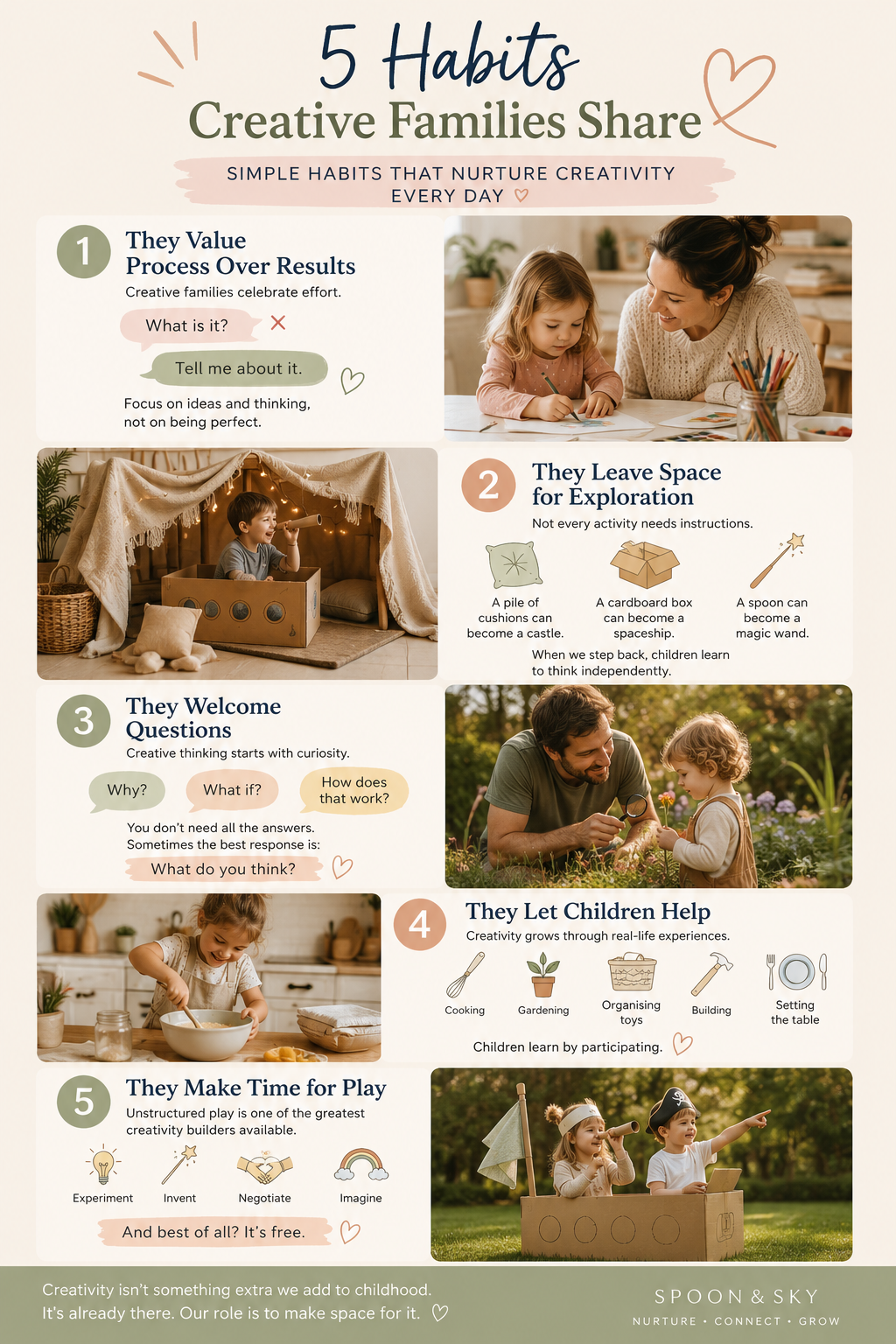
5 Habits Creative Families Share
Creative families don't necessarily have more supplies, more time, or bigger budgets.
Instead, they often share a few simple habits.
1. They Value Process Over Results
Creative families celebrate effort.
Instead of asking:
"What is it?"
They ask:
"Tell me about it."
Instead of focusing on whether something looks "good," they focus on the child's ideas and thinking.
This helps children feel confident experimenting rather than worrying about being perfect.
2. They Leave Space for Exploration
Not every activity needs instructions.
Sometimes children need opportunities to discover their own way.
A pile of cushions can become a castle.
A cardboard box can become a spaceship.
A spoon can become a magic wand.
When we provide materials without directing every step, children learn to think independently.
3. They Welcome Questions
Creative thinking starts with curiosity.
Questions like:
Why?
What if?
How does that work?
are signs that a child's imagination is growing.
You don't need all the answers.
Sometimes the best response is:
"What do you think?"
4. They Let Children Help
Creativity grows through real-life experiences.
Cooking, gardening, organising toys, building furniture, and setting the table all involve creative thinking.
Children learn by participating.
5. They Make Time for Play
Unstructured play is one of the greatest creativity builders available.
It gives children opportunities to experiment, invent, negotiate, and imagine.
And best of all?
It's free.
Activity 1: Storytelling Snack Time
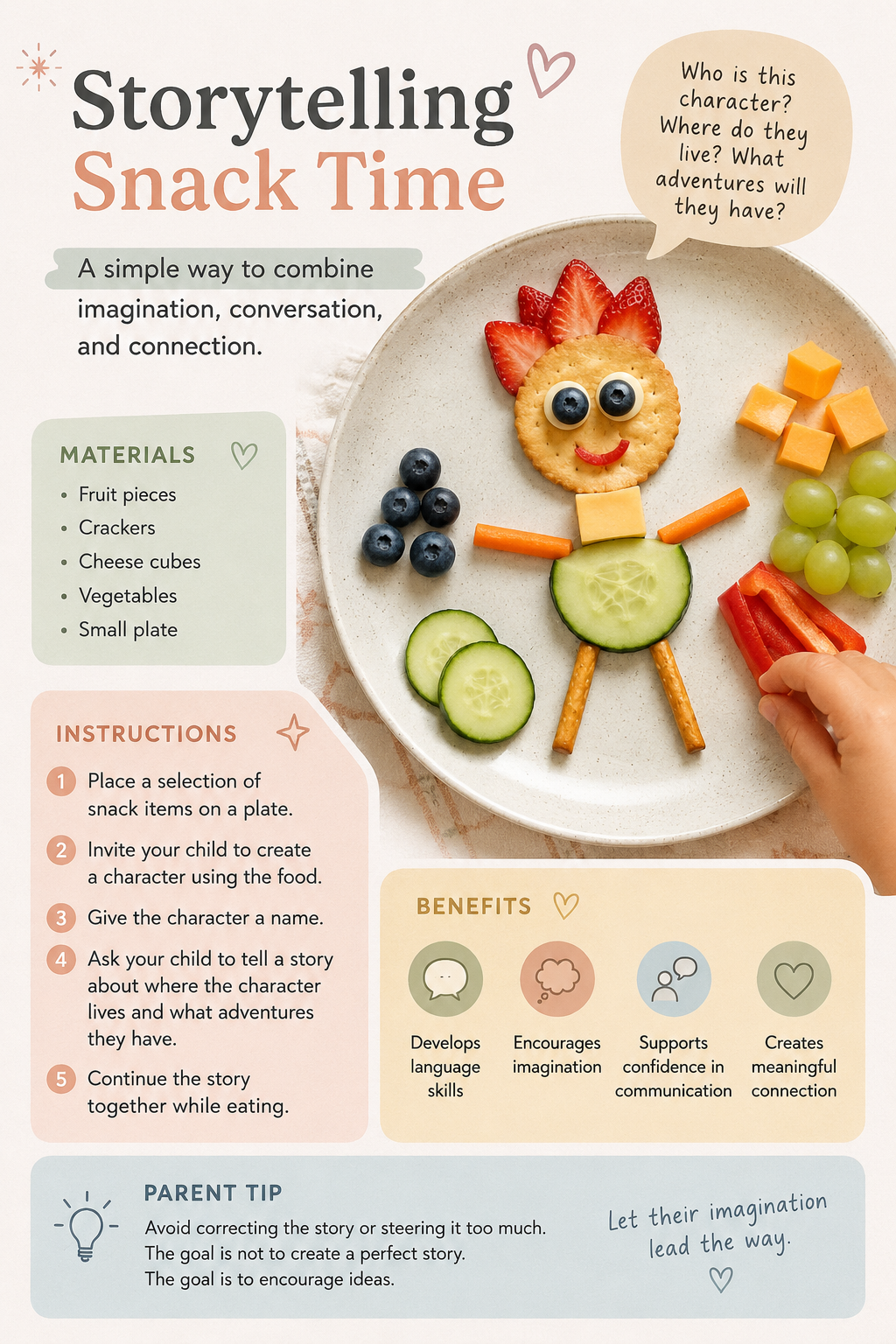
A simple way to combine imagination, conversation, and connection.
Materials
Fruit pieces
Crackers
Cheese cubes
Vegetables
Small plate
Instructions
Place a selection of snack items on a plate.
Invite your child to create a character using the food.
Give the character a name.
Ask your child to tell a story about where the character lives and what adventures they have.
Continue the story together while eating.
Benefits
Develops language skills
Encourages imagination
Supports confidence in communication
Creates meaningful connection
Parent Tip
Avoid correcting the story or steering it too much.
The goal is not to create a perfect story.
The goal is to encourage ideas.
Activity 2: The Living Room Fort Challenge
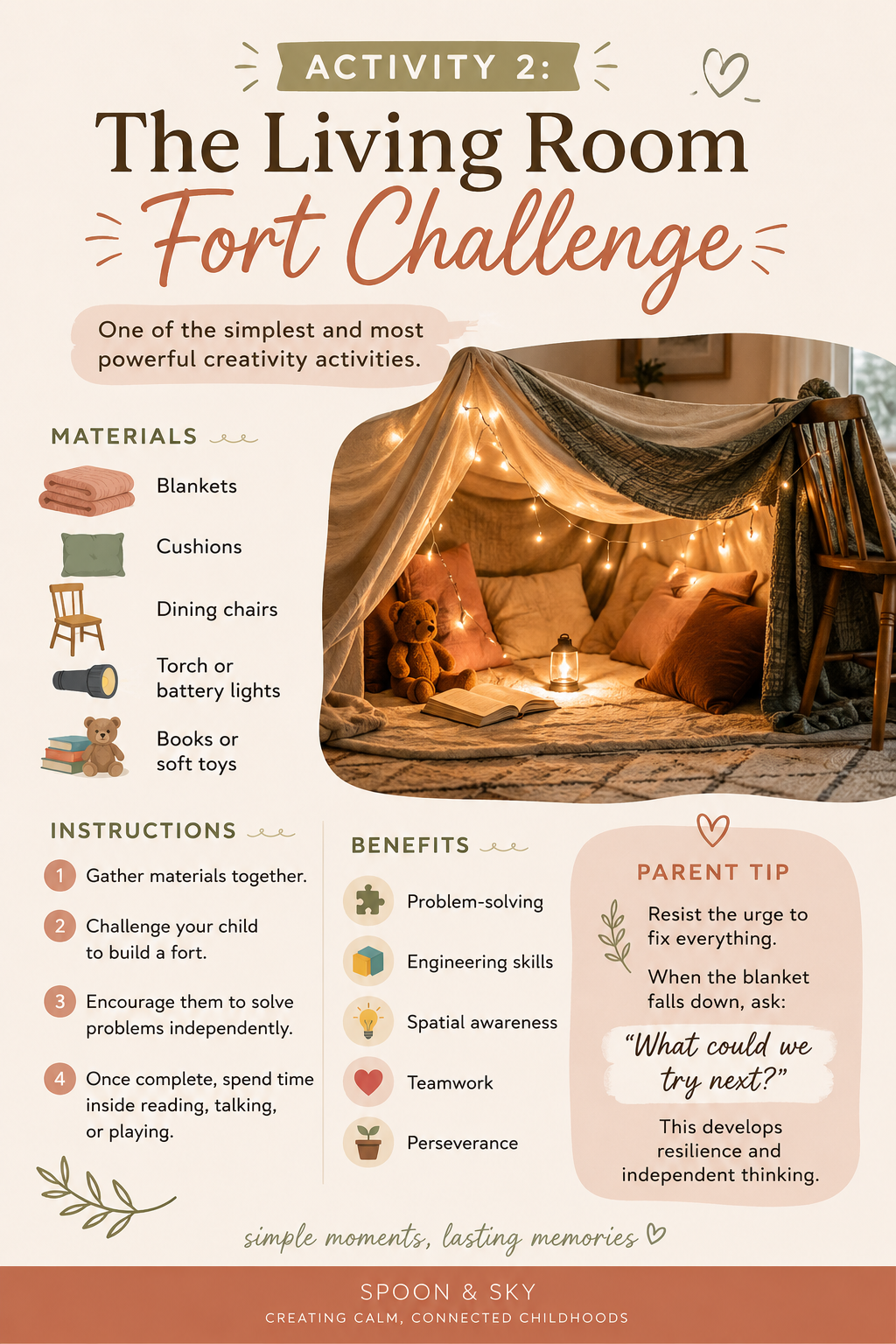
One of the simplest and most powerful creativity activities.
Materials
Blankets
Cushions
Dining chairs
Torch or battery lights
Books or soft toys
Instructions
Gather materials together.
Challenge your child to build a fort.
Encourage them to solve problems independently.
Once complete, spend time inside reading, talking, or playing.
Benefits
Problem-solving
Engineering skills
Spatial awareness
Teamwork
Perseverance
Parent Tip
Resist the urge to fix everything.
When the blanket falls down, ask:
"What could we try next?"
This develops resilience and independent thinking.
Activity 3: Kitchen Helper Creativity Challenge
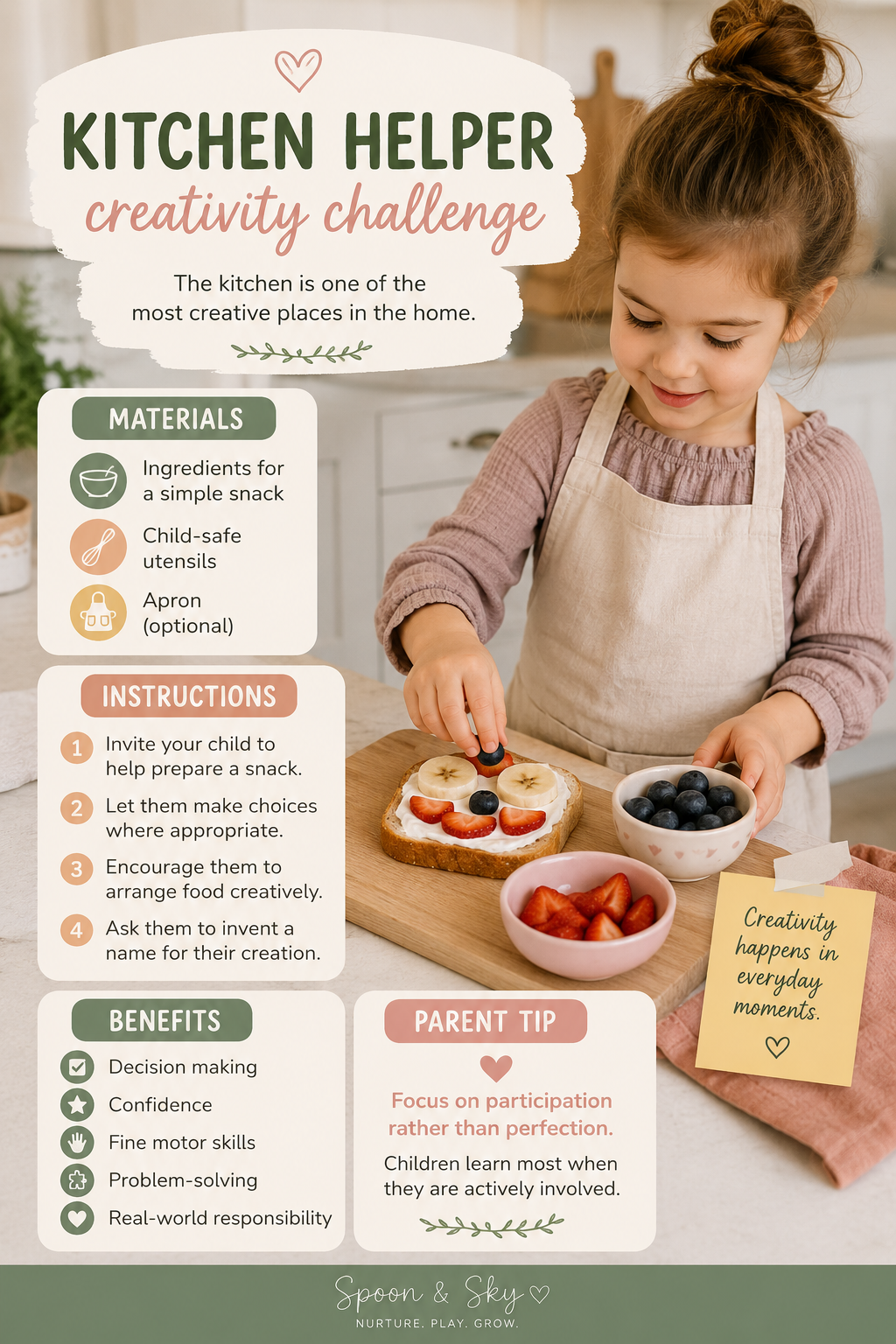
The kitchen is one of the most creative places in the home.
Materials
Ingredients for a simple snack
Child-safe utensils
Apron (optional)
Instructions
Invite your child to help prepare a snack.
Let them make choices where appropriate.
Encourage them to arrange food creatively.
Ask them to invent a name for their creation.
Benefits
Decision making
Confidence
Fine motor skills
Problem-solving
Real-world responsibility
Parent Tip
Focus on participation rather than perfection.
Children learn most when they are actively involved.
How to Encourage Creativity Without Extra Work
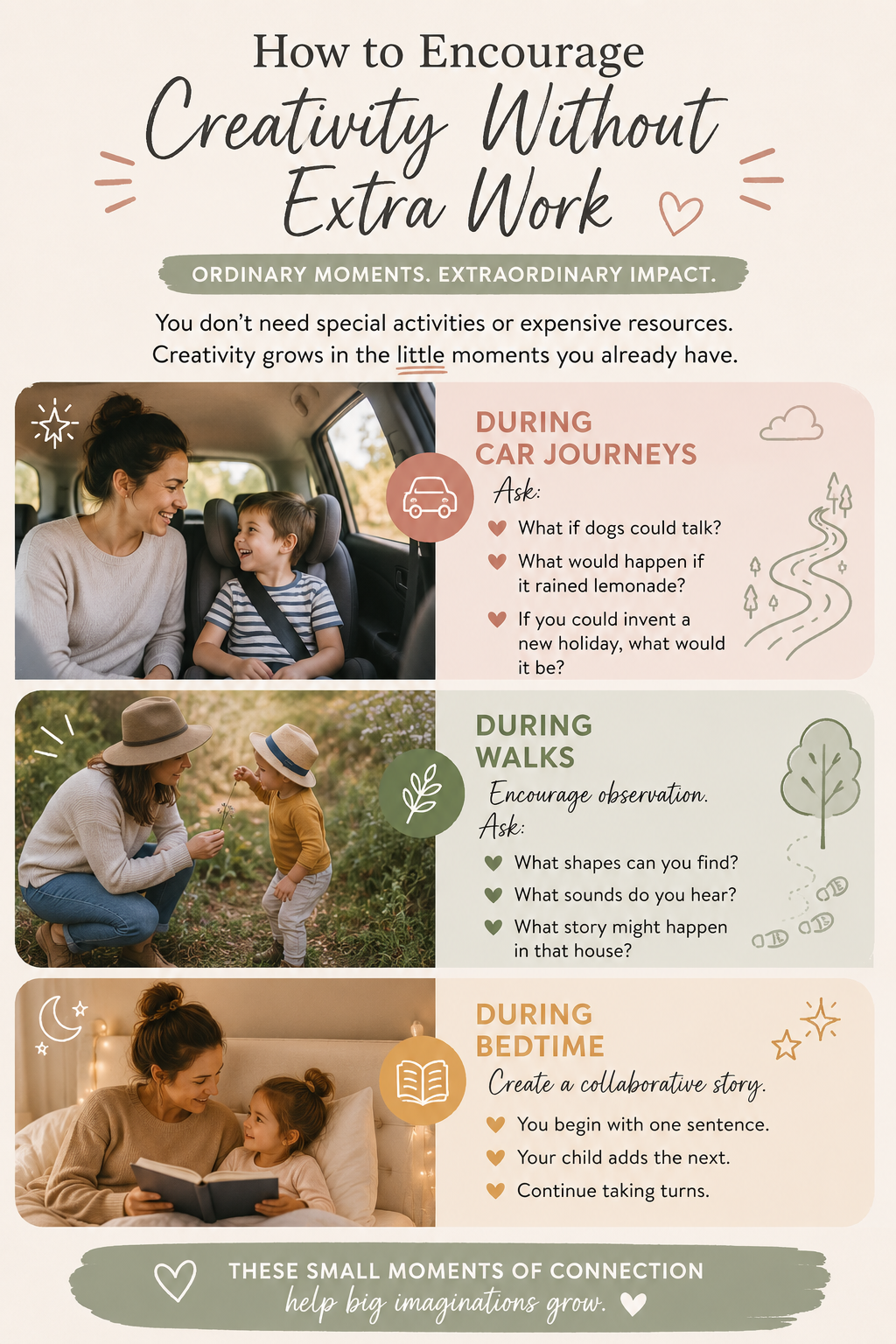
Many parents worry they need special activities or expensive resources.
You don't.
Creativity often grows best in ordinary moments.
Try:
During Car Journeys
Ask:
What if dogs could talk?
What would happen if it rained lemonade?
If you could invent a new holiday, what would it be?
During Walks
Encourage observation.
Ask:
What shapes can you find?
What sounds do you hear?
What story might happen in that house?
During Bedtime
Create a collaborative story.
You begin with one sentence.
Your child adds the next.
Continue taking turns.
These small moments often become the most memorable.
The Surprising Power of Boredom
Many parents feel pressure to keep children entertained.
But boredom isn't the enemy.
Boredom is often the doorway to creativity.
When children aren't immediately provided with entertainment, something interesting happens.
Their brains begin searching for possibilities.
They invent games.
They create stories.
They build worlds.
Of course, boredom can be uncomfortable at first.
You may hear:
"I'm bored!"
This is normal.
Instead of immediately solving the problem, try saying:
"I wonder what you'll think of."
Then give them time.
Many wonderful ideas begin with a little boredom.
Questions That Spark Imagination
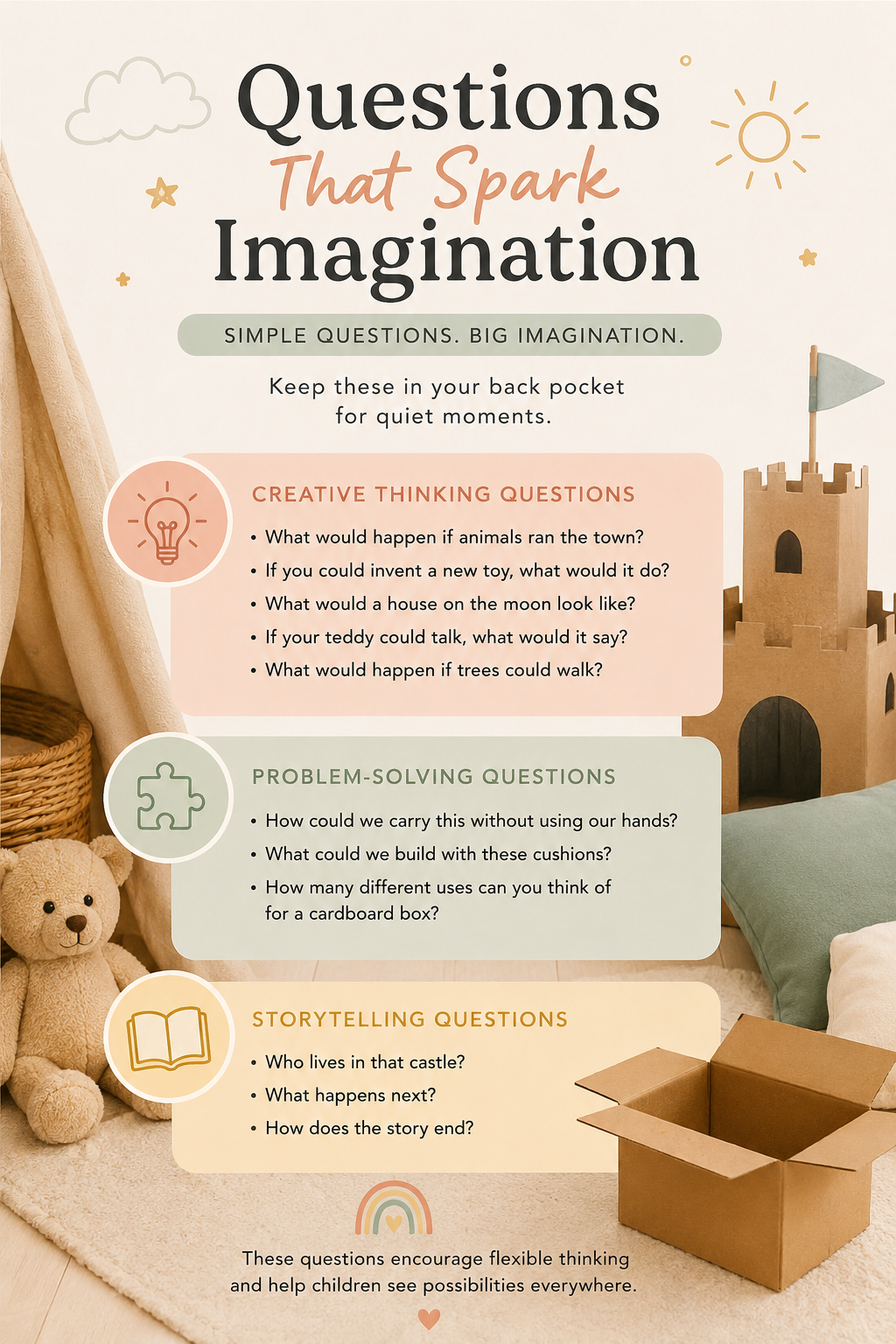
Sometimes all children need is a good question.
Keep these in your back pocket for quiet moments.
Creative Thinking Questions
What would happen if animals ran the town?
If you could invent a new toy, what would it do?
What would a house on the moon look like?
If your teddy could talk, what would it say?
What would happen if trees could walk?
Problem-Solving Questions
How could we carry this without using our hands?
What could we build with these cushions?
How many different uses can you think of for a cardboard box?
Storytelling Questions
Who lives in that castle?
What happens next?
How does the story end?
These questions encourage flexible thinking and help children see possibilities everywhere.
The Real Secret
The secret to raising creative kids isn't buying more supplies.
It isn't filling every moment with activities.
It isn't creating perfect crafts.
The real secret is creating opportunities.
Opportunities to imagine.
To explore.
To wonder.
To solve problems.
To try.
To fail.
To try again.
Creativity grows when children feel safe enough to experiment and confident enough to share their ideas.
And often, those moments happen in the simplest places:
Around the dinner table.
Inside a blanket fort.
On a walk.
While helping in the kitchen.
In the middle of an ordinary day.
Because creativity isn't something extra you need to add to childhood.
It's already there.
Our role is simply to make space for it.
At Spoon & Sky, we believe creativity is where connection begins. Not through perfect crafts or complicated projects, but through small everyday moments that help children feel seen, capable, and loved.
Until next time,
Lily
Spoon & Sky
Creativity is the bridge where your child feels seen.