“How Was School?” “Fine.” — 30 Questions to Actually Get Your Child Talking About Their Day
“How Was School?” “Fine.” — 30 Questions to Actually Get Your Child Talking About Their Day
You wait all day to see them.
You wonder how they're getting on.
Did they enjoy lunch?
Who did they play with?
Did anything make them laugh?
Was anything difficult?
Then finally, the school doors open.
Your child comes running out.
You smile.
They smile.
You ask:
“How was school?”
“Fine.”
“What did you do?”
“Nothing.”
“Who did you play with?”
“I don't know.”
And apparently that's the complete report from the six hours they just spent away from you.
It's tempting to keep going.
“What did you have for lunch?”
“Can't remember.”
“Did you do phonics?”
“Maybe.”
“What did your teacher say?”
“I don't know.”
Excellent.
Very comprehensive.
If this sounds familiar, don't worry. Your child isn't necessarily shutting you out.
For children aged 3–8, “How was school?” is actually a surprisingly difficult question to answer.
It's enormous.
It asks a tired little brain to search through an entire day of experiences, decide which ones matter, organise them into words and present you with a summary.
And you're often asking them to do it approximately thirty seconds after they've left a busy classroom.
So instead of trying harder to get children to talk, we can make it easier for conversation to happen.
Here are 30 better questions to try — plus a few simple changes that can turn after-school conversations from an interview into something much more valuable:
connection.
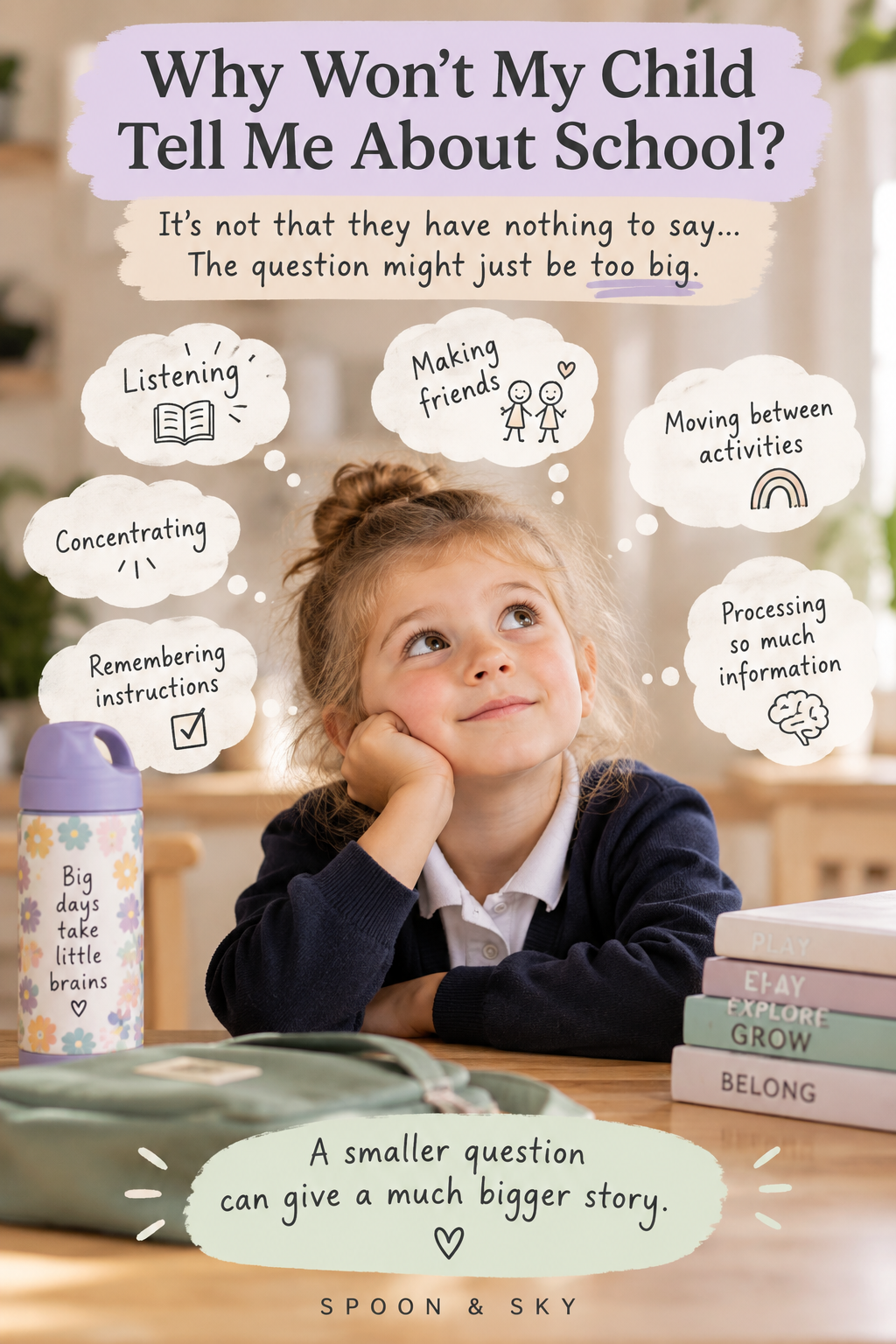
Why Won't My Child Tell Me About School?
Before changing the questions, it helps to understand what's happening.
Imagine someone waiting outside your workplace at the end of a long day and immediately asking:
“So, tell me everything that happened.”
Where would you even begin?
Children have spent their school day listening, concentrating, moving between activities, navigating friendships, remembering instructions and processing huge amounts of information.
Then they see you.
Home.
Their safe person.
They may not want to immediately revisit everything they've just experienced.
They may simply want to stop thinking for a while.
There is also a developmental piece.
Young children don't necessarily organise memories chronologically in the way adults expect.
Ask:
“What did you do today?”
and they may genuinely have no idea how to answer.
Ask:
“What did you play with outside?”
and suddenly:
“Oh! Me and Ava made a potion but then Harry put a stick in it and then we found a snail and Mrs Jones said we couldn't bring it inside and—”
There it is.
Sometimes the problem isn't that children have nothing to say.
The question is simply too big.
First: Stop Asking at the School Gate
This may be the most useful change you make.
You don't have to ask about school the moment you see your child.
Try:
“I'm happy to see you.”
That's it.
Give them the snack.
Walk home.
Let them stare out of the car window.
Let them tell you an extremely detailed story about a stick they found.
Let their nervous system move from school mode back into home mode.
For some children, conversation will happen five minutes later.
For others, it might happen during dinner.
In the bath.
While drawing.
When you're turning off the bedroom light.
Children don't always talk when we schedule conversation.
They talk when they feel ready.
Our job is to leave the door open.
30 Questions to Ask Instead of “How Was School?”
You don't need to ask all 30.
Please don't.
That would rather defeat the point.
Pick one.
Maybe two.
Then see where the conversation goes.
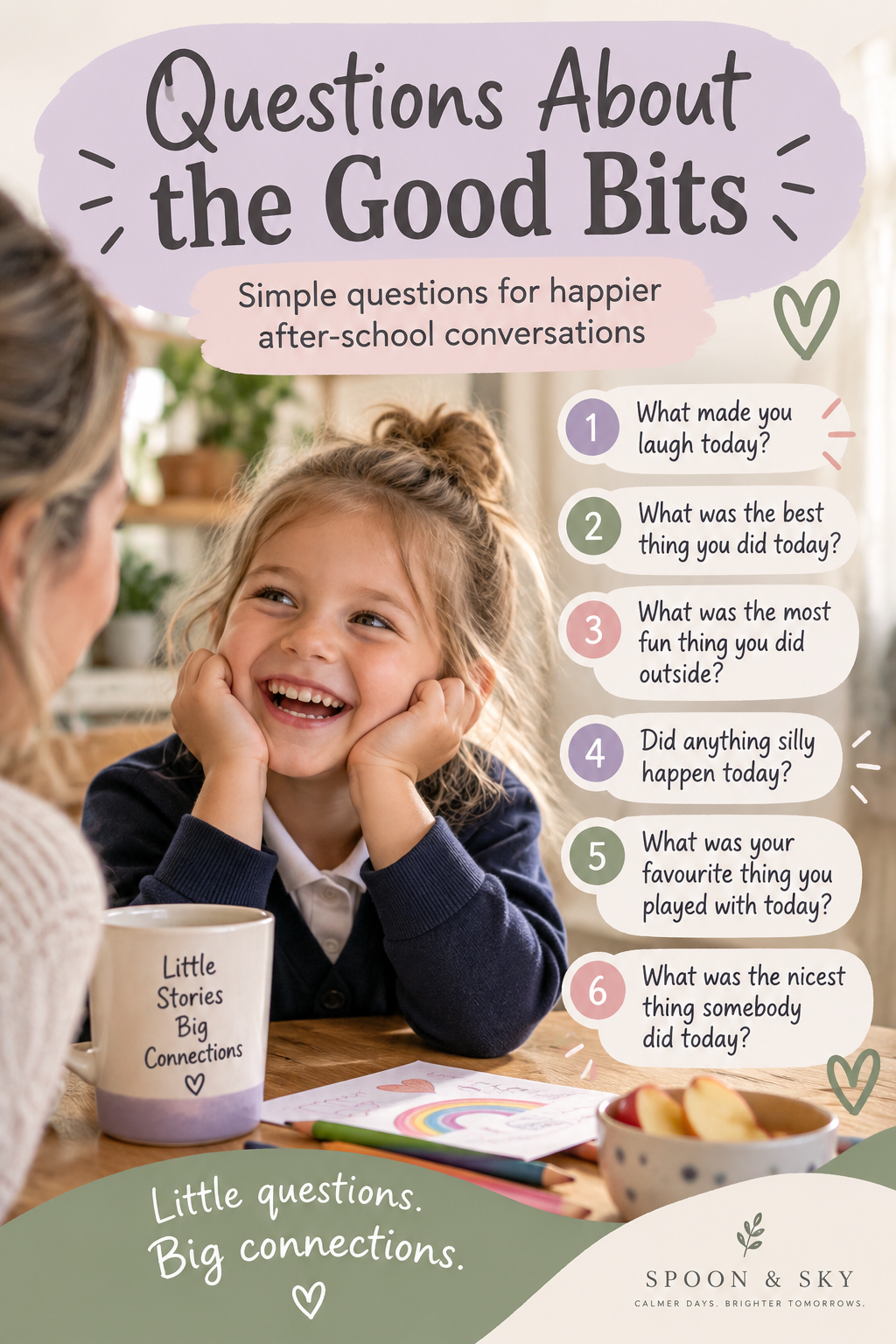
Questions About the Good Bits
Let's start somewhere easy.
1. What made you laugh today?
This is one of my favourites because it's specific without feeling demanding.
And the answer is often wonderfully ridiculous.
2. What was the best thing you did today?
Much easier than asking about the entire school day.
If “best” feels too difficult, try:
“What was one thing you liked today?”
3. What was the most fun thing you did outside?
Playtime is often easier for children to remember than the classroom.
And it can give you a lovely little glimpse into their friendships and interests.
4. Did anything silly happen today?
This question often unlocks stories that “How was school?” never will.
Expect extensive discussion about somebody making a strange noise.
5. What was your favourite thing you played with today?
This works especially well for younger children in Reception and Year 1.
6. What was the nicest thing somebody did today?
A beautiful way to notice kindness without turning the conversation into a lesson.
You might hear about a friend sharing a pencil, someone helping with a coat or a teacher saying something encouraging.
Questions About Friends
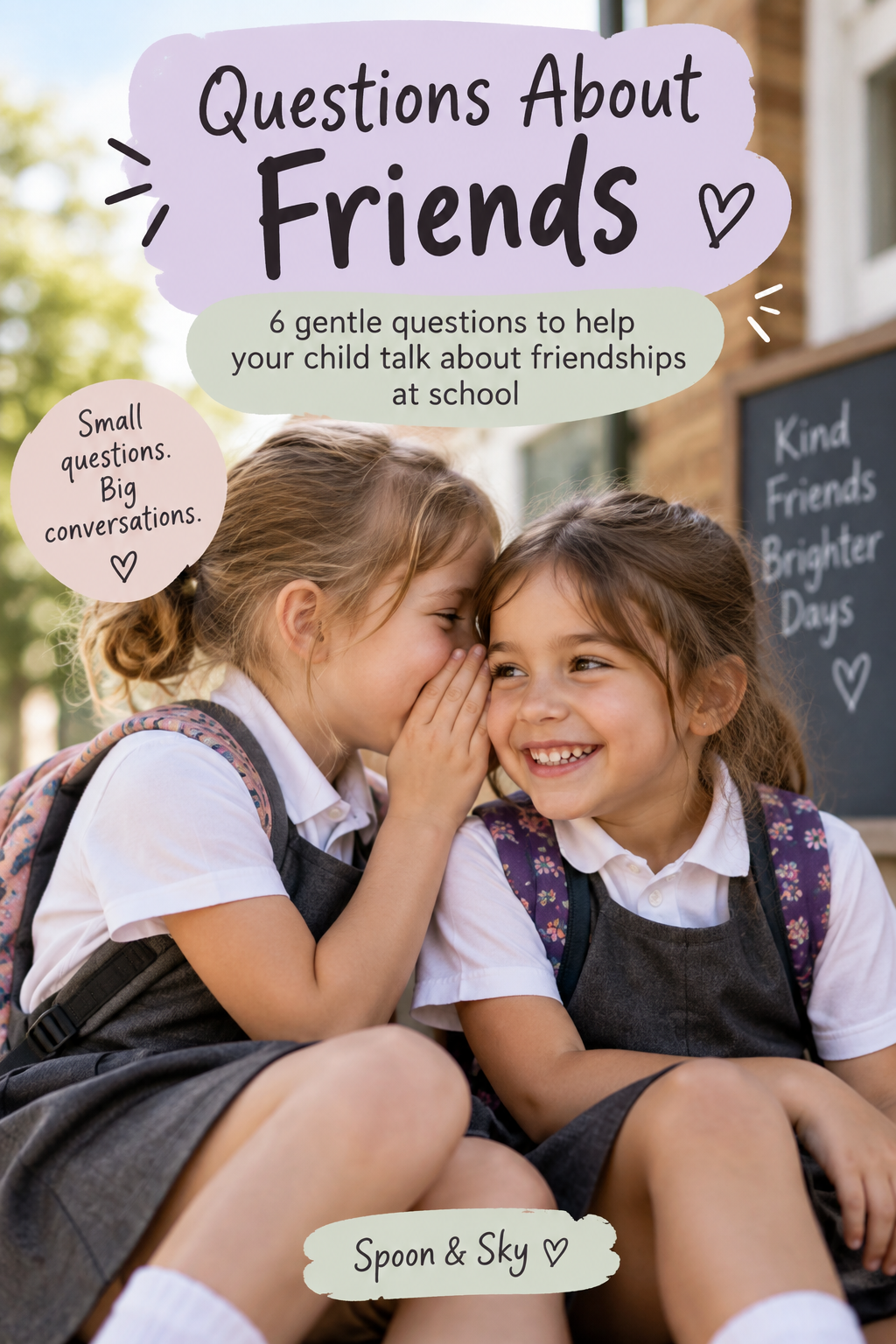
Friendships occupy a huge part of children's school lives.
But asking “Who did you play with?” can sometimes feel like another test.
Try something more specific.
7. Who made you smile today?
This can lead naturally into stories about friendships without asking your child to define who their friends are.
8. Who did you sit next to today?
Simple.
Concrete.
Easy to remember.
And sometimes the story continues naturally from there.
9. Did you help anyone today?
Perhaps they helped somebody find something.
Held a door.
Showed someone how to build something.
Or maybe the answer is simply:
“No.”
That's fine too.
10. Did anyone help you today?
This quietly reinforces something important:
We don't have to do everything alone.
11. What did people play at break time?
Notice we're not asking:
“Did YOU have someone to play with?”
That can feel loaded, particularly if you're already worried about friendships.
Asking what everyone was playing gives children space to tell you as much or as little as they want.
12. If you could choose someone from your class to sit beside tomorrow, who would you choose?
This can reveal a surprising amount about who your child enjoys spending time with.
But keep it light.
It's curiosity, not investigation.
Questions About Learning
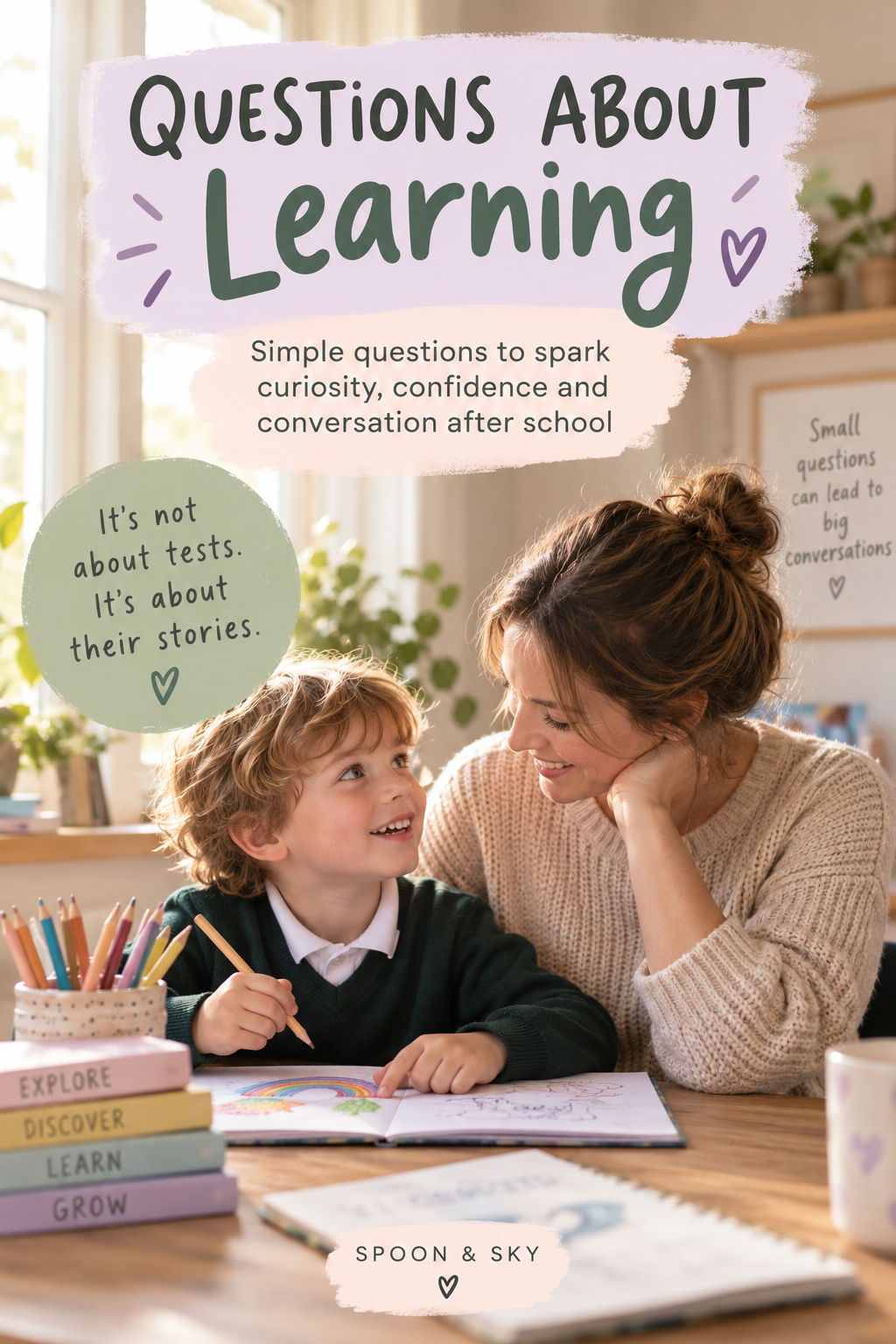
You can absolutely talk about what your child is learning without turning home into another classroom.
Try focusing on curiosity rather than performance.
13. What did you learn today that you didn't know yesterday?
Don't worry if the answer is:
“Spiders have eight legs.”
when you're fairly certain they've known that since they were two.
We're going for conversation, not assessment.
14. Did your teacher tell you anything interesting today?
This is often easier to retrieve than:
“What did you learn?”
15. What was the easiest thing you did today?
We often ask children what was difficult.
Ask what felt easy too.
It's a lovely opportunity for them to notice growing confidence.
16. What was the trickiest thing you did today?
“Tricky” can feel gentler than:
“What did you struggle with?”
And it opens the door for:
“I couldn't do…”
without making difficulty feel like failure.
17. Did you make or draw anything today?
A very useful question for younger children who remember experiences through things they physically did.
18. What would you like to do again tomorrow?
This gives you a little clue about what they're enjoying without directly asking whether they like school.
Questions About Feelings
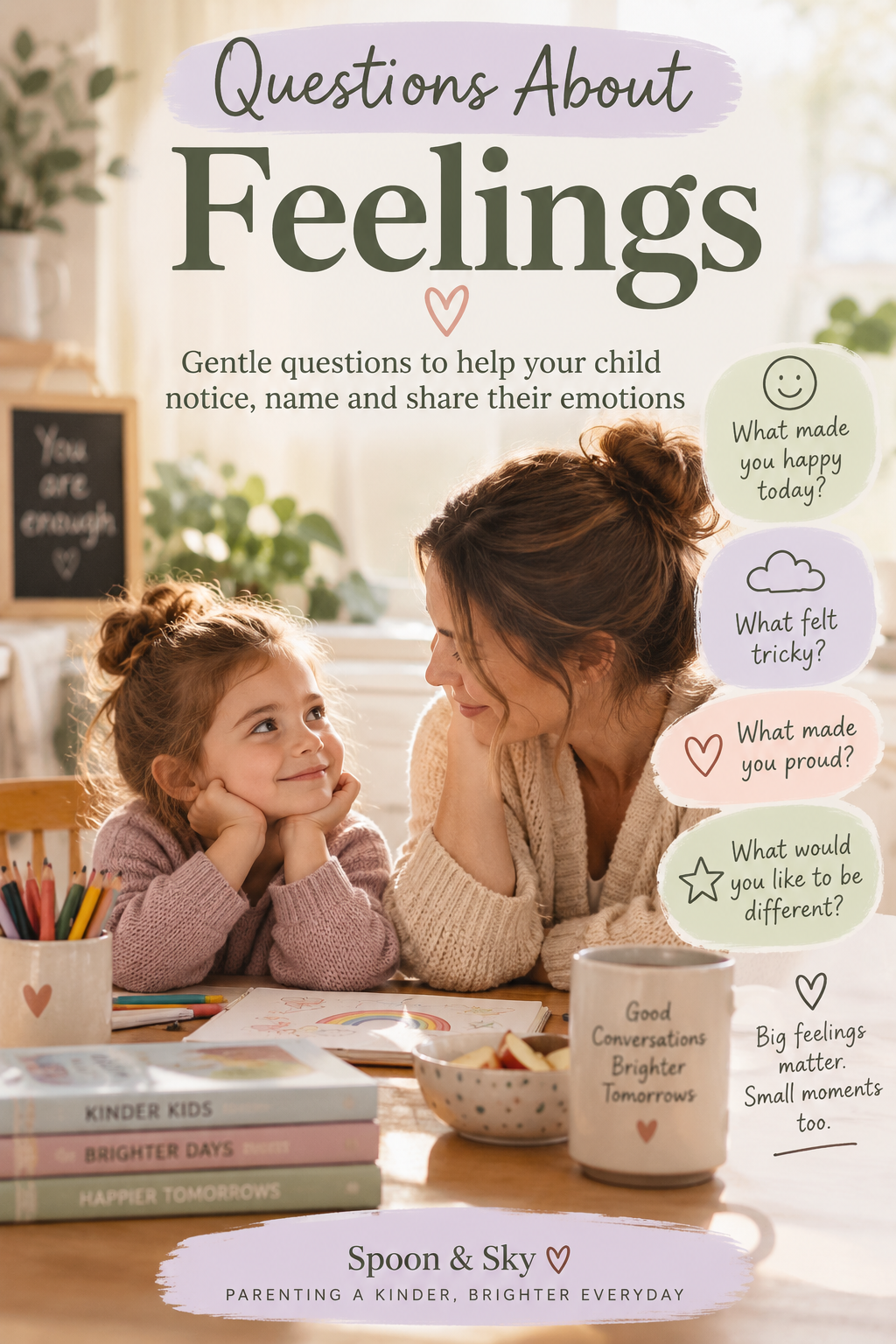
Not every conversation needs to involve feelings.
But gentle, specific questions can help children gradually learn to notice and name their emotional experiences.
19. Was there a moment today when you felt really happy?
If they don't know, that's okay.
You don't need to push for an answer.
20. Did anything feel a little bit tricky or uncomfortable today?
This gives your child an opening without assuming something bad happened.
21. Was there a moment when you felt really proud of yourself?
Maybe they wrote their name.
Climbed something.
Answered a question.
Asked for help.
Or managed to open the yoghurt tube without spraying it across the table.
Pride lives in small things too.
22. Did anything annoy you today?
Sometimes children find annoyed much easier to talk about than sad or worried.
And what begins with:
“Oliver kept taking the blue pencil…”
may reveal something worth listening to.
23. Was there anything you wished was different today?
This is a lovely alternative to:
“Did anything bad happen?”
It gives children room to mention small frustrations without suggesting they should be looking for something negative.
24. When did you feel most comfortable today?
This is particularly useful for children who are settling into a new class or school.
Perhaps they feel safest at story time.
Outside.
Beside a particular friend.
With a particular adult.
Those little details can tell you a lot.
Questions That Are Just Fun
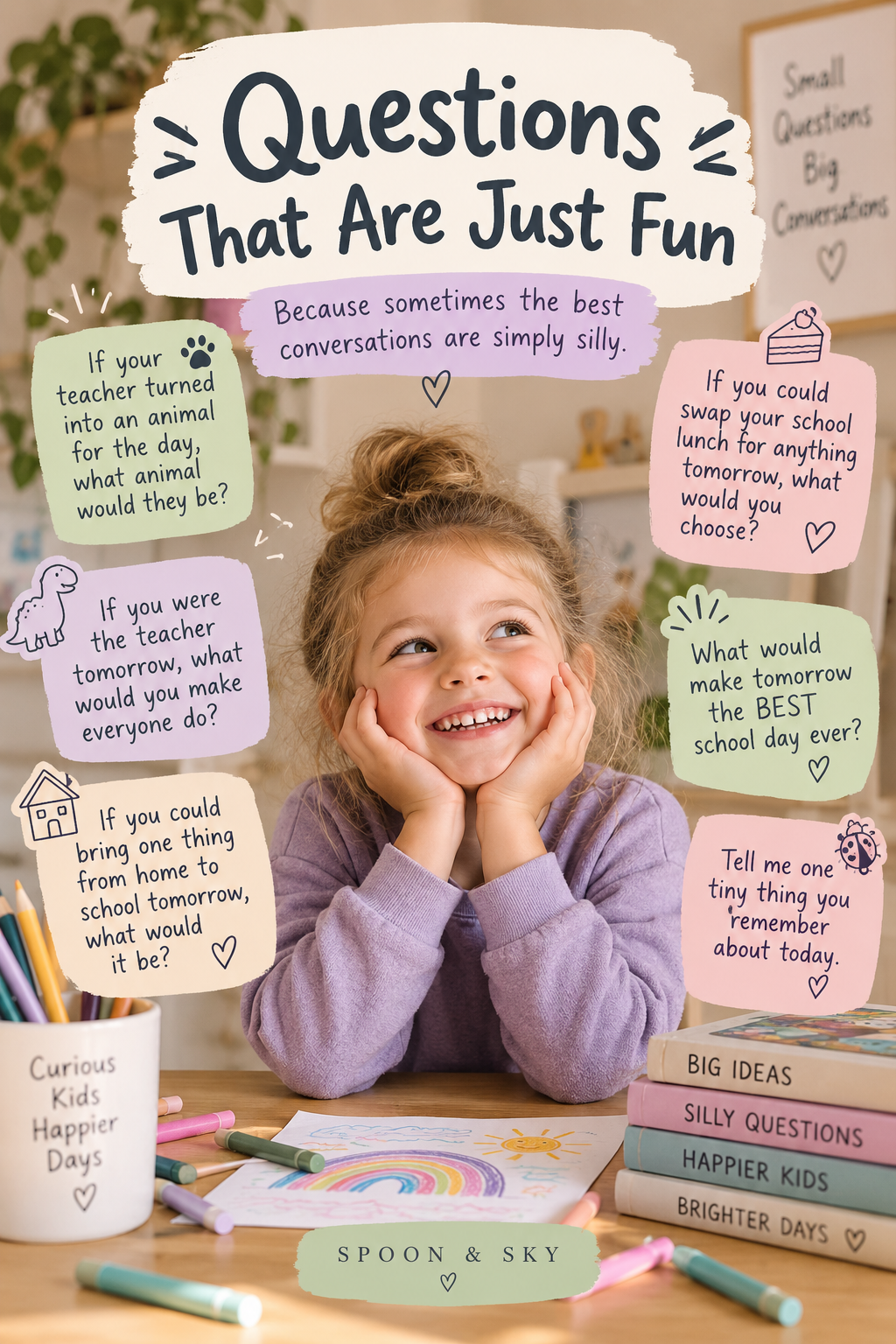
Not every conversation about school needs to gather useful parenting information.
Sometimes the best conversations are simply silly.
25. If your teacher turned into an animal for the day, what animal would they be?
You may learn absolutely nothing about school.
But you'll probably get a conversation.
And that's the point.
26. If you could swap your school lunch for anything tomorrow, what would you choose?
Prepare yourself emotionally for:
“Chocolate cake.”
27. If you were the teacher tomorrow, what would you make everyone do?
This can be surprisingly revealing.
Your child may invent an entire day of outdoor play.
Or dinosaurs.
Or snacks.
Lots of snacks.
28. What would make tomorrow the BEST school day ever?
Again, don't treat the answer as a request you need to fulfil.
It's simply a window into their world.
29. If you could bring one thing from home to school tomorrow, what would it be?
Their answer might be a favourite toy.
Their dog.
Their blanket.
You.
Sometimes playful questions create room for deeper feelings without us deliberately looking for them.
30. Tell me one tiny thing you remember about today.
This might be my favourite of all.
Not the best thing.
Not the worst thing.
Not the most important thing.
Just:
One tiny thing.
Maybe:
“We had pears.”
“Mrs Smith wore green shoes.”
“There was a ladybird outside.”
“My pencil broke.”
And sometimes one tiny thing becomes an entire story.
Try Sharing Your Day First
Conversation doesn't always need to begin with a question.
Instead of:
“What did you do today?”
try:
“Something funny happened to me today…”
Tell them a small story.
Maybe you dropped something.
Saw a strange dog.
Burned the toast.
Forgot why you walked into a room.
Then stop.
You don't even have to ask them anything.
Children learn conversation by experiencing it.
When we share pieces of our own lives, we show them:
This is something we do together.
Not:
You went away for six hours and now you need to provide a report.
You can even start a simple dinner-table rhythm:
One good thing.
One tricky thing.
One funny thing.
Everyone answers — adults included.
That way your child isn't the only person being asked to share.
Talk While You're Doing Something Else
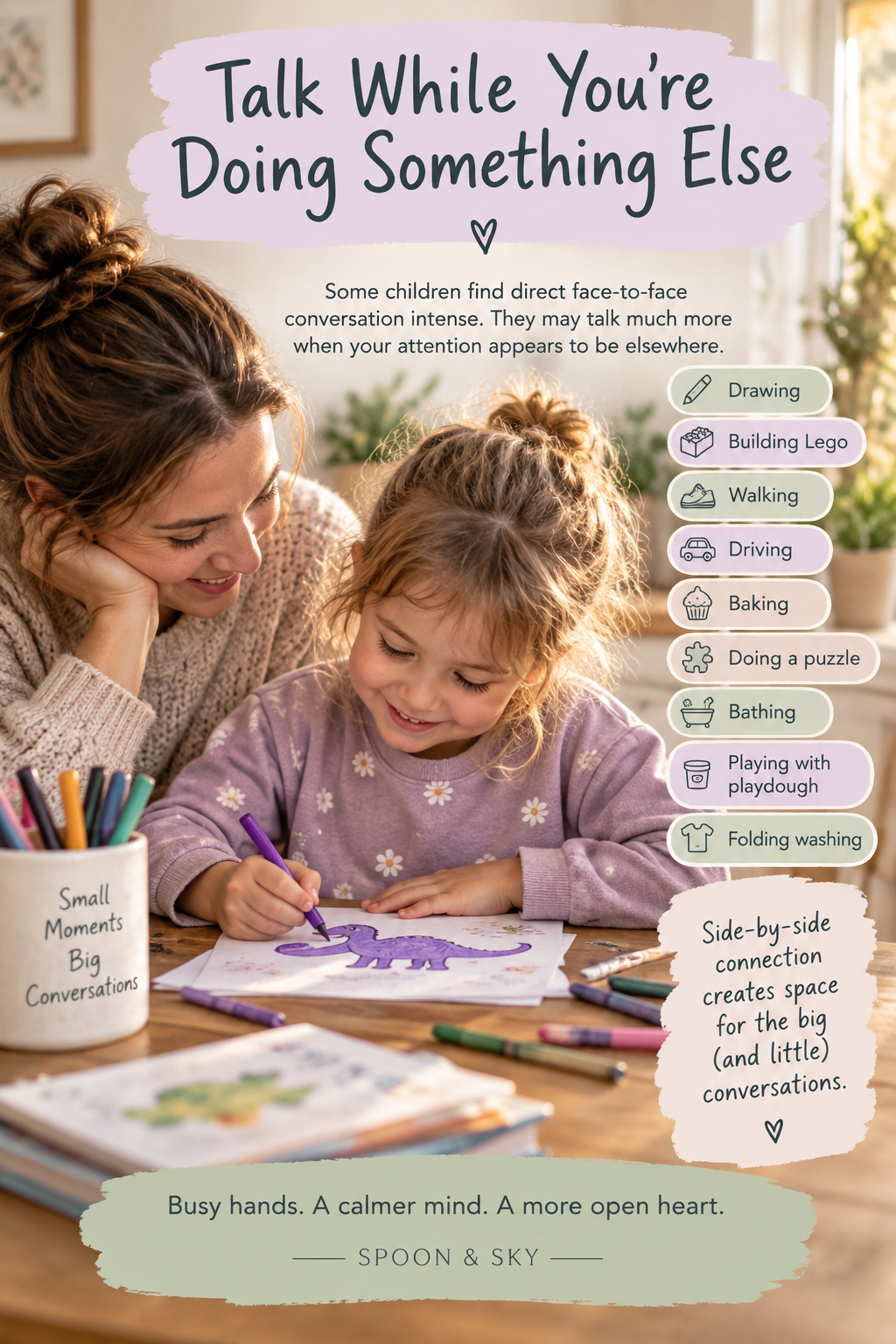
Some children find direct face-to-face conversation intense.
They may talk much more when your attention appears to be somewhere else.
Try chatting while:
Drawing.
Building Lego.
Walking.
Driving.
Baking.
Doing a puzzle.
Bathing.
Playing with playdough.
Folding washing.
There is something lovely about side-by-side connection.
Nobody is staring.
Nobody is waiting for the perfect answer.
The hands are busy.
And the words have somewhere to appear.
This is particularly helpful if something difficult has happened.
Your child may not sit down and announce:
“I'd like to discuss a friendship problem.”
They may quietly say:
“Amelia doesn't play with me anymore.”
while drawing a purple dinosaur.
That's your opening.
Put the metaphorical clipboard away.
Stay beside them.
And listen.
Don't Turn Every Story Into a Lesson
This one can be hard.
Your child says:
“Someone wouldn't let me play.”
Immediately your parenting brain activates.
Did you ask nicely? What did you say? Did you tell the teacher? Maybe tomorrow you could—
Sometimes that's useful.
But sometimes your child isn't asking you to fix anything.
They're simply telling you what happened.
Try beginning with:
“Oh. That sounds like it didn't feel very nice.”
Then wait.
They may continue.
They may ask what they should do.
Or they may simply say:
“Yeah.”
and move on to telling you that somebody found a worm.
Not every difficult experience needs an immediate solution.
Sometimes children need the experience of telling someone:
This happened to me.
And hearing:
I'm listening.
What If My Child Tells Me Something Worrying?
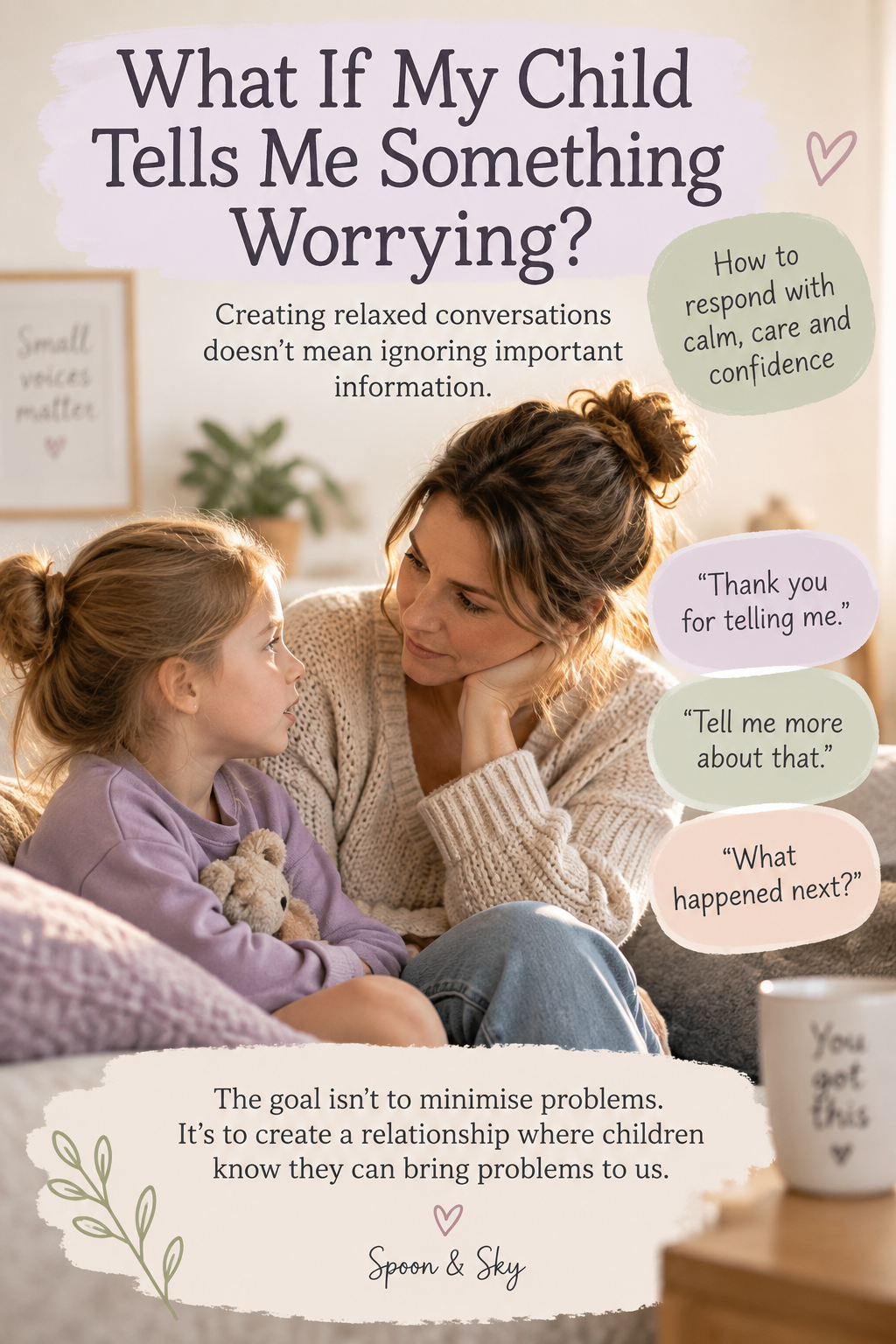
Creating relaxed conversations doesn't mean ignoring important information.
If your child tells you something concerning, stay as calm as you reasonably can.
Listen.
Let them explain in their own words.
Avoid immediately asking lots of leading questions or showing so much alarm that they become worried about telling you more.
You can say:
“Thank you for telling me.”
“Tell me more about that.”
“What happened next?”
Depending on what they've shared, you may need to speak to their teacher, school or another appropriate professional.
If your child describes something that raises a safeguarding concern or suggests they or another child may be unsafe, take it seriously and follow the appropriate safeguarding route.
The goal of gentle conversation isn't to minimise problems.
It's to create a relationship where children know they can bring problems to us.
What If They Still Say “I Don't Know”?
Then let them.
Really.
You don't need to find the magical question that unlocks your child every afternoon.
Some children process their day internally.
Some need longer.
Some are extremely chatty on Tuesday and apparently signed a confidentiality agreement on Wednesday.
That's okay.
You can simply say:
“No problem. I'm here if you think of anything later.”
Then move on.
That sentence communicates something powerful:
You don't have to talk to me on demand.
And paradoxically, removing the pressure often makes conversation more likely.
Create a Small After-School Connection Ritual
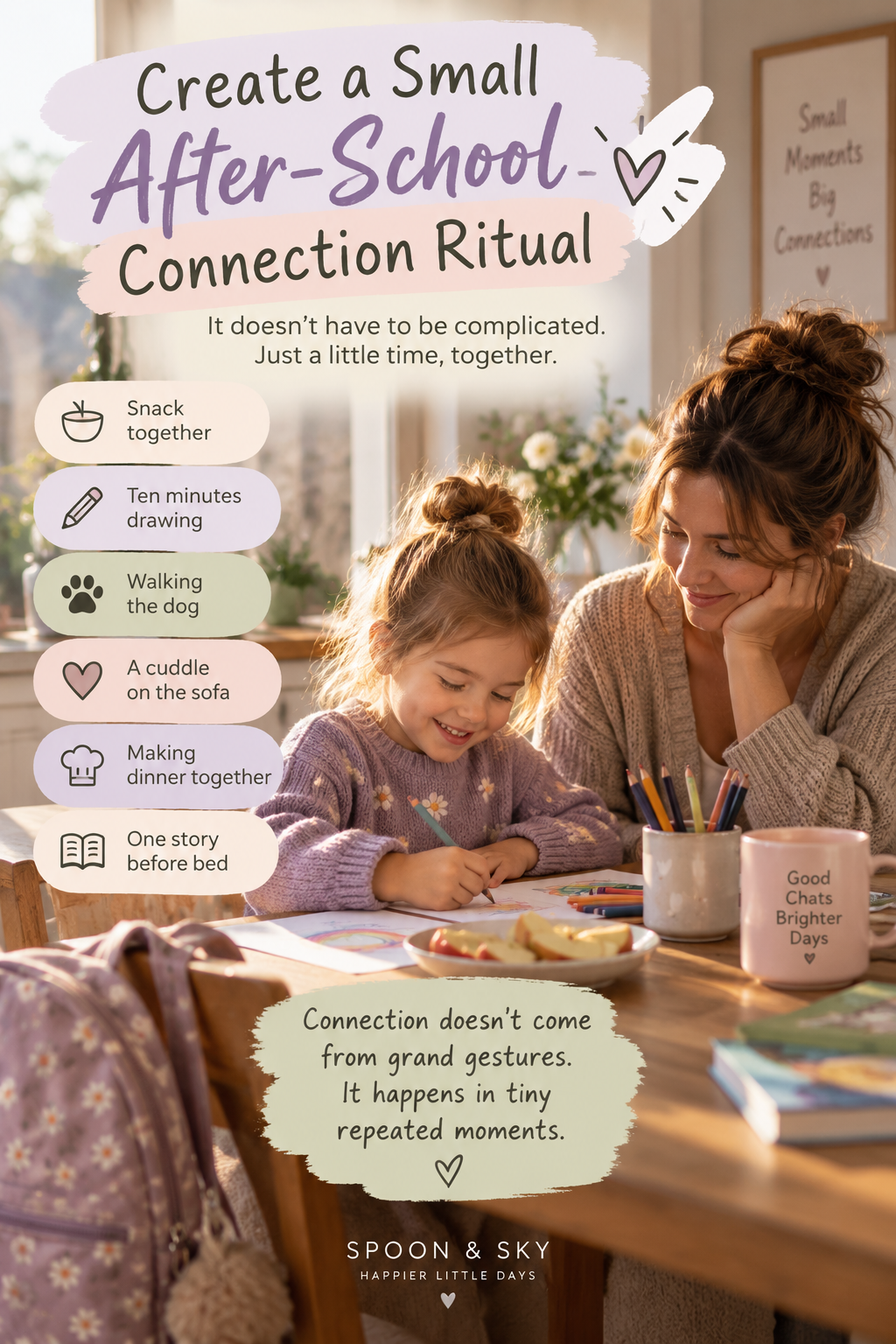
If you'd like more connection after school, don't necessarily add more questions.
Add a small predictable moment together.
Maybe it's:
Snack at the kitchen table.
Ten minutes drawing.
Walking the dog.
A cuddle on the sofa.
Making dinner together.
A cup of warm milk before bed.
One story.
Nothing elaborate.
The important part is that your child begins to recognise:
This is our little moment.
At Spoon & Sky, we believe connection doesn't usually come from grand gestures.
It happens in tiny repeated moments.
A child colouring beside you while you chop vegetables.
A story told from the back seat of the car.
A hand slipped into yours on the walk home.
A conversation that begins with a ladybird and somehow ends with a friendship worry.
These moments are easy to overlook because they don't look particularly impressive.
But they're often where children show us their world.
Connection Doesn't Need the Perfect Question
There will still be afternoons when you ask:
“How was school?”
And they say:
“Fine.”
You will probably continue asking it for the rest of your parenting life.
That's okay.
The goal isn't to eliminate one question.
It's to remember that connection isn't measured by how much information your child gives you.
You don't need a detailed account of every school day to have a close relationship.
You need to create enough little openings that your child knows:
You're interested in my world.
You listen when I talk.
I don't have to perform for you.
And if something important happens, I can tell you.
So tomorrow, when they walk through the school gates, perhaps don't begin with a question at all.
Smile.
Take the book bag.
Say:
“I'm happy to see you.”
Go home.
Find the snack.
Let everybody breathe.
And later, when the moment feels right, try something small:
“What made you laugh today?”
Then see where they take you.
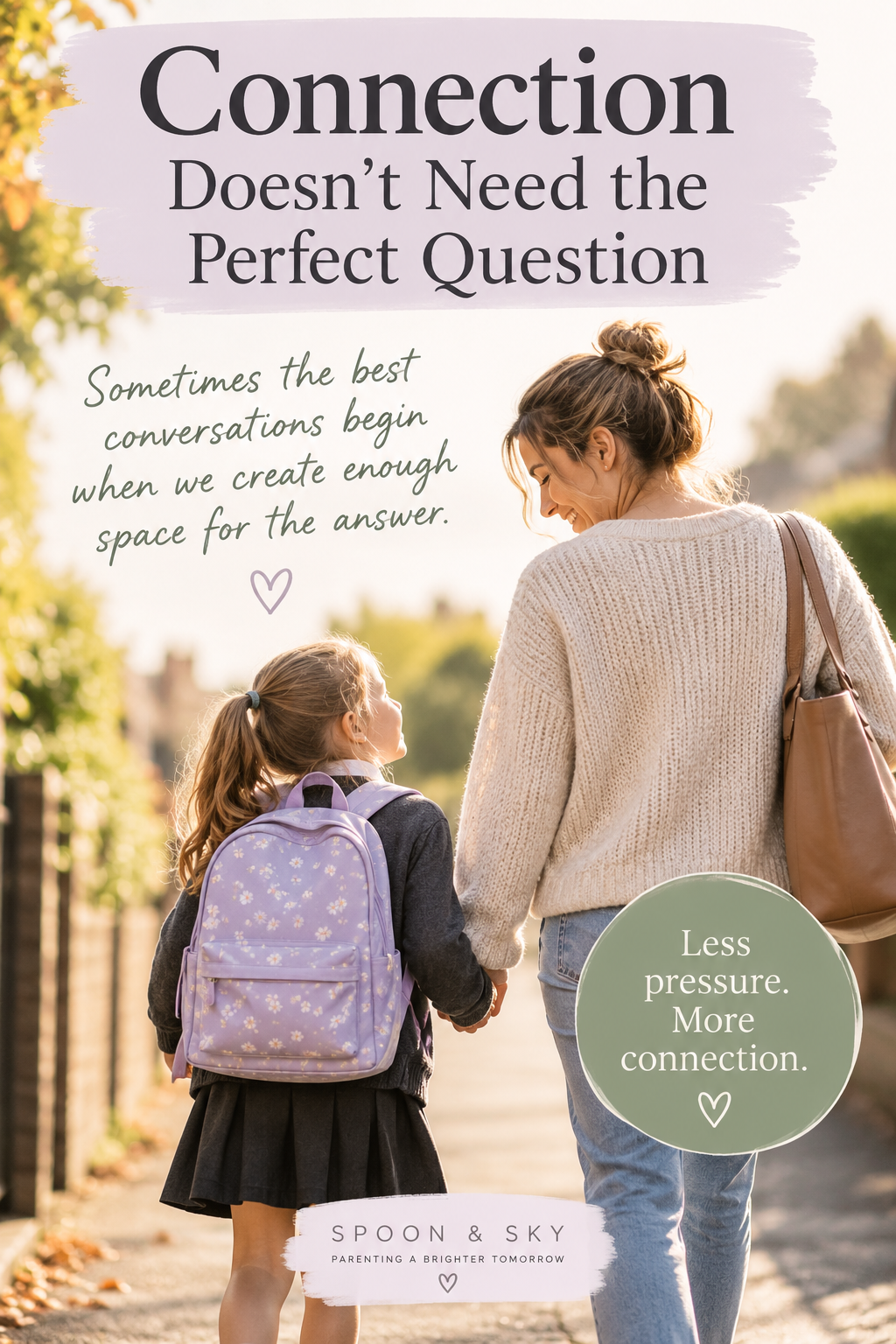
Because sometimes the best conversations with our children don't begin with the perfect question.
They begin when we create enough space for the answer.
At Spoon & Sky, we often say:
Creativity is the bridge where your child feels seen.
And sometimes conversation works in exactly the same way.
It doesn't happen because we sit children down and ask them to talk.
It happens while we're drawing.
Building.
Walking.
Making.
Laughing.
Simply being together.
So instead of searching for the perfect way to get your child talking, create more little places where conversation can find you.
Because the story they need to tell you might begin with nothing more than:
“Mum, do you know what happened today?”
And when it does, listen.
Lily x
Spoon & Sky