
Starting Reception: 12 Things Nobody Tells You About the First Few Weeks
Starting Reception: 12 Things Nobody Tells You About the First Few Weeks
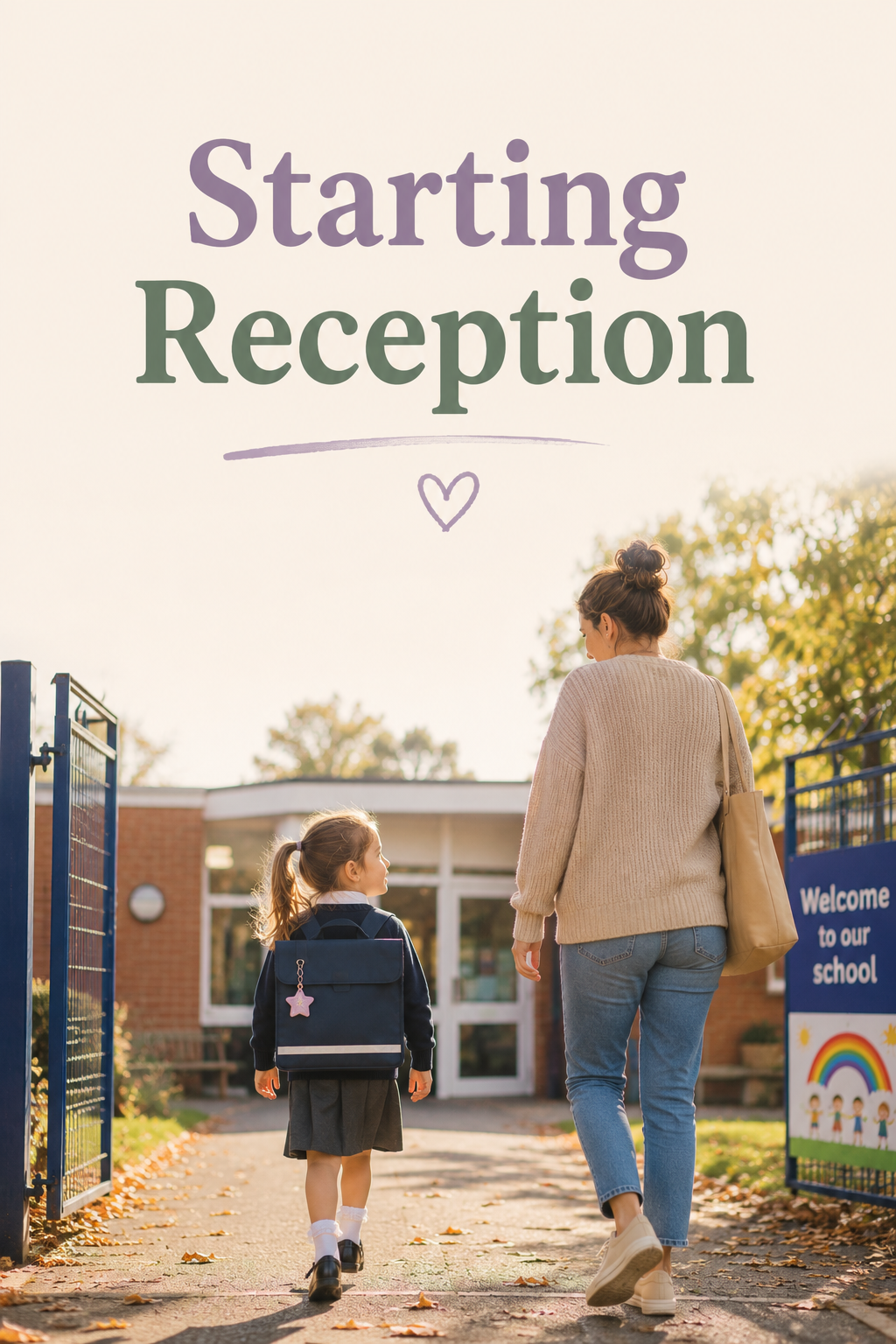
The uniform is slightly too big.
The shoes are suspiciously clean.
There's a new water bottle, a book bag and probably at least one name label you forgot to iron onto something.
And suddenly, the tiny person who once needed your help to put both legs into a pair of trousers is walking through the doors of Reception.
Starting school is a huge milestone.
We spend so much time preparing children for it — practising getting dressed, talking about teachers, reading books about school and reassuring them that they're going to have a wonderful time.
But there's another transition we don't always talk about quite as much:
What happens when they come home.
Because your child can be completely ready for Reception and still find the first few weeks enormous.
They might love their teacher and cry the following morning because they don't want to go.
They might hold everything together beautifully at school and completely fall apart because you gave them the wrong coloured cup at home.
They may suddenly need help with things they could confidently do a month ago.
And when you ask what they did all day?
“Nothing.”
If you're currently wondering what happened to your usually cheerful, reasonably independent four-year-old, you're not alone.
Here are 12 things nobody tells you about those first few weeks of Reception — and what your child might really need from you while they find their feet.
1. They may be absolutely exhausted
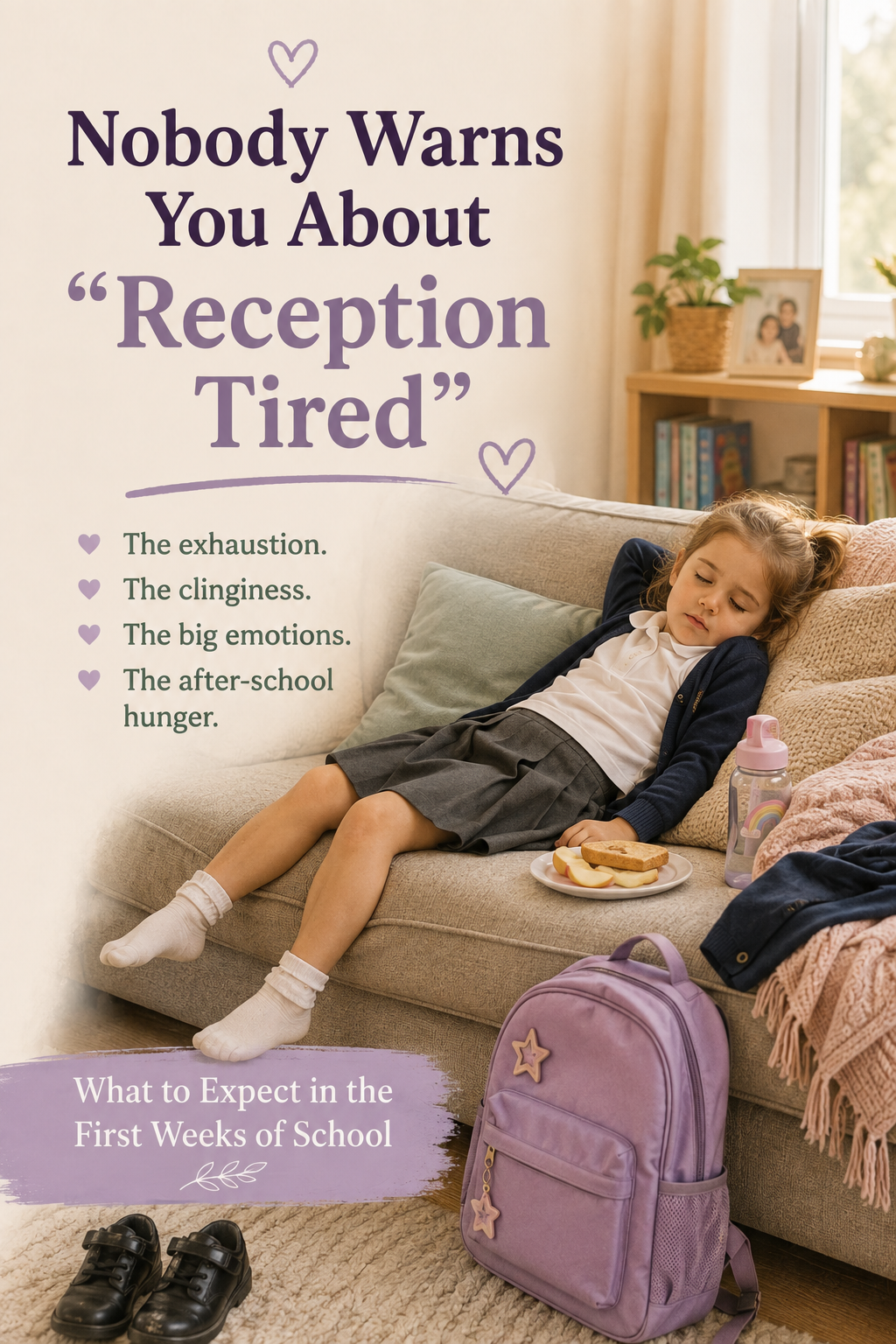
Not ordinary tired.
Reception tired.
The kind of tired where taking off one shoe appears to require the emotional resources of climbing a mountain.
Starting school asks a lot of a four or five-year-old.
They're learning where everything belongs.
They're remembering new names.
They're listening to instructions.
They're navigating friendships.
They're working out when they can talk, where they sit, where the toilets are and what happens after lunch.
They're learning academically too, of course, but there is an enormous amount of invisible learning happening alongside it.
So don't be surprised if your child is exhausted.
You may notice more tears, less patience, earlier bedtimes or a child who seems completely fine until approximately 4:47pm and then cannot possibly cope with the fact that their banana broke in half.
It doesn't necessarily mean something is wrong.
Sometimes it simply means:
That was a very big day for a very small person.
2. Their behaviour at home might temporarily get worse
Your child's teacher might tell you:
“They've been wonderful!”
And you may smile politely while thinking:
Wonderful? Are we discussing the same child?
Because at home they're shouting because their socks feel funny, refusing dinner and lying dramatically on the kitchen floor.
This can feel confusing.
But home is often where children feel safest to release everything they've been holding together.
At school, they're managing expectations, transitions, social situations and lots of stimulation.
Then they see you.
Their safe person.
And everything comes out.
This doesn't mean you should accept every behaviour.
Boundaries can still be kind and clear.
But understanding what might be sitting underneath the behaviour can change how you respond.
Instead of seeing:
“They're being difficult.”
you might begin to see:
“They're having a difficult moment.”
That small shift can make a big difference.
3. They might suddenly become more clingy
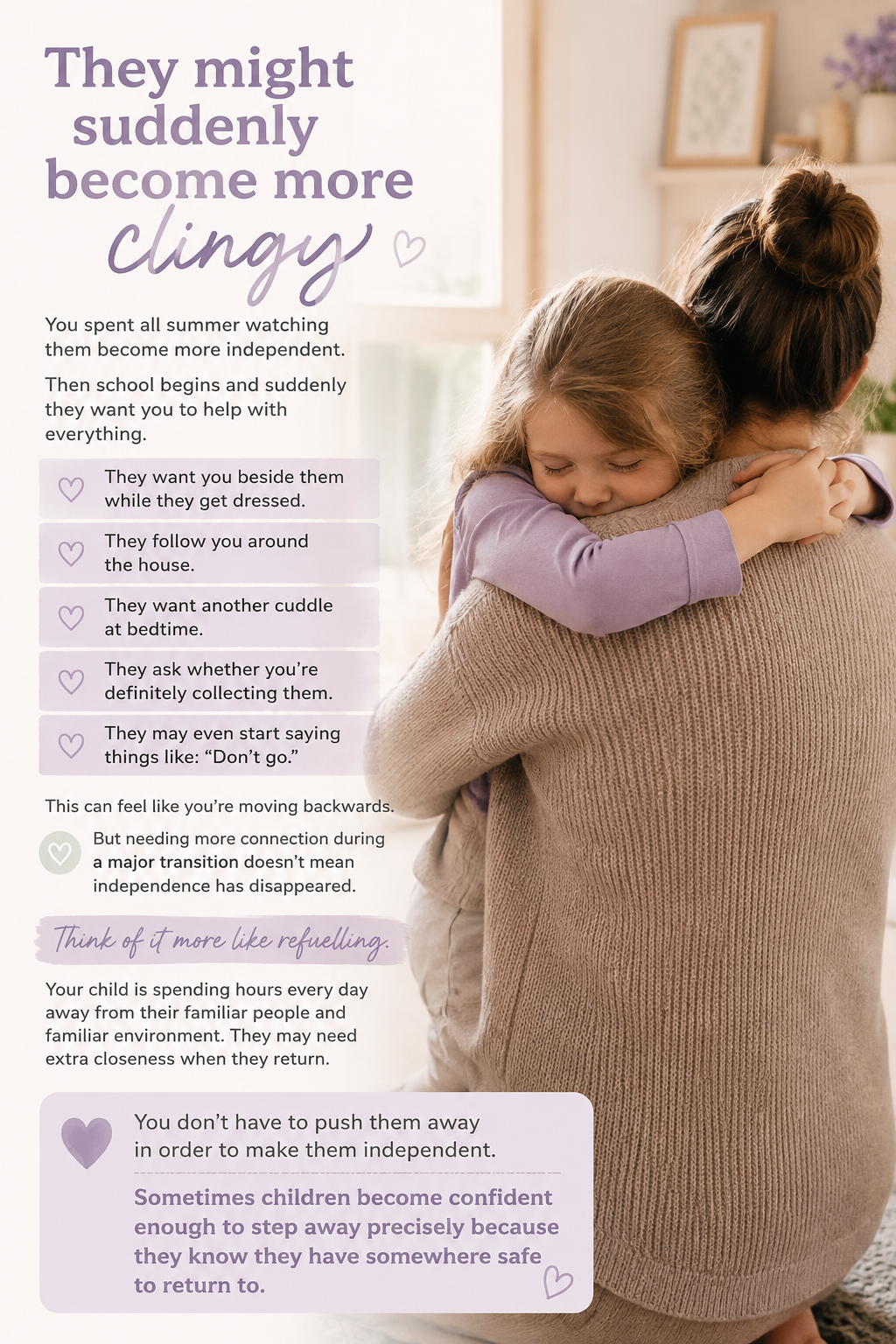
You spent all summer watching them become more independent.
Then school begins and suddenly they want you to help with everything.
They want you beside them while they get dressed.
They follow you around the house.
They want another cuddle at bedtime.
They ask whether you're definitely collecting them.
They may even start saying things like:
“Don't go.”
This can feel like you're moving backwards.
But needing more connection during a major transition doesn't mean independence has disappeared.
Think of it more like refuelling.
Your child is spending hours every day away from their familiar people and familiar environment.
They may need extra closeness when they return.
You don't have to push them away in order to make them independent.
Sometimes children become confident enough to step away precisely because they know they have somewhere safe to return to.
4. They may tell you absolutely nothing about their day
You wait all day to see them.
The door opens.
You finally get your child back.
You ask:
“How was school?”
“Good.”
“What did you do?”
“Nothing.”
“Who did you play with?”
“No one.”
“What did you have for lunch?”
“I can't remember.”
Excellent.
Very informative.
The problem isn't necessarily that your child doesn't want to talk to you.
“How was school?” is actually an enormous question.
You're asking a four-year-old to review six hours of experiences, decide which parts are relevant and organise them into a coherent answer.
Immediately after they've spent all day using their brain.
Try waiting.
Offer a snack.
Walk home.
Let them play.
Then later, ask something smaller:
“What made you laugh today?”
“Did anything surprise you?”
“Who did you sit next to?”
“What was the best thing outside?”
“Was anything tricky today?”
Sometimes the stories appear when you stop trying to extract them.
5. Hunger can become serious business

You may collect your child from school and wonder whether anybody has fed them since Tuesday.
They are starving.
This can happen even when they've eaten lunch.
School days require energy.
And children may also eat differently in an unfamiliar environment.
Perhaps lunch felt rushed.
Perhaps they were busy talking.
Perhaps they didn't eat something because opening the packet was difficult.
Perhaps they simply weren't very hungry at lunchtime and are now ready to consume the entire contents of your kitchen.
Having a predictable snack ready after school can help enormously.
It doesn't have to be impressive.
Think simple and filling:
Fruit with yoghurt.
Toast with peanut butter.
Cheese and crackers.
Hummus and pitta.
A banana and a glass of milk.
A homemade muffin.
Something familiar that requires very little decision-making.
Because sometimes what looks like a spectacular emotional collapse is at least partly a very hungry four-year-old.
6. They may temporarily “forget” how to do things
“My child dressed themselves all summer. Why can't they put their trousers on anymore?”
Because independence isn't perfectly linear.
When children are using enormous amounts of energy learning something new, you may see temporary regressions elsewhere.
They may ask you to put their shoes on.
They might need more help at bedtime.
There may even be occasional toileting accidents after months of independence.
Try not to turn these moments into a test.
You can still encourage independence without making your child prove it every time.
Try:
“You start and I'll help with the tricky bit.”
Or:
“Would you like to do it yourself or do it together today?”
Support today doesn't erase yesterday's progress.
Sometimes it simply gives your child enough capacity to try again tomorrow.
7. Play becomes even more important
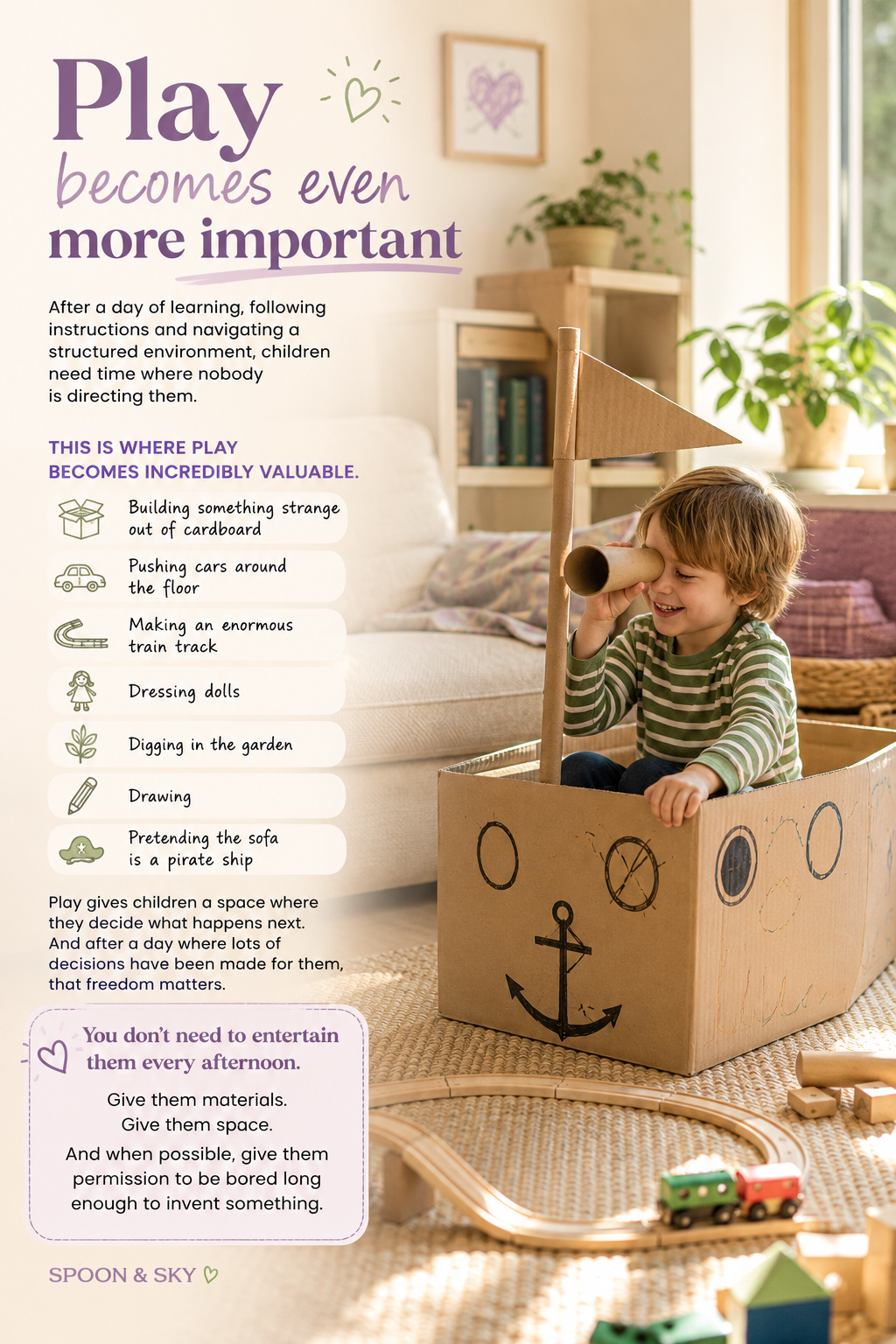
After spending the day learning, following instructions and navigating a structured environment, children need opportunities where nobody is directing them.
This is where play becomes incredibly valuable.
Not educational play.
Not a carefully planned activity designed to practise phonics.
Just play.
Building something strange out of cardboard.
Pushing cars around the floor.
Making an enormous train track.
Dressing dolls.
Digging in the garden.
Drawing.
Pretending the sofa is a pirate ship.
Play gives children a space where they decide what happens next.
And after a day where lots of decisions have been made for them, that freedom matters.
You don't need to entertain them every afternoon.
Give them materials.
Give them space.
And when possible, give them permission to be bored long enough to invent something.
8. They may not need another activity after school
Starting Reception can create a strange pressure.
Suddenly it seems like everyone is doing something.
Swimming on Monday.
Dance on Tuesday.
Football on Wednesday.
Gymnastics on Thursday.
And apparently somebody else's four-year-old is learning Mandarin on Friday.
Extracurricular activities can be wonderful.
But your child doesn't need to do everything immediately.
During the first few weeks of school, simply going to school may be enough.
Watch the child in front of you.
If they come home buzzing with energy and desperate to move, an activity might be exactly what they need.
If they're collapsing into your arms every afternoon, a quieter September may serve them better.
There is plenty of time.
Childhood isn't a race to collect activities.
9. Bedtime might need to move earlier
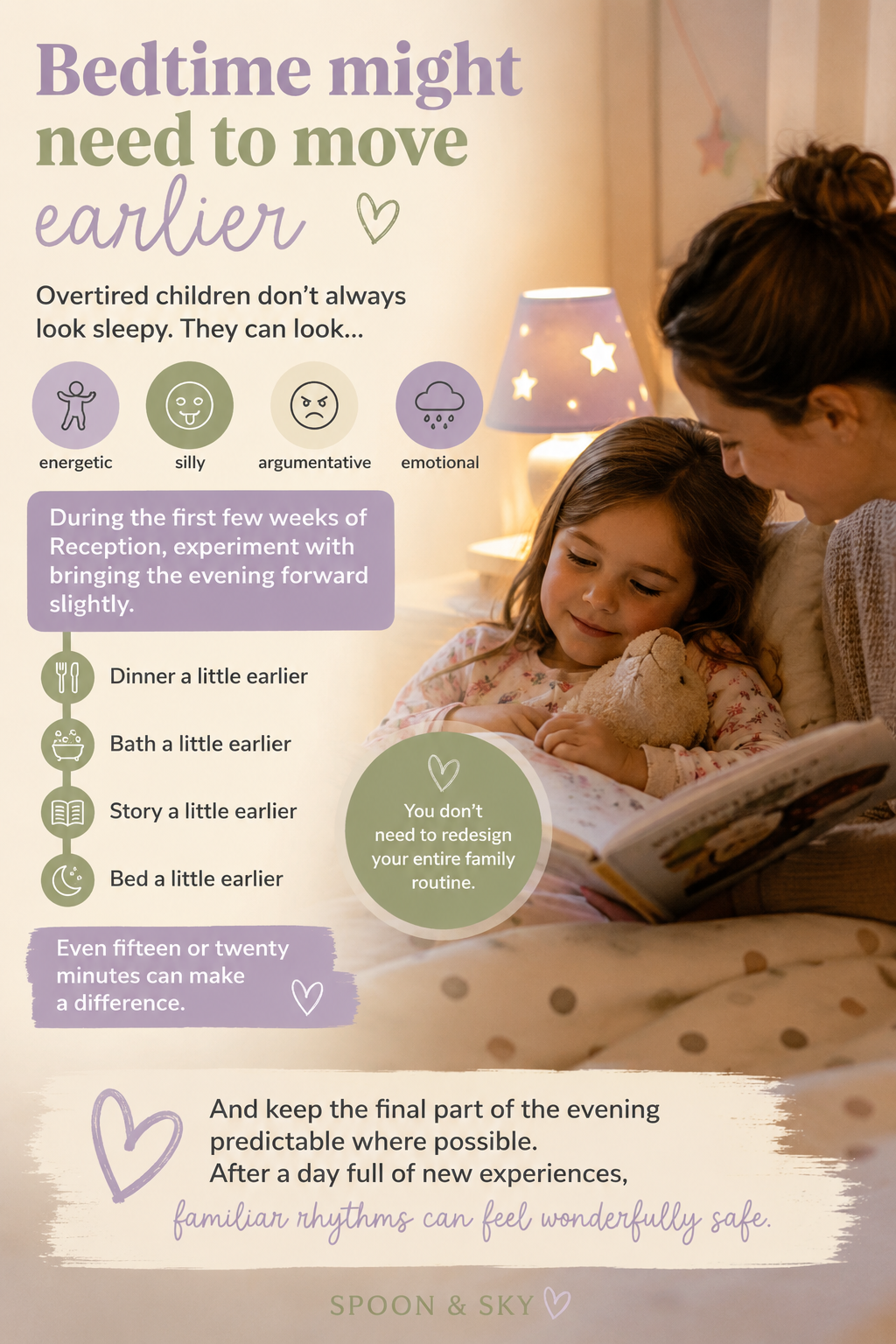
If bedtime suddenly feels chaotic, consider whether your child is simply reaching it too late.
Overtired children don't always look sleepy.
Sometimes they look energetic.
Silly.
Argumentative.
Emotional.
Or strangely convinced that brushing their teeth is an outrageous violation of their human rights.
During the first few weeks of Reception, experiment with bringing the evening forward slightly.
Dinner a little earlier.
Bath a little earlier.
Story a little earlier.
Bed a little earlier.
You don't need to redesign your entire family routine.
Even fifteen or twenty minutes can make a difference.
And keep the final part of the evening predictable where possible.
After a day full of new experiences, familiar rhythms can feel wonderfully safe.
10. “I don't want to go to school” doesn't automatically mean they hate school
This one can really pull at your heart.
Your child seemed happy.
The teacher said they'd had a lovely day.
Then the next morning:
“I don't want to go.”
Try not to panic.
“I don't want to go to school” can mean many things.
It might mean:
“I don't want to leave you.”
“I'm tired.”
“I don't know what today will look like.”
“Something happened yesterday.”
“I'd rather stay home where everything is familiar.”
Or simply:
“School is hard work and home is comfortable.”
Listen.
Stay curious.
Ask gentle questions.
But don't assume one difficult morning means school is going badly.
If it continues, becomes more intense or your child identifies something specific that's worrying them, speak to their teacher.
Home sees one part of the picture.
School sees another.
Working together helps you understand the whole child.
11. Your evenings may need fewer questions and more connection
When children begin school, parents understandably become curious about everything.
Did you eat your lunch?
Did you go to the toilet?
Did you make a friend?
Did you do phonics?
What did the teacher say?
Who did you sit beside?
Did anyone upset you?
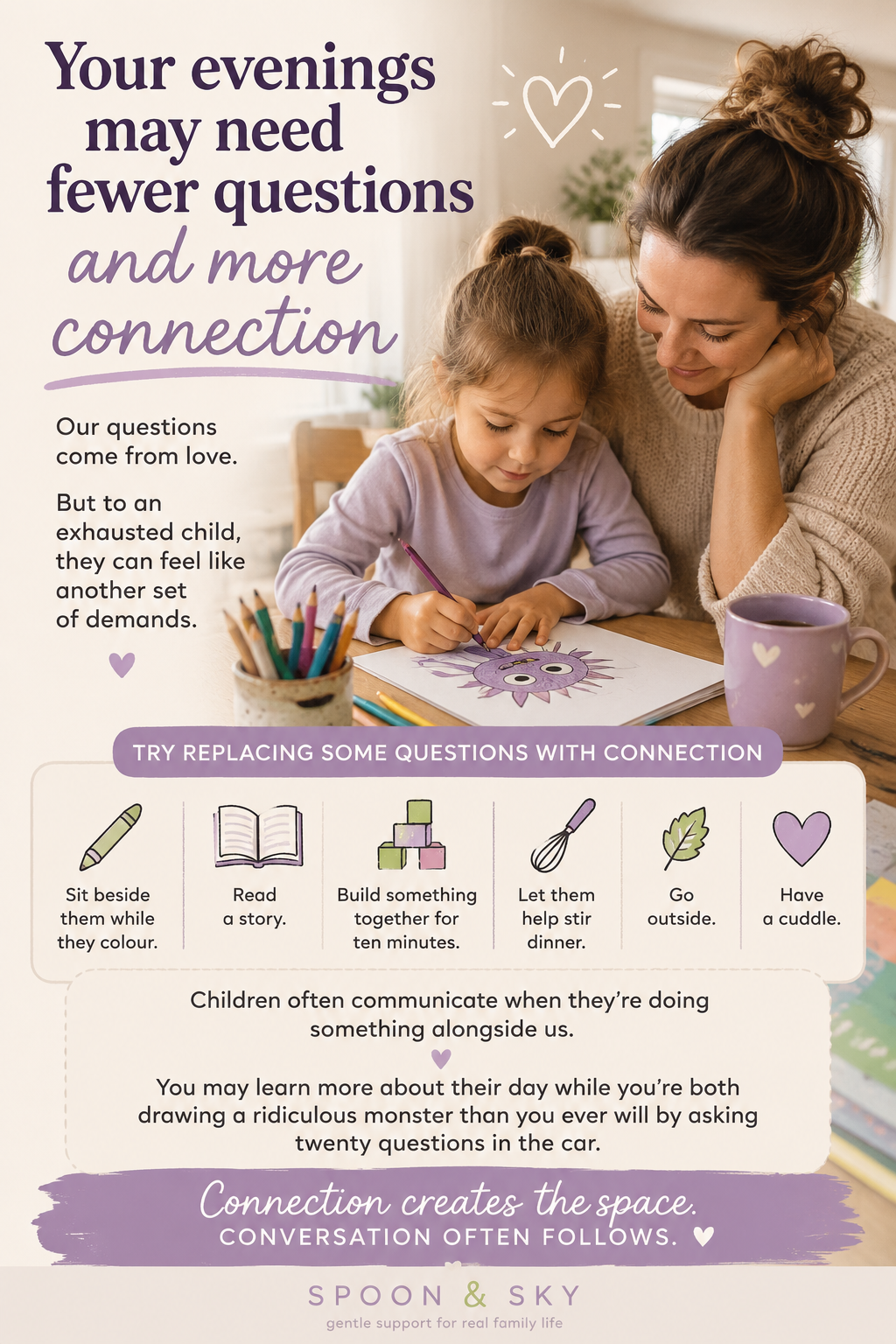
Our questions come from love.
But to an exhausted child, they can feel like another set of demands.
So try replacing some questions with connection.
Sit beside them while they colour.
Read a story.
Build something together for ten minutes.
Let them help stir dinner.
Go outside.
Have a cuddle.
Children often communicate when they're doing something alongside us.
You may learn more about their day while you're both drawing a ridiculous monster than you ever will by asking twenty questions in the car.
Connection creates the space. Conversation often follows.
12. They don't need you to make Reception perfect
We want the beginning of school to be magical.
The perfect first-day photograph.
The lovely teacher.
The instant best friend.
The happy child skipping through the gate.
And sometimes it is like that.
Sometimes it isn't.
There might be tears.
Lost jumpers.
Uneaten lunches.
Friendship wobbles.
A child who loved school on Monday and announces their retirement from education by Thursday.
That's okay.
Your child doesn't need every day to be brilliant in order for Reception to be a positive experience.
They need time to learn.
Time to adjust.
Time to find their people.
And somewhere safe to land when the day is finished.
Try a Simple Reception After-School Rhythm
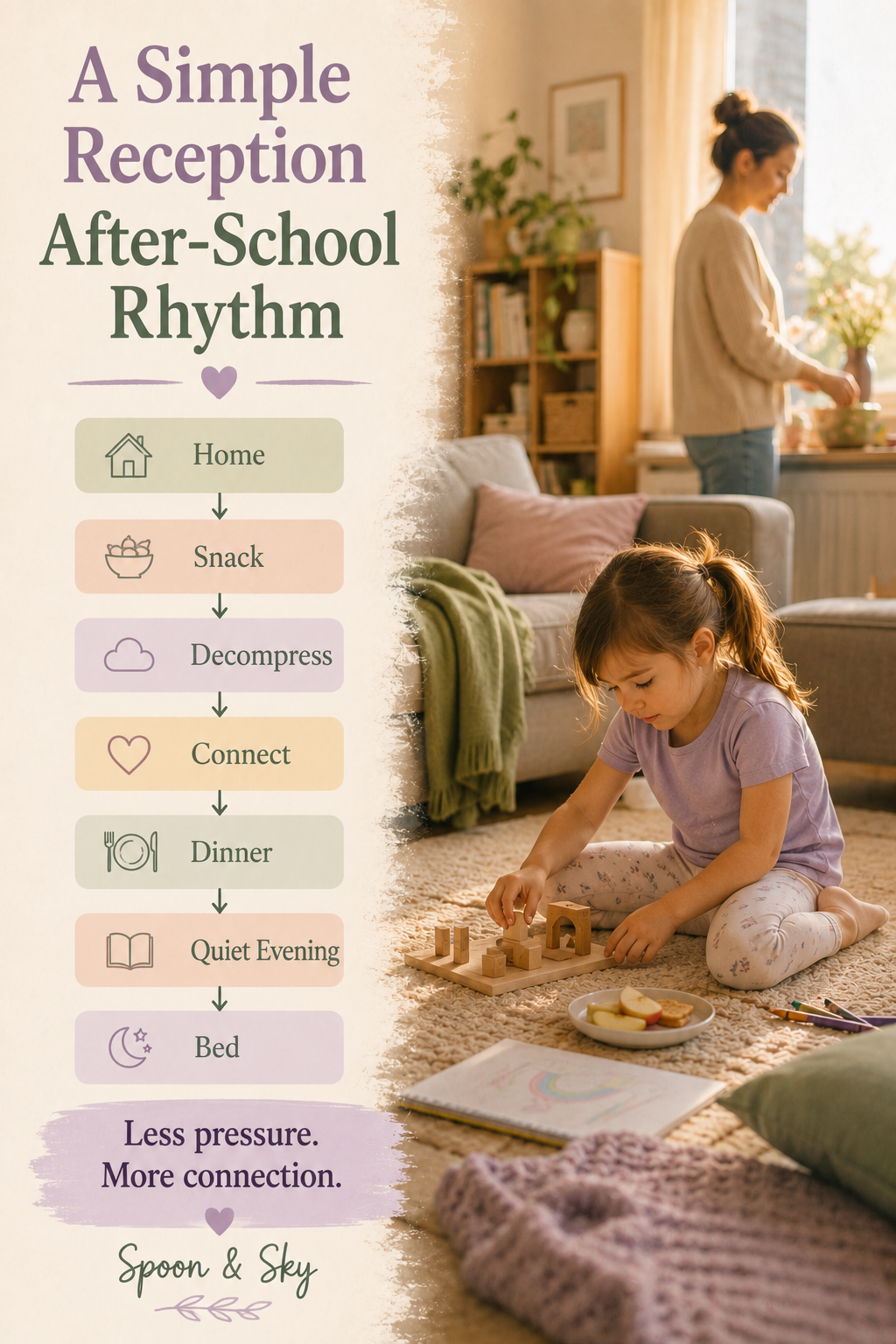
One of the best things you can do during the first few weeks is resist the temptation to fix every wobble with more structure.
Children need predictability.
But they also need breathing room.
Try something as simple as:
Home → Snack → Decompress → Connect → Dinner → Quiet Evening → Bed
That's it.
No complicated schedule.
No seventeen-step routine.
No expectation that every afternoon should be productive.
Some days, your child might come home and immediately disappear into imaginary play.
Wonderful.
Another day they might want to sit on you while eating crackers and watching something familiar.
Also fine.
The rhythm is there to provide gentle anchors — not to control every minute.
That's what we mean at Spoon & Sky when we talk about joyful structure.
Enough predictability for children to feel secure.
Enough flexibility for real family life to happen inside it.
What Does Your Child Really Need During the First Few Weeks of Reception?
Probably less than you think.
They don't need you to recreate school at home.
They don't need worksheets every evening.
They don't need to practise everything they learned that day.
They don't need a packed schedule of enrichment activities.
And they certainly don't need you to become their second teacher.
They need home.
Food.
Sleep.
Play.
Connection.
Predictability.
A chance to talk when they're ready.
And somebody who remains steady while their world gets a little bigger.
School will teach them enormous amounts.
At home, you can give them something different.
Somewhere they don't have to achieve anything at all.
And What About You?

There is another person adjusting to Reception too.
You.
Perhaps you've spent years counting down to the moment when you'd finally have a little more time.
And now the house feels strangely quiet.
Perhaps you're delighted they're at school.
Perhaps you're worried.
Perhaps you're emotional every time you see them walking through those gates.
Perhaps you're feeling all three before 9am.
Starting school changes the rhythm of family life.
It marks the beginning of a new stage for your child, but also for you.
So give yourself a little grace too.
You don't need to know every detail of their day.
You don't need to solve every friendship problem before it happens.
You don't need to make every morning calm.
And forgetting to return the reading book once does not make you a terrible school parent.
You're learning this new rhythm together.
Reception Is a Beginning, Not a Test
The first few weeks of school can feel enormous because everything is happening for the first time.
The first drop-off.
The first packed lunch.
The first playground friendship.
The first reading book.
The first “I don't want to go today.”
The first time they disappear through the school doors carrying a whole little life that you're no longer there to witness.
But slowly, things become familiar.
They learn where their coat belongs.
They recognise the walk to their classroom.
They know which adult to ask for help.
They discover who makes them laugh.
The shoes get scuffed.
The jumper gets lost.
The book bag becomes inexplicably filled with crumbs.
And somewhere amongst all those ordinary moments, school stops being the new place.
It simply becomes part of their world.
Until then, you don't need to rush the adjustment.
Keep home soft.
Keep the rhythms simple.
Make space for play.
Offer the snack.
Give the cuddle.
And remember:
A child can be ready for school and still need you very much.
Those two things can exist together.
At Spoon & Sky, we believe children don't need every moment of childhood planned, perfected or productive.
They need enough structure to feel safe, enough freedom to explore and enough connection to know they're seen.
So during these first few weeks of Reception, don't worry about doing more.
Sometimes the most helpful thing you can offer is wonderfully simple:
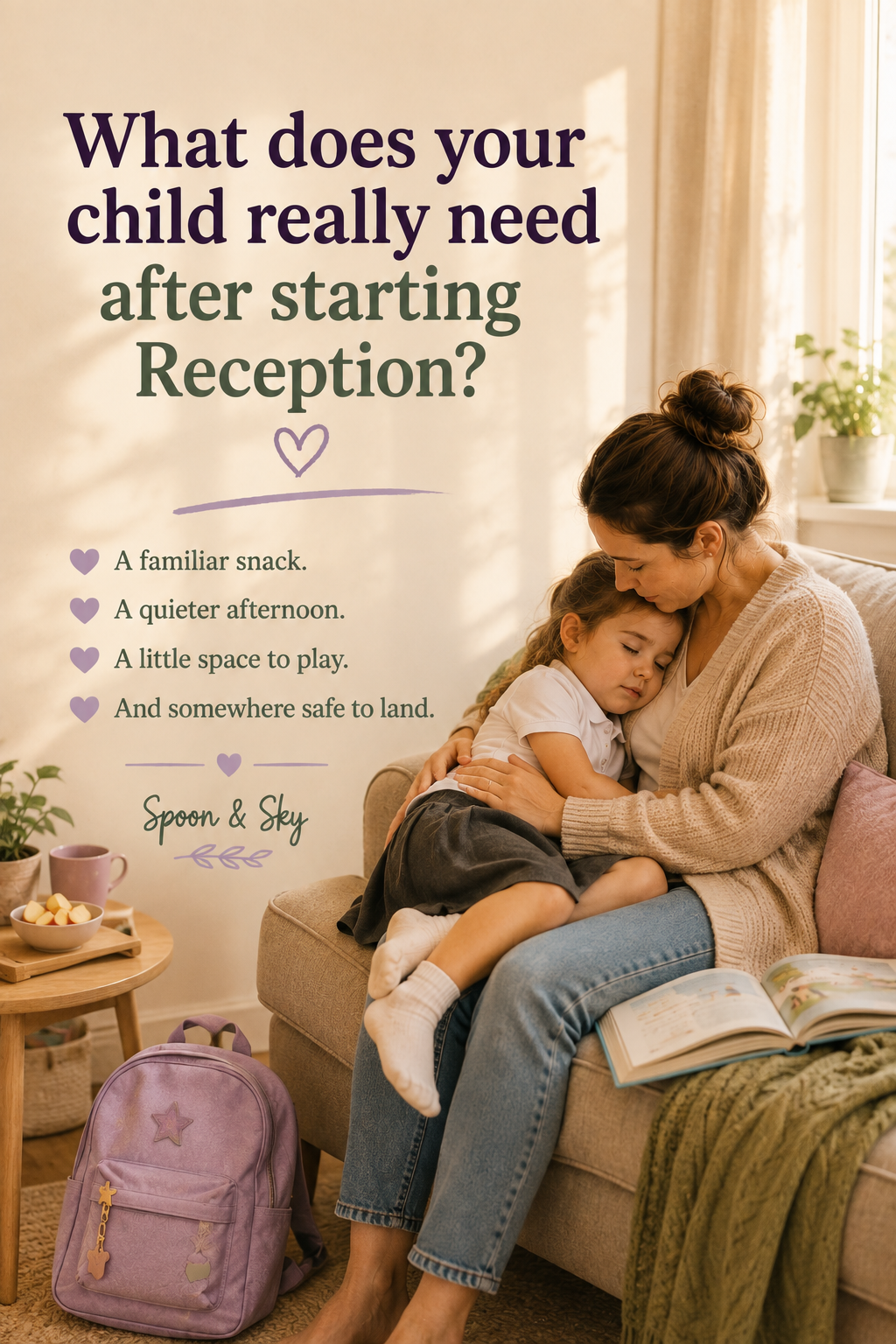
A familiar snack.
A quieter afternoon.
A little space to play.
And somewhere safe to land.
One small rhythm at a time.
Lily x
Spoon & Sky