
The "Tantrum-Free" Summer: How to Protect Your Child's Emotional Baseline
The "Tantrum-Free" Summer: How to Protect Your Child's Emotional Baseline (and Your Sanity)
Summer has a funny way of making us dream.
We picture long afternoons in the sunshine.
Picnics in the park.
Barefoot adventures.
Sticky ice cream smiles.
Children laughing together while butterflies flutter past.
It all feels wonderfully simple.
Until real life arrives.
The bedtime that slowly drifts later and later.
The skipped naps because "they're having too much fun."
The endless excitement of family visits, playgrounds, beach days, BBQs, swimming pools, and late evenings outdoors.
By the middle of summer, something often changes.
Your usually cheerful four-year-old bursts into tears because the banana broke in half.
Your six-year-old collapses onto the kitchen floor because their towel is "the wrong blue."
Your seven-year-old suddenly seems argumentative about absolutely everything.
If you've ever found yourself wondering,
"Why is everything suddenly so difficult?"
you're certainly not alone.
The answer often isn't poor behaviour.
It's an overwhelmed nervous system.
Young children—especially between the ages of three and eight—thrive on predictability.
Their brains are still learning how to process excitement, disappointment, change, tiredness, noise, and big emotions.
Summer brings wonderful experiences.
It also brings a huge amount of stimulation.
The good news?
You don't need to cancel your adventures or spend the entire holiday at home to create calmer days.
Instead, we can gently protect what I like to call your child's emotional baseline.
Think of it as keeping their emotional "battery" from running completely flat.
The more we help children recharge throughout the day, the better they're able to cope when life inevitably throws them a disappointment.
Let's look at some simple ways to support your child's emotional wellbeing this summer—and perhaps protect a little of your own sanity too.
What Is an Emotional Baseline?
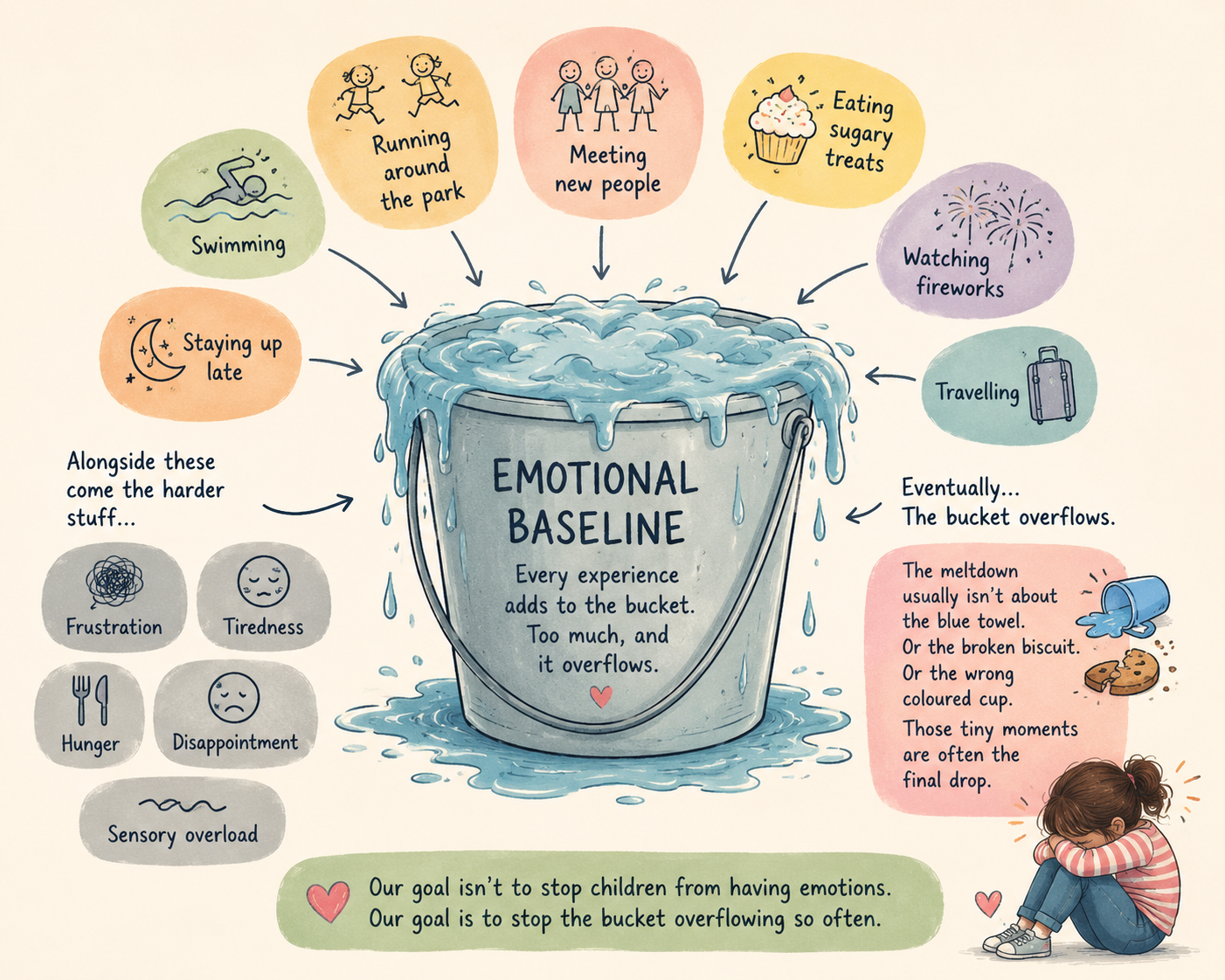
Imagine your child's emotions like a bucket.
Every exciting experience adds something to it.
Running around the park.
Meeting new people.
Eating sugary treats.
Watching fireworks.
Swimming.
Travelling.
Staying up late.
Even happy experiences fill the bucket.
Alongside those come frustration, tiredness, hunger, disappointment and sensory overload.
Eventually...
The bucket overflows.
The meltdown usually isn't about the blue towel.
Or the broken biscuit.
Or the wrong coloured cup.
Those tiny moments simply become the final drop.
Our goal isn't to stop children from having emotions.
Our goal is to stop the bucket overflowing quite so often.
Why Summer Can Feel So Much Harder
During school terms, life naturally contains rhythm.
Wake up.
Breakfast.
School.
Lunch.
Home.
Dinner.
Bath.
Bed.
Children know what comes next.
Their brains don't have to work very hard predicting the day.
Summer often removes all of that.
One day you're visiting grandparents.
The next you're swimming.
The next you're shopping.
Then there's a birthday party.
Then a late evening picnic.
Then everyone sleeps in.
While that sounds wonderfully relaxing for adults, children can quietly find constant unpredictability exhausting.
Their brains are continually asking:
"What's happening next?"
That uncertainty alone uses emotional energy.
Which is exactly why small routines can make such a big difference.
1. Create a Visual Summer Calendar
Time is a surprisingly complicated concept for young children.
"Tomorrow."
"Next week."
"Later."
These words don't always mean very much.
Instead of expecting them to remember verbal plans, help them see the week.
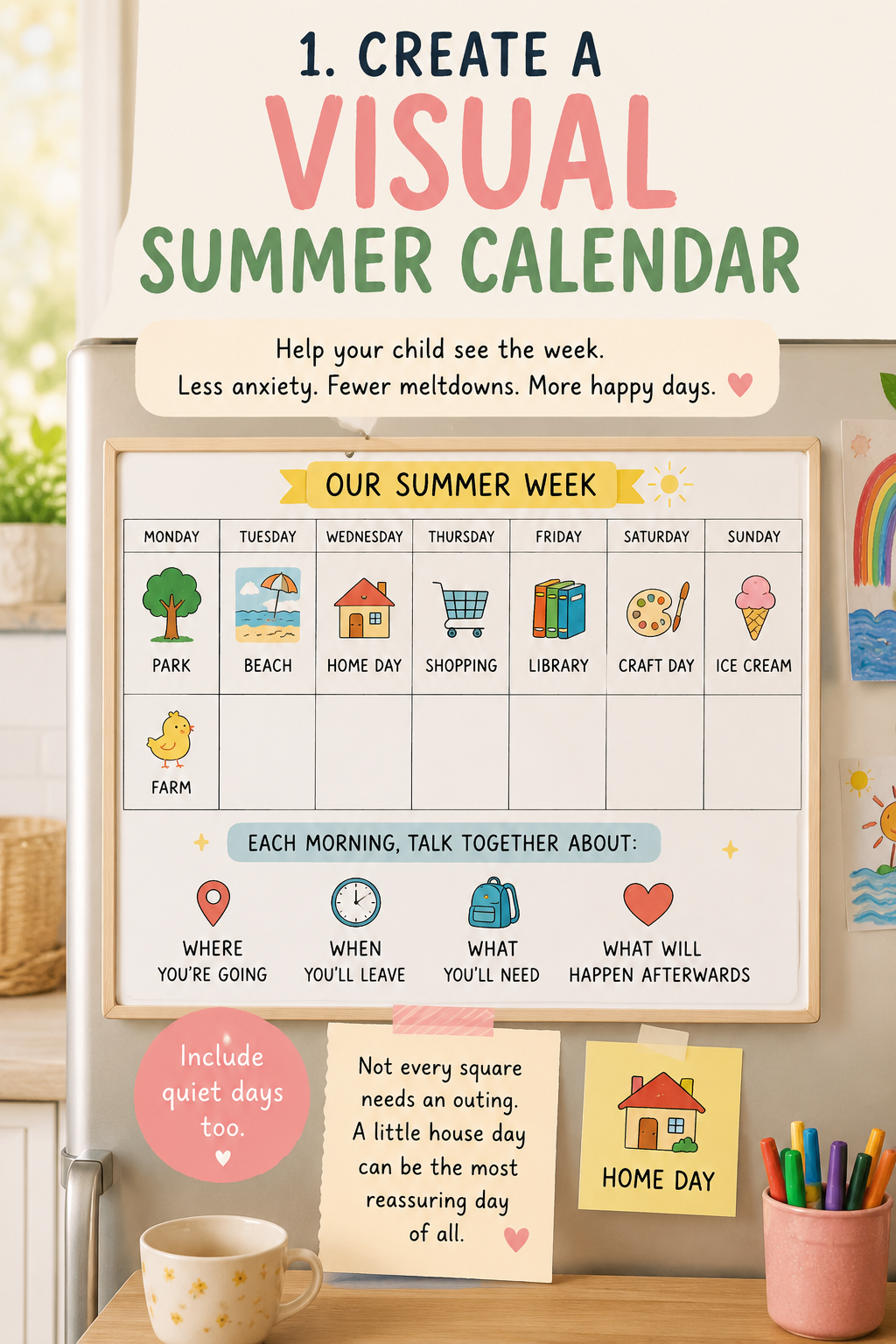
A simple calendar on the fridge works beautifully.
You don't need anything fancy.
Use little drawings or printed pictures.
🌳 Park
🏖 Beach
🏡 Home day
🛒 Shopping
📚 Library
🎨 Craft day
🍦 Ice cream
🐥 Farm
Each morning, spend two minutes looking at today's picture together.
Talk about:
where you're going
when you'll leave
what you'll need
what will happen afterwards
Children often cope much better with transitions when they can picture what's coming.
Better still, include quiet days too.
Not every square needs to contain an exciting outing.
Sometimes seeing a little house icon reminding them,
"Today we're staying home,"
is exactly the reassurance they need.
2. Pack a Co-Regulation Kit
We rarely leave the house without sunscreen.
Or snacks.
Or water bottles.
But emotional support deserves a place in the backpack too.
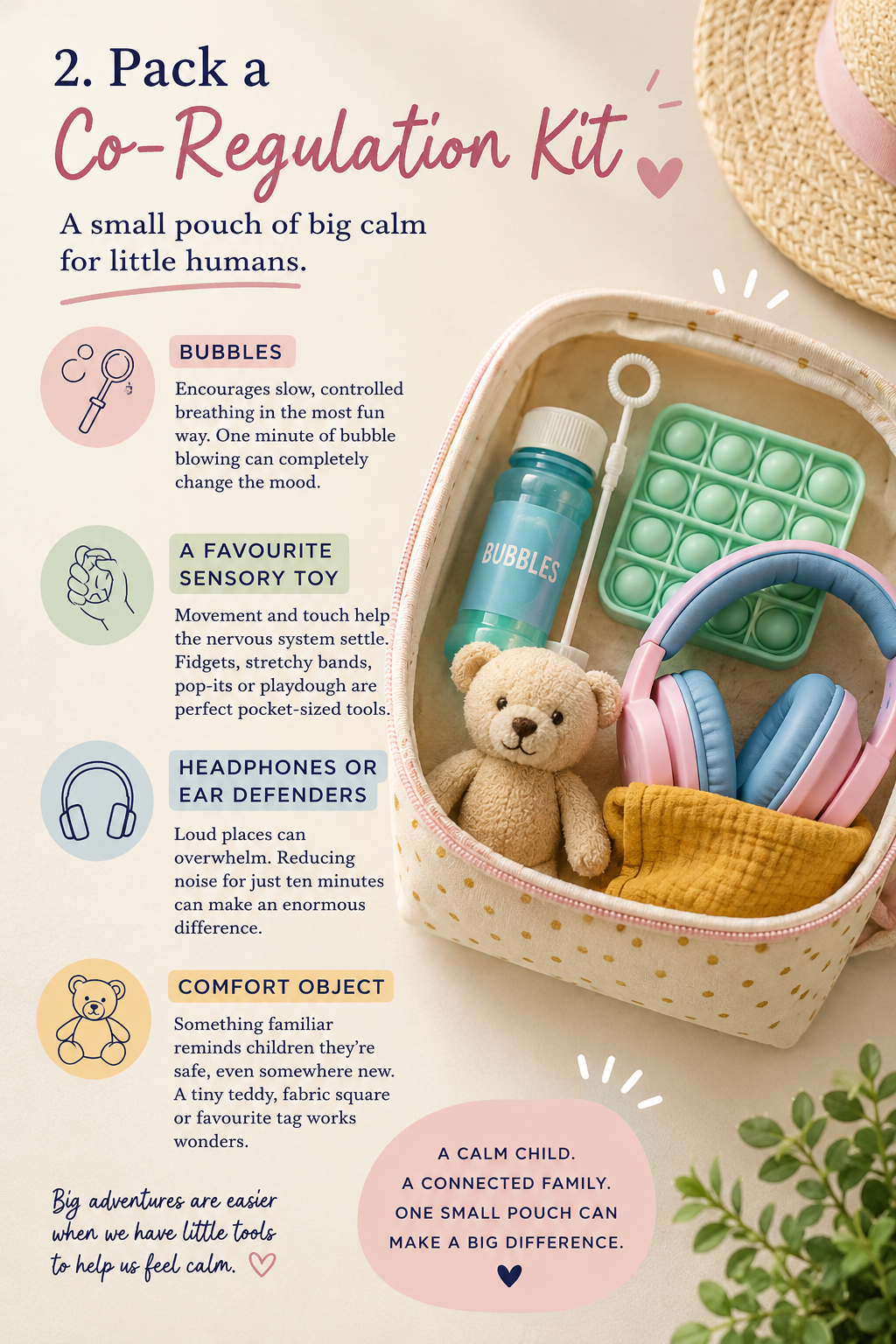
Think of a small pouch as your family's portable calm corner.
Inside you might include:
Bubbles
This is one of my favourite parenting tools.
Blowing bubbles naturally encourages slow, controlled breathing.
Without saying,
"Take deep breaths,"
you're helping your child regulate their body.
Sometimes one minute of bubble blowing completely changes the mood.
A Favourite Sensory Toy
Children regulate through movement and touch.
A small fidget toy, stretchy band, textured fabric square, pop-it, or mini tub of playdough can provide just enough sensory input to help their nervous system settle.
Headphones or Ear Defenders
Busy summer events can be incredibly loud.
Markets.
Festivals.
Swimming pools.
Family gatherings.
For some children, simply reducing the noise for ten minutes can make an enormous difference.
Comfort Object
Don't underestimate the power of familiarity.
A tiny teddy.
A blanket square.
A favourite fabric tag.
Something familiar reminds children they're safe, even somewhere new.
3. Protect Quiet Hour (Even if Nobody Naps)
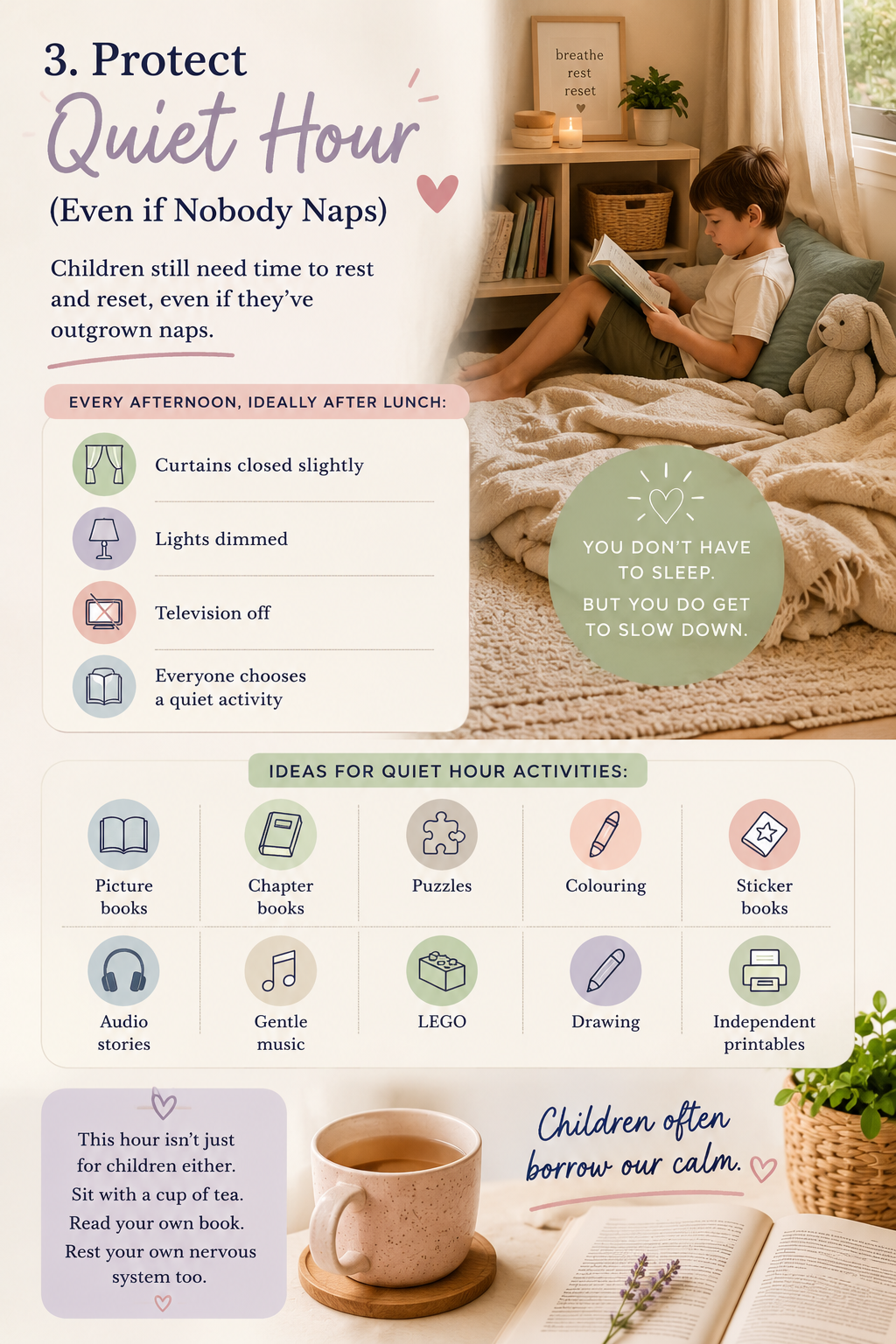
One of the biggest mistakes many of us accidentally make during summer is assuming children don't need downtime because they're no longer napping.
Actually...
Many children still need the break.
Their bodies simply don't sleep anymore.
Instead of calling it nap time, try introducing Quiet Hour.
The name alone feels much more inviting for older children.
Every afternoon, ideally after lunch:
curtains closed slightly
lights dimmed
television off
everyone chooses a quiet activity
You don't have to sleep.
But your body gets a chance to slow down.
Ideas include:
picture books
chapter books
puzzles
colouring
sticker books
audio stories
gentle music
LEGO
drawing
independent printable activities
This hour isn't just for children either.
Sit with a cup of tea.
Read your own book.
Rest your own nervous system too.
Children often borrow our calm.
4. Build "Nothing" Into the Schedule
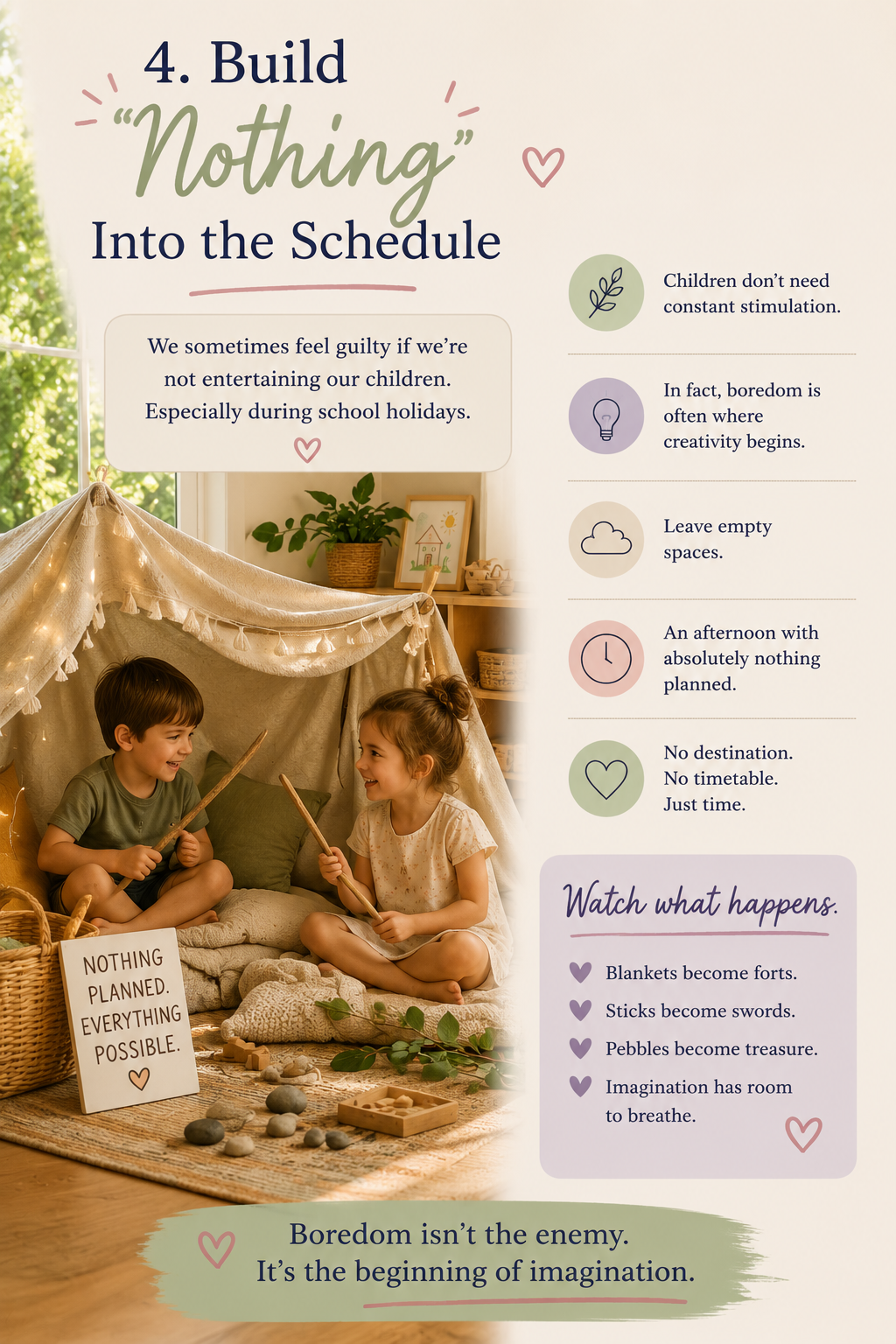
We sometimes feel guilty if we're not entertaining our children.
Especially during school holidays.
But children don't need constant stimulation.
In fact, boredom is often where creativity begins.
Leave empty spaces.
An afternoon with absolutely nothing planned.
No destination.
No timetable.
Just time.
Watch what happens.
Blankets become forts.
Sticks become swords.
Pebbles become treasure.
Imagination has room to breathe.
5. Say Yes to Controlled Chaos
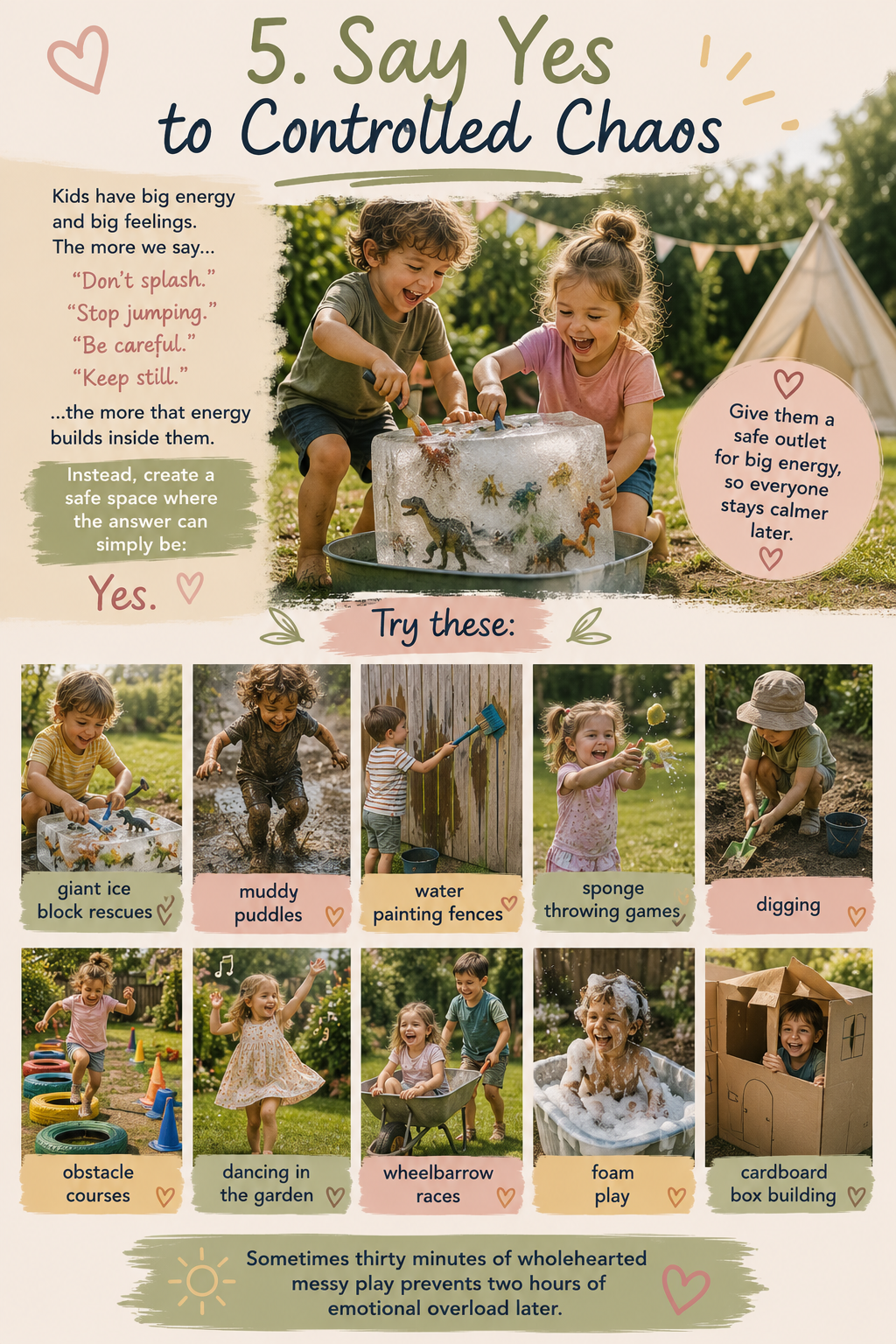
Children have an incredible need for movement and sensory play.
The more we say,
"Don't splash."
"Stop jumping."
"Be careful."
"Keep still."
the more that energy builds inside them.
Instead, create a safe place where the answer can simply be:
"Yes."
Try:
giant ice block rescues
muddy puddles
water painting fences
sponge throwing games
digging
obstacle courses
dancing in the garden
wheelbarrow races
foam play
cardboard box building
Sometimes thirty minutes of wholehearted messy play prevents two hours of emotional overload later.
6. Keep One Routine Sacred

Summer doesn't need a military schedule.
But choosing one or two routines to protect creates emotional anchors.
Perhaps it's:
breakfast together every morning
bedtime stories every night
afternoon quiet hour
evening family walk
Friday pizza picnic
Children don't need every day to look the same.
They simply need something familiar to hold onto.
7. Watch the HALT Signals
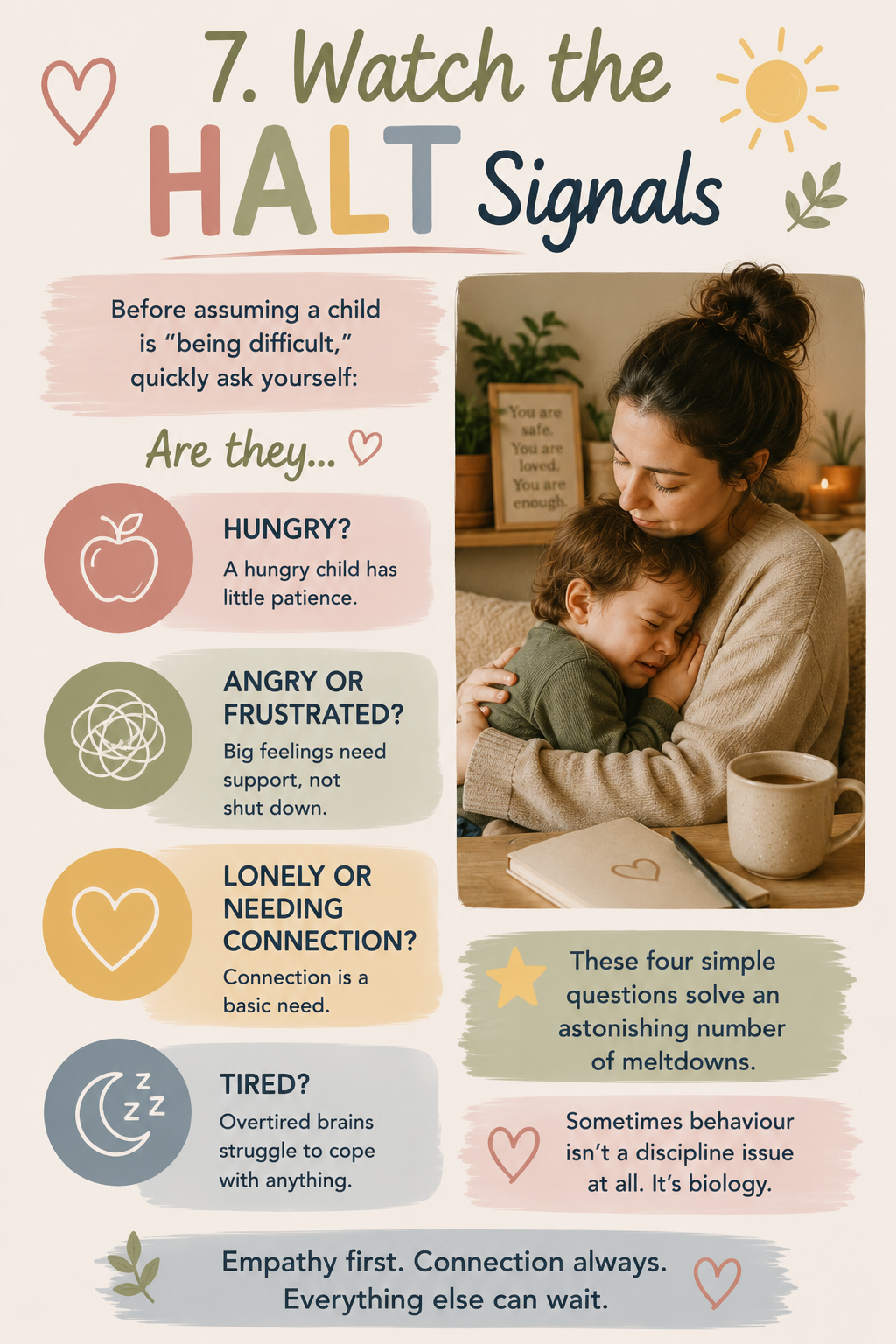
Before assuming a child is "being difficult," quickly ask yourself:
Are they...
Hungry?
Angry or frustrated?
Lonely or needing connection?
Tired?
These four simple questions solve an astonishing number of meltdowns.
Sometimes behaviour isn't a discipline issue at all.
It's biology.
8. Remember That Connection Comes Before Correction
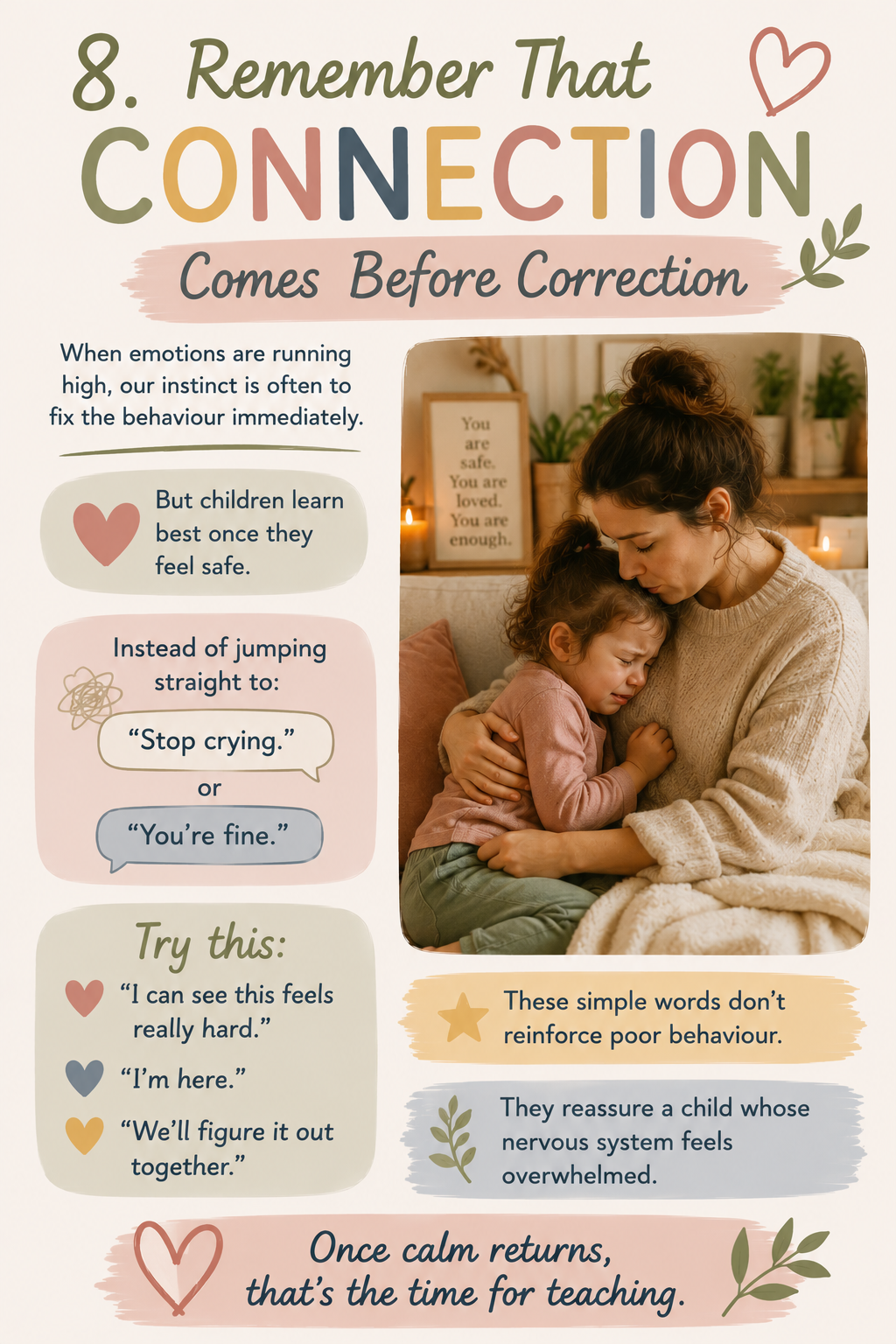
When emotions are running high, our instinct is often to fix the behaviour immediately.
But children learn best once they feel safe.
Instead of jumping straight to:
"Stop crying."
or
"You're fine."
try:
"I can see this feels really hard."
"I'm here."
"We'll figure it out together."
These simple words don't reinforce poor behaviour.
They reassure a child whose nervous system feels overwhelmed.
Once calm returns, that's the time for teaching.
And Parents?
You matter too.
Summer can be wonderful.
It can also be relentless.
Children are home.
Meals seem never-ending.
Laundry doubles.
The house stays messy.
Everyone wants something.
You don't have to create magical memories every single day.
Some days, surviving is enough.
Some days, frozen pizzas and garden sprinklers are exactly what your family needs.
Children don't remember whether every activity was perfectly planned.
They remember how safe they felt.
How loved they felt.
How often someone sat beside them.
Those small moments matter far more than elaborate plans.
A Gentle Reminder for Every Parent
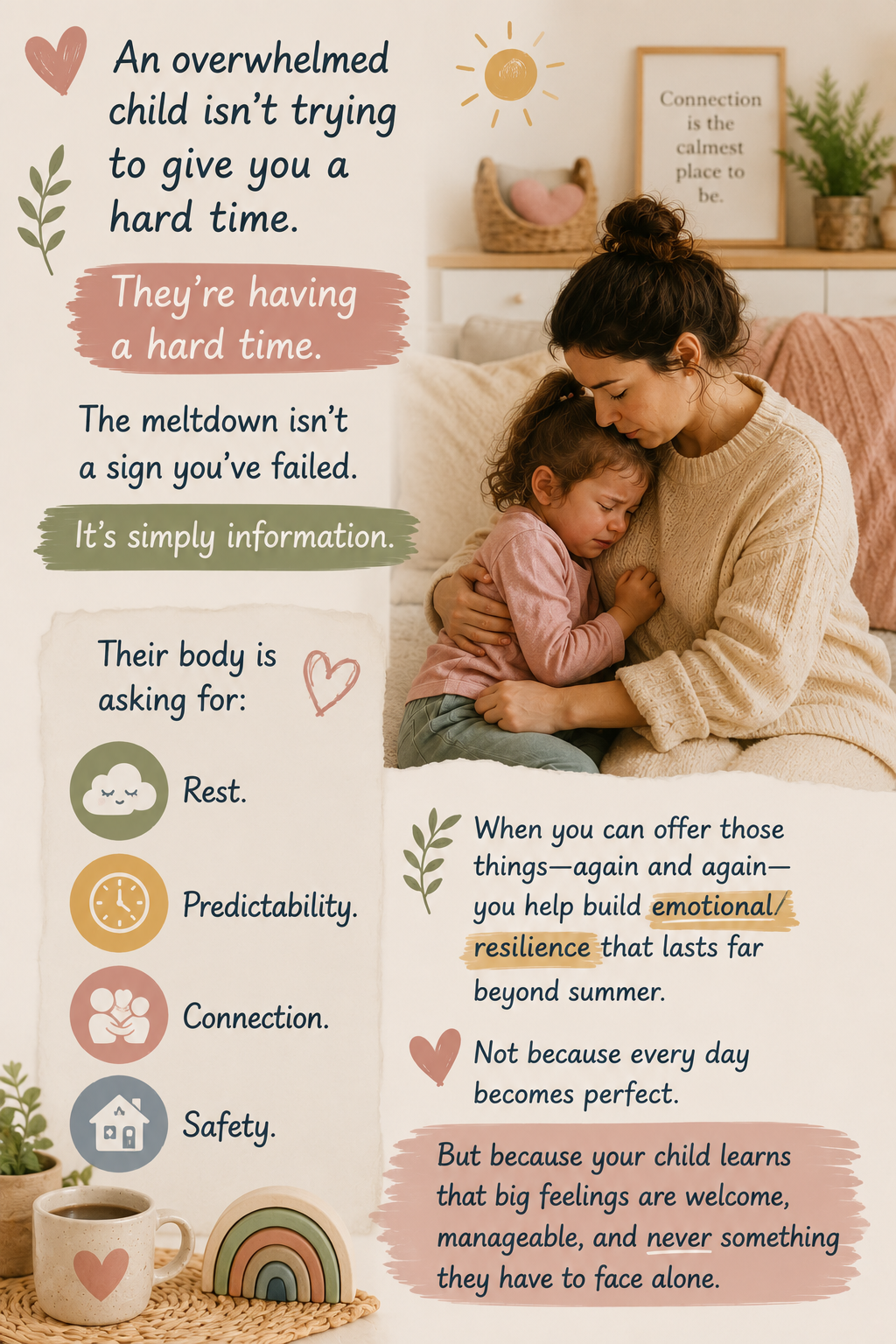
An overwhelmed child isn't trying to give you a hard time.
They're having a hard time.
The meltdown isn't a sign you've failed.
It's simply information.
Their body is asking for rest.
Predictability.
Connection.
Safety.
When you can offer those things—again and again—you help build emotional resilience that lasts far beyond summer.
Not because every day becomes perfect.
But because your child learns that big feelings are welcome, manageable, and never something they have to face alone.
Your Summer Calm Challenge
Choose just one idea from this article to try this week.
Perhaps it's creating a visual calendar.
Maybe it's introducing Quiet Hour.
Or packing your very first Co-Regulation Kit.
Small changes, repeated consistently, often create the biggest transformation.
You don't have to overhaul your whole summer.
Just make today a little calmer than yesterday.
How do you help your family stay calm during the summer holidays?
I'd love to hear your favourite routines, calming activities, or little traditions in the comments. Your ideas might be exactly what another parent needs to read today.
Here's to calmer days, creative moments, and finding connection in the middle of real family life.
With love,
Lily
Founder, Spoon & Sky 💜