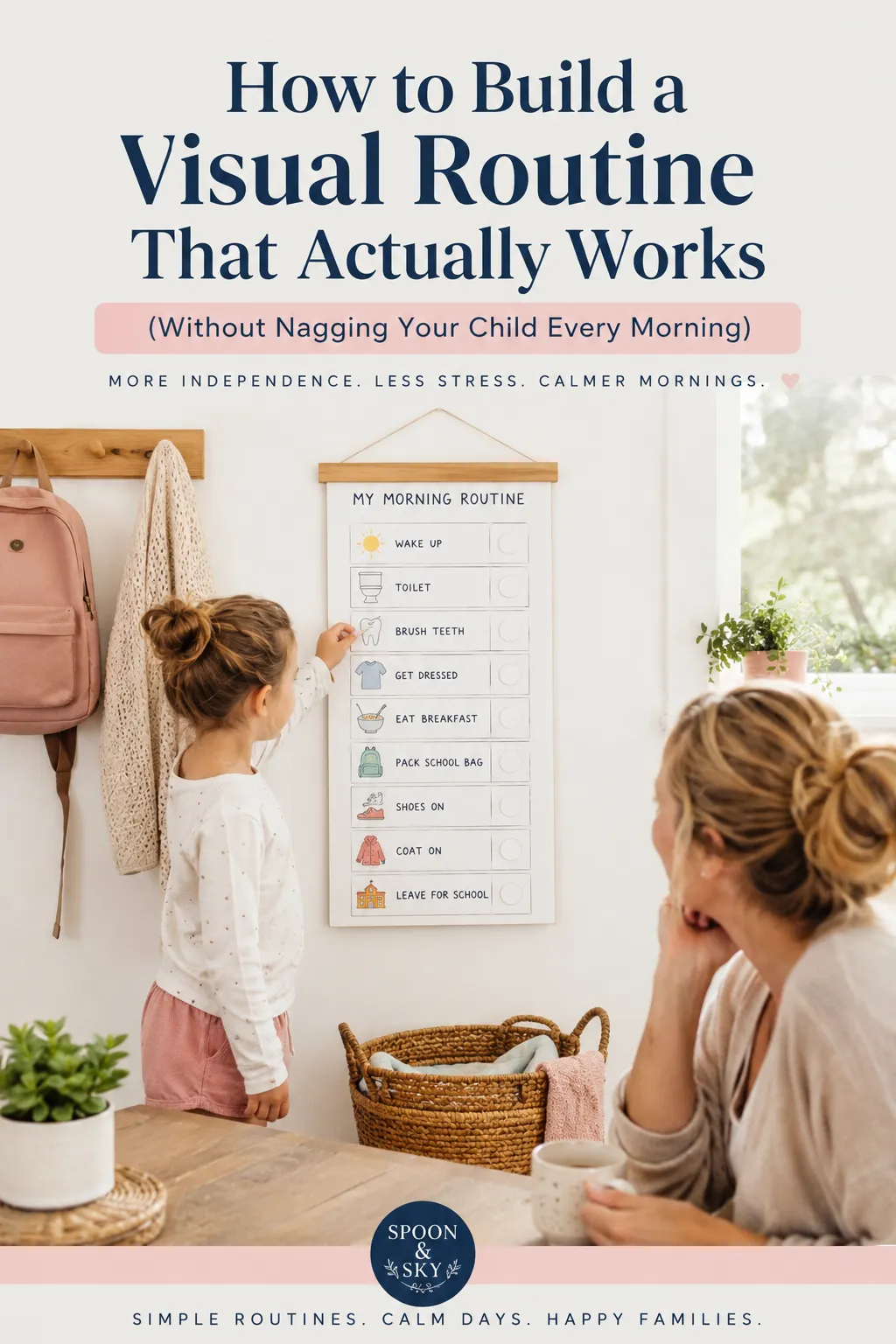
Visual Routine for Kids: Build Calm Mornings Without Nagging
How to Build a Visual Routine That Actually Works (Without Nagging Your Child Every Morning)
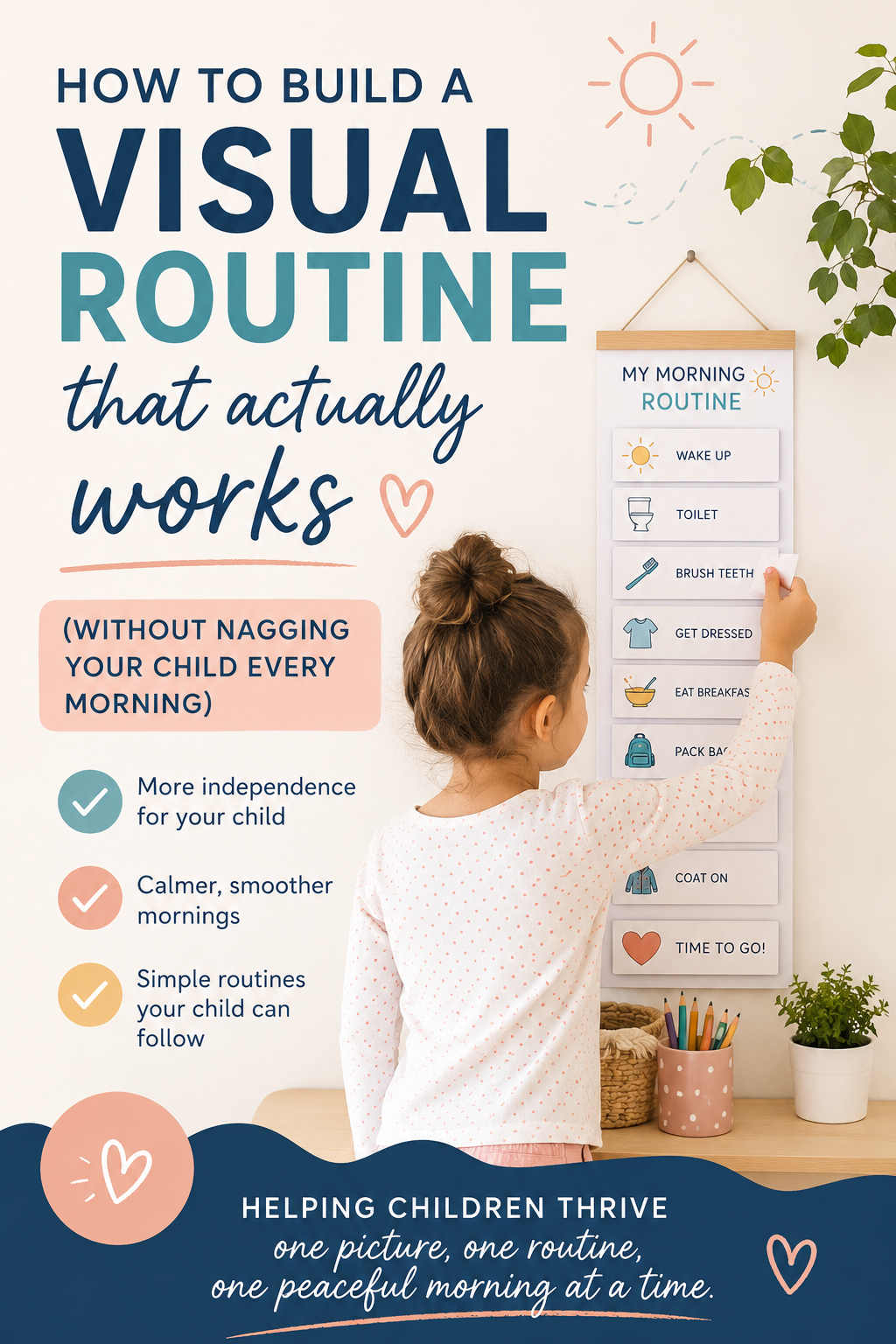
Helping children become more independent—one picture, one routine, one peaceful morning at a time.
Have you ever caught yourself saying the same thing over and over again?
"Brush your teeth."
"Please put your shoes on."
"Have you packed your school bag?"
"Come back and finish getting dressed."
"Don't forget your water bottle!"
By the time you've left the house, it can feel as though you've spent the entire morning repeating yourself.
If this sounds familiar, you're not alone.
Most parents don't wake up hoping to become a broken record.
We repeat ourselves because we're trying to help our children remember everything they need to do.
But what if there was another way?
What if your child didn't need you to remind them every single step?
What if they could look at a simple picture, know what came next, and begin doing it independently?
That's exactly why visual routines work.
At Spoon & Sky, we believe children thrive when they know what to expect.
Predictability creates confidence.
Confidence builds independence.
And independence creates calmer days for everyone.
Let's explore how visual routines can transform your family's everyday rhythm.
Why Children Respond to Pictures
Adults often rely on written lists, calendars, reminders, and phone notifications.
Children don't.
Young children are naturally visual learners.
Long before they can read confidently, they understand pictures.
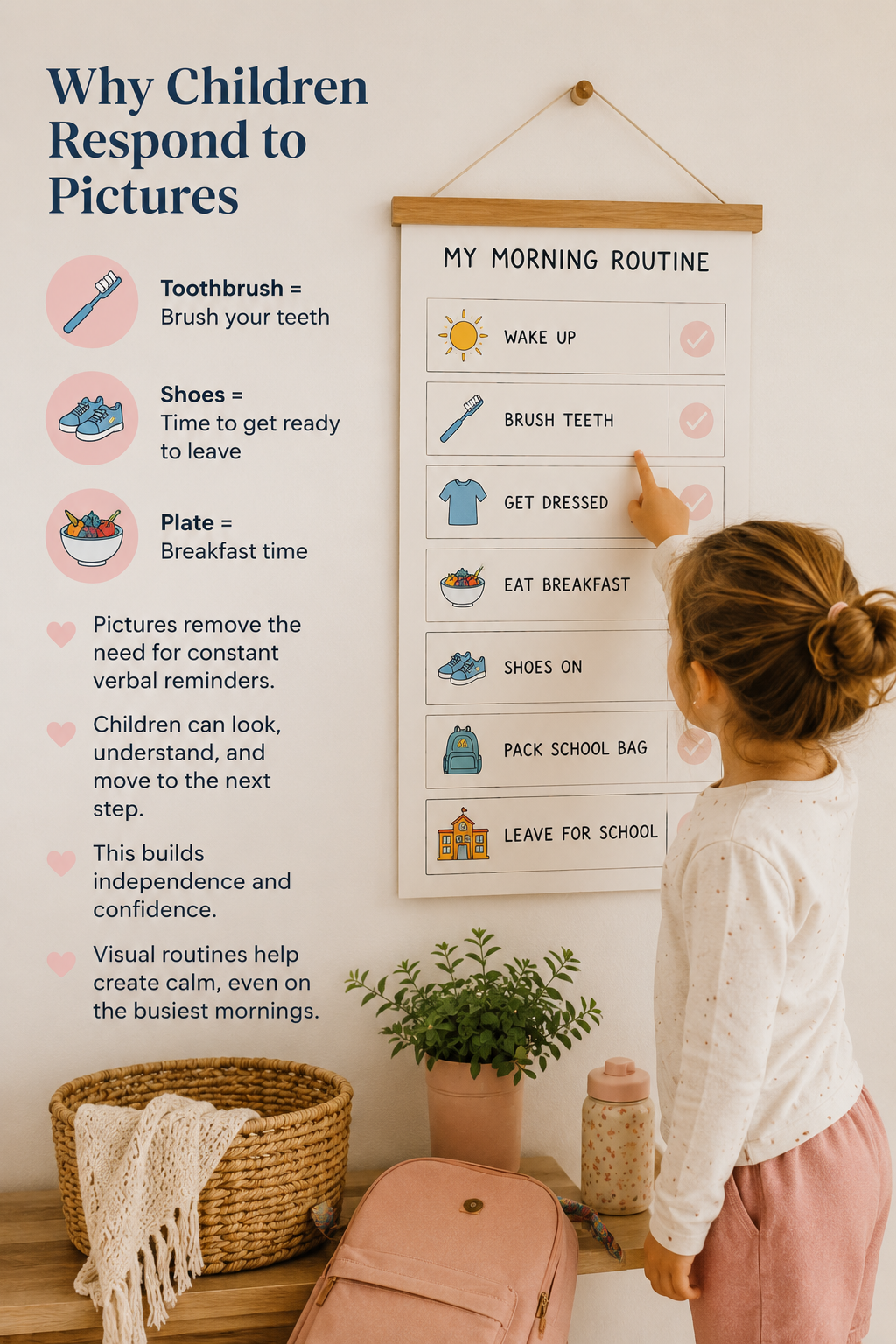
A toothbrush means brush your teeth.
A pair of shoes means it's time to get ready to leave.
A plate means breakfast.
Pictures remove the need for constant verbal reminders.
Instead of relying on memory, children can simply look, understand, and move to the next step.
That's incredibly reassuring.
Especially during busy transitions like getting ready for school.
Visual routines don't replace your support.
They simply reduce the amount of talking needed to guide your child through familiar tasks.
Reducing Decision Fatigue
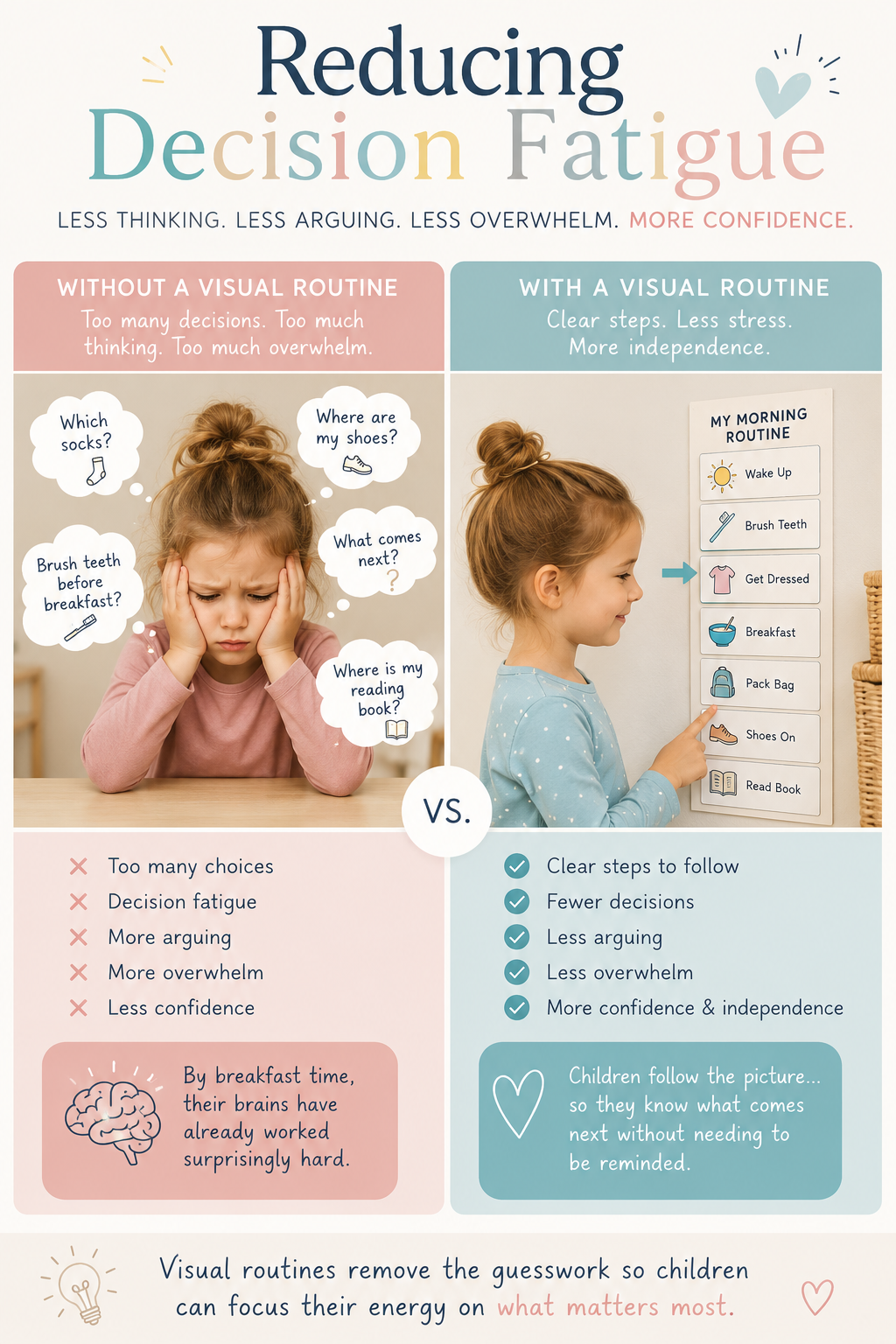
Every morning, children make dozens of tiny decisions.
Which socks?
Where are my shoes?
What comes next?
Do I brush my teeth before breakfast?
Where is my reading book?
By breakfast time, their brains have already worked surprisingly hard.
This is called decision fatigue.
The more choices we ask children to make, the more tired their thinking becomes.
Visual routines gently remove many of those unnecessary decisions.
Instead of wondering what happens next, children simply follow the pictures.
Less thinking.
Less arguing.
Less overwhelm.
More confidence.
Building Independence (One Step at a Time)
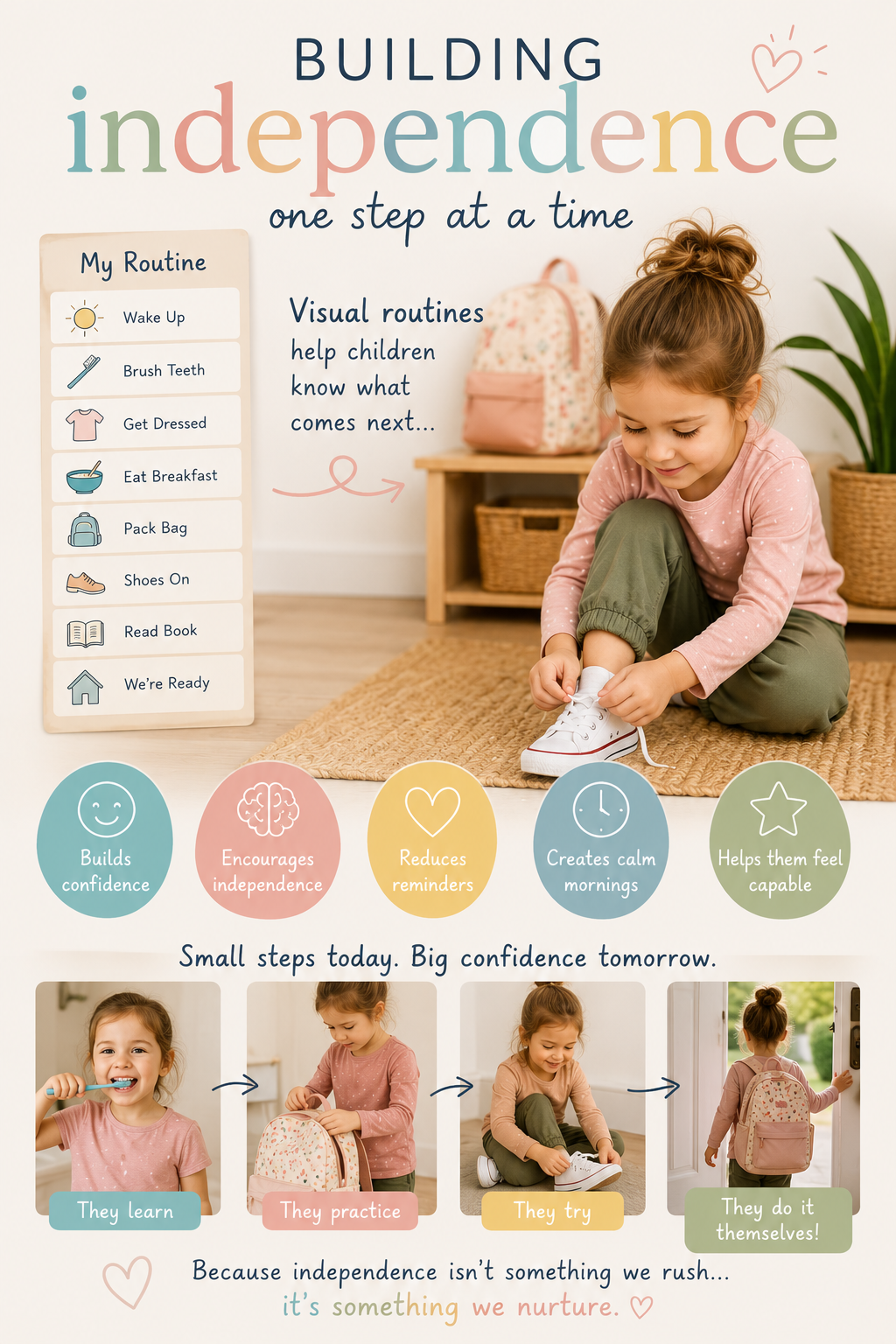
One of the greatest gifts we can give our children is the confidence to do things for themselves.
Not because we want them to grow up too quickly.
But because independence helps children feel capable.
Visual routines quietly encourage this.
Instead of waiting for a parent to direct every step, children begin recognising the sequence themselves.
Over time, you may notice something wonderful happening.
They start brushing their teeth without being asked.
They remember their backpack.
They put on their shoes before you even mention them.
Not because they're suddenly "being good."
Because they've learned the routine.
That's a huge difference.
What Makes a Good Visual Routine?
Simple routines are usually the most successful.
Aim for:
Clear pictures
One task per card
A logical order
Familiar activities
Positive language
Consistent placement
Avoid creating routines with twenty different steps.
Children respond much better to routines that feel achievable.
Think of your routine as a gentle guide—not a checklist that has to be completed perfectly every single day.
A Simple Morning Routine Example
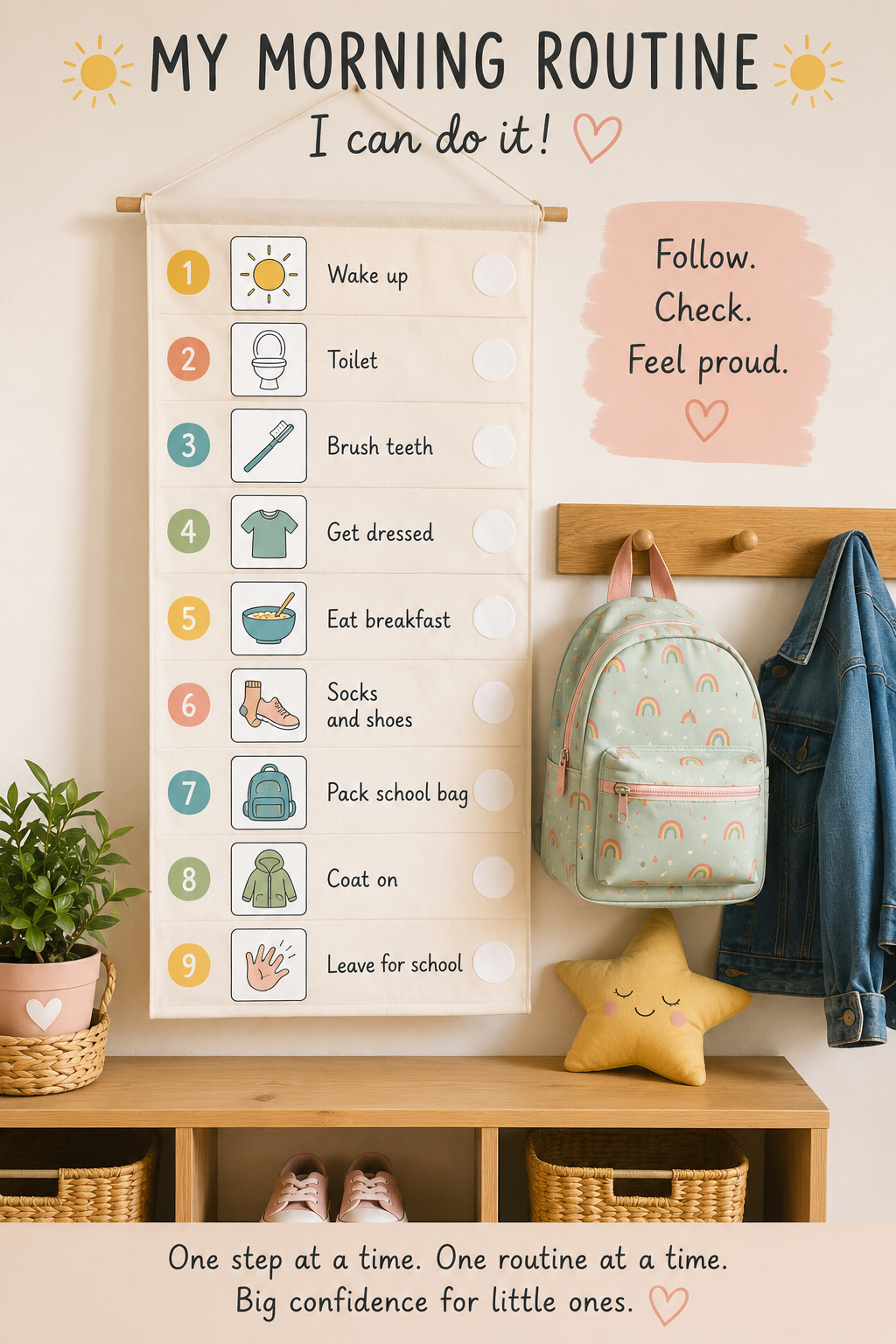
A typical school morning might look like this:
🌞 Wake up
🚽 Toilet
🪥 Brush teeth
👕 Get dressed
🍽 Eat breakfast
🧦 Socks and shoes
🎒 Pack school bag
🧥 Coat on
👋 Leave for school
Placed somewhere visible—perhaps beside the breakfast table or near the front door—this routine becomes something your child can follow independently.
Instead of saying,
"What's next?"
they simply check the next picture.
A Calm After-School Routine
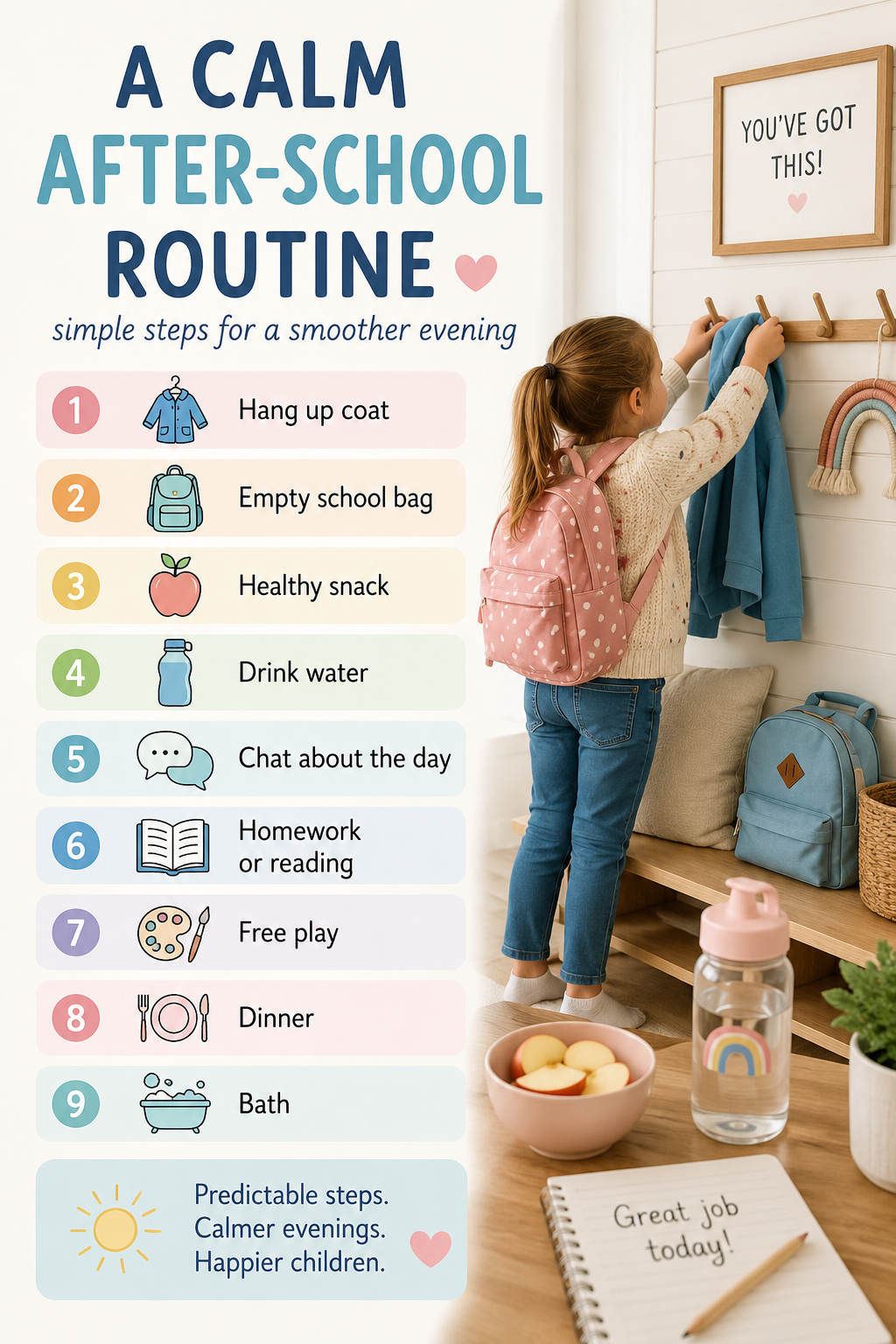
Transitions don't stop when the school day ends.
Many children arrive home tired, hungry, and emotionally full after concentrating all day.
A gentle after-school routine helps everyone reset.
For example:
👋 Hang up coat
🎒 Empty school bag
🍎 Healthy snack
💧 Drink water
💬 Chat about the day
📚 Homework or reading
🎨 Free play
🍽 Dinner
🛁 Bath
Children often feel calmer when they know what happens after school, too.
An Evening Routine That Encourages Better Sleep
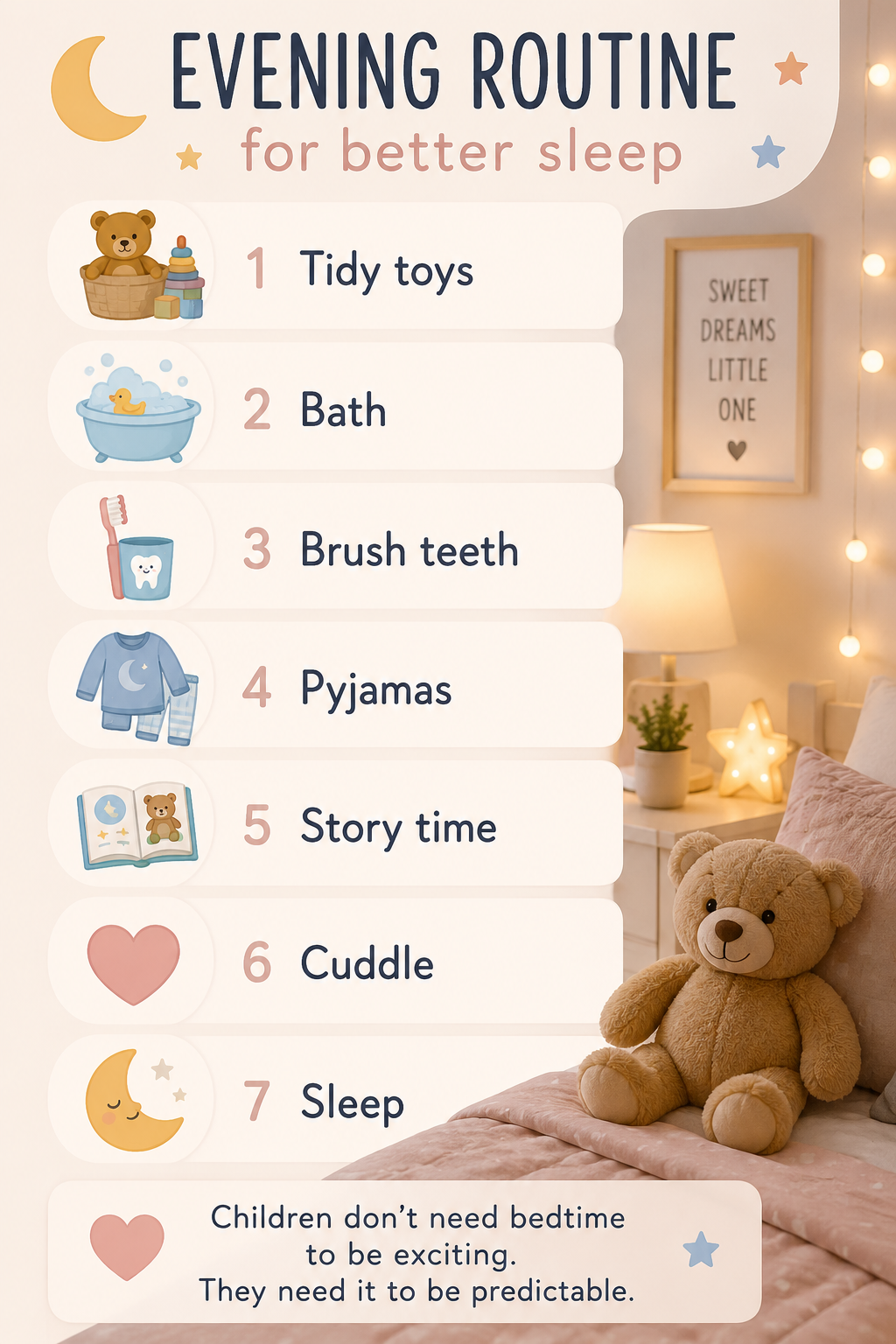
Bedtime becomes much smoother when it follows the same gentle rhythm each evening.
For example:
🧸 Tidy toys
🛁 Bath
🪥 Brush teeth
👚 Pyjamas
📖 Story time
💛 Cuddle
🌙 Sleep
Children don't need bedtime to be exciting.
They need it to be predictable.
Common Mistakes When Starting Visual Routines
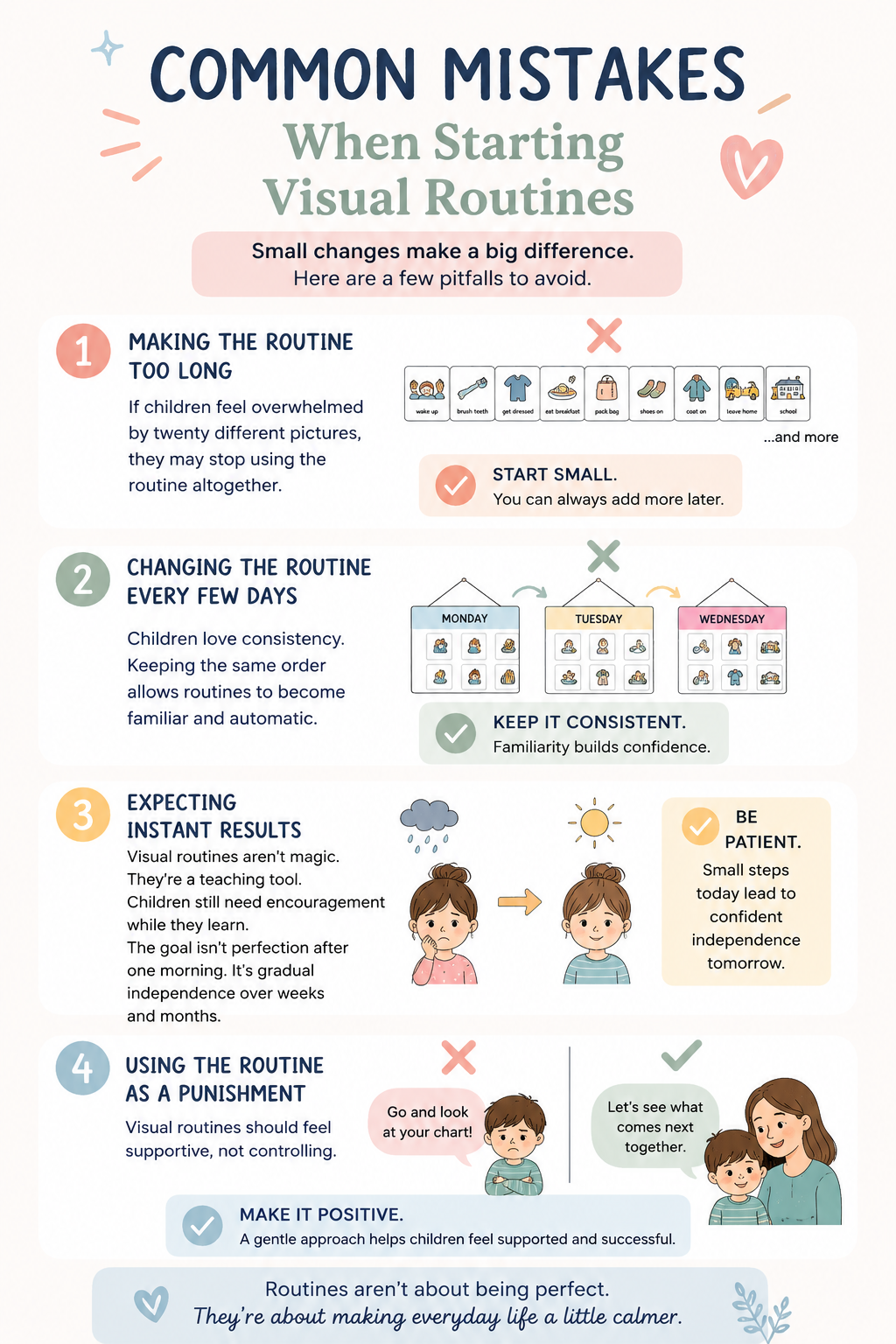
Like any new habit, visual routines take a little time.
Here are a few common pitfalls to avoid.
Making the Routine Too Long
If children feel overwhelmed by twenty different pictures, they may stop using the routine altogether.
Start small.
You can always add more later.
Changing the Routine Every Few Days
Children love consistency.
Keeping the same order allows routines to become familiar and automatic.
Expecting Instant Results
Visual routines aren't magic.
They're a teaching tool.
Children still need encouragement while they learn.
The goal isn't perfection after one morning.
It's gradual independence over weeks and months.
Using the Routine as a Punishment
Visual routines should feel supportive, not controlling.
Instead of saying,
"Go and look at your chart!"
try,
"Let's see what comes next together."
That tiny change keeps routines positive and collaborative.
How to Introduce a Visual Routine Gently
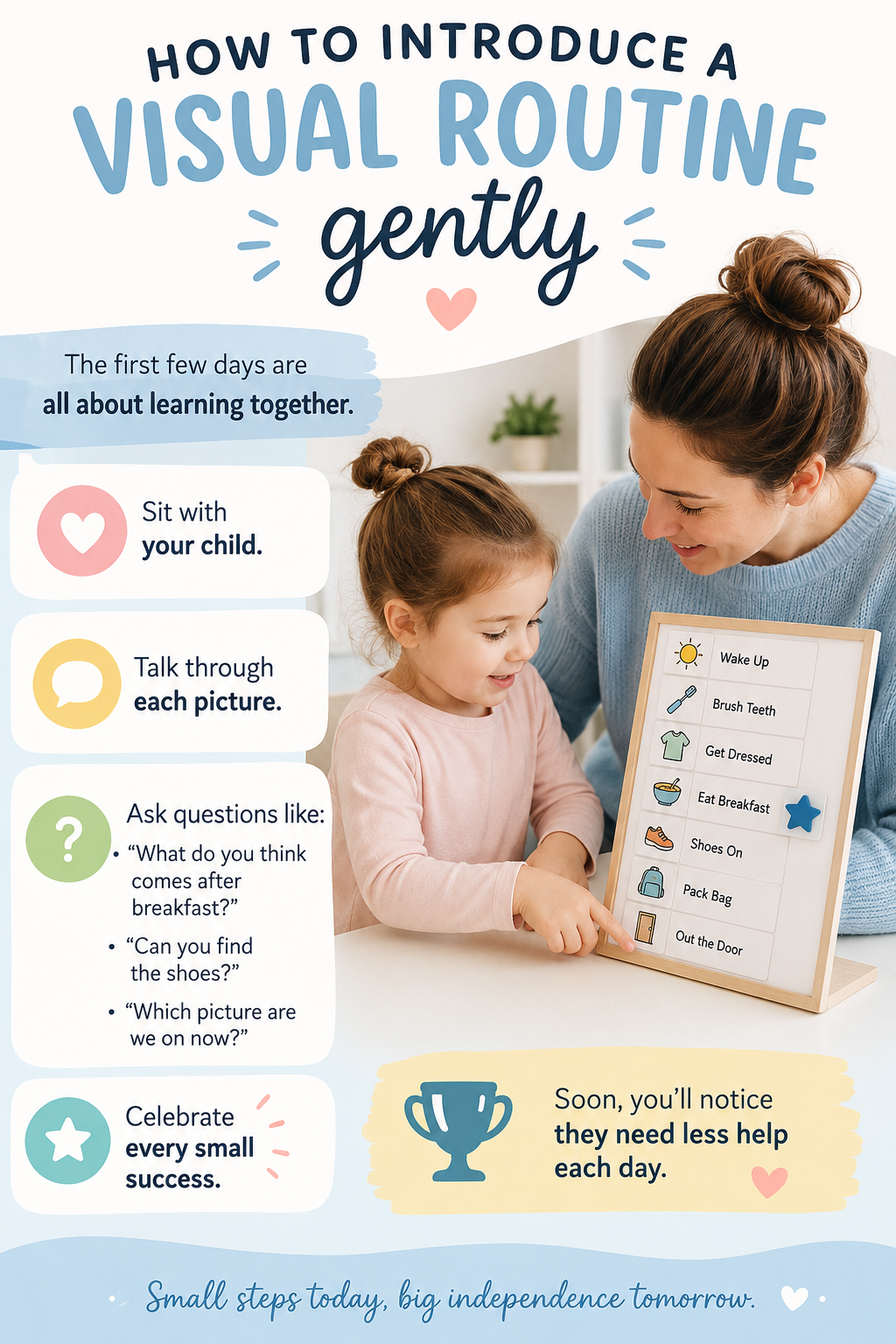
The first few days are all about learning together.
Sit with your child.
Talk through each picture.
Ask questions like:
"What do you think comes after breakfast?"
"Can you find the shoes?"
"Which picture are we on now?"
Celebrate every small success.
Soon, you'll notice they need less help each day.
Making Routines Flexible
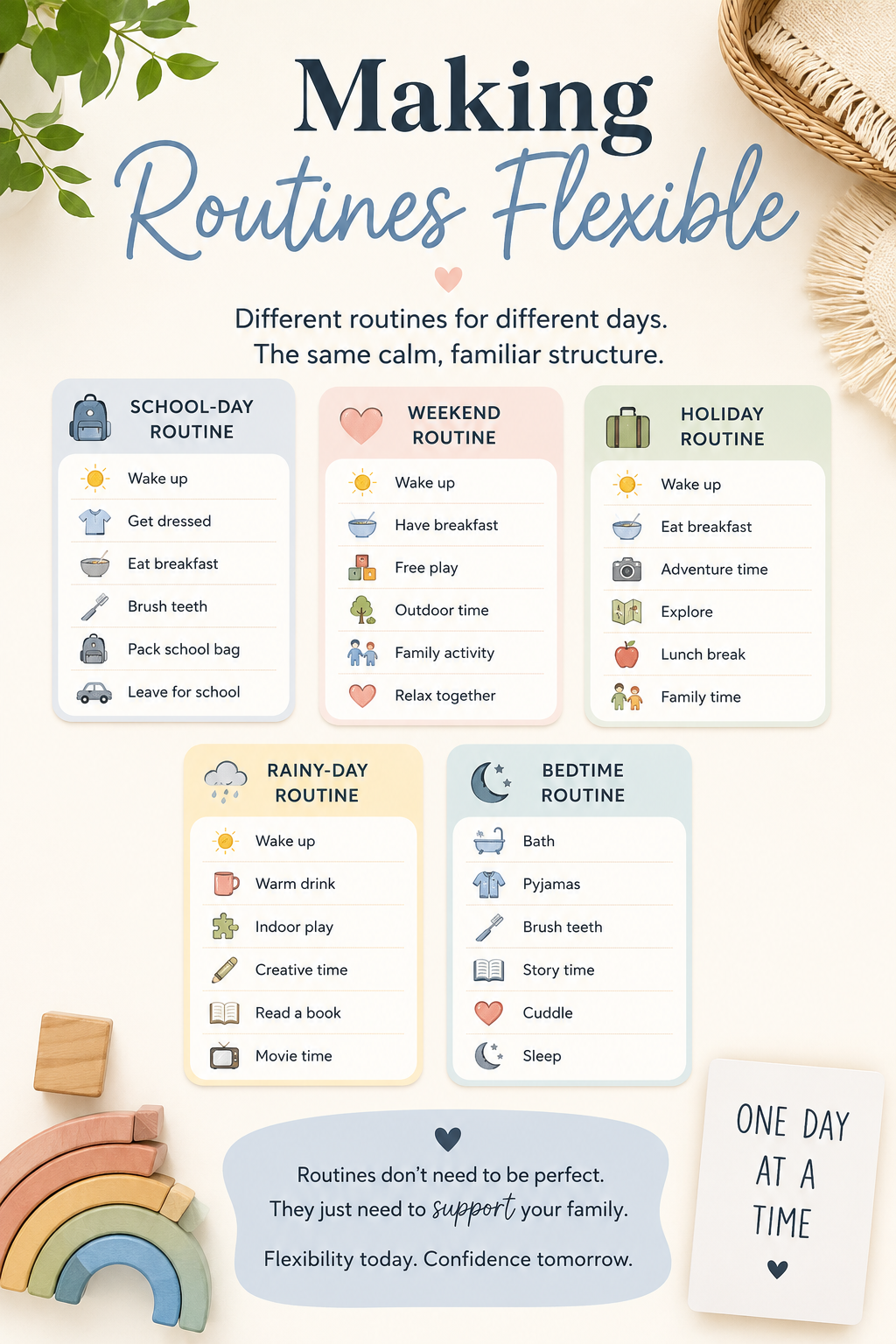
Life isn't always predictable.
Some mornings begin later.
Some evenings include swimming lessons.
Some weekends look completely different.
That's okay.
Visual routines aren't meant to control your family.
They're meant to support it.
You might have:
A school-day routine.
A weekend routine.
A holiday routine.
A rainy-day routine.
A bedtime routine.
Different routines for different seasons of family life.
Children adapt surprisingly well when the overall structure remains familiar.
Encouraging Consistency Without Rewards
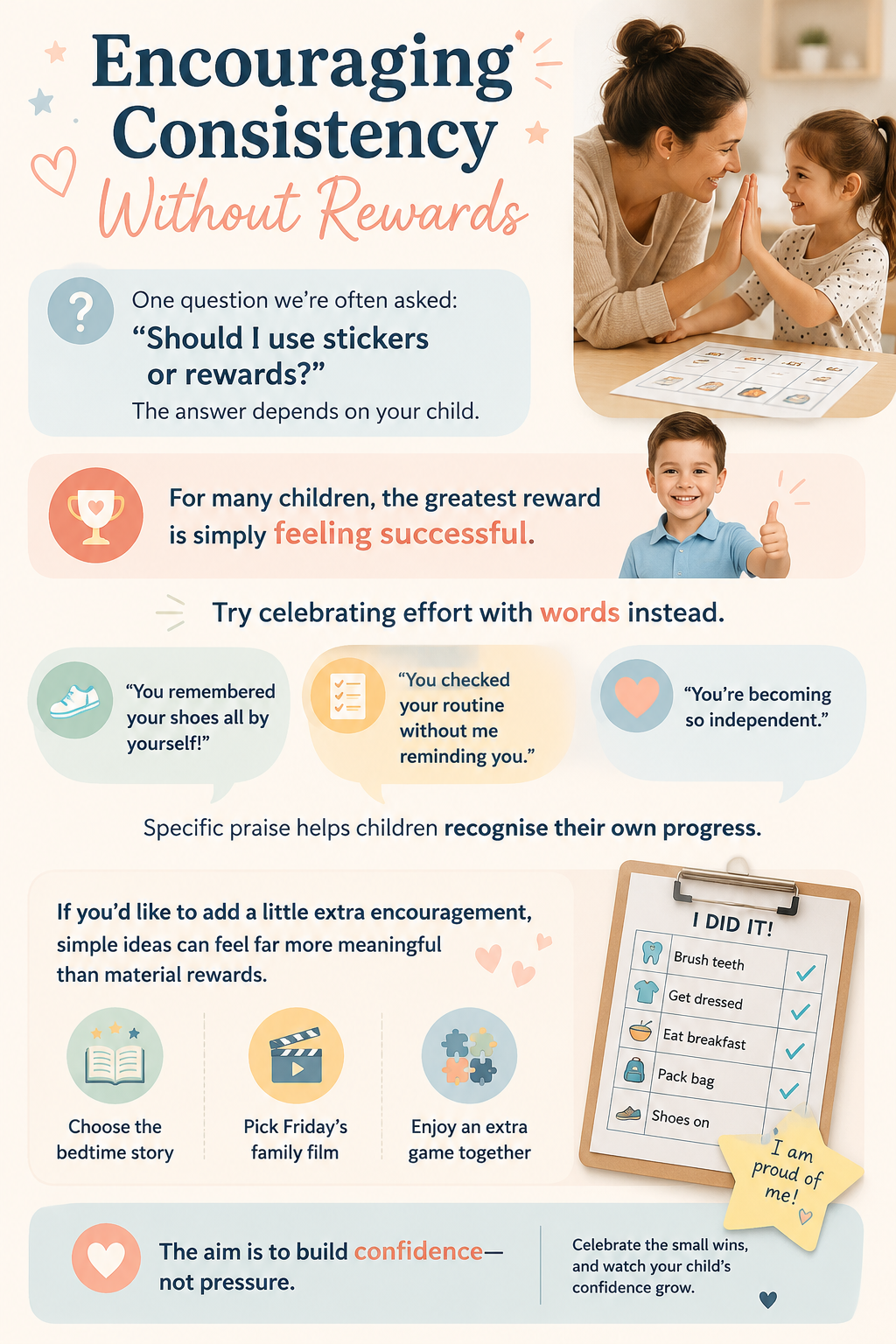
One question we're often asked is,
"Should I use stickers or rewards?"
The answer depends on your child.
For many children, the greatest reward is simply feeling successful.
Try celebrating effort with words instead.
"You remembered your shoes all by yourself!"
"You checked your routine without me reminding you."
"You're becoming so independent."
Specific praise helps children recognise their own progress.
If you'd like to add a little extra encouragement, simple ideas such as choosing the bedtime story, picking Friday's family film, or enjoying an extra game together can feel far more meaningful than material rewards.
The aim is to build confidence—not pressure.
What If the Routine Stops Working?
Sometimes routines suddenly seem to fall apart.
Don't panic.
Ask yourself a few gentle questions.
Has your child started a new class?
Are they tired?
Have their needs changed?
Is the routine becoming too complicated?
Do they need fewer steps?
Do they need more independence?
Routines should grow alongside children.
It's perfectly normal to adjust them as your family changes.
Visual Routine Ideas by Age
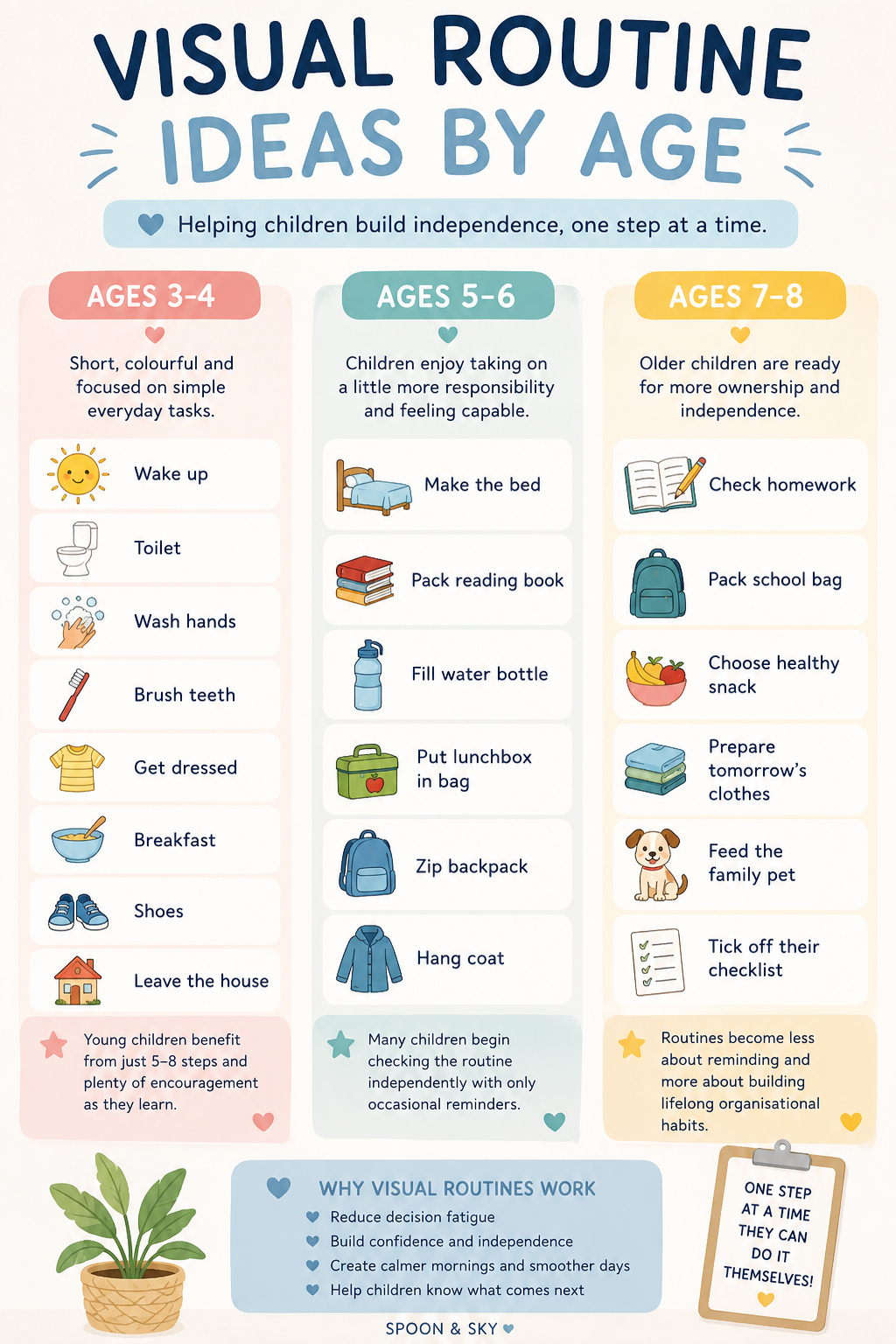
Every child develops differently, but these examples can help you build routines that feel age-appropriate.
Ages 3–4
At this stage, routines work best when they're short, colourful, and focused on simple everyday tasks.
Try including:
Wake up
Toilet
Wash hands
Brush teeth
Get dressed
Breakfast
Shoes
Leave the house
Young children benefit from just five to eight steps and plenty of encouragement as they learn.
Ages 5–6
Children in this age group often enjoy taking on a little more responsibility.
You might add:
Make the bed
Pack reading book
Fill water bottle
Put lunchbox in bag
Zip backpack
Hang coat
Many children begin checking the routine independently with only occasional reminders.
Ages 7–8
Older children are often ready for more ownership.
Their routine might include:
Check homework
Pack school bag
Choose healthy snack
Prepare tomorrow's clothes
Feed the family pet
Tick off their checklist
At this stage, routines become less about reminding and more about building lifelong organisational habits.
Remember: Every Child Is Different
Some children love ticking every box.
Others prefer a few simple pictures.
Some thrive with structure.
Others need a little more flexibility.
There's no "perfect" routine.
The best routine is the one your family can use consistently.
Small, realistic routines almost always work better than complicated ones that feel impossible to maintain.
A Gentle Reminder for Parents
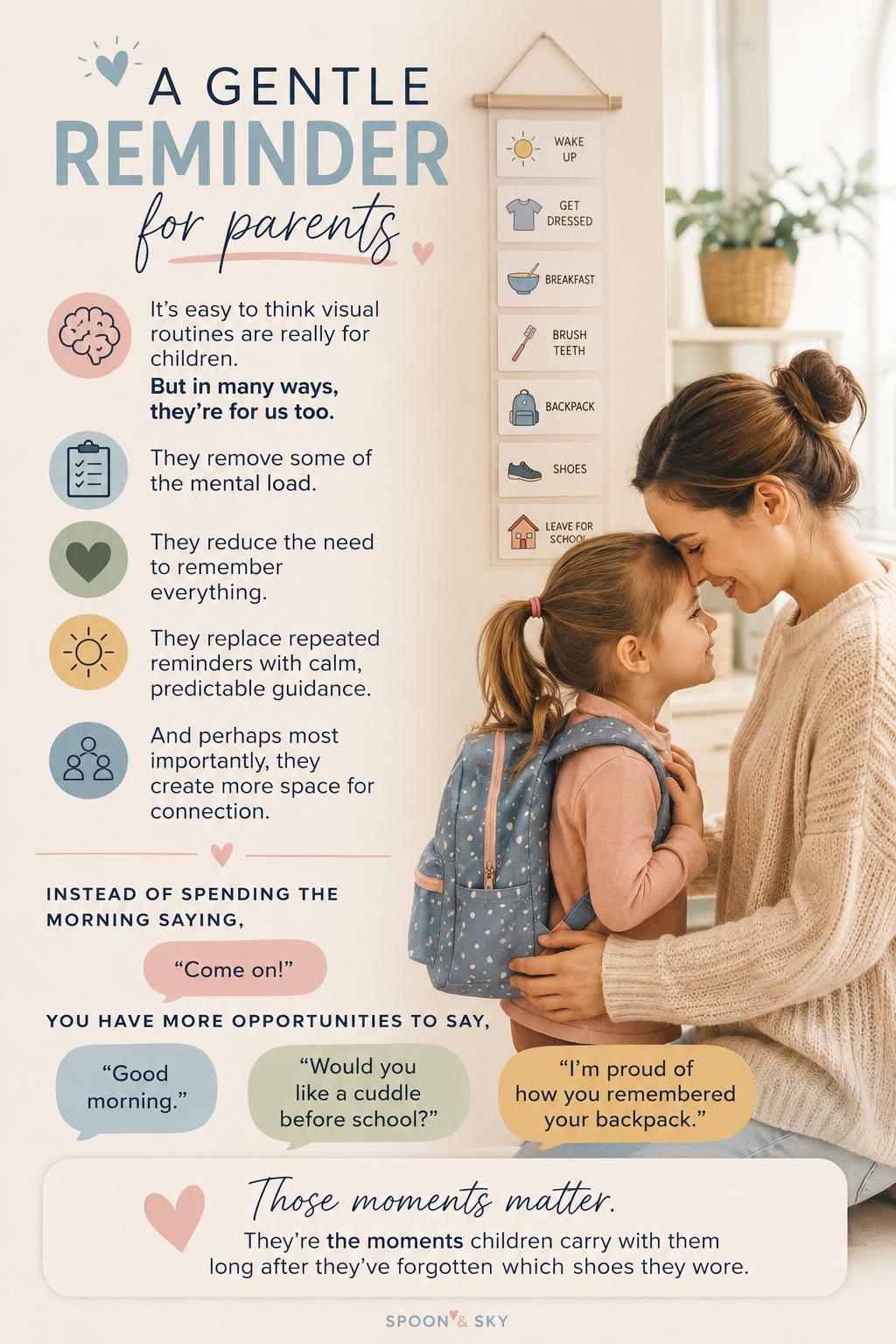
It's easy to think visual routines are really for children.
But in many ways, they're for us too.
They remove some of the mental load.
They reduce the need to remember everything.
They replace repeated reminders with calm, predictable guidance.
And perhaps most importantly, they create more space for connection.
Instead of spending the morning saying,
"Come on!"
you have more opportunities to say,
"Good morning."
"Would you like a cuddle before school?"
"I'm proud of how you remembered your backpack."
Those moments matter.
They're the moments children carry with them long after they've forgotten which shoes they wore.
A Final Thought
Children don't wake up hoping to make mornings difficult.
They're learning.
They're practising.
They're building habits that will stay with them for years to come.
Visual routines aren't about creating perfectly behaved children.
They're about creating an environment where children know what to expect, feel capable of doing it, and gradually learn to manage more on their own.
One picture.
One step.
One successful morning at a time.
At Spoon & Sky, we believe calm isn't found in having a perfectly organised home.
It's found in creating gentle rhythms that help families spend less time rushing—and more time connecting.
And sometimes, all that starts with a simple picture of a toothbrush.
Ready to Make Mornings Feel Calmer?
If you'd like a ready-made solution that fits beautifully into family life, explore our Visual Routine Cards Bundle.
Designed especially for children aged 3–8, our printable routine cards use clear, child-friendly illustrations to guide little ones through morning, after-school, and bedtime routines with confidence.
Whether you're introducing routines for the first time or refreshing your family's daily rhythm, they're designed to reduce the nagging, encourage independence, and help children feel proud of what they can do on their own.
Because at Spoon & Sky, we believe the best routines don't create perfect mornings.
They create calmer ones—and leave more room for the hugs, conversations, and little moments that make childhood so special.