
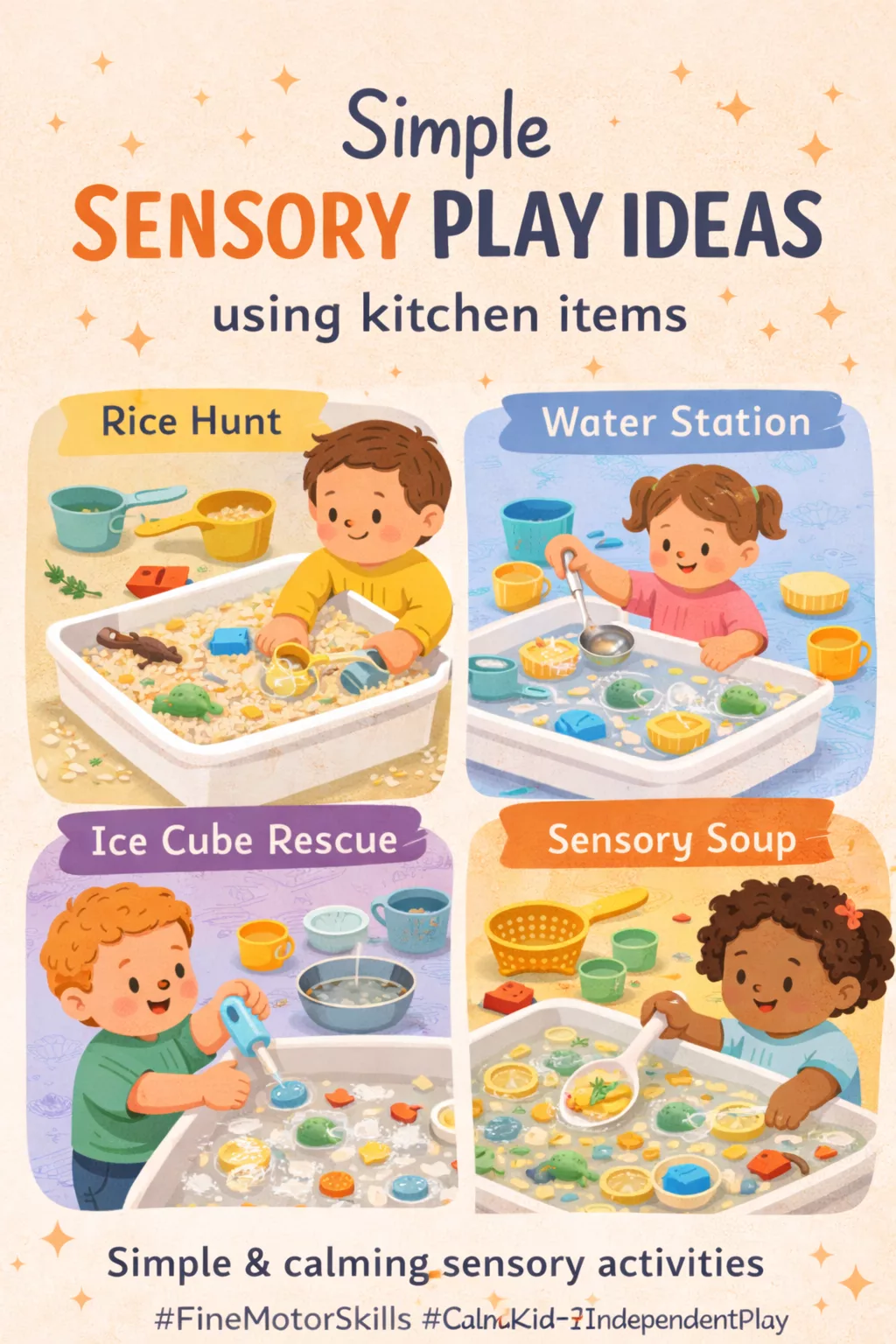
When Calm Feels Out of Reach
Sensory play is the best tool you can have when you need to whip up a quick activity, and here’s why: when kids act wild, melt down, or can’t focus, it’s easy to assume something is wrong.
Too much sugar. Not enough sleep. A “bad mood.”
But more often than not, what you’re seeing isn’t defiance at all — it’s sensory overload or sensory underload.
Children’s nervous systems are constantly taking in information: sounds, textures, movement, light, emotions. When that input isn’t balanced, their bodies look for regulation — through movement, noise, mess, or big reactions.
This is where sensory play becomes a secret weapon.
Sensory play doesn’t hype children up — it grounds them.
It calms the nervous system, strengthens concentration, and builds fine motor skills in a way that feels natural, not forced.
And here’s the best part:
You don’t need expensive kits, Pinterest-perfect setups, or a dedicated playroom.
You already have everything you need — right there in your kitchen cupboard.
Why Sensory Play Works (Especially When You’re Overwhelmed)
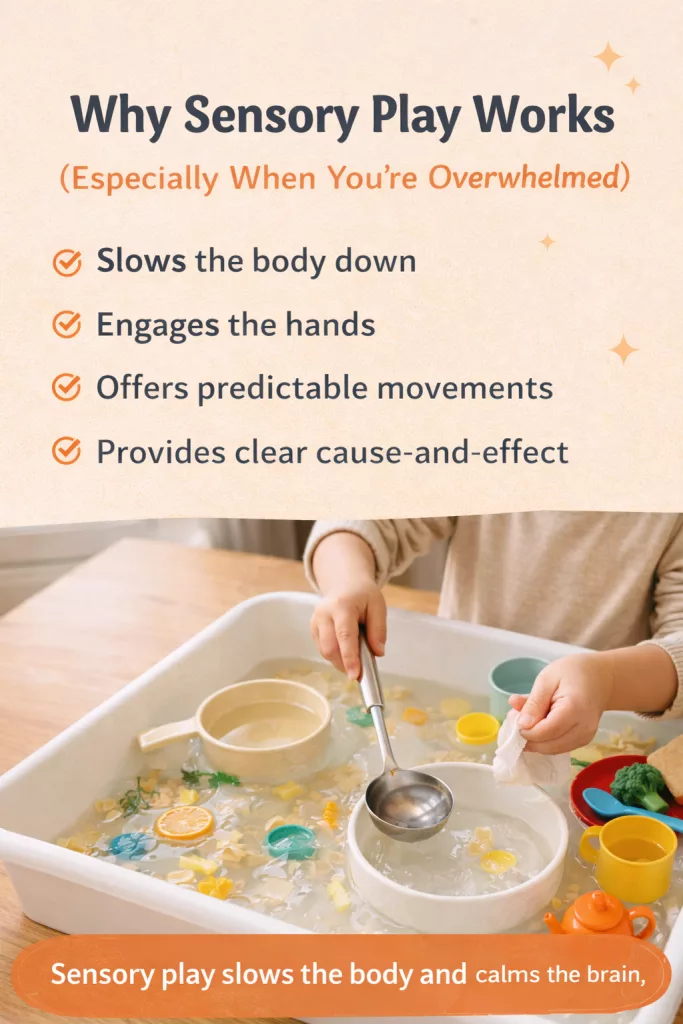
Sensory play helps children regulate because it:
- Slows the body down
- Engages the hands (which calms the brain)
- Offers predictable, repetitive movements
- Provides clear cause-and-effect
- Creates focus without pressure
Think scooping, pouring, squeezing, stirring — these actions are incredibly soothing for children, especially between ages 3–8.
When sensory input is balanced, children naturally:
- Settle more quickly
- Focus for longer stretches
- Play independently
- Transition between activities more smoothly
In other words: sensory play buys you calm.
And when you’re running on empty, calm is everything.
You Don’t Need More Stuff — You Need Better Structure
One of the biggest myths around sensory play is that it requires special equipment.
In reality, the magic comes from:
- Simple materials
- Clear boundaries
- A predictable setup
This is where the Boundary Method makes all the difference.
The Boundary Method: Contain the Chaos
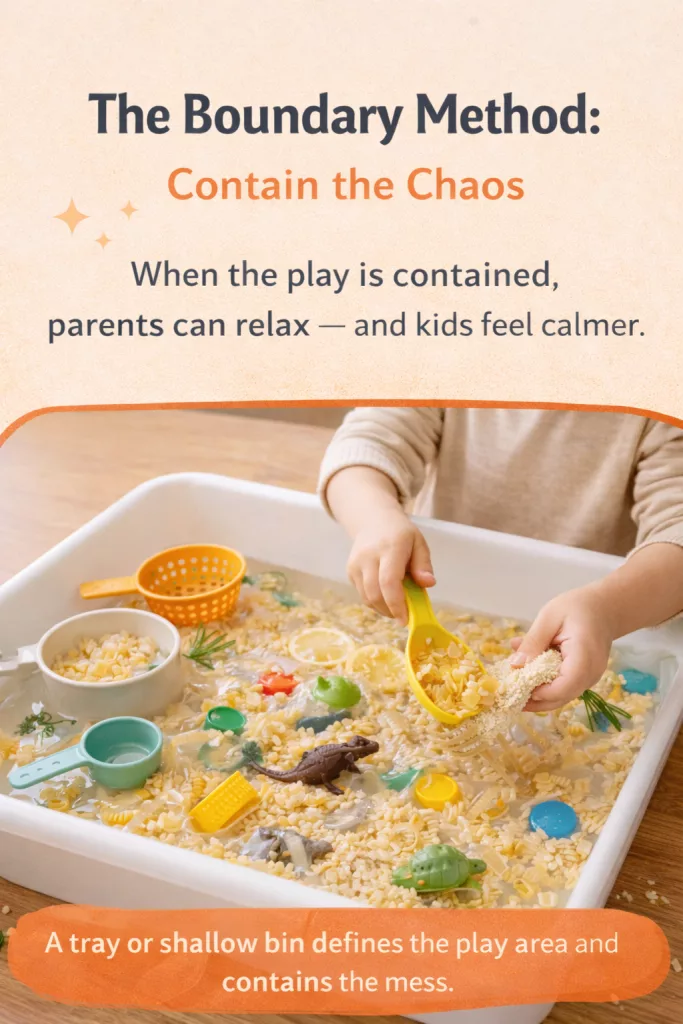
Sensory play can feel intimidating because of the potential mess — but mess isn’t the problem. Uncontained mess is.
The Boundary Method solves this by defining the play area clearly from the start.
What You Need:
- A large tray
- A shallow plastic storage box
- A roasting tin
- A baking tray
That’s it.
This single boundary gives children freedom within limits. It tells their brain:
“This is where the play happens.”
And when the play is contained, parents relax — which helps children regulate even more.
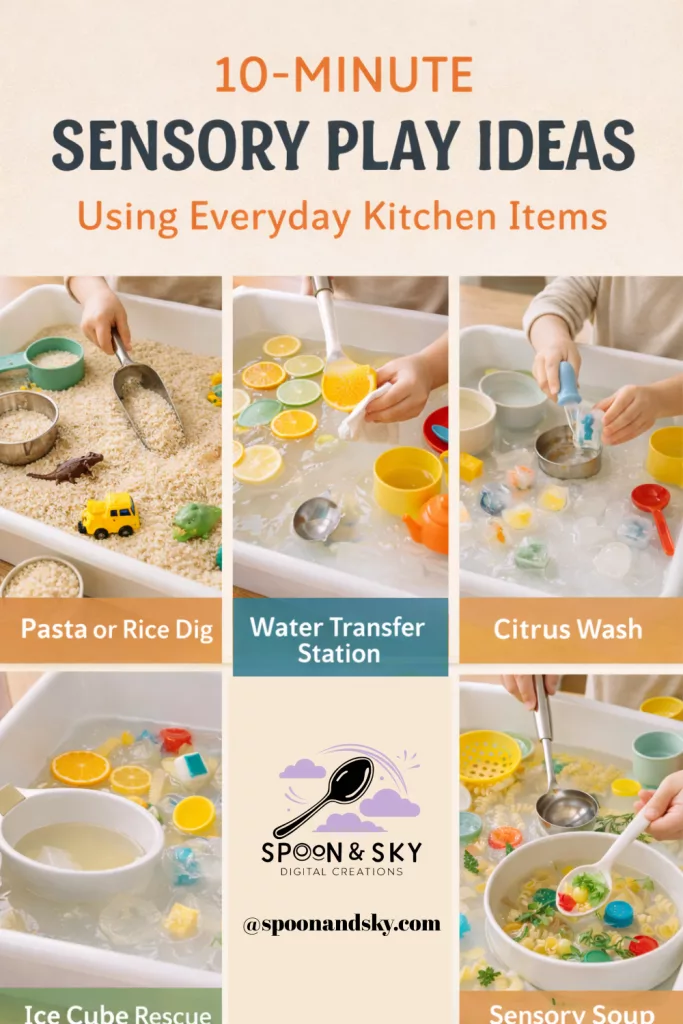
5 Simple Sensory Play Prompts (Using Only Kitchen Items)
Each of these activities can be set up in under 5 minutes and played with for 15–30 minutes — sometimes longer.
No instructions.
No expectations.
Just exploration.
1. Pasta or Rice Dig
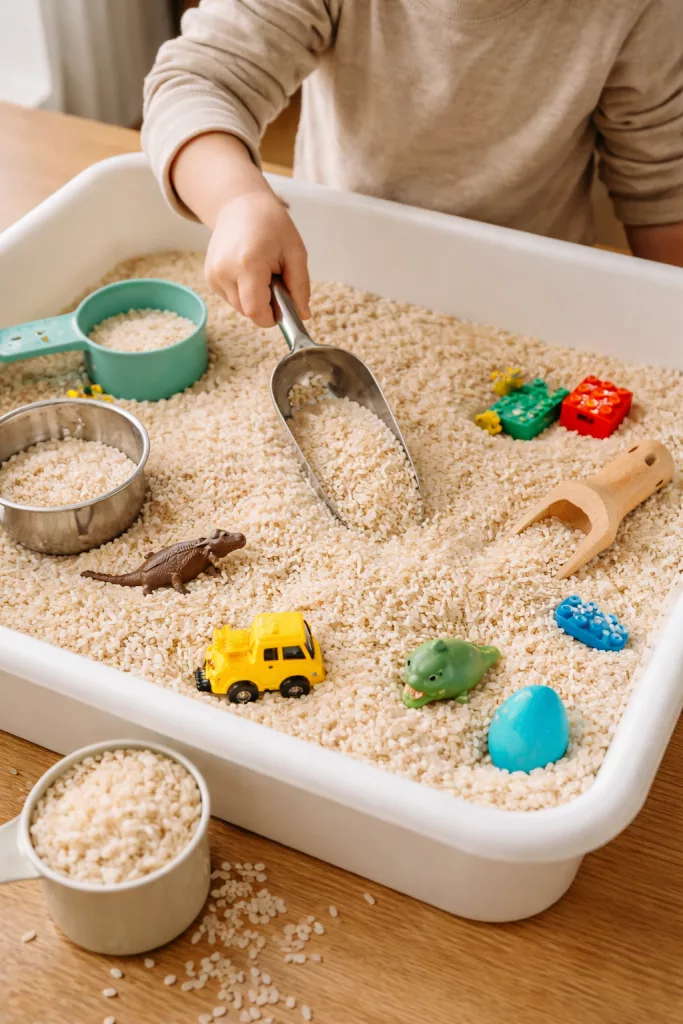
Best for: Focus, fine motor skills, quiet play
Fill a tray or shallow bin with:
- Dry rice, pasta, lentils, or oats
Hide:
- Small toys
- Plastic animals
- LEGO figures
- Coins or bottle caps
Provide:
- Measuring cups
- Spoons
- Ladles
This instantly becomes a treasure hunt.
Children scoop, pour, dig, and search — all while their nervous system slows down.
🧠 Why it works:
The repetitive motion of scooping and pouring regulates the brain and strengthens hand muscles needed for writing later on.
2. Water Transfer Station
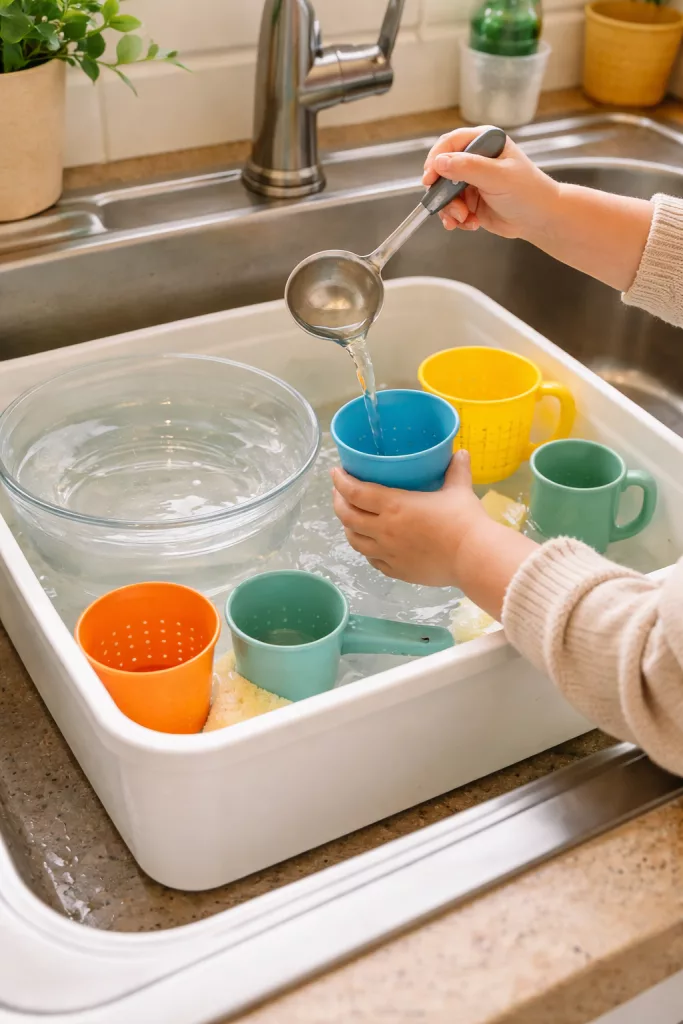
Best for: Regulation, patience, independence
Set this up in:
- The sink
- The bath
- Outside on a warm day
Provide:
- Cups
- A ladle
- A sponge
- A turkey baster (if you have one)
Demonstrate once:
“Scoop the water here… now pour it here.”
Then step back.
Children will repeat this motion over and over — and it’s surprisingly meditative.
🧠 Why it works:
Water play offers deep sensory input that calms overstimulated nervous systems almost instantly.
3. Citrus Wash
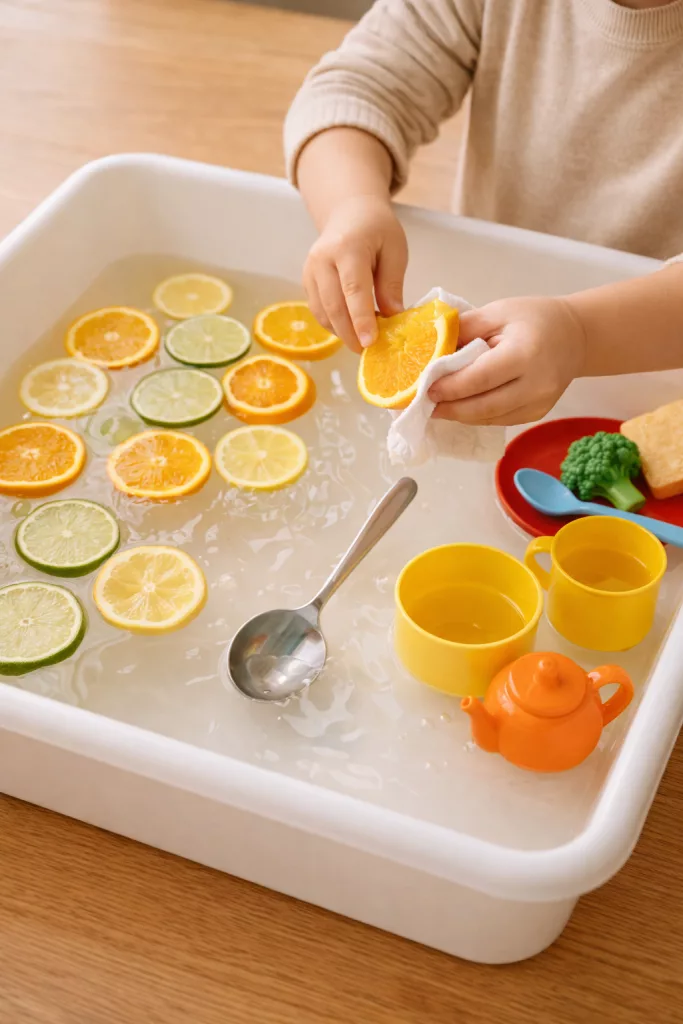
Best for: Sensory exploration, mindfulness
Slice:
- Oranges
- Lemons
- Limes
Add them to a bowl of water.
Provide:
- A spoon
- A small cloth
- Toy dishes or play food
Invite your child to “wash” the items.
This activity engages:
- Smell
- Sight
- Touch
And feels wonderfully grounding.
🧠 Why it works:
Multi-sensory input helps reset emotional overload and encourages slow, focused play.
4. Ice Cube Rescue
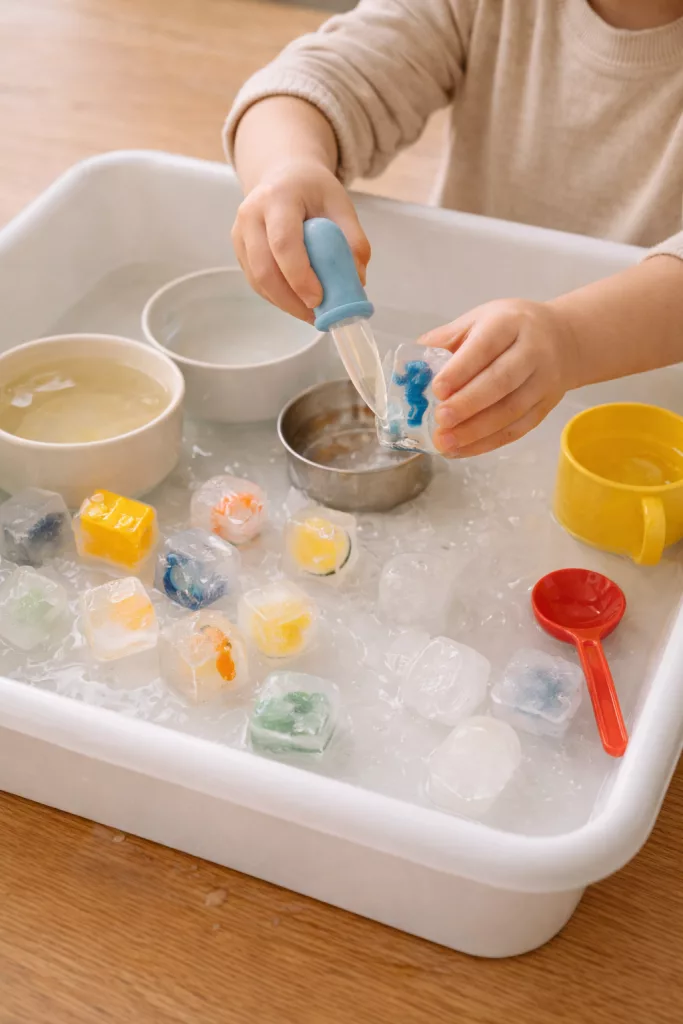
Best for: Problem-solving, patience
Freeze:
- Small toys
- Buttons
- Plastic animals
Give your child:
- Warm water
- A spoon
- A dropper or syringe
Their job? Rescue the trapped toys.
They’ll experiment with temperature, timing, and technique — all without realising they’re learning.
🧠 Why it works:
This blends sensory input with cognitive challenge, which holds attention beautifully.
5. Sensory Soup
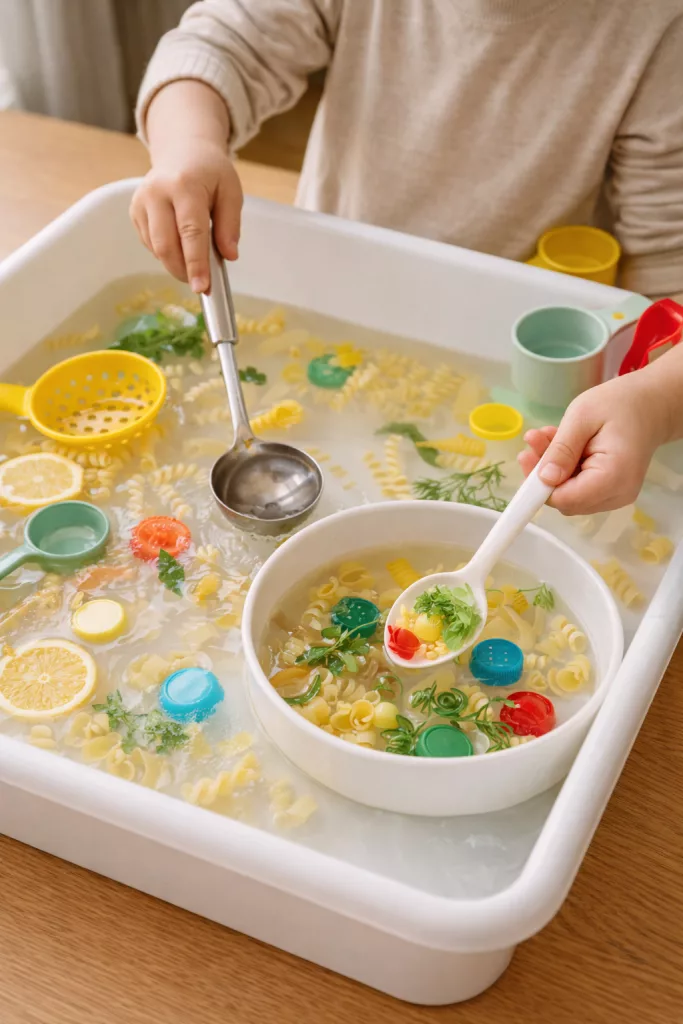
Best for: Imaginative play, calm creativity
Fill a tray or bowl with water and add:
- Pasta shapes
- Herbs
- Spoons
- Ladles
- Bottle caps
Suddenly, your child is a chef.
They stir, scoop, pretend, narrate — all while staying deeply focused.
🧠 Why it works:
Imaginative play layered onto sensory input extends engagement and encourages independent storytelling.
The Most Important Part: Supporting Independence
Sensory play works best when you don’t hover.
The goal isn’t to entertain — it’s to empower.
Here’s the Spoon & Sky approach:
- Demonstrate the activity once
- Set a clear time frame
- Step back
Say something like:
“I’m setting the timer for 15 minutes.
This is your exploration time.”
Timers:
- Give structure
- Reduce anxiety
- Build focus
- Teach responsibility
Children relax when they know how long something lasts.
What If They Lose Interest Quickly?
That’s okay.
Sensory play isn’t about keeping kids occupied endlessly — it’s about giving their nervous system what it needs in that moment.
Some days they’ll play for 3 minutes.
Some days for 30.
Both count.
The real benefit comes from repetition over time, not perfection in the moment.
When to Use Sensory Play
These activities are especially helpful:
- After school
- Before dinner
- On rainy days
- During transitions
- When emotions are running high
- When you need a quiet reset
Think of sensory play as a regulation tool, not just an activity.
The Bigger Picture: Calm Isn’t Accidental
Calm doesn’t come from telling children to “settle down.”
It comes from:
- Predictable environments
- Gentle structure
- Opportunities to regulate
- Simple, doable rituals
Sensory play offers all of this — without screens, without purchases, and without pressure.
And when calm becomes part of your rhythm, everything else feels lighter too.
I believe calm isn’t something we force — it’s something we design for.
With simple tools, gentle structure, and everyday moments turned intentional, we can create homes that feel steadier, softer, and more supportive for everyone in them.
Here’s to quieter afternoons, busy hands, and a cup of tea that’s finally warm.
Simple tools for joyful structure — always.
With warmth and a deep understanding of the messy middle,
Lily Luz — Spoon & Sky Studios


✨ Get Your Free Printable ✨
Looking for a simple way to bring a little more calm, structure, or creativity into your day?
Enter your email below and get instant access to your free printable from Spoon & Sky — made to spark joy, imagination, and gentle rhythms at home. 🌿
We’ll send your printable and a few kind, helpful ideas to your inbox. No spam — just calm, creative family tools.
Leave a Reply