
If your child lights up at the sight of scoops, cups, and a pile of “stuff to pour,” you already know: sensory play is magic. It calms busy bodies, invites deep focus, and turns ordinary afternoons into small adventures. The best part? You don’t need expensive kits or designer bins. With a bit of creativity (and a good rummage in the kitchen or charity shop), you can set up beautiful sensory trays that look curated, cost very little, and deliver hours of play.
At Spoon & Sky, our motto is simple tools for joyful structure. Sensory trays are exactly that—simple, repeatable, low-prep invitations that give children the right kind of input for regulation and imaginative play. Today, we’ll build a toolkit you can use again and again: how to hack a tray from everyday items, what to thrift, smart IKEA picks (hello TROFAST inserts and GLADOM tray), quick filler recipes, 10 themed tray ideas with play prompts, plus clean-up and safety tips so you actually want to do this tomorrow, too.
Why Sensory Trays Work (for Kids and Parents)
- Regulation: Scooping, pouring, and sifting give deep, rhythmic input that helps bodies settle.
- Focus: Repetitive actions (pour… level… pour…) invite sustained attention and problem-solving.
- Fine motor strength: Tweezers, spoons, and pinches build the tiny muscles needed for writing.
- Language + imagination: Children narrate, sort, count, measure, and invent worlds as they play.
- Structure with freedom: You offer the frame (the tray + a few tools); they lead the story.
Parent bonus: a well-set tray buys you a quiet, content 15–30 minutes—often more once they get “in the flow.”
What Makes a Great Sensory Tray?
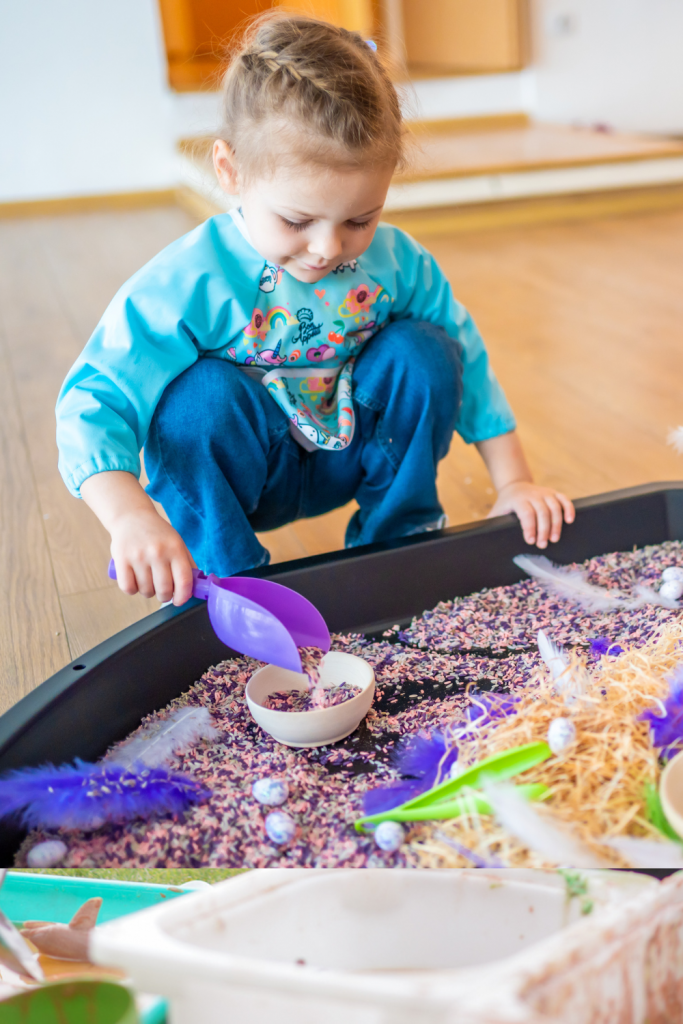
Think in three parts:
- Container – anything with a rim to contain the mess:
- Baking sheet with lip, roasting tin, casserole dish, under-bed plastic box, serving tray, shallow basket, or a cardboard box lid in a pinch.
- IKEA favorites: TROFAST basket inserts (shallow bins that slot into their units) and the GLADOM tray (the removable metal top from the little side table works beautifully as a portable play surface).
- Filler (the “world”) – one main material + optional accents:
- Dry: rice, pasta, lentils, oats, chickpeas, birdseed, pom-poms, shredded paper, dry beans, kinetic sand, aquarium pebbles, corks.
- Wet: plain water, bubbly water, water + a drop of food coloring, oobleck (cornflour + water), ice cubes.
- Nature: leaves, cones, seed pods, pebbles, shells, herbs.
- Taste-safe (for under-3s with supervision): cooked pasta, gelatin cubes, chia “slime,” crumbled baby-safe crackers. (Always supervise closely.)
- Tools (the “job”) – 3–6 items is plenty:
- Measuring cups/spoons, ladles, funnels, silicone cupcake cases, tea strainers, turkey baster, pipettes, tongs, tweezers, small jars, yogurt pots, empty spice shakers.
- Labels, mini clipboards, muffin tin for sorting, a couple of small figurines to invite story play.
Pro tip: Limit colors. Two to three tones + neutral tools make trays feel calm and intentional.
Thrift It: What to Look for (Charity Shop Checklist)
Bring home hardwearing pieces you won’t mind getting messy:
- Metal baking sheets, roasting tins, and enamel trays (easy to disinfect).
- Melamine plates, cafeteria trays, plastic serving platters with sections.
- Small stainless bowls, sieves, strainers, and scoops.
- Silicone cupcake molds and ice-cube trays (great for sorting + freezing).
- Mini tongs, salad servers, wooden spoons, ladles.
- Baskets for “invitation” displays (line with a tea towel for dry fillers).
Inspect: no cracks, chips, or sharp edges. Clean: hot soapy water + dilute vinegar; sun-dry when you can.
IKEA on a Budget: Smart Picks (Mix & Match)
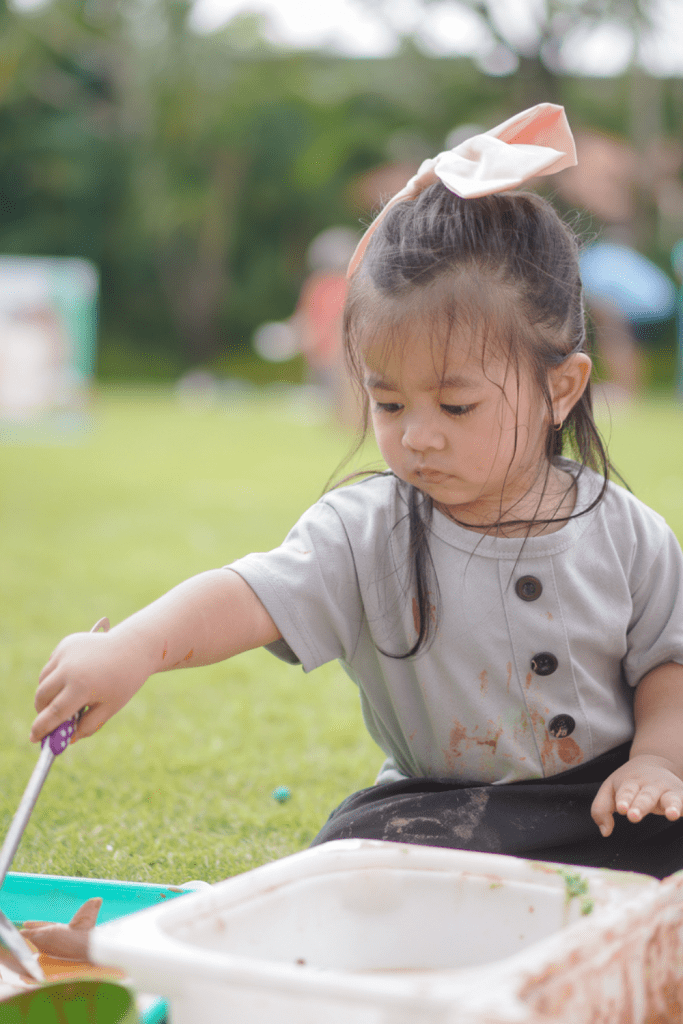
- TROFAST basket inserts: shallow and deep bins that slot into frames or stack in a cupboard. Perfect for sand, rice, beads, and quick swaps.
- GLADOM tray table: the removable metal tray becomes a portable play surface. Bonus: raised edge = less spillage.
- VARIERA boxes: lightweight, wipeable sorting caddies for tools or themed bits.
- SAMLA clear boxes: lids on = instant storage; lids off = roomy tray.
- BEVARA clips: kids use as “tongs” or for clipping labels to containers.
- IKEA 365 food containers: transparent, sturdy, great for portioning fillers or color-sorting.
Start with one TROFAST insert + one GLADOM tray and you can rotate a dozen themes.
Filler “Recipes” (Fast, Reusable, Low-Mess)
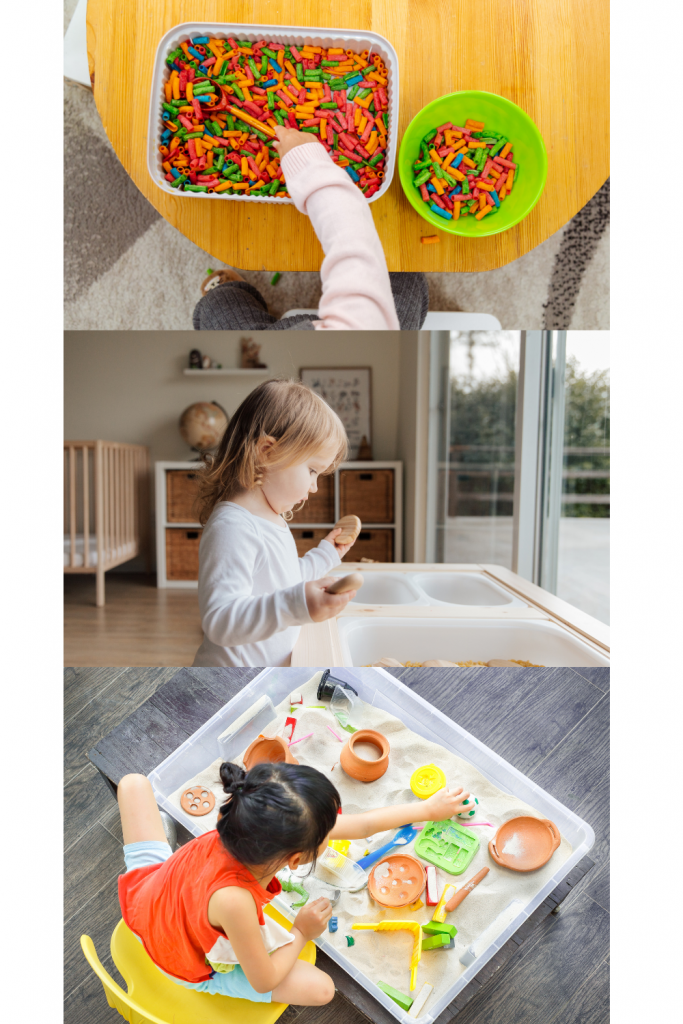
- Rainbow rice: 4 cups rice + 1 tsp white vinegar + few drops food coloring in a zip bag; shake, dry on a tray (15–30 min). Store airtight.
- Citrus water: cold water + orange/lemon slices + a few spoons/cups = instant café.
- Oobleck: 2 parts cornflour to 1 part water; add a drop of color. It’s solid when squeezed, liquid when you let go—science + sensory.
- Nature mix: gather leaves, cones, seed pods; add a pinch of dried lavender or rosemary for gentle scent.
- Moon sand (taste-safe): 8 parts flour + 1 part oil; mix until it packs like damp sand.
Label a few jars; reuse and rotate. Rotation makes trays feel new without buying more.
10 Quick Themed Tray Ideas (2-Min Setup, Prompts Included)
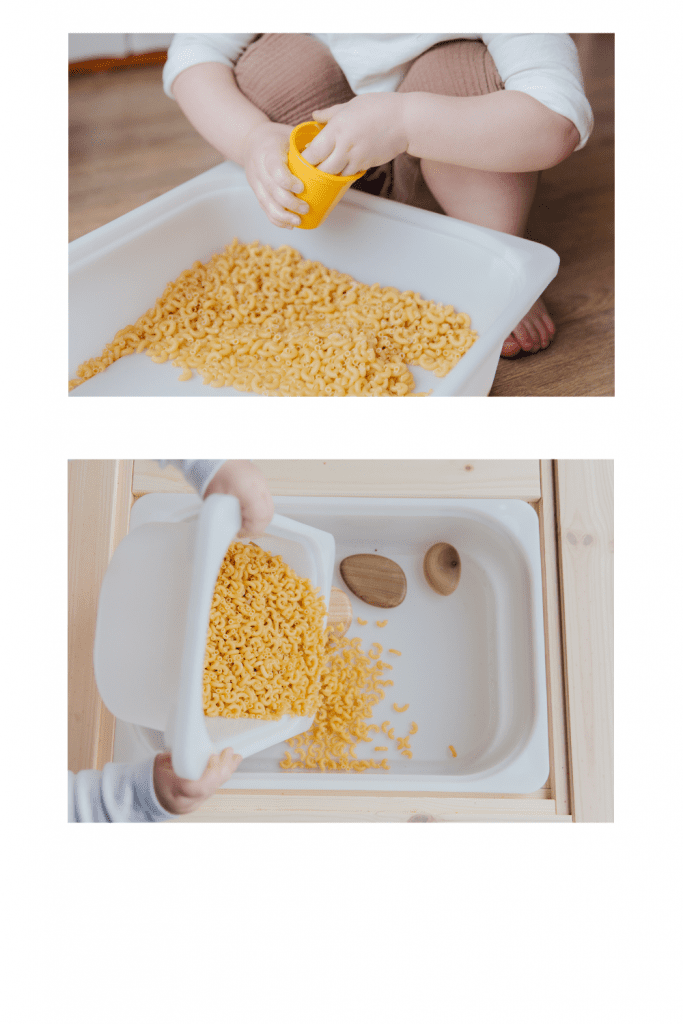
Each idea lists Filler + Tools + Prompt so you can set it up fast and step back.
1) Construction Site
- Filler: kinetic sand or moon sand + a handful of pebbles.
- Tools: small diggers/trucks, measuring spoons, mini ramekins.
- Prompt: “The road washed away! Can you build and smooth a new one?”
- Extend: Press tyre tracks and compare patterns; count “loads.”
2) Ice-Cream Parlour
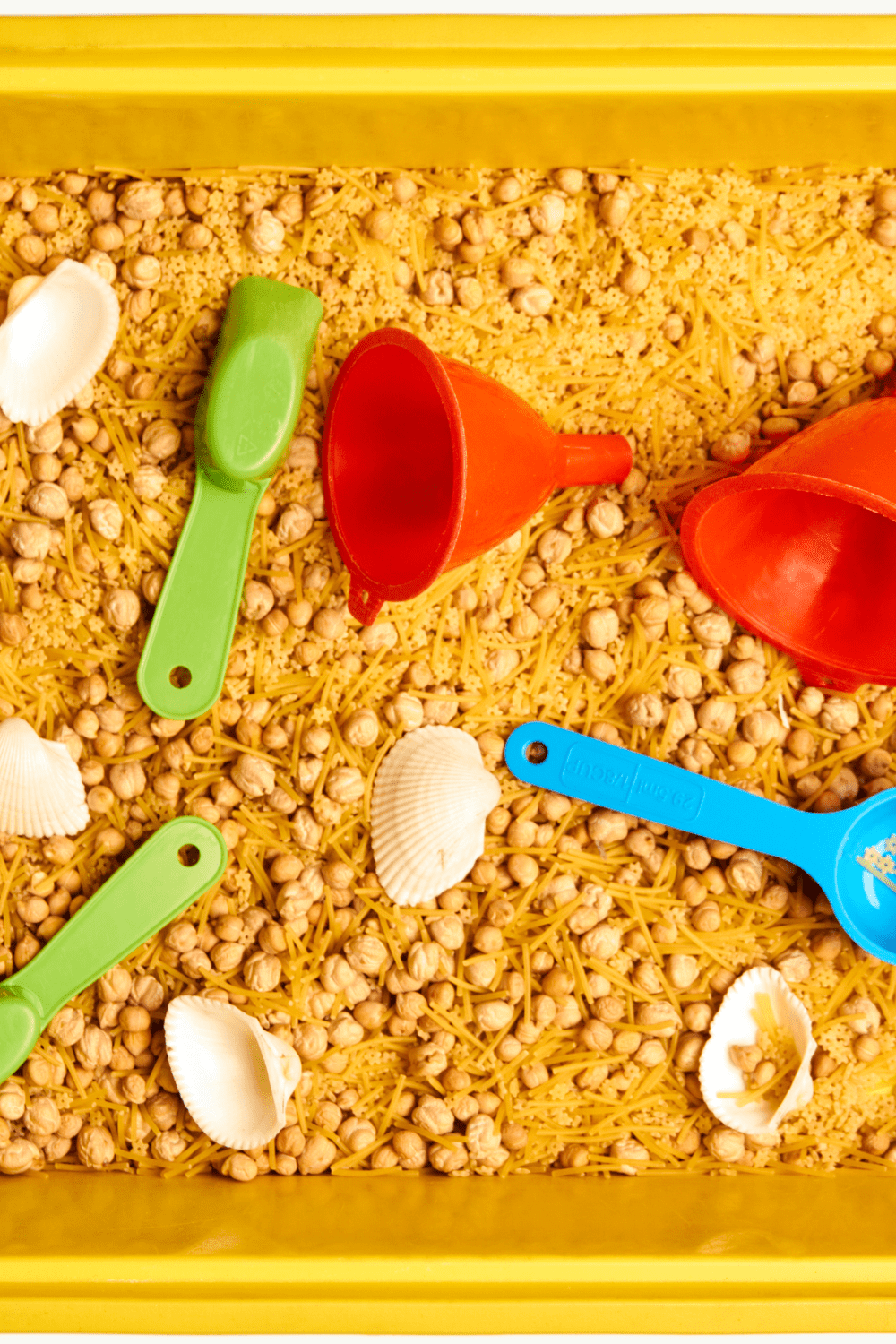
- Filler: dry chickpeas or pom-poms (scoops) + silicone cupcake cases.
- Tools: ice-cream scoop, spoons, empty sprinkle jar.
- Prompt: “Open for business—what’s today’s flavour of the day?”
- Extend: Price menu with sticky notes; practice taking orders.
3) Arctic Rescue
- Filler: ice cubes (plain or with plastic animals frozen inside) + a little water.
- Tools: turkey baster/pipettes, slotted spoon, small bowl of warm water.
- Prompt: “Our friends are stuck in the ice—how can we help?”
- Safety: Towels down; watch for slippery floors.
4) Potion Lab
- Filler: water in two colors (tiny drop of food dye) + dried herbs or citrus slices.
- Tools: funnels, jugs, jars, tea strainer.
- Prompt: “Brew a sleepy-time potion that smells like a garden.”
- Extend: Name the potions; label with washi tape.
5) Dinosaur Dig
- Filler: dry oats + a sprinkle of cocoa powder (for “earth”).
- Tools: pastry brush, soft paintbrush, small sieve, buried dinos/fossils.
- Prompt: “Careful excavation—what era do these bones belong to?”
- Extend: Brush vs. pour—what uncovers best?
6) Garden Shop
- Filler: dried beans/lentils + a few faux (or real) leaves/flower heads.
- Tools: muffin tin, tweezers/tongs, price labels.
- Prompt: “Sort the seeds and make bouquets for customers.”
- Extend: Count “coins,” weigh beans in a cup = simple maths.
7) Post Office
- Filler: shredded paper “mail” + small envelopes or folded paper.
- Tools: stickers/stamps, small boxes, clipboards, pencil for “addresses.”
- Prompt: “Special delivery—can you sort by colour or first letter?”
- Extend: Add a map; deliver around the house.
8) Car Wash
- Filler: warm soapy water + a tray of dry towels.
- Tools: toothbrush, sponge, spray bottle (half-filled), toy cars.
- Prompt: “Muddy rally—clean, rinse, park in the drying bay.”
- Extend: Time trials; assign roles: wash, rinse, dry.
9) Shell Sorters
- Filler: sand (play or kinetic) + shells/pebbles.
- Tools: sieves, small bowls, paintbrush for brushing sand.
- Prompt: “Sort by size/shape—can you make a spiral gallery?”
- Extend: Pattern making: big–small–small–big.
10) Magic Bakery
- Filler: coloured rice or pasta.
- Tools: cupcake tray, measuring spoons, paper cases, spice shaker with safe “sprinkles” (rice).
- Prompt: “Bake rainbow cupcakes—how many scoops in each?”
- Extend: Fractions play: half-scoop, full scoop, two scoops.
Keep it simple: one filler + 3–6 tools + one story prompt is enough for deep play.
Setup in 90 Seconds (Ritual That Works)
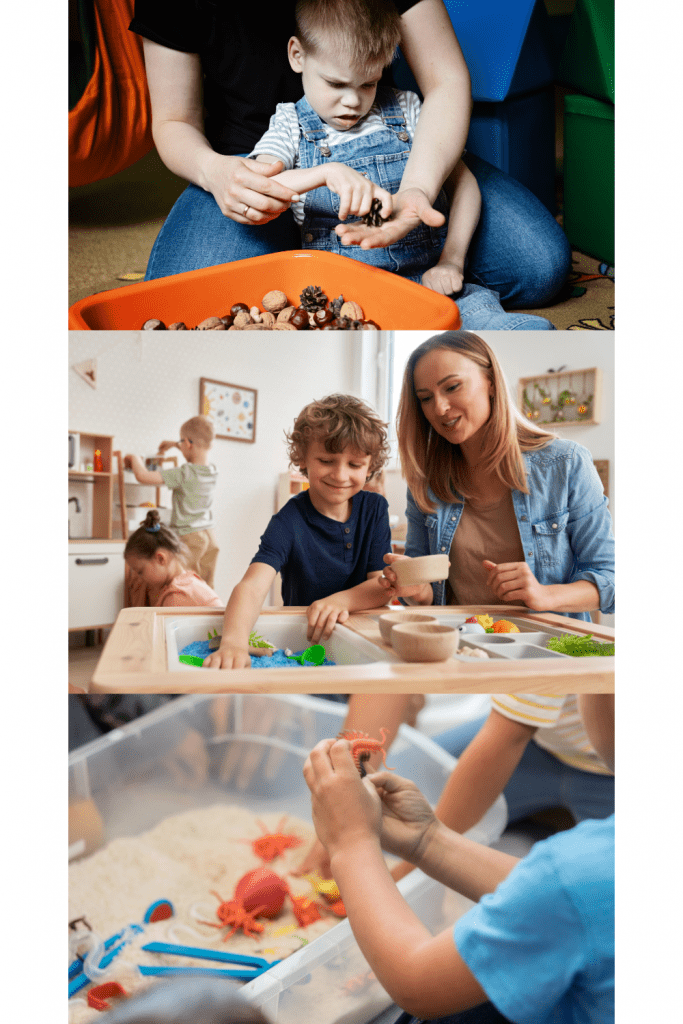
- Mat down (old sheet, picnic mat, or shower curtain liner).
- Tray out (TROFAST insert or baking sheet).
- Filler in (about 2–4 cups).
- Tools on the side (small bowl or VARIERA box).
- Offer the prompt, then step back. (Sip tea. Breathe.)
Kids play more independently when you observe instead of direct. If invited, join—otherwise, let the tray do its job.
Clean-Up (Make Tomorrow Easy)
- Two-bowl method: One bowl for “save,” one for “bin/compost” (wilted leaves, damp oats).
- Funnel the rest back into a labelled jar.
- Brush + dustpan for quick sweeps; lint roller for stray rice on rugs.
- Hand wipe + table wipe = ritual complete.
Teach the “reset rule” (like nursery): tools back in their caddy, filler in its jar, tray on the shelf. Five minutes, tops.
Safety + Sensitivities
- Always supervise under-3s; avoid small parts if there’s any mouthing.
- Check for food allergies; avoid scented fillers if sensitive.
- Keep wet play on non-slip mats; model slow movements.
- Wash hands before/after; store fillers dry and labelled.
- If siblings of varied ages are playing, tier the tray: big parts at the edge for toddlers, small bits closer to you.
Cheap + Cheerful: Five-Minute Hacks
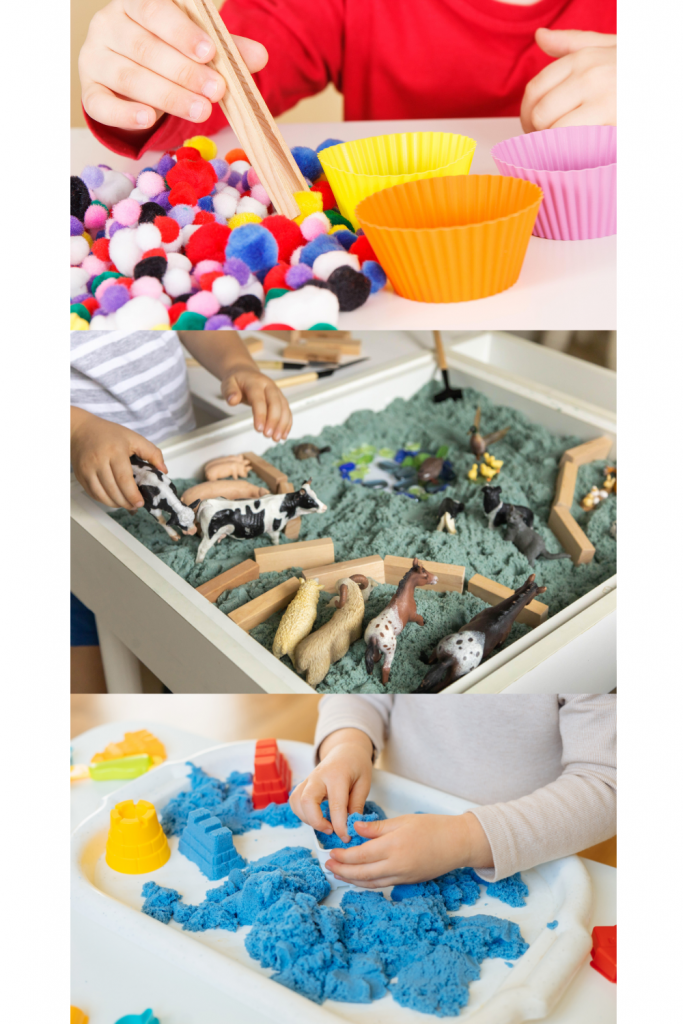
- Colour-code scoops with washi tape to match filler jars—kids learn to reset independently.
- Shaker lids from empty spice jars = instant “rain” for sand/rice.
- Paper towel tubes become chutes; prop them on a book stack.
- Egg cartons are perfect for sorting; write numbers inside for an easy counting game.
- Clip-on task cards: BEVARA clip + index card with a tiny picture prompt (“wash,” “sort,” “count”).
FAQ: “What if my child throws rice?” (and other real-life moments)
- Throwing? Offer a “yes place” to pour high (large SAMLA bin) and state the boundary: “Rice stays in the tray. If you want big throws, we’ll go outside.”
- Bored in two minutes? Reduce tools; too much choice can overwhelm. Or add a story role (you’re the customer, they’re the baker).
- Hates textures? Start with tools-first (scoops, spoons). Offer gloves. Build tolerance slowly.
- Too messy today? Skip fillers—use dry tools only: sort lids by size, stack cups, clip labels. Process > product.
Where the Magic Lives (Structure + Freedom)
Sensory trays are deceptively simple. You offer clear borders (the tray, the tools, the expectation that we reset), and inside those borders, your child gets expansive freedom. That combination—joyful structure—is what grows calm, focus, and creativity.
Start with one thrifted tray and a TROFAST insert, steal the GLADOM tray top for portability, and rotate three fillers you already have. In a week, you’ll have a rhythm: set up, exhale, let play do its quiet work.
And if anyone asks how you created such inviting play with so little… you’ll smile, shake a grain of rice out of your sleeve, and say, “Tricks of the tray.”
With sand in my hair and frozen plastic toys on my tray,
Lily
Spoon & Sky — simple tools for joyful structure


✨ Get Your Free Printable ✨
Looking for a simple way to bring a little more calm, structure, or creativity into your day?
Enter your email below and get instant access to your free printable from Spoon & Sky — made to spark joy, imagination, and gentle rhythms at home. 🌿
We’ll send your printable and a few kind, helpful ideas to your inbox. No spam — just calm, creative family tools.
Leave a Reply