
Introduction: Why Little Bodies Need to Move
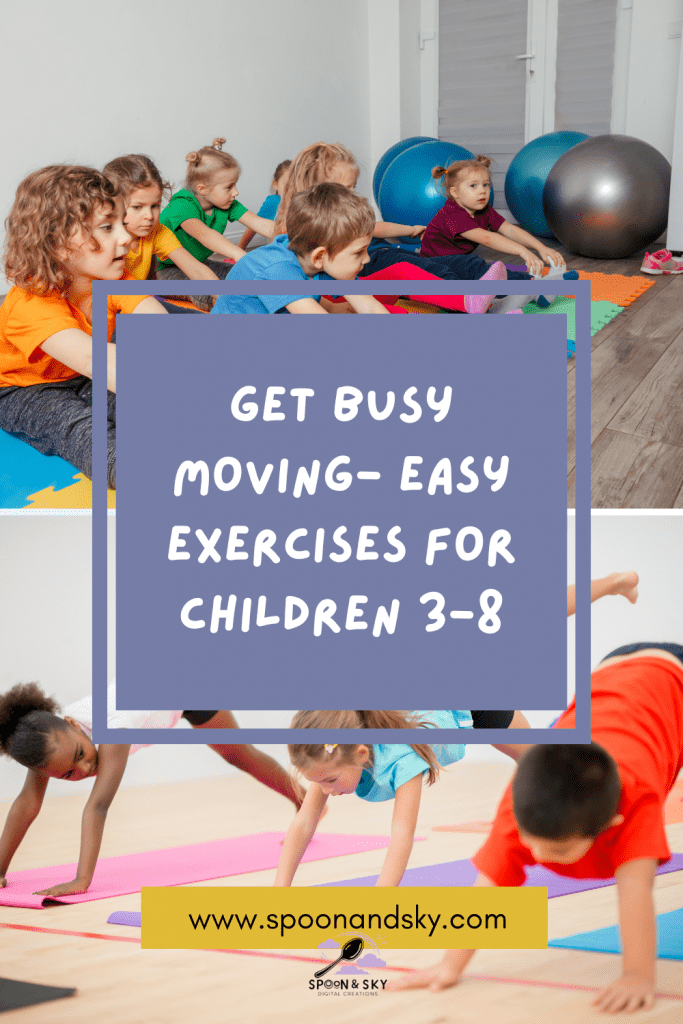
If you’ve ever seen your child bounce off the couch cushions like a trampoline, you know that children are built to move. Movement is how they explore the world, burn off big feelings, and grow strong in both body and mind.
But in our modern, screen-filled lives, many children spend more time sitting than skipping, more time scrolling than swinging. The good news? Exercise for kids doesn’t need to mean gyms, uniforms, or structured drills. For children ages 3–8, it’s all about playful movement woven into everyday life.
From animal walks in the living room to backyard obstacle courses, simple stretches before bed to family dance parties, exercise can be joyful, imaginative, and accessible. Let’s explore how to help your child move with confidence, creativity, and laughter.
1. Why Movement Matters for Kids
Physical Benefits
- Builds strong bones and muscles
- Improves balance and coordination
- Boosts cardiovascular health
- Helps regulate sleep patterns
Mental & Emotional Benefits
- Burns off stress and big emotions
- Increases focus and attention (movement primes the brain for learning)
- Boosts mood by releasing “happy hormones”
- Builds confidence and body awareness
Social Benefits
- Encourages teamwork, sharing, and turn-taking
- Strengthens family connection through shared activities
- Helps children practice following rules in fun, low-pressure ways
💡 Rule of Thumb: Children ages 3–8 should aim for at least 60 minutes of active play each day — but it doesn’t need to happen all at once. Short bursts of joyful movement throughout the day are just as effective.
2. Simple Exercises Kids Can Do Anywhere
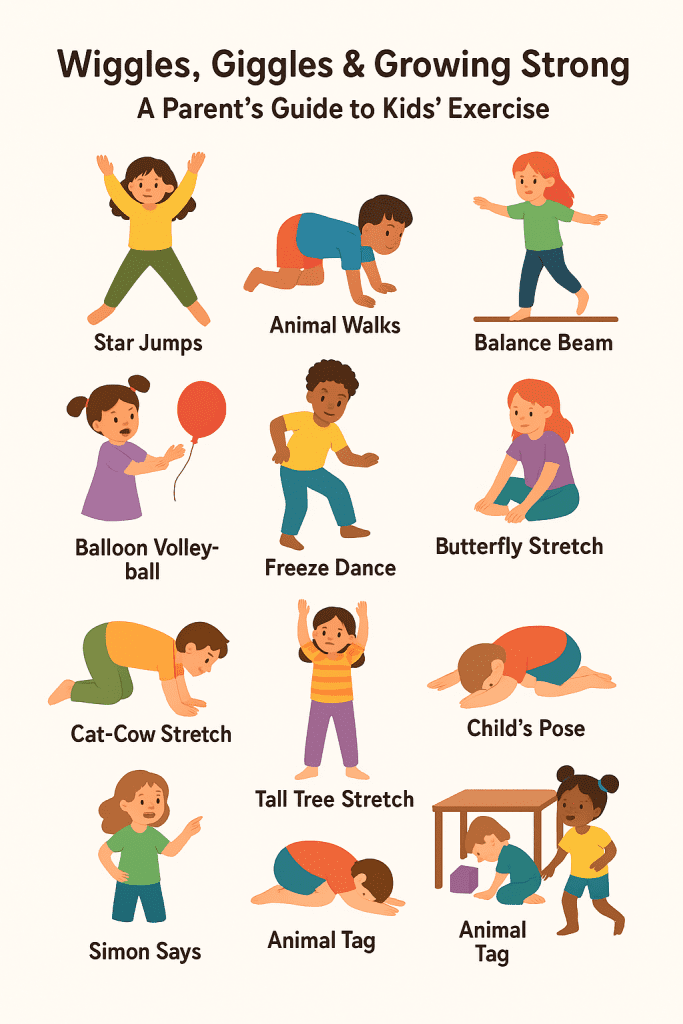
Here are parent-friendly guides to easy, no-equipment exercises for kids. (You can introduce them as “challenges” or weave them into play.)
1. Star Jumps (Jumping Jacks)
How: Jump feet apart and raise arms overhead like a star, then jump back together.
Benefits: Cardiovascular health, coordination.
Variation: Call out “night” (curl up small) and “day” (jump big).
2. Animal Walks
- Bear Walk: Hands and feet on the ground, hips high, stomping like a bear.
- Crab Walk: Sit with hands and feet on the floor, tummy up, walk backwards.
- Frog Jumps: Squat low, leap high, say “ribbit!”
Benefits: Strength, flexibility, imagination.
3. Balance Beam (Invisible Line)
How: Place tape or a rope on the floor (or just pretend). Walk heel-to-toe, arms out like an acrobat.
Variation: Try backward walking or balancing with a beanbag on the head.
Benefits: Balance, concentration.
4. Balloon Volleyball
How: Blow up a balloon. Bat it back and forth without letting it touch the ground.
Variation: Add challenges (use only elbows, heads, or knees).
Benefits: Agility, coordination, teamwork.
5. Freeze Dance
How: Play music and dance wildly. When the music stops, freeze in silly poses.
Benefits: Cardiovascular fitness, listening skills, laughter.
3. Stretching for Small Bodies
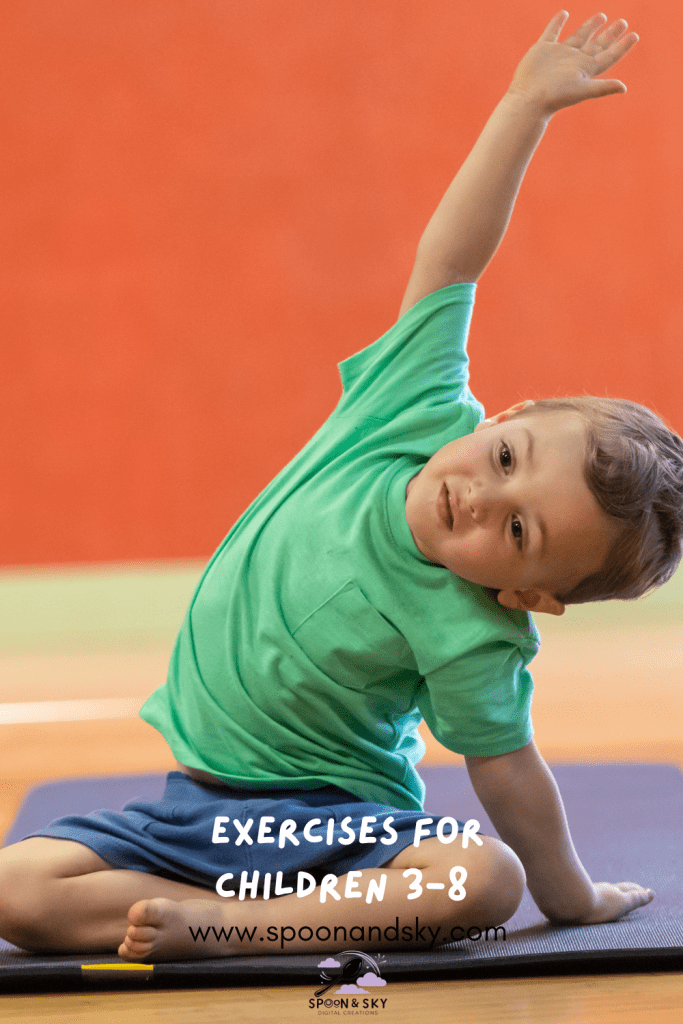
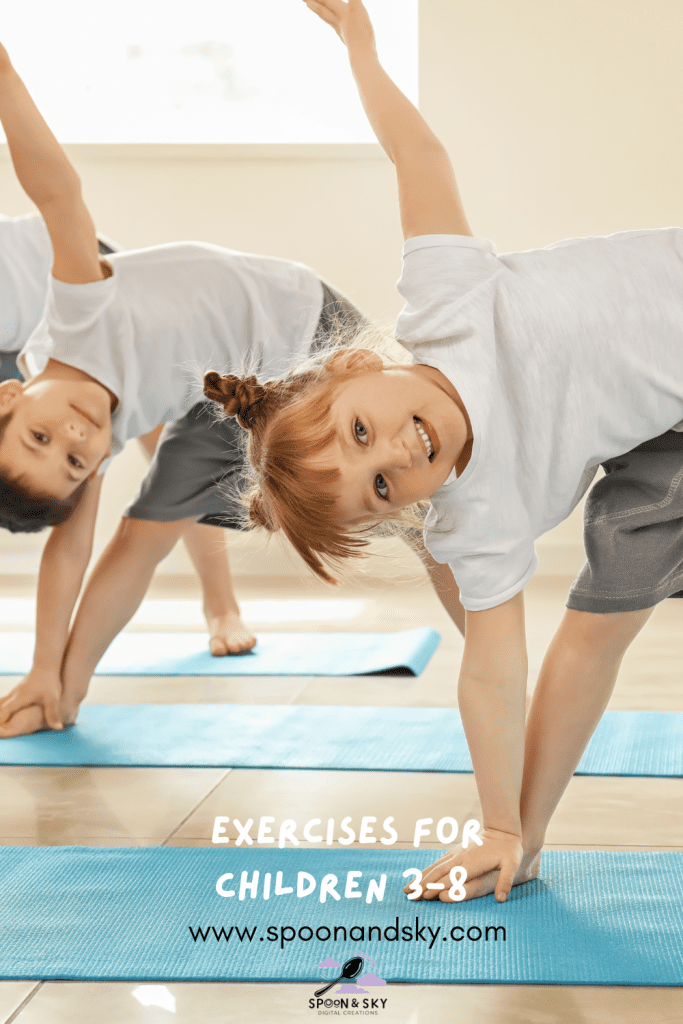
Stretching teaches kids to listen to their bodies, wind down, and prevent stiffness. Keep it short, fun, and imaginative.
Butterfly Stretch
How: Sit with feet together, knees bent out like wings. Gently flap knees.
Variation: Pretend to be butterflies flying through a garden.
Benefits: Opens hips, encourages relaxation.
Cat-Cow Stretch
How: On hands and knees, arch back like a cat, then dip tummy and lift head like a cow.
Variation: Add sound effects (“meow,” “moo!”).
Benefits: Spinal flexibility, calming.
Tall Tree Stretch
How: Stand tall, arms reaching overhead like branches. Sway side to side in the “wind.”
Benefits: Lengthens body, improves posture.
Child’s Pose (Resting Turtle)
How: Kneel, sit back on heels, stretch arms forward, rest head down.
Variation: Pretend to be a turtle hiding in its shell.
Benefits: Calms the nervous system, stretches back.
4. Playful Movement Games for Families
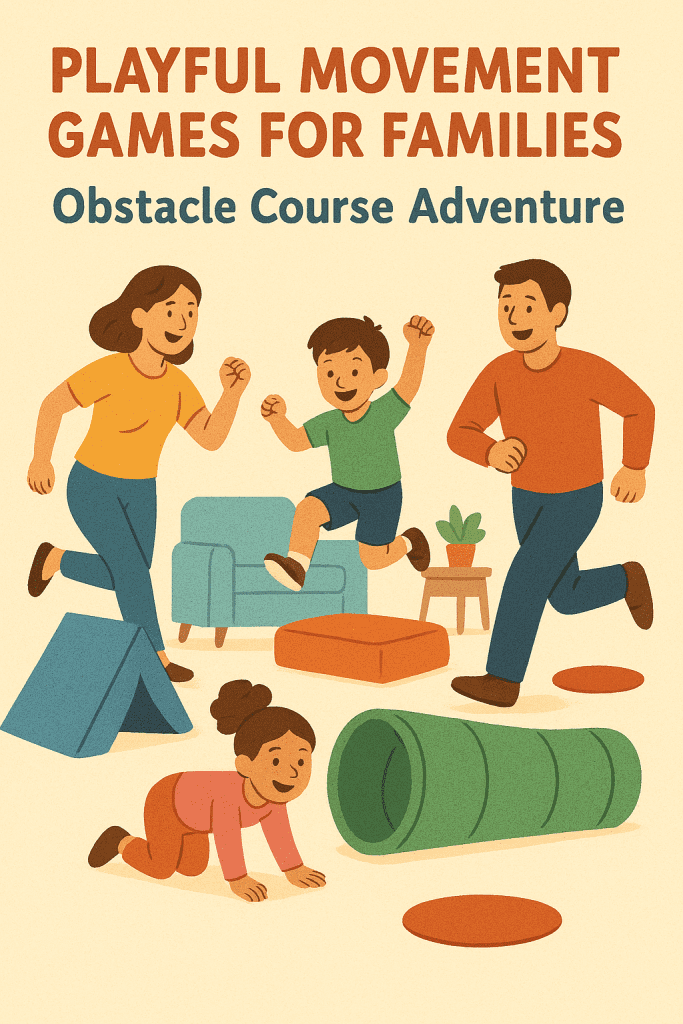
Obstacle Course Adventure
Use pillows, chairs, tunnels, or chalk outside to create a course: crawl under, jump over, balance, hop, spin. Kids love inventing the rules themselves.
Animal Tag
Instead of running, assign each person an animal move (hopping bunny, waddling penguin). Slower, sillier, and extra fun.
Simon Says (Movement Edition)
Add moves like: “Simon says do 5 frog jumps,” “Simon says balance on one foot.” Great for quick bursts of movement indoors.
Yoga Storytime
Turn yoga poses into a story: stretch tall like a tree, curl small like a mouse, roar like a lion.
5. Seasonal Movement Ideas
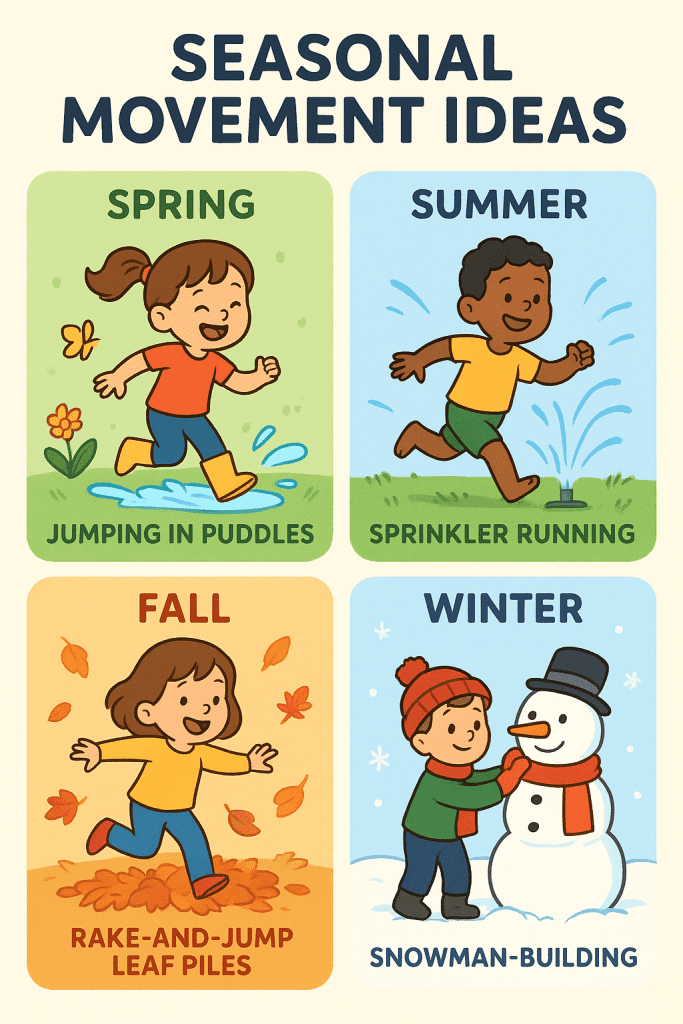
Spring
- Backyard scavenger hunt for flowers or bugs.
- Jumping in puddles (rain boots required!).
Summer
- Sprinkler running.
- Sidewalk chalk hopscotch.
Fall
- Rake-and-jump leaf piles.
- Pumpkin “relay races.”
Winter
- Indoor dance party with scarves.
- Snowman-building or “snowball” toss with rolled socks inside.
6. Variations for Different Ages
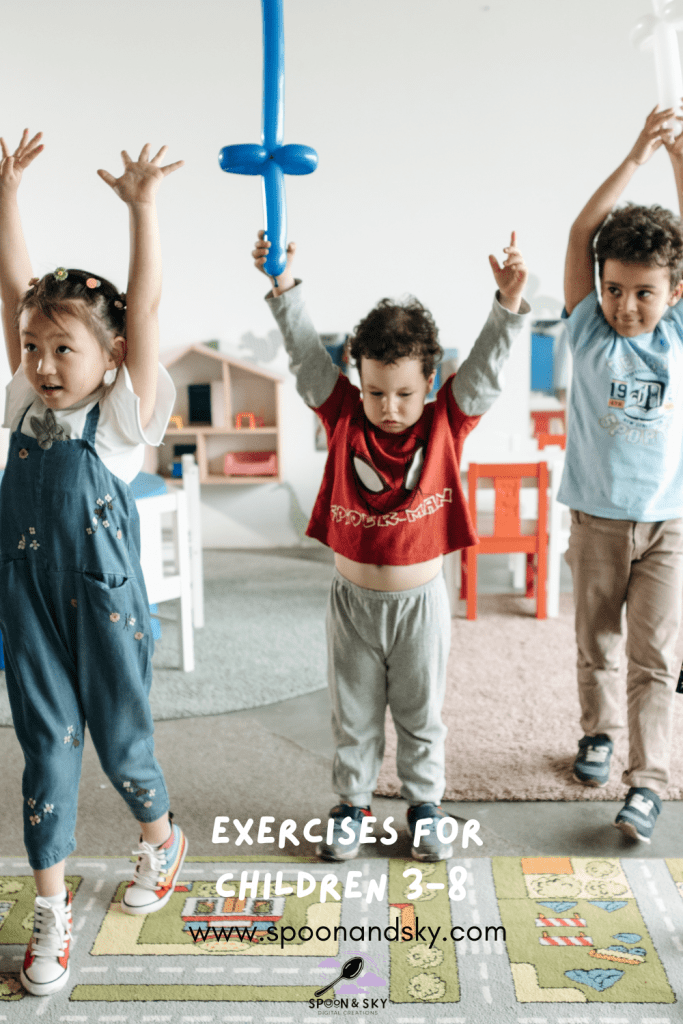
Ages 3–5
- Keep sessions short (5–10 minutes).
- Focus on imaginative play (animals, superheroes, pretending games).
- Emphasize fun over form.
Ages 6–8
- Add challenges (timed runs, counting reps).
- Encourage teamwork games with siblings or friends.
- Begin teaching gentle responsibility for warming up and cooling down.
7. Building Daily Movement Habits
- Morning Wiggles: Start the day with a silly stretch or dance.
- Transition Movement: Use short bursts between activities (star jumps before snack, wiggle dance after homework).
- Tech Balance: Swap 10 minutes of screen time for a “movement challenge.”
- Family Rituals: Weekly “family dance night” or evening walks make movement part of your rhythm.
8. Reflection for Parents
Ask yourself:
- When does my child move most joyfully?
- How can I weave small movement breaks into our daily routine?
- What activities bring us closer together as a family while moving?
9. Why It All Matters
Exercise isn’t about six-packs or scores at this age. It’s about planting seeds: that moving feels good, play is part of health, and their body is something to be celebrated. By keeping exercise playful and inclusive, you’re not just raising active kids — you’re nurturing confident, resilient humans who know the joy of moving their bodies.

Conclusion: Growing Strong, Together
Movement is more than exercise — it’s a language of joy. When your child skips down the street, stretches like a turtle, or collapses giggling after freeze dance, they’re building not just muscles but memories.
You don’t need special gear or perfect routines. Just a little space, a playful spirit, and willingness to join in the fun. After all, nothing motivates a child more than seeing their parent wobbling like a penguin or roaring like a lion beside them.
With sneakers by the door and laughter in the living room,
Lily.


✨ Get Your Free Printable ✨
Looking for a simple way to bring a little more calm, structure, or creativity into your day?
Enter your email below and get instant access to your free printable from Spoon & Sky — made to spark joy, imagination, and gentle rhythms at home. 🌿
We’ll send your printable and a few kind, helpful ideas to your inbox. No spam — just calm, creative family tools.
Leave a Reply