
A Visual Guide to Building Emotional Intelligence Through Play
Some days, emotions swirl through the house like a summer storm.
Tears over the blue cup. A stomp because the tower fell. A shout because “it’s not fair.”
And as parents, we often feel the ripple too — the rising tension, the deep breath, the “where did that come from?” moment.
But here’s something worth remembering: big emotions aren’t bad emotions. They’re information — signals from your child’s internal world.
When we teach children to recognize, name, and manage their feelings, we’re not just calming the moment. We’re giving them lifelong tools for empathy, self-awareness, and problem-solving.
At Spoon & Sky, I believe emotional regulation starts with one small thing: visibility.
Children can’t manage what they can’t name — and that’s where visual emotional planners come in.
💭 Why Children Struggle With Big Feelings
Children experience emotions just as intensely as adults — sometimes even more so. But the part of the brain that regulates emotions (the prefrontal cortex) is still developing well into the teenage years.
That means kids feel deeply but don’t yet have the tools to express it calmly. Instead of saying “I’m frustrated because this is hard,” they might scream, stomp, or cry.
This isn’t defiance — it’s dysregulation.
The good news? With consistent, calm guidance, children can learn to:
- Recognize what they’re feeling
- Label emotions accurately
- Choose tools that help them regulate
- Communicate those needs to others
That’s emotional intelligence in action — and it starts with one simple step: making emotions visual.
🖍️ The Power of Visual Emotion Charts
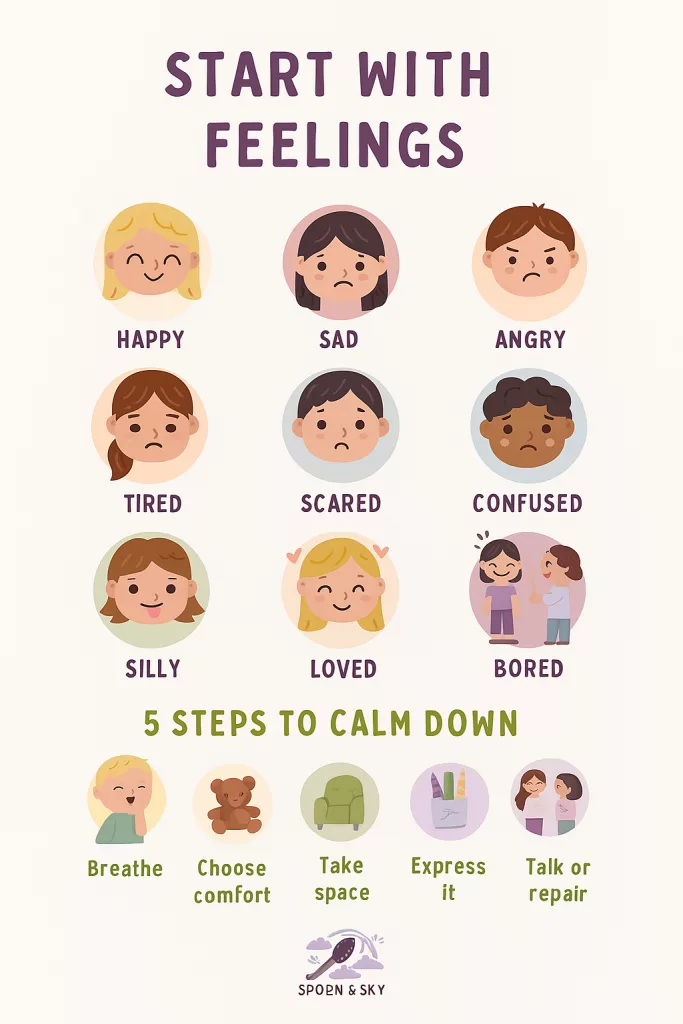
For young children (ages 3–8), pictures make the invisible visible.
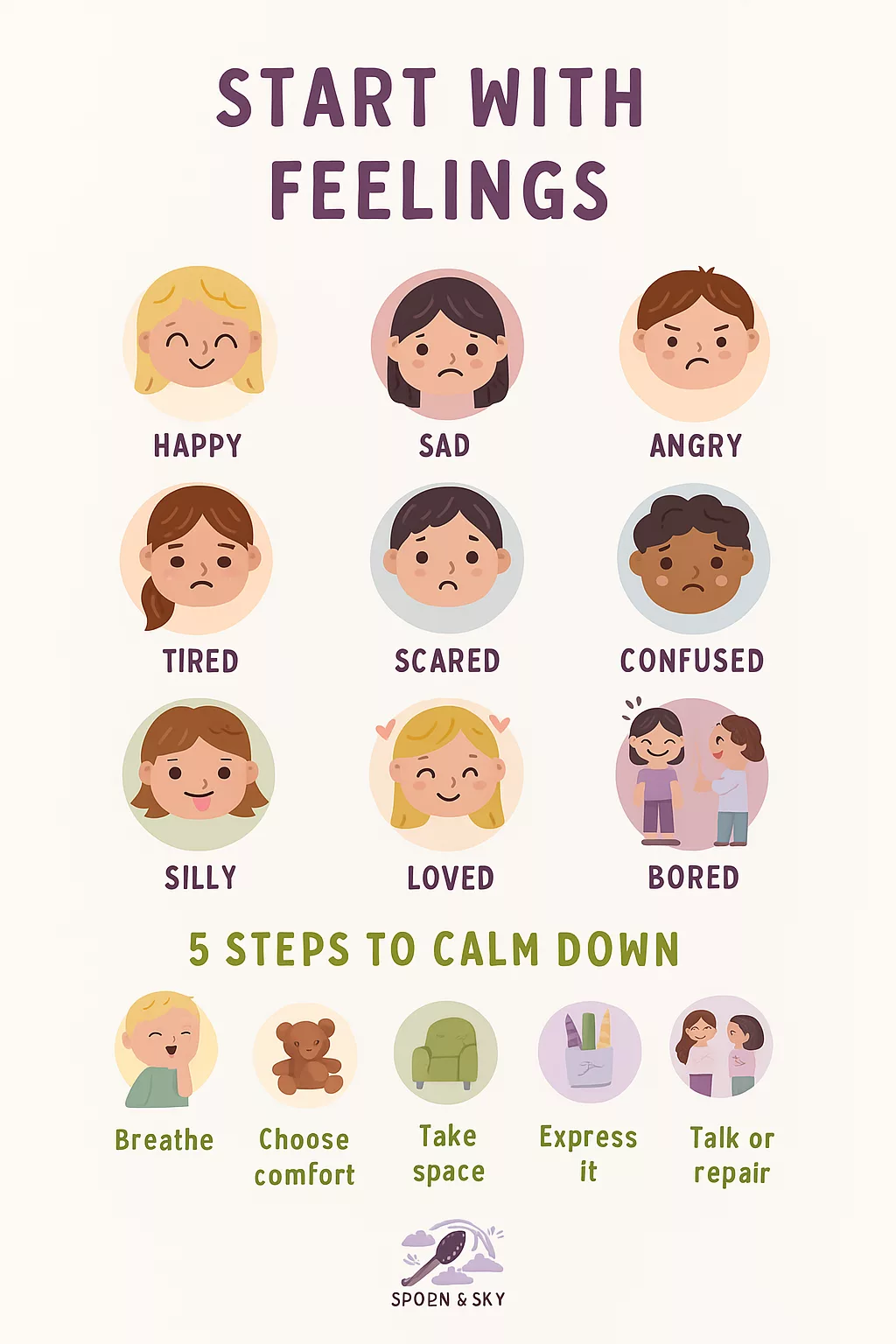
When you offer a visual chart of faces — happy, sad, angry, tired, silly, scared — you’re giving them a mirror of their internal state.
It’s a way of saying,
“I see what you’re feeling — can you help me understand it too?”
This helps kids:
- Identify emotions faster
- Feel seen and validated
- Choose regulation strategies independently
- Build language for empathy
Visual emotion charts work because they bypass logic and go straight to recognition — and for kids, recognition leads to connection.
🪞 Step-by-Step: How to Help Kids Use a Feelings Chart
1️⃣ Pause and Name the Moment
When your child’s emotions rise, pause. Take a breath yourself first.
Then say something gentle and observational:
“Wow, that looks like a big feeling.”
“You seem upset — can we look together and find which one it might be?”
Avoid judgment words like “calm down” or “stop crying.” Your goal is to meet the emotion, not mute it.
2️⃣ Let Them Point, Not Explain
Give your child autonomy to choose how they share their feeling. Some kids love to talk; others prefer pointing.
Use a simple visual feelings chart with expressive faces. Include options like:
😊 Happy
😔 Sad
😡 Angry
😱 Scared
😕 Confused
😴 Tired
💫 Silly
💞 Loved
💭 Bored
If they point to two or three — that’s okay! Mixed emotions are part of being human.
3️⃣ Validate the Feeling
Once they’ve chosen, mirror it back:
“You’re feeling angry. That’s okay — everyone feels angry sometimes.”
“You feel sad because your tower fell down. That makes sense.”
Validation is not agreement — it’s acknowledgment. It tells your child: your feelings matter.
4️⃣ Offer Tools, Not Fixes
After identifying the feeling, guide them gently toward self-regulation strategies.
This can be through a “calm-down visual sequence” — a short, illustrated path that reminds kids what to do next.
🌈 Visual Calm-Down Sequence (The Spoon & Sky Method)
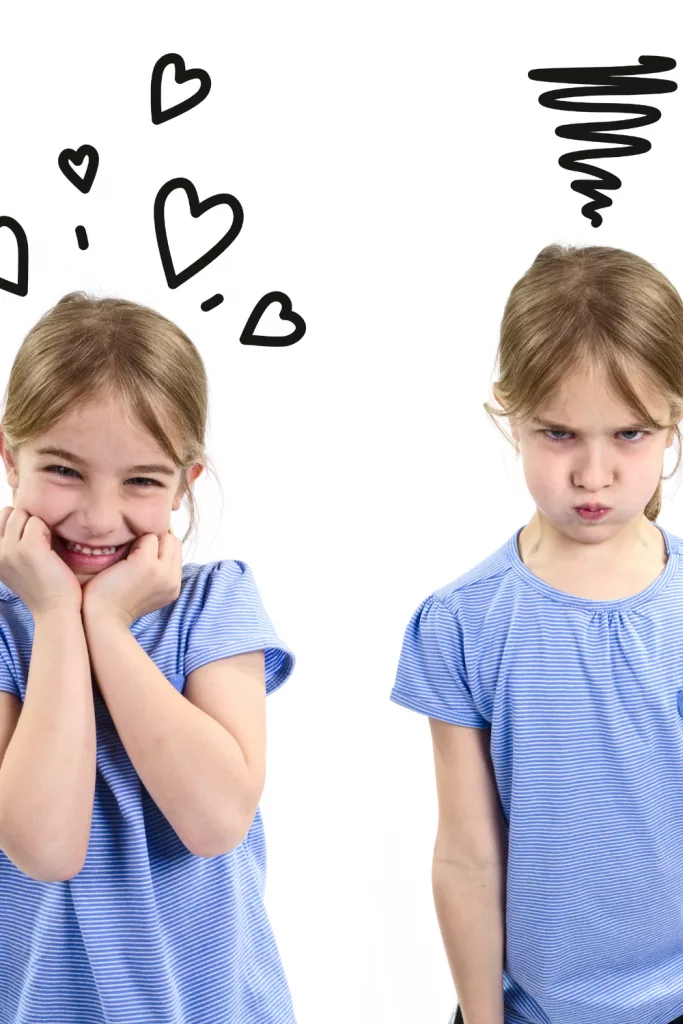
Here’s a simple visual path to help children move through big emotions safely:
Step 1: 🫁 Breathe
“Let’s take 3 balloon breaths — fill up big like a balloon… and let it out slowly.”
Teach it through play: hands on belly, deep inhale, long exhale.
Step 2: 🧸 Choose Comfort
“Would you like a cuddle, a soft toy, or your cozy blanket?”
This step teaches children to seek calm through connection, not isolation.
Step 3: 🪑 Take Space
“Do you want to sit in your calm corner or stay with me?”
Offer two safe options. The goal is regulation, not punishment — a calm corner, not a time-out corner.
Step 4: 🎨 Express It
“Would you like to draw it, squeeze some playdough, or stomp it out?”
Giving emotions an outlet helps discharge energy and teaches healthy expression.
Step 5: 💬 Talk or Repair
“Now that you’re calm, would you like to tell me what happened?”
Once they can talk, help label the sequence:
Feeling → Reaction → Recovery → Repair.
This builds the lifelong skill of emotional reflection.
🪴 Creating a Calm-Down Space
Check out this blog post, if you want to know more about Calm Down Corners.
Your visual tools will work best when paired with a physical space — a little corner designed for peace, not punishment.
Include:
- A soft cushion or blanket
- Favorite cuddly toy
- Visual feelings chart
- Calm jar or sensory bottle
- Simple books about emotions (like The Color Monster)
- Low lighting or a small lamp
Label it “The Calm Corner” and introduce it during neutral moments:
“This is a space for anyone who needs to feel calm again.”
Soon, your child will begin to use it voluntarily — that’s regulation in progress.
🧩 Step 6: Keep It Consistent

Like any skill, emotional regulation takes practice.
Use your visual tools daily — not just in crises.
Try these mini-moments:
- “How are you feeling before school?” (point to the chart)
- “What emotion matches how you feel after your snack?”
- “Let’s check in before bed — what’s your heart feeling?”
Consistency turns visuals into routine — and routines into calm.
📖 Step 7: Model It Yourself
Children learn through imitation. When you model naming and managing emotions, they follow suit.
“I’m feeling a bit frustrated that we’re running late, so I’m going to take a deep breath.”
“I felt sad when the rain cancelled our walk, but I made some tea and feel better now.”
Your emotional vocabulary becomes their emotional vocabulary.
🌼 Step 8: Use Play to Practice Feelings
Turn emotional literacy into games:
- Feelings Charades: Act out emotions for kids to guess.
- Storytime Check-Ins: “How do you think the character feels right now?”
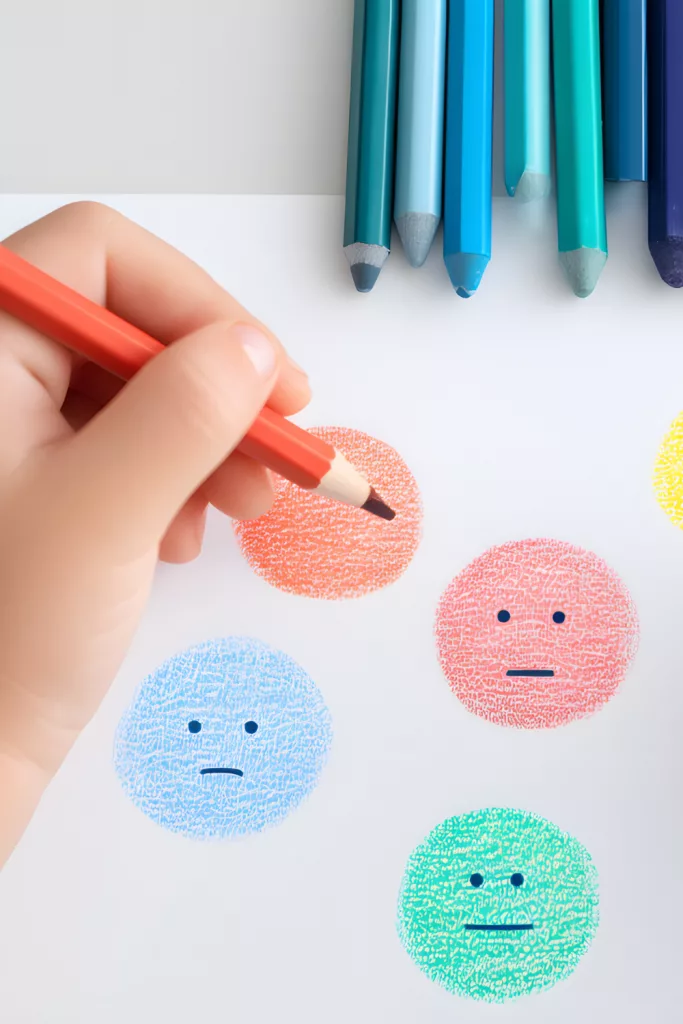
- Draw the Feeling: Let them draw happy, angry, or worried faces.
This keeps emotional learning light, fun, and memorable.
💞 Step 9: The Spoon & Sky “Feelings First” Printable
Download your free “Feelings First” Visual Chart — designed in calm pastel tones, it includes:
- 9 illustrated emotions
- A 5-step calm-down path
- Space to add your child’s own words or drawings
Perfect for use in calm corners, bedrooms, or playrooms.
🕊️ Final Thoughts
Helping your child recognize and name their feelings doesn’t just create calmer days — it builds the foundation for empathy, resilience, and connection.
You’re teaching them that emotions aren’t something to fear or hide — they’re something to understand and move through.
And on the days when everything feels big and loud, you can always come back to that simple question:
“Can you point to how you feel right now?”
That’s where calm begins.
With kindness and clouds of crayons,
Lily Luz — Spoon & Sky


✨ Get Your Free Printable ✨
Looking for a simple way to bring a little more calm, structure, or creativity into your day?
Enter your email below and get instant access to your free printable from Spoon & Sky — made to spark joy, imagination, and gentle rhythms at home. 🌿
We’ll send your printable and a few kind, helpful ideas to your inbox. No spam — just calm, creative family tools.
Leave a Reply