Bedtime Battles: How Much Sleep Do Kids Aged 3–8 Need?


Gentle, practical ways to make bedtime feel a little calmer — for everyone.
"Just one more story."
"I'm thirsty."
"I need another hug."
"But I'm not tired!"
If bedtime in your house seems to involve an endless collection of requests, negotiations and unexpected trips out of bed, you're certainly not alone.
For many families, bedtime is one of the trickiest parts of the day. Everyone is tired, patience is running low, and the child who could barely keep their eyes open on the sofa suddenly has enough energy for a marathon.
And when the clocks change and the evenings grow darker? Even a well-established routine can feel as though it's gone out of the window.
The good news is that bedtime doesn't need to be perfect to work.
A few gentle changes, some realistic expectations and a little consistency can make evenings feel much more manageable.
Let's begin with one of the questions parents ask most often.
How Much Sleep Does a Child Aged 3–8 Actually Need?
Children need different amounts of sleep depending on their age, development and individual needs.
According to the American Academy of Sleep Medicine, these are the recommended daily sleep ranges:
Age
Recommended sleep
3–5 years
10–13 hours in 24 hours, including naps
6–8 years
9–12 hours in 24 hours
These are guidelines rather than strict targets. Some children need more sleep than others, even when they're the same age.
For example, a five-year-old who wakes at 7am may need to be asleep around 7pm to get 12 hours of sleep. Another child may feel well rested with a slightly later bedtime.
The important question isn't simply, "How many hours did they sleep?"
It's also:
-
Do they wake feeling reasonably rested?
-
Can they manage their usual daily activities?
-
Are they frequently exhausted, irritable or struggling to concentrate?
If your child consistently seems overtired, it may be worth looking at their overall sleep routine.
Why Do the Clocks Changing Cause So Much Bedtime Chaos?
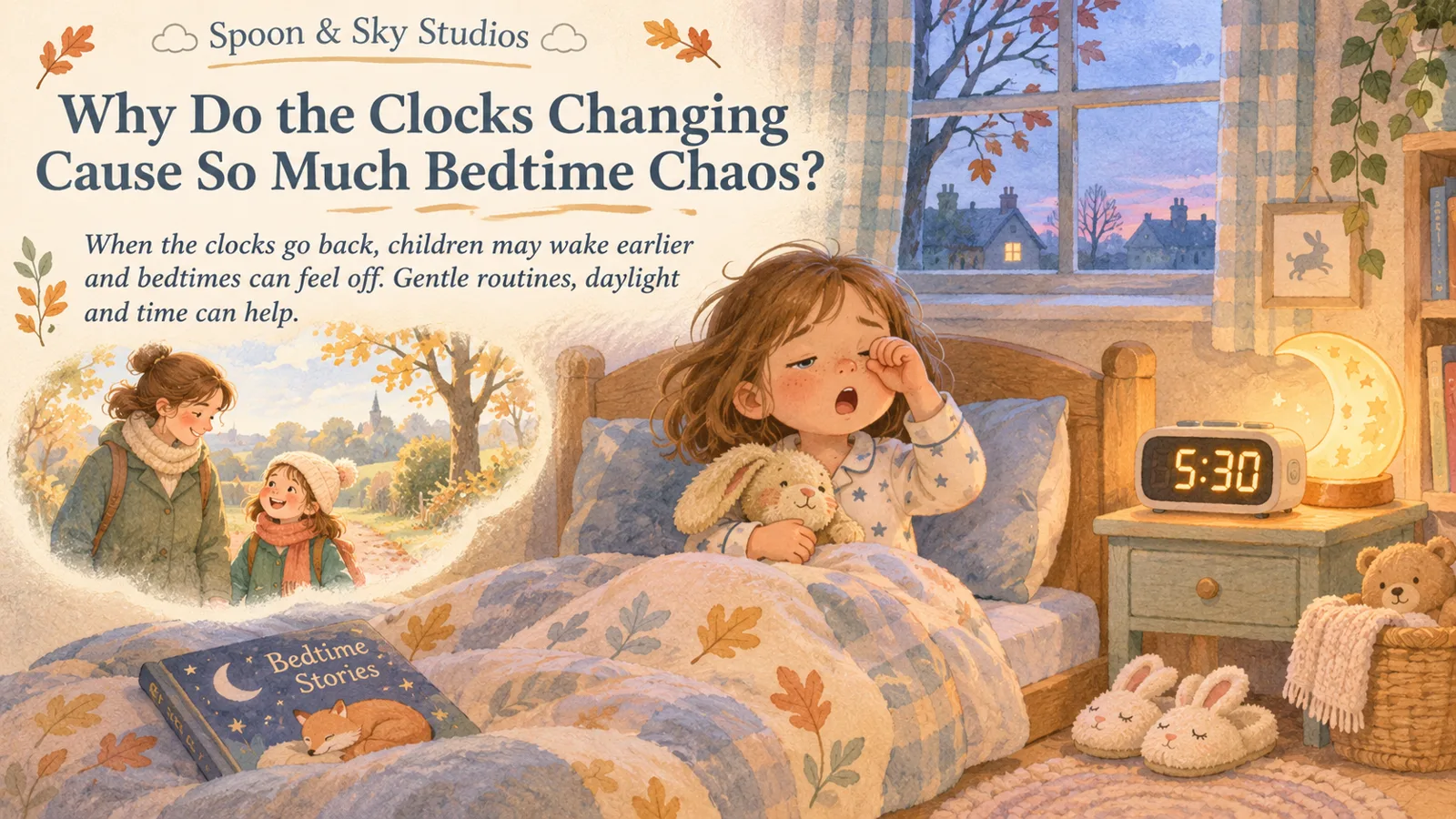
In the UK, the clocks went back on Sunday 25 October 2026.
Although an extra hour sounds lovely in theory, small children don't always see it that way.
Their bodies are still working according to their internal clocks.
A child who usually wakes at 6.30am might suddenly be wide awake at 5.30am. Meanwhile, darker evenings can make familiar routines feel different.
What can help?
Try keeping mornings and evenings predictable while your child adjusts.
Get outside during daylight hours, particularly in the morning. Natural light helps support the body's sleep–wake rhythm.
Keep meals, activity and bedtime roughly consistent.
If their routine has shifted, move it gradually rather than trying to change everything overnight.
And most importantly, give everyone a little time to adjust.
The Four Most Common Bedtime Battles
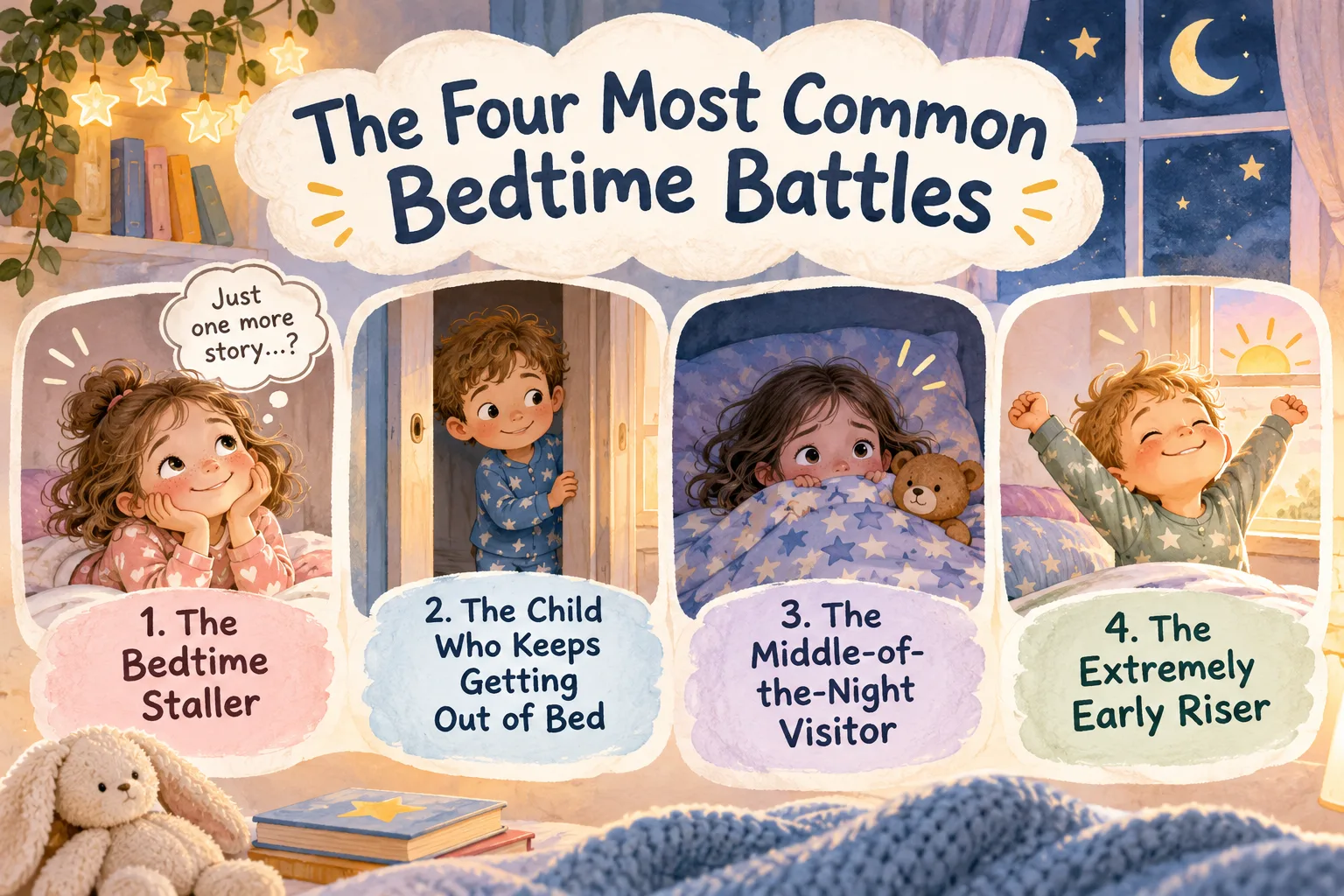
1. The Bedtime Staller
Your child suddenly remembers that they need water, another story, a different teddy or an extremely important conversation about dinosaurs.
Try this: Build those predictable requests into the routine before lights out.
Offer a drink, visit the toilet, choose a teddy and agree on the number of stories beforehand.
Then use a gentle, consistent phrase:
"We've done everything on our bedtime list. Now it's time for our bodies to rest."

2. The Child Who Keeps Getting Out of Bed
Some children struggle with the transition from family time to being alone in their room.
Others have learned that getting out of bed leads to more interaction.
Try this: Respond calmly, make sure their needs are met, and gently guide them back to bed.
Avoid turning the moment into a long conversation or a new game.
If your child is genuinely frightened or distressed, offer comfort and help them feel secure before settling them again.

3. The Middle-of-the-Night Visitor
Waking during the night can happen for many reasons, including dreams, discomfort, illness or worries.
Try this: Keep lights low and interactions quiet.
Check whether your child needs the toilet, feels unwell or needs reassurance.
Offer a calm response and help them return to sleep without making the middle of the night feel like daytime.

4. The Extremely Early Riser
When your child thinks 5am is the perfect time to start the day, it can be exhausting.
Try this: Make sure the bedroom is dark enough in the early morning, maintain a consistent morning routine and check whether bedtime or daytime naps need adjusting.
For older children, a simple visual morning clock may help them understand when it's time to get up.
Remember that children have different natural waking times. The goal is adequate, restful sleep — not necessarily sleeping until a particular hour.

A Simple 20-Minute Bedtime Routine
You don't need a complicated evening schedule filled with activities.
In fact, when children are already tired, simpler is often better.
The key is familiarity.
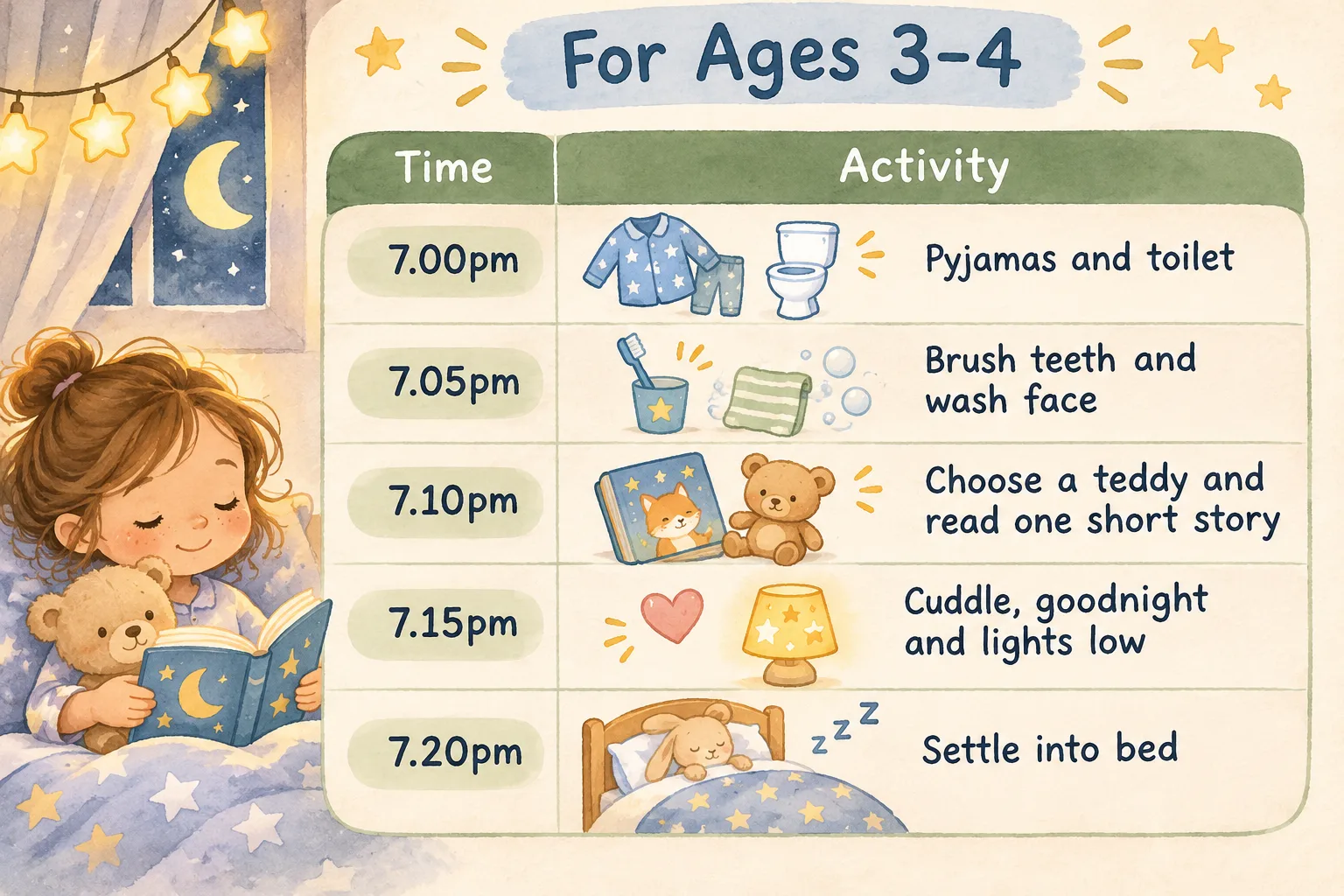
Start winding down with calm activities around 30 minutes before bedtime, then use a predictable 20-minute routine for those final steps.
For Ages 3–4
Time
Activity
7.00pm
Pyjamas and toilet
7.05pm
Brush teeth and wash face
7.10pm
Choose a teddy and read one short story
7.15pm
Cuddle, goodnight and lights low
7.20pm
Settle into bed
For Ages 6–8
Time
Activity
7.40pm
Get ready for bed
7.45pm
Brush teeth and prepare for tomorrow
7.50pm
Read together or independently
7.55pm
Share one good thing about the day
8.00pm
Goodnight and lights out
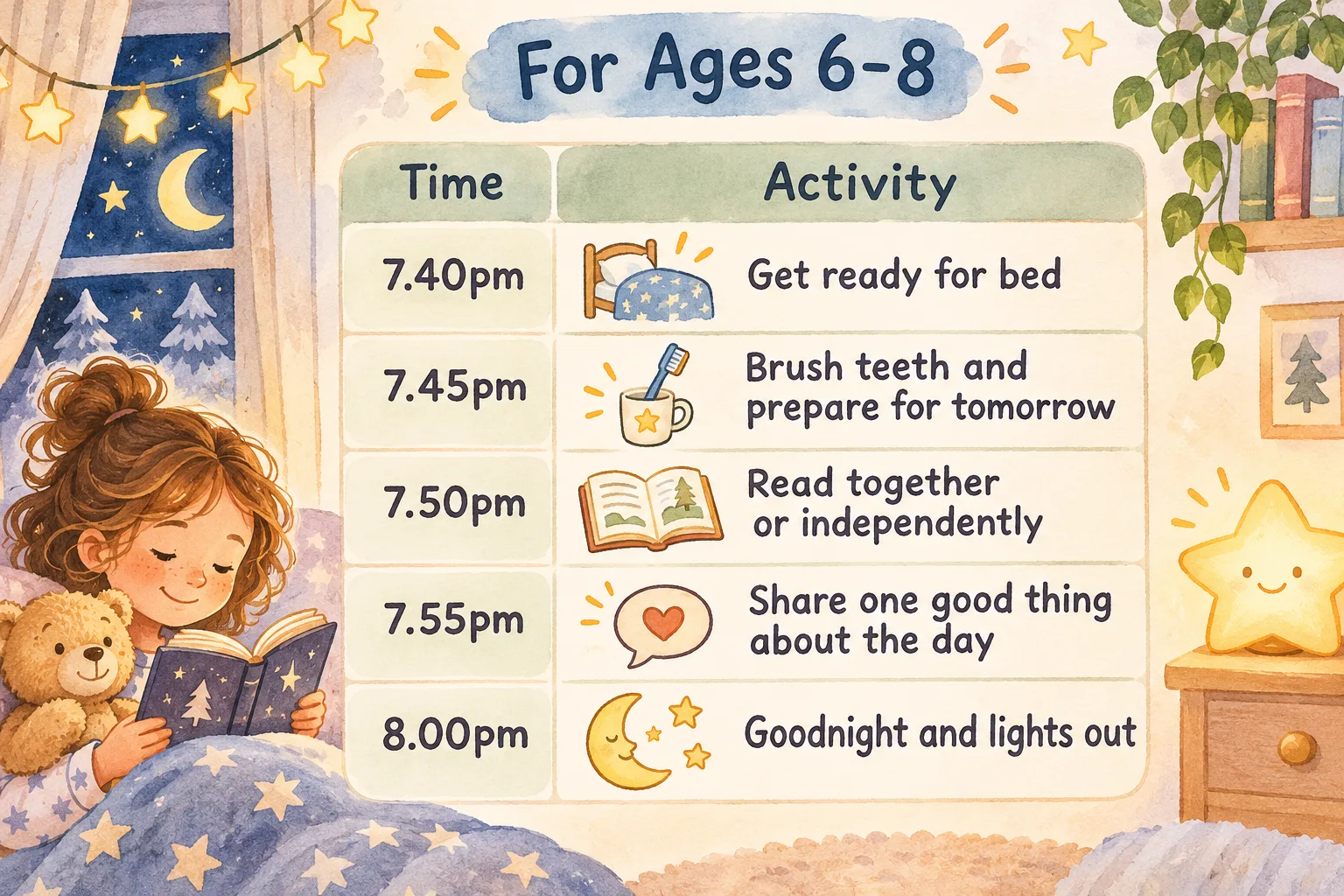
These are example schedules, not recommended bedtimes for every child. Adjust them to your child's sleep needs and morning waking time.
One of the loveliest ways to make bedtime easier is to let children see what's coming next.
A simple visual routine chart can help them follow each step without needing quite so many reminders.
Instead of repeatedly asking, "Have you brushed your teeth yet?" you can point to the picture and ask:
"What's next on our bedtime chart?"
It turns a repeated instruction into something children can begin to manage for themselves.
What to Say When Your Child Asks for "Just One More"
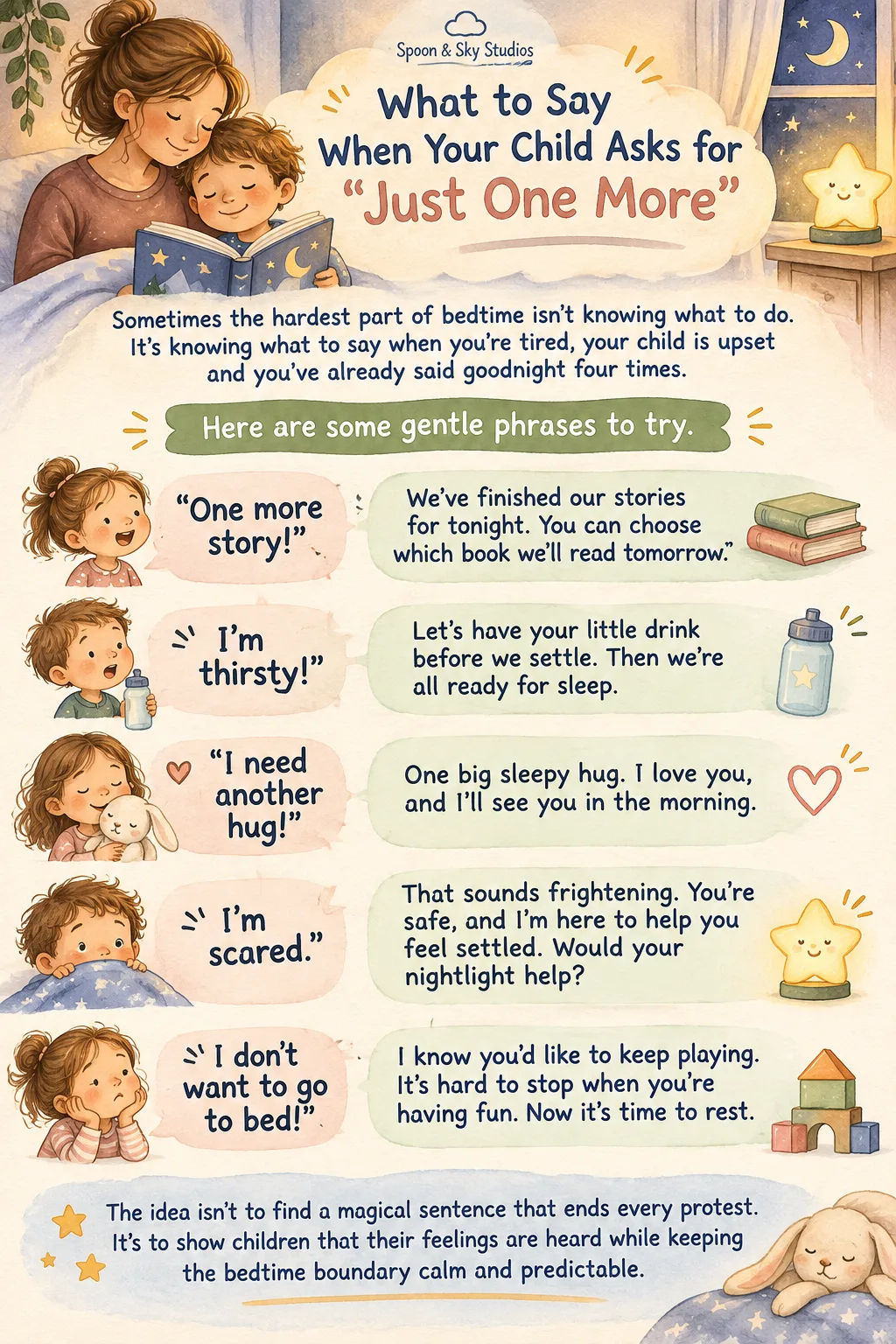
Sometimes the hardest part of bedtime isn't knowing what to do.
It's knowing what to say when you're tired, your child is upset and you've already said goodnight four times.
Here are some gentle phrases to try.
"One more story!"
"We've finished our stories for tonight. You can choose which book we'll read tomorrow."
"I'm thirsty!"
"Let's have your little drink before we settle. Then we're all ready for sleep."
"I need another hug!"
"One big sleepy hug. I love you, and I'll see you in the morning."
"I'm scared."
"That sounds frightening. You're safe, and I'm here to help you feel settled. Would your nightlight help?"
"I don't want to go to bed!"
"I know you'd like to keep playing. It's hard to stop when you're having fun. Now it's time to rest."
The idea isn't to find a magical sentence that ends every protest.
It's to show children that their feelings are heard while keeping the bedtime boundary calm and predictable.
What If They Keep Leaving Their Bed?
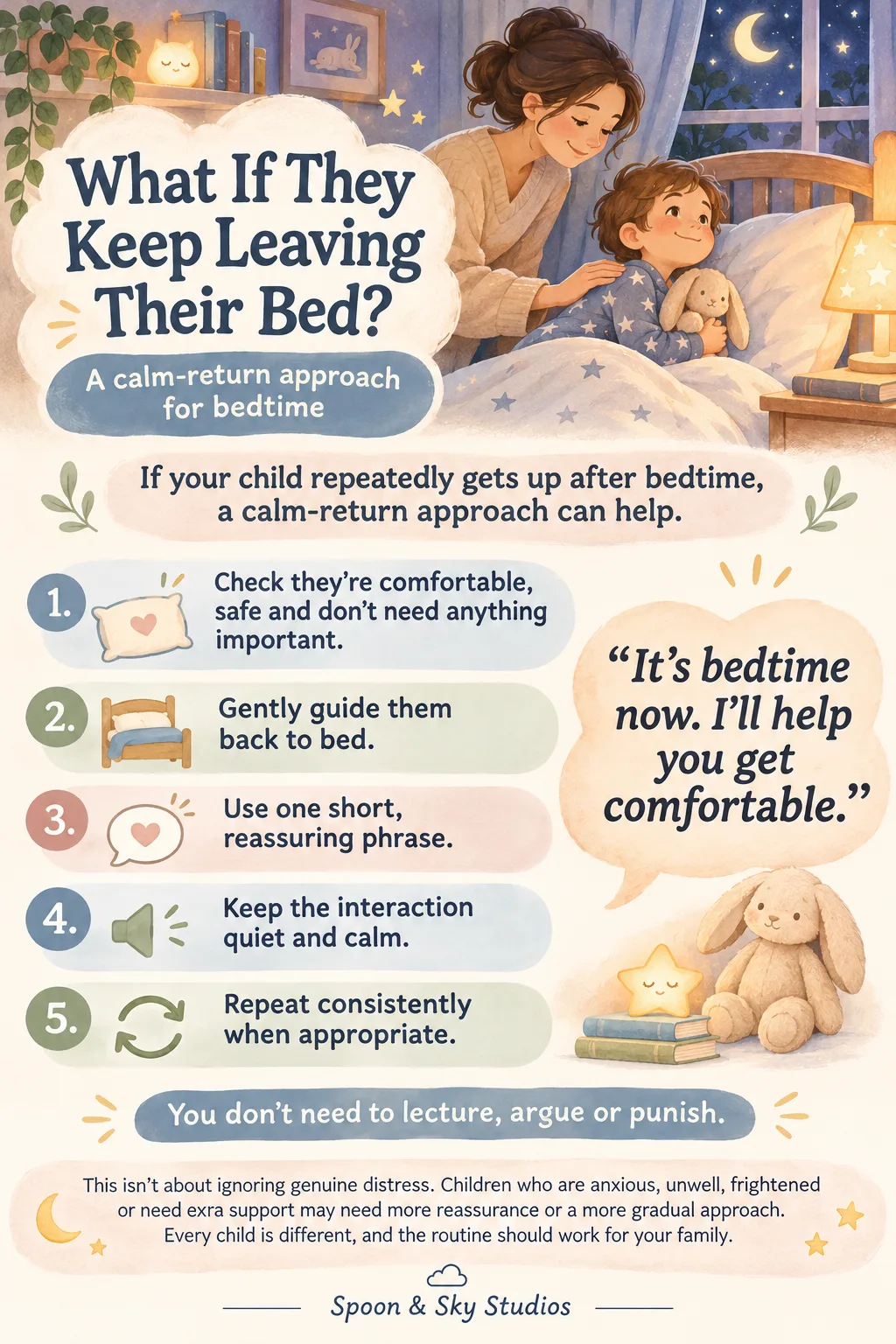
If your child repeatedly gets up after bedtime, you might find a calm-return approach helpful.
It works like this:
1.
Check that your child is comfortable, safe and doesn't need anything important.
2.
Gently guide them back to bed.
3.
Use one short, reassuring phrase.
4.
Keep the interaction quiet.
5.
Repeat consistently when appropriate.
You might say:
"It's bedtime now. I'll help you get comfortable."
You don't need to lecture, argue or punish.
However, this isn't about ignoring genuine distress. Children who are anxious, unwell, frightened or need additional support may benefit from more reassurance, a parent staying nearby or a more gradual approach.
Every child is different, and the routine should work for your family.
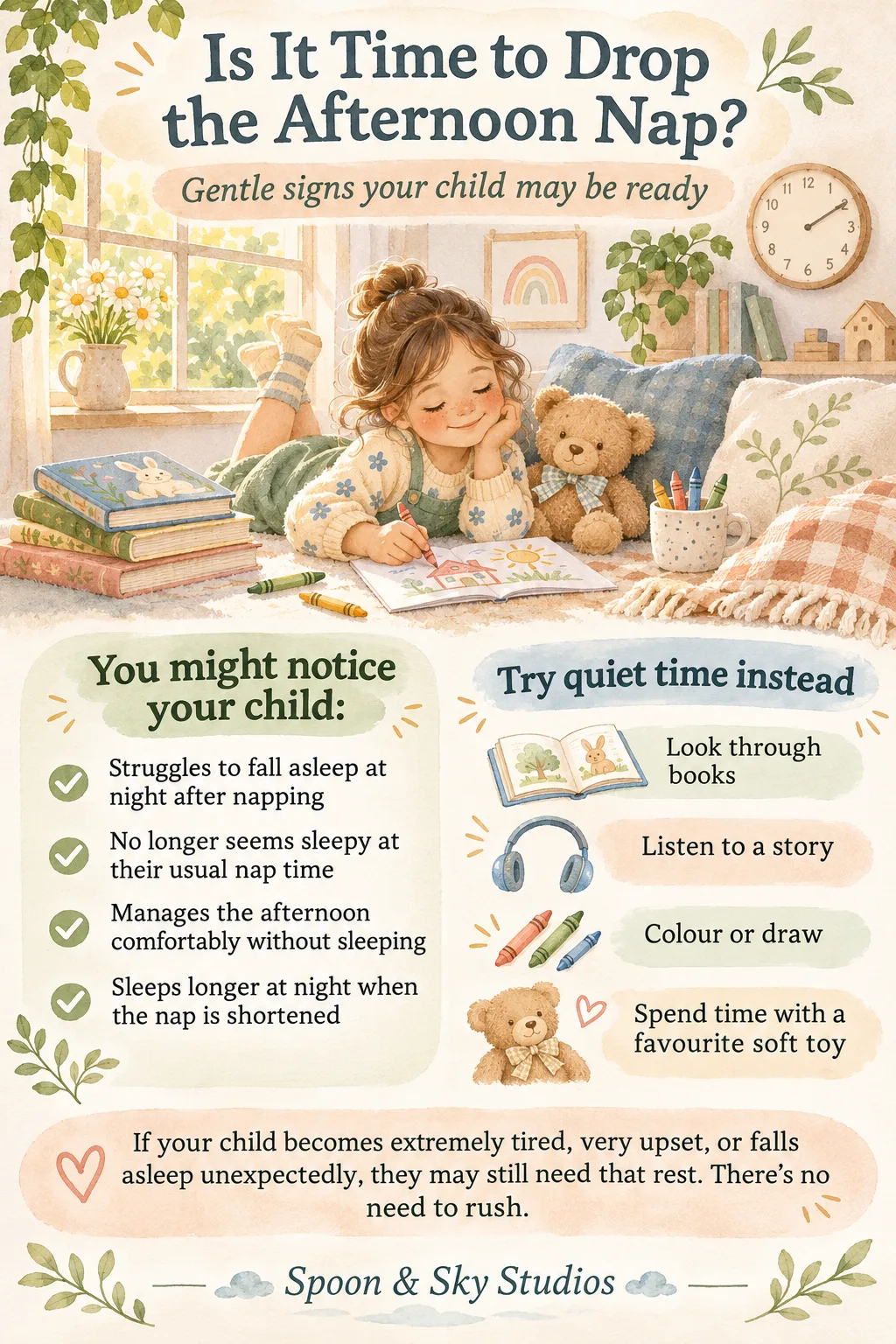
Is It Time to Drop the Afternoon Nap?
Between roughly ages three and five, many children gradually stop needing daytime naps.
But there isn't one particular birthday when every child suddenly becomes ready.
You might notice that your child:
-
Regularly struggles to fall asleep at night after napping.
-
No longer seems sleepy at their usual nap time.
-
Manages the afternoon comfortably without sleeping.
-
Starts sleeping longer at night when the nap is shortened.
If this sounds familiar, try replacing the nap with a gentle quiet-time routine.
Your child could look through books, listen to a story, colour or spend time with a favourite soft toy.
You can also shorten a long nap gradually or move it earlier.
But if your child becomes extremely tired, upset or falls asleep unexpectedly every afternoon, they may still need that rest.
There's no need to rush.
When Should You Speak to Your GP?
Most occasional bedtime struggles and night waking can be managed with supportive routines.
However, some sleep difficulties deserve medical attention.
Speak with your GP if your child:
-
Snores loudly or regularly, especially with gasping or pauses in breathing.
-
Seems unusually exhausted during the day despite enough time in bed.
-
Experiences frequent, intense or worsening night terrors.
-
Has persistent sleep problems that affect their wellbeing, behaviour or everyday life.
Night terrors are different from ordinary nightmares. During a night terror, a child may appear awake and distressed while still asleep. Focus on keeping them safe rather than trying to force them awake.
New night terrors beginning after age five should also be discussed with a healthcare professional.
Sleep difficulties can sometimes have medical, emotional or developmental causes, so you don't have to work everything out by yourself.
Make Bedtime a Little More Predictable
At Spoon & Sky Studios, we're big believers in making everyday family moments feel a little easier.
And bedtime is one of those moments where small things can make a meaningful difference.
A familiar story.
A favourite cuddly toy.
A little extra connection.
A routine your child can understand.
These things won't guarantee a perfectly peaceful bedtime every night. But they can help children know what to expect and feel supported as they settle.
Try Our Simple Bedtime Routine Chart
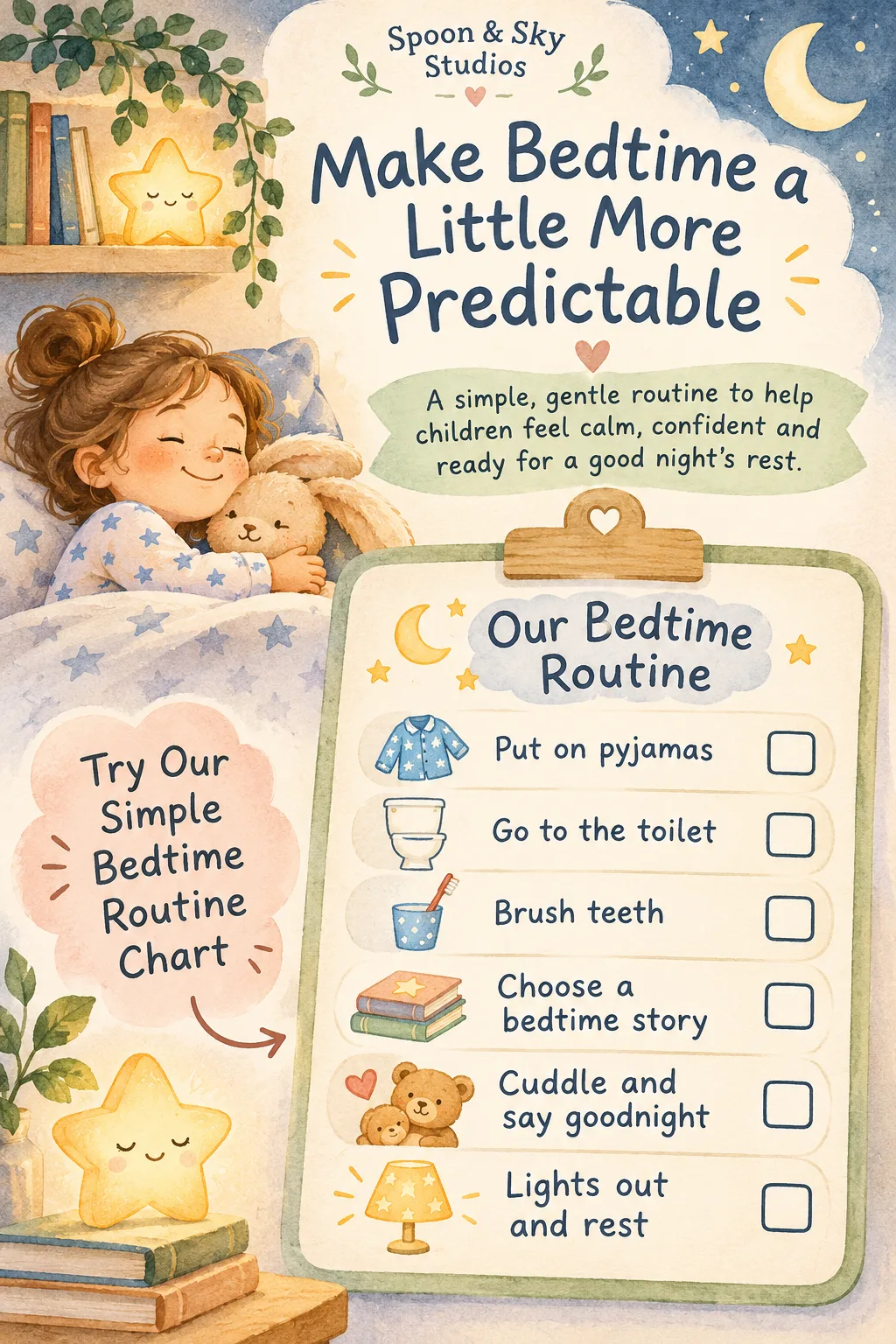
Create a visual checklist with these six steps:
1.
Put on pyjamas
2.
Go to the toilet
3.
Brush teeth
4.
Choose a bedtime story
5.
Cuddle and say goodnight
6.
Lights out and rest
Let your child tick each step as they complete it, or move a little marker along the chart.
Keep it playful, pressure-free and flexible.
And if tonight doesn't go quite to plan?
Tomorrow is another chance to try.
A little less rushing. A little more connection. One calmer bedtime at a time.
With love, Spoon & Sky Studios
This article offers general parenting information and is not a substitute for individual medical advice.