
3 to 4 years: growing, playing and learning
Big feelings, big questions and a whole lot of pretend play. Every child grows at their own pace: these are gentle starting points, not a checklist.
Usually: Nursery or pre-school
Physical Growth
What's typical
Lots of 3 year olds happily eat the same healthy meals as everyone else, just in smaller portions. Water and milk are the best drinks.
- The NHS advises a daily vitamin supplement with vitamins A, C and D for all children from 6 months to 5 years
- The NHS suggests no more than 14g of free sugars a day for 2 to 3 year olds, and 19g (about 5 sugar cubes) for 4 to 6 year olds
- Fussy phases are really common at this age
The NHS advises that pre-schoolers spend at least 3 hours a day doing a variety of physical activities, including at least 1 hour that gets them out of breath, and aren't inactive for long periods (except when asleep).
Around this age many children string large beads, put on some clothes by themselves and use a fork. Through the year many begin to catch a large ball most of the time and saying sentences of four or more words.
Activities to try
- Let them help: washing veg, tearing lettuce, stirring the bowl
- A 'helper job' each day: feeding the pet, setting out spoons
- A 'small world' tray: a few toys, a box lid and some leaves from the garden
- Animal walks: stomp like an elephant, hop like a bunny, tiptoe like a mouse
- A cushion obstacle course in the living room
Tips
- Offer, don't push: no pressure to finish or to taste
- Give two simple choices: 'the red cup or the blue cup?'
- Spread activity through the day rather than one big session
- Let them do the zip and the shoes, even when it takes longer
Free to try
From the shop
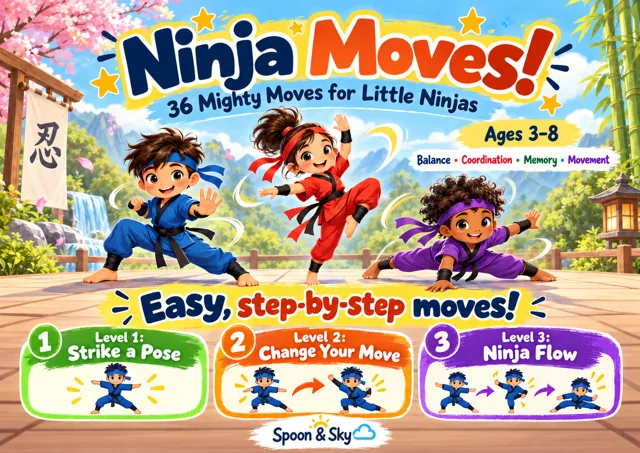
MOVE series: Ninja Moves and Step and Stomp Guide
Ages 3-8
Coming early 2027
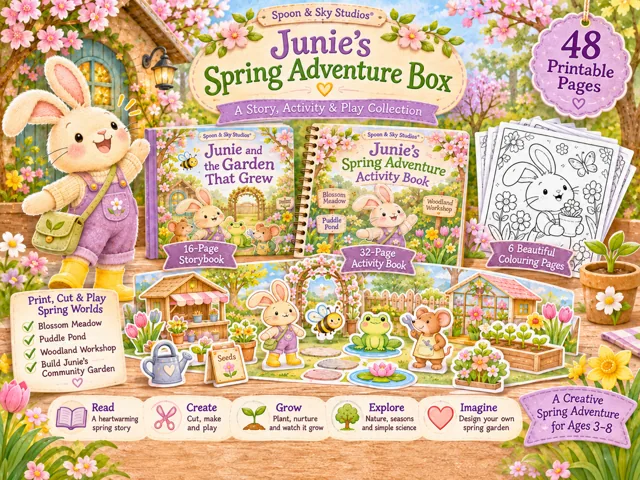
Spring Adventure Pack
Ages 3-8
£9.99
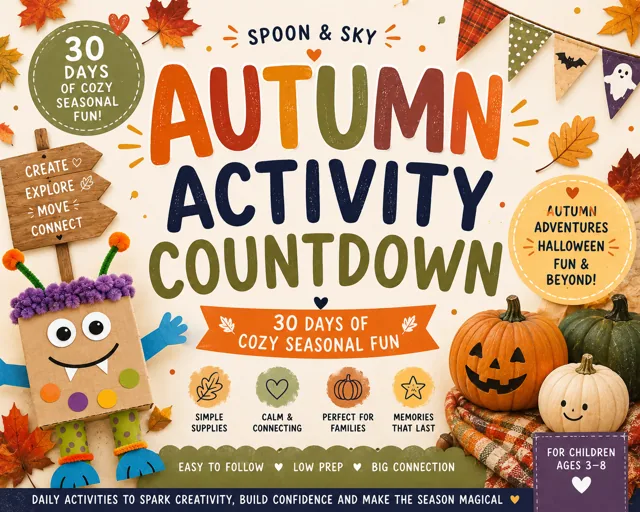
Autumn Activity Countdown for Kids
Ages 3-8
£9.99
Read more
- Picky Eaters at Christmas: A Low-Stress Guide for Parents
- Bedtime Battles: How Much Sleep Do Kids Aged 3–8 Need?
- 25 Indoor Movement Games for Kids on Rainy Days
When to ask for advice
- If your child seems to lose skills they once had
- If you're worried about how they talk, move, play or get on with others
- If something just doesn't feel right: you know your child best
Talk to your health visitor or GP. Asking early is always fine, and they would rather hear from you.
- If you're worried about your child's eating, weight or growth
- If they eat only a very small range of foods, or meals are often very distressing
Talk to your health visitor, school nurse or GP.
- If your child seems to lose skills they once had
- If you're worried about how they talk, move, play or get on with others
- If something just doesn't feel right: you know your child best
Talk to your health visitor or GP. Asking early is always fine, and they would rather hear from you.
Cognitive Thinking
What's typical
At this age, children learn through hands-on exploration, imagination, repetition and discovery. They begin to recognise colours, shapes and simple patterns, make connections between actions and outcomes, and solve simple problems through trial and error. Their imagination blossoms through pretend play, while their memory, attention and ability to predict what happens next gradually develops.
Activities to try
- A 'food explorer' game: look, touch, smell, and taste only if they want to
- Threading pasta or big beads onto string, and counting them together
Tips
- Answer 'why?' with 'what do you think?' and enjoy their ideas
From the shop
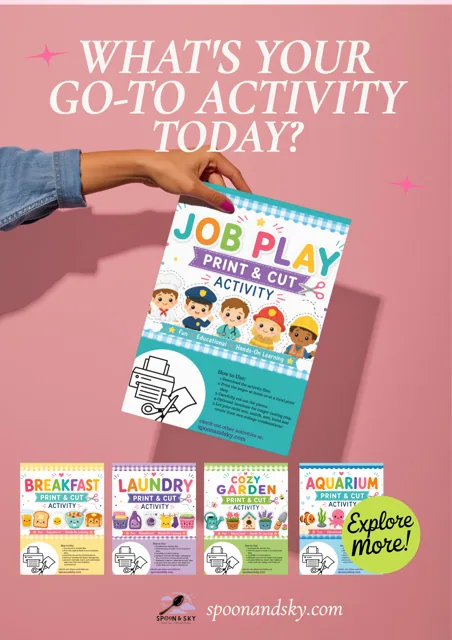
Ultimate Printable Play Bundle
Ages 3-8
£9.99 £7.99
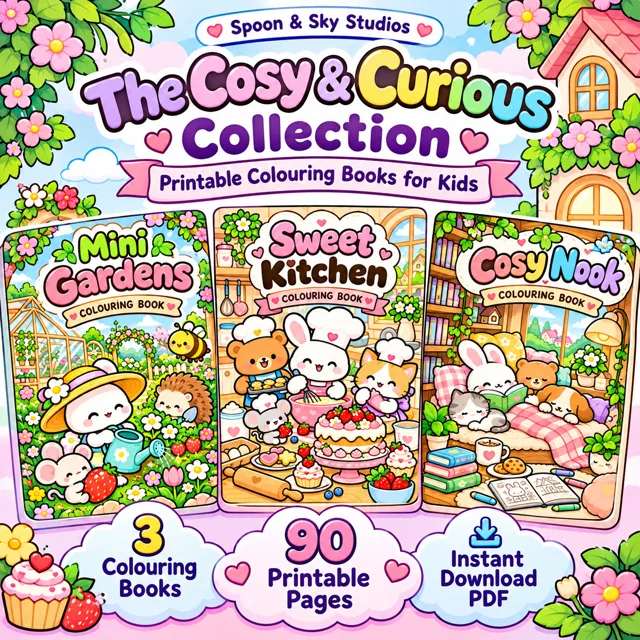
The Cosy & Curious Collection — 90 Printable Kawaii Colouring Pages
Ages 3-8
£9.99 £7.99
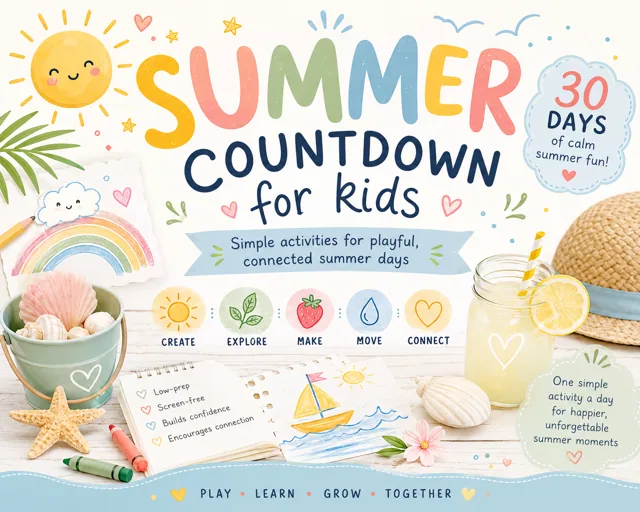
Summer Activity Countdown for Kids
Ages 3-8
£9.99
Read more
- 25 Easy After-School Snacks for Hungry Kids (That Won’t Ruin Dinner)
- The Calm Back-to-School Reset: 12 Small Changes for Easier School Mornings
- 10 Wonderful Summer Books for Kids Ages 3–8 | The Ultimate Throwback Reading List
When to ask for advice
- If your child seems to lose skills they once had
- If you're worried about how they talk, move, play or get on with others
- If something just doesn't feel right: you know your child best
Talk to your health visitor or GP. Asking early is always fine, and they would rather hear from you.
- If you're worried about your child's eating, weight or growth
- If they eat only a very small range of foods, or meals are often very distressing
Talk to your health visitor, school nurse or GP.
- If your child seems to lose skills they once had
- If you're worried about how they talk, move, play or get on with others
- If something just doesn't feel right: you know your child best
Talk to your health visitor or GP. Asking early is always fine, and they would rather hear from you.
Emotional & Social Connection
What's typical
Feelings are big too: many 3 year olds calm down within about 10 minutes after you leave them at nursery, and through the year many start comforting a friend who's sad.
Many 3 year olds can put on some clothes by themselves, and through the year many love being a helper and begin to change how they behave depending on where they are (the library, the playground).
Activities to try
- A cosy calm-down spot with a cushion and a favourite book
- A picture routine for mornings or bedtime
- A two-minute warning song before transitions
Tips
- Name feelings out loud, theirs and yours: 'You're cross the tower fell over'
- Keep routines gentle and flexible: they're a support, not a rule book
From the shop
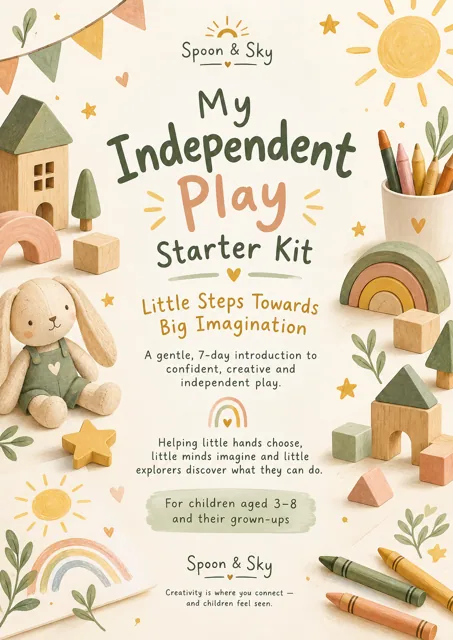
Independent Play Pack
Ages 3-8
Coming early 2027
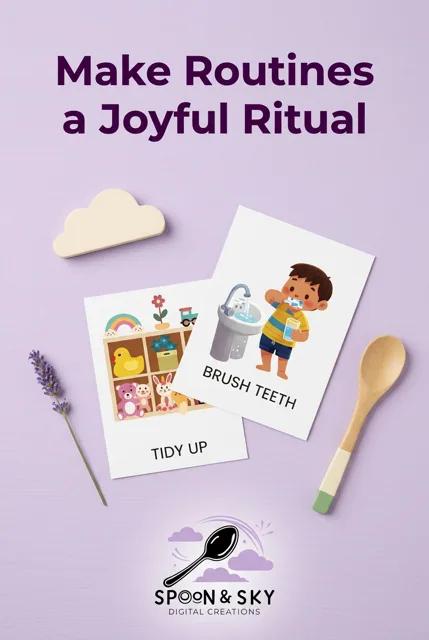
Visual Routine Cards Collection
Ages 3-8
£1.99
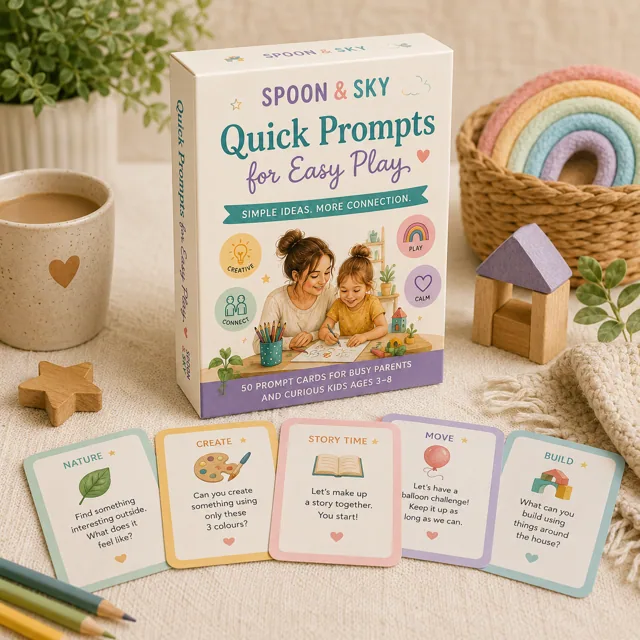
Quick Prompts for Play Cards
Ages 3-8
£3.99
Read more
- Surviving Christmas Gatherings with Kids: A Parent's Guide
- Tantrums & Big Feelings: What to Say and Do (Ages 3–8)
- The Calm Back-to-School Reset: 12 Small Changes for Easier School Mornings
When to ask for advice
- If your child seems to lose skills they once had
- If you're worried about how they talk, move, play or get on with others
- If something just doesn't feel right: you know your child best
Talk to your health visitor or GP. Asking early is always fine, and they would rather hear from you.
- If you're worried about your child's eating, weight or growth
- If they eat only a very small range of foods, or meals are often very distressing
Talk to your health visitor, school nurse or GP.
- If your child seems to lose skills they once had
- If you're worried about how they talk, move, play or get on with others
- If something just doesn't feel right: you know your child best
Talk to your health visitor or GP. Asking early is always fine, and they would rather hear from you.
Language & Expression
What's typical
Pretend play is everywhere at 3! Lots of children can draw a circle once you show them how, and through the year many become teachers, superheroes or puppies in their games, and start drawing people with a few body parts.
They love stories too: many can say what's happening in a picture ('running', 'eating') and talk with you in little back-and-forth conversations.
Activities to try
- Dress-up with whatever's around: scarves, hats, a cardboard crown
- Draw together and ask them to tell you the story of their picture
Tips
- Praise the trying and the story, not how it looks
- Keep a few simple materials where little hands can reach them
From the shop
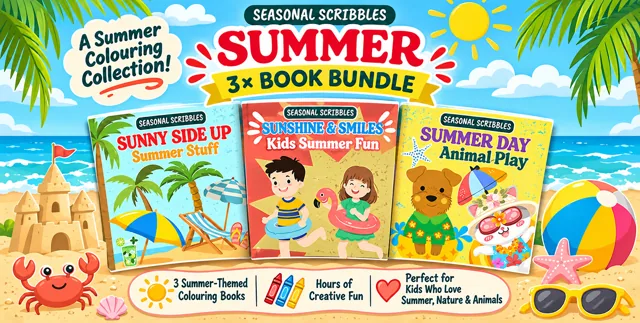
Summer Colouring Book Bundle
Ages 3-8
£3.99
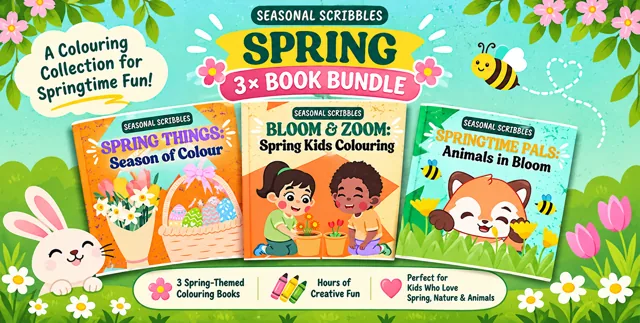
Spring Colouring Book Bundle
Ages 3-8
£3.99
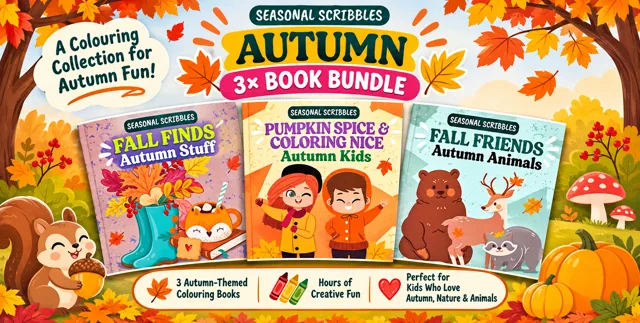
Autumn Colouring Book Bundle
Ages 3-8
£3.99
Read more
- 15 Easy DIY Halloween Costumes for Kids (Cheap + Last-Minute Ideas)
- 10 Wonderful Summer Books for Kids Ages 3–8 | The Ultimate Throwback Reading List
- What we Love to Read Classic Best Spring/Summer Picture Books for Kids
When to ask for advice
- If your child seems to lose skills they once had
- If you're worried about how they talk, move, play or get on with others
- If something just doesn't feel right: you know your child best
Talk to your health visitor or GP. Asking early is always fine, and they would rather hear from you.
At nursery and school
Nursery or pre-school
In England, 3 and 4 year olds can get 15 hours of free early education a week (more for some working families). Learning follows the EYFS: communication and language; personal, social and emotional development; physical development (the three 'prime' areas), plus literacy, mathematics, understanding the world, and expressive arts and design. It's all done through play.
From: GOV.UK: Free childcare and education for 2 to 4 year olds; Early years foundation stage (EYFS) framework; Development Matters (Department for Education)
Where this comes from
- NHS: Vitamins for children
- NHS: Sugar in our diet
- NHS: The Eatwell Guide
- CDC: Developmental milestones (checklists to age 5)
- Development Matters (Department for Education)
- NHS: Physical activity guidelines for children under 5
- UK Chief Medical Officers' physical activity guidelines
General information to support family life, not medical advice. Every child grows at their own pace. If you're worried about your child, talk to your health visitor, GP or school nurse.