Tantrums & Big Feelings: What to Say and Do (Ages 3–8)

A gentle, practical guide to helping children through their biggest emotions — without shouting, threats or endless negotiations.
"NO! I DON'T WANT TO!"
The shoes are on the floor. Your child is crying. You've asked them to get ready approximately seventeen times, and somehow a perfectly ordinary Tuesday morning has turned into a full-blown meltdown.
Or perhaps it's the supermarket.
You've said no to a toy, and suddenly everyone in the shop seems to be watching.
Maybe it's after school, when your child has held everything together all day, only to completely unravel over the wrong-coloured cup.
If any of this sounds familiar, you're certainly not alone.
Big feelings are part of growing up. And learning how to handle those feelings is something children develop gradually, with lots of practice, patience and support.
The tricky part?
As parents, we're often trying to help our children manage their emotions while managing our own.
So today, let's talk about what actually helps when emotions run high, what to say when your child is struggling, and how to make those difficult moments a little easier for everyone.
Why Do Children Have Tantrums?
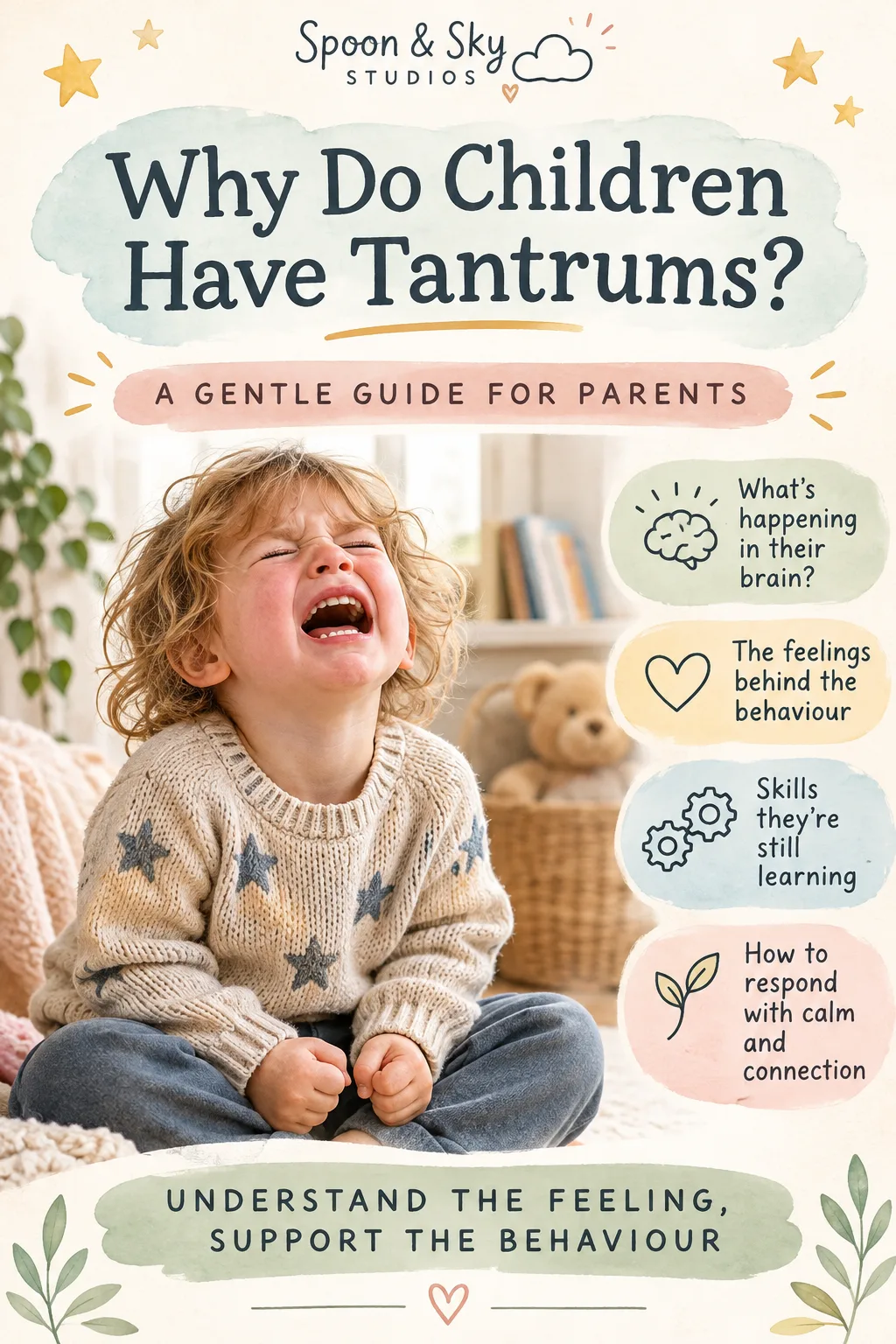
Imagine feeling incredibly frustrated but not having the words, patience or skills to explain what's wrong.
Perhaps you're tired, hungry or disappointed.
Something hasn't gone the way you expected.
And suddenly everything feels too much.
For young children, this can happen quite easily.
The parts of the brain involved in planning, controlling impulses and managing emotions are still developing throughout childhood.
That means children are gradually learning skills that adults have had many more years to practise.
Things like:
-
Waiting for something they really want.
-
Accepting disappointment.
-
Changing from one activity to another.
-
Recognising when they're becoming overwhelmed.
-
Expressing frustration without shouting or hitting.
-
Calming themselves after something upsetting happens.
These are learned skills, not abilities children simply wake up with one morning.
A tantrum is not always a child deliberately choosing to behave badly.
Sometimes it's a child who is overwhelmed and doesn't yet know what to do with that feeling.
Of course, children also test boundaries and learn from how adults respond. Understanding their emotions doesn't mean abandoning rules or saying yes to everything.
It means we can respond to the behaviour while still recognising the feeling underneath it.
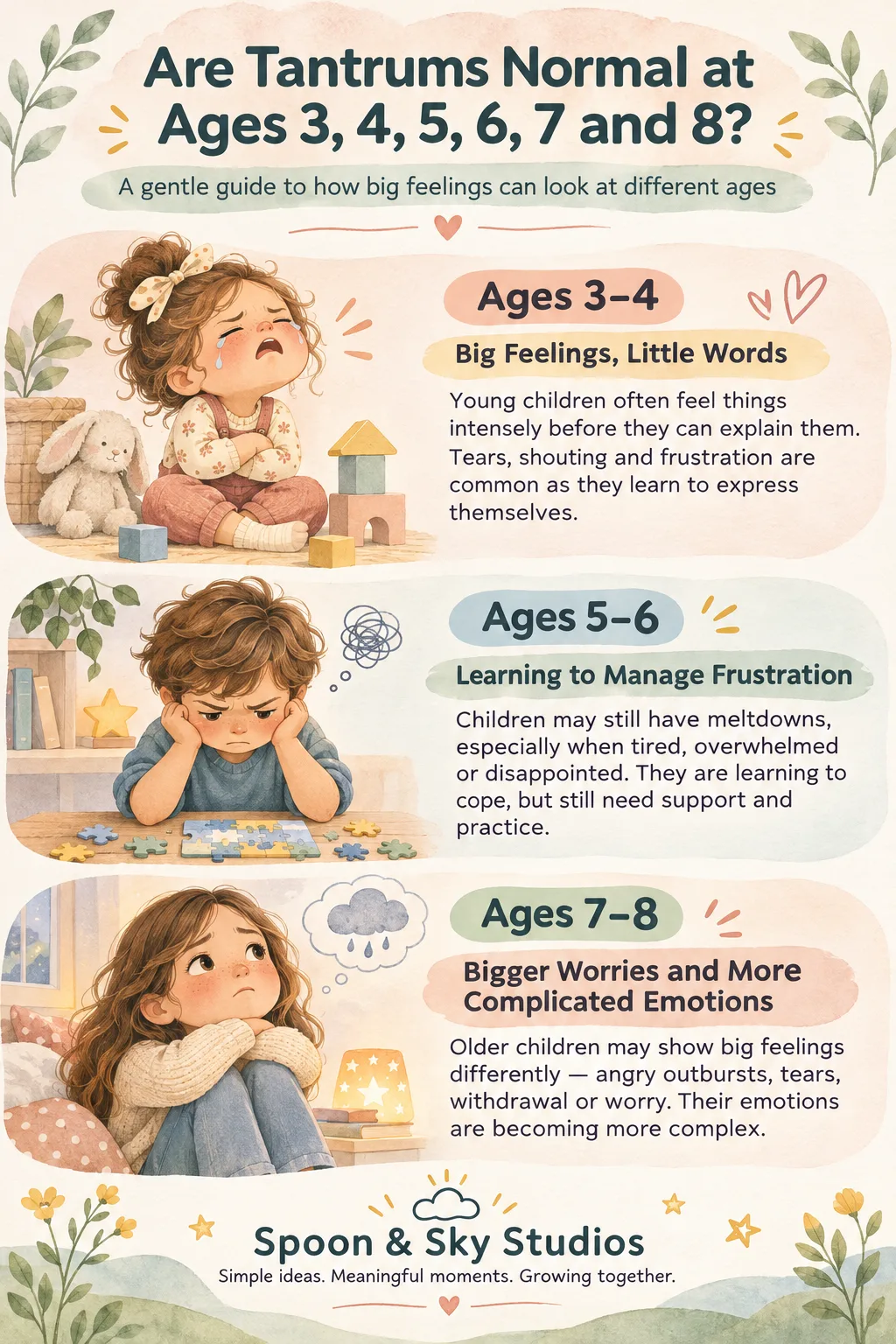
Are Tantrums Normal at Ages 3, 4, 5, 6, 7 and 8?
Tantrums are particularly common in toddlers and preschoolers.
As children become better at communicating and regulating their emotions, frequent tantrums generally become less common.
But that doesn't mean a child suddenly stops having difficult moments when they turn five.
Ages 3–4: Big Feelings, Little Words
At this age, children may become upset over things that seem small to us.
A broken biscuit.
The wrong shoes.
Having to leave the playground.
Their independence is growing, but their ability to manage disappointment is still developing.
They often need simple words, predictable boundaries and plenty of adult support.
Ages 5–6: Learning to Manage Frustration
Children this age may be better at explaining their feelings, but that doesn't mean they can always manage them.
Starting school, friendships, new routines and tiredness can all contribute to emotional outbursts.
You might notice more arguing, crying, shouting or refusing to cooperate when they're overwhelmed.
Ages 7–8: Bigger Worries and More Complicated Emotions
Older children may be less likely to have a classic toddler-style tantrum.
Instead, you might see:
-
Angry outbursts.
-
Slamming doors.
-
Saying hurtful things.
-
Crying over seemingly small frustrations.
-
Refusing to talk.
-
Withdrawing when upset.
These moments can still happen, particularly during stressful periods.
However, frequent, prolonged or very intense meltdowns in school-age children deserve closer attention, especially if they're affecting daily life.
The important thing isn't to compare your child with someone else's. It's to notice their individual needs, patterns and progress.
What to Do During a Tantrum: A Simple Four-Step Approach
When your child is screaming, crying or refusing to cooperate, it's tempting to explain why they're being unreasonable.
But during the most intense part of a meltdown, children may struggle to take in explanations or solve problems.
This is the moment to keep things simple.
Step 1: Find Your Own Calm First
Before responding, try to soften your voice, relax your shoulders and take one slow breath.
You don't need to feel perfectly calm.
You just want to avoid adding more intensity to an already difficult moment.
If you need a second, that's okay.
You might quietly remind yourself:
"My child is having a hard moment. I can respond without joining the chaos."
Children notice our tone, facial expressions and body language.
A calm adult can't magically stop every tantrum, but they can help create a safer, more predictable environment.

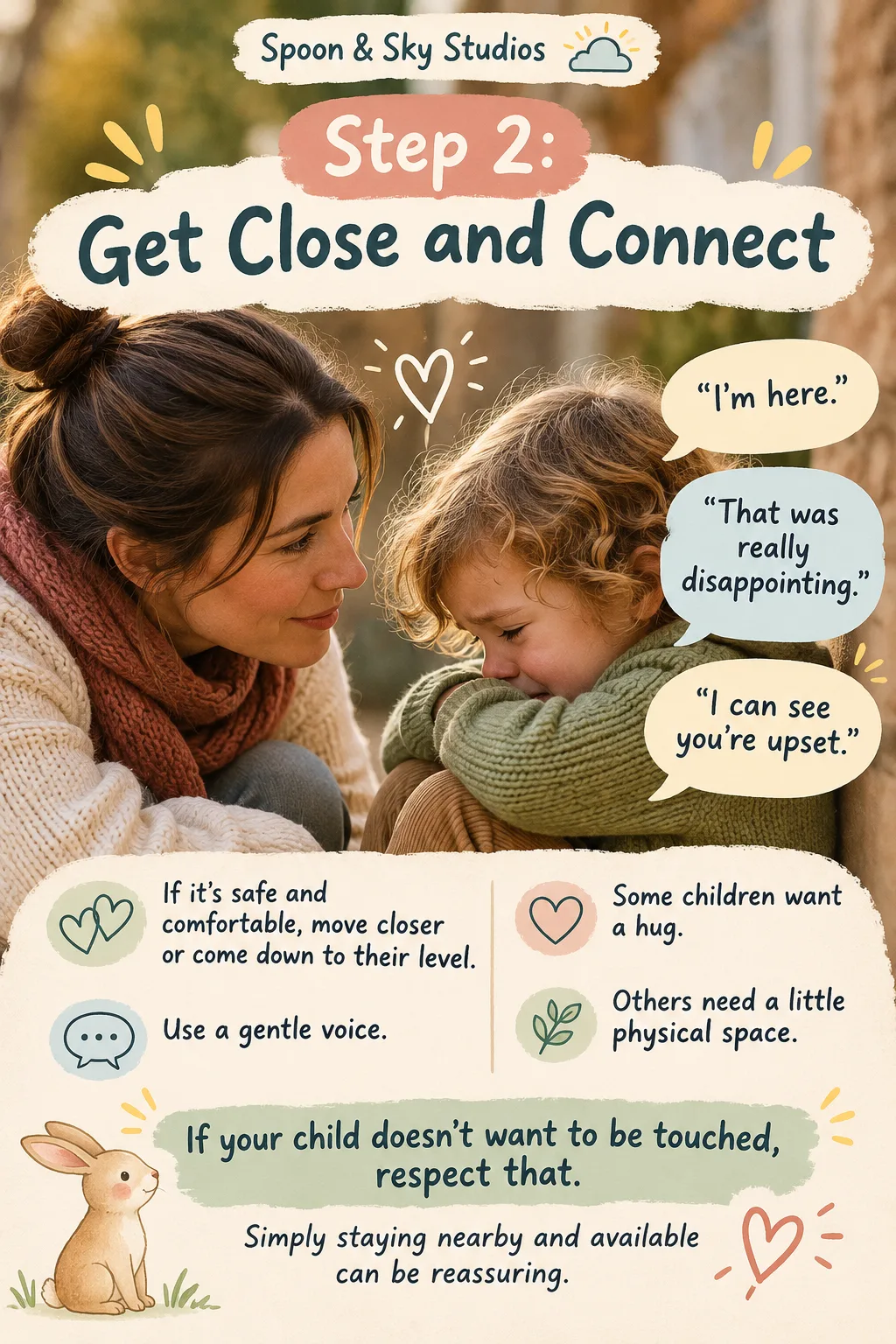
Step 2: Get Close and Connect
If it's safe and comfortable for your child, move closer or come down to their level.
Use a gentle voice.
Some children want a hug.
Others need a little physical space.
You might say:
"I'm here."
"That was really disappointing."
"I can see you're upset."
If your child doesn't want to be touched, respect that.
Simply staying nearby and available can be reassuring.
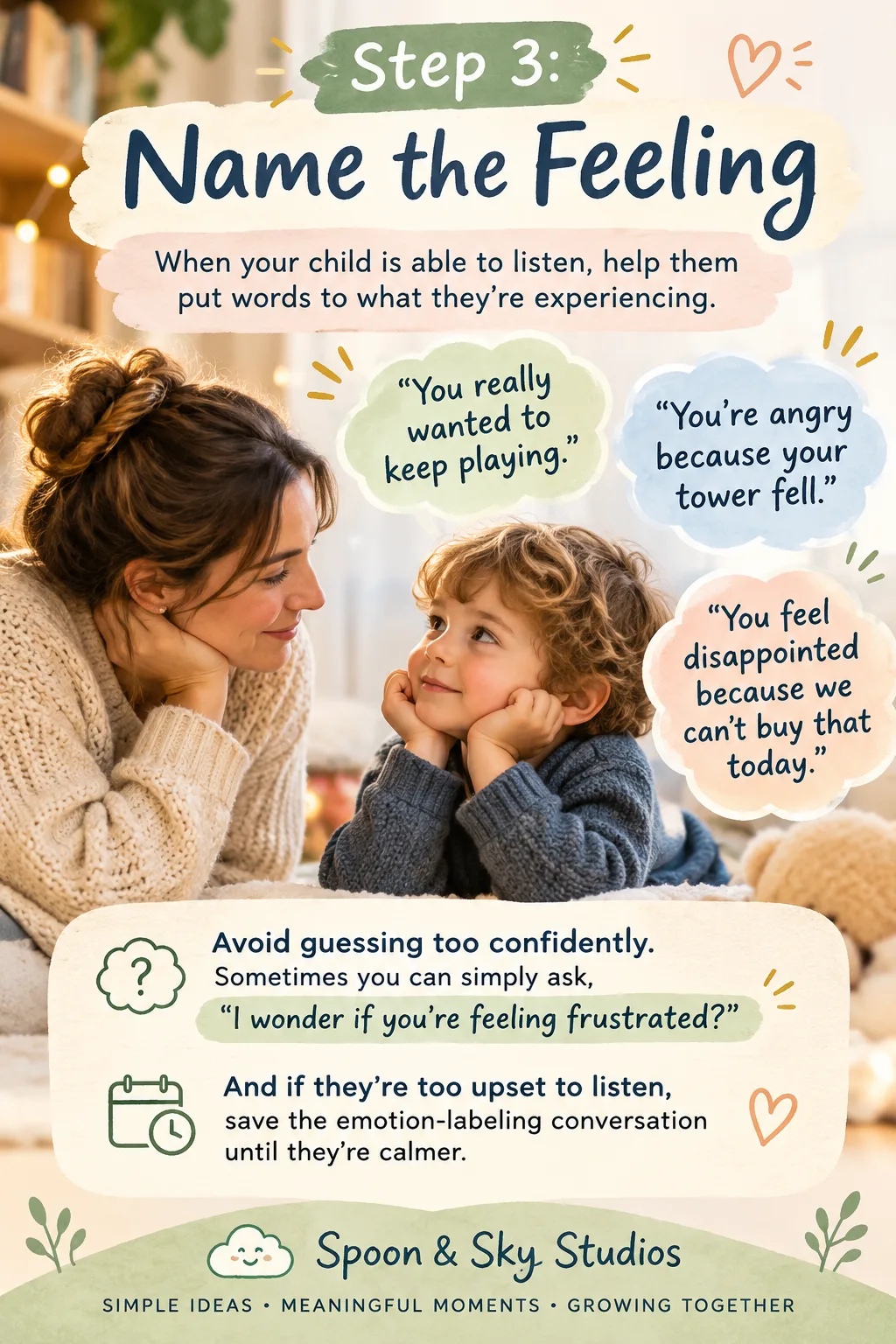
Step 3: Name the Feeling
When your child is able to listen, help them put words to what they're experiencing.
"You really wanted to keep playing."
"You're angry because your tower fell."
"You feel disappointed because we can't buy that today."
Avoid guessing too confidently. Sometimes you can simply ask, "I wonder if you're feeling frustrated?"
And if they're too upset to listen, save the emotion-labeling conversation until they're calmer.
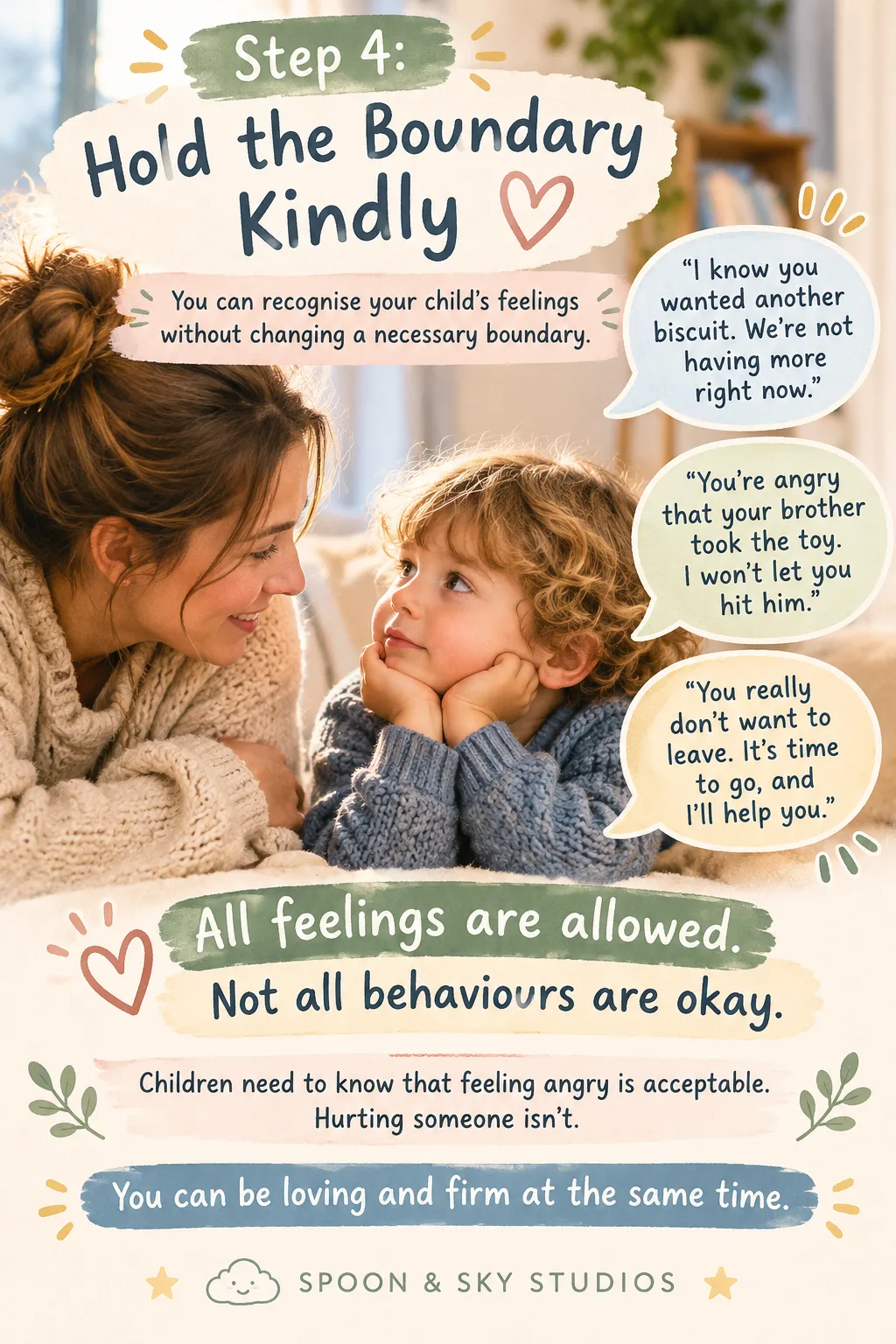
Step 4: Hold the Boundary Kindly
This is the part that can feel especially difficult.
You can recognise your child's feelings without changing a necessary boundary.
For example:
"I know you wanted another biscuit. We're not having more right now."
"You're angry that your brother took the toy. I won't let you hit him."
"You really don't want to leave. It's time to go, and I'll help you."
The message is simple:
All feelings are allowed. Not all behaviours are okay.
Children need to know that feeling angry is acceptable.
Hurting someone isn't.
You can be loving and firm at the same time.
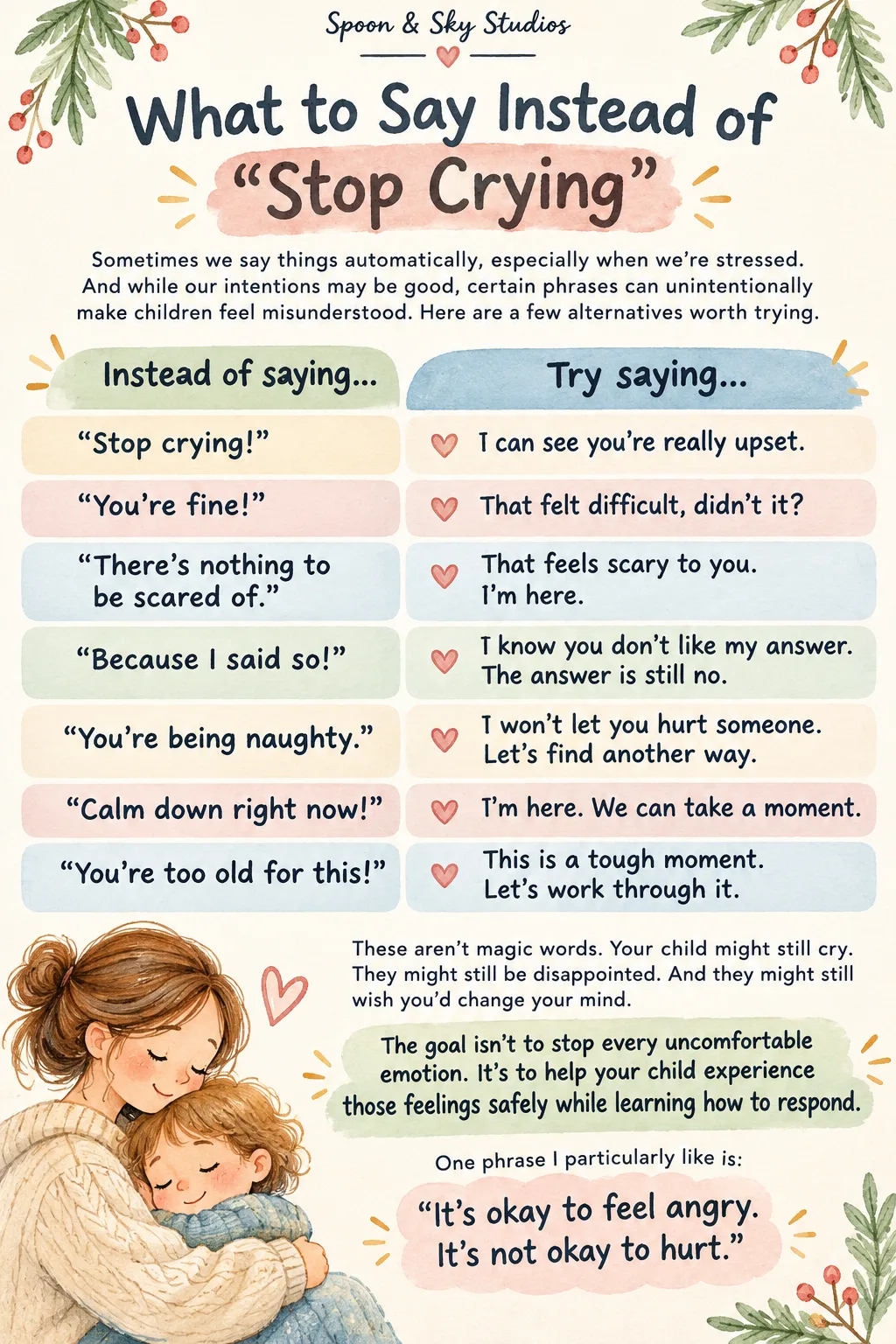
What to Say Instead of "Stop Crying"
Sometimes we say things automatically, especially when we're stressed.
And while our intentions may be good, certain phrases can unintentionally make children feel misunderstood.
Here are a few alternatives worth trying.
Instead of saying...
Try saying...
"Stop crying!"
"I can see you're really upset."
"You're fine!"
"That felt difficult, didn't it?"
"There's nothing to be scared of."
"That feels scary to you. I'm here."
"Because I said so!"
"I know you don't like my answer. The answer is still no."
"You're being naughty."
"I won't let you hurt someone. Let's find another way."
"Calm down right now!"
"I'm here. We can take a moment."
"You're too old for this!"
"This is a tough moment. Let's work through it."
These aren't magic words.
Your child might still cry.
They might still be disappointed.
And they might still wish you'd change your mind.
The goal isn't to stop every uncomfortable emotion. It's to help your child experience those feelings safely while learning how to respond.
One phrase I particularly like is:
"It's okay to feel angry. It's not okay to hurt."
Short, clear and easy to remember.
What If Your Child Screams Every Time You Say No?
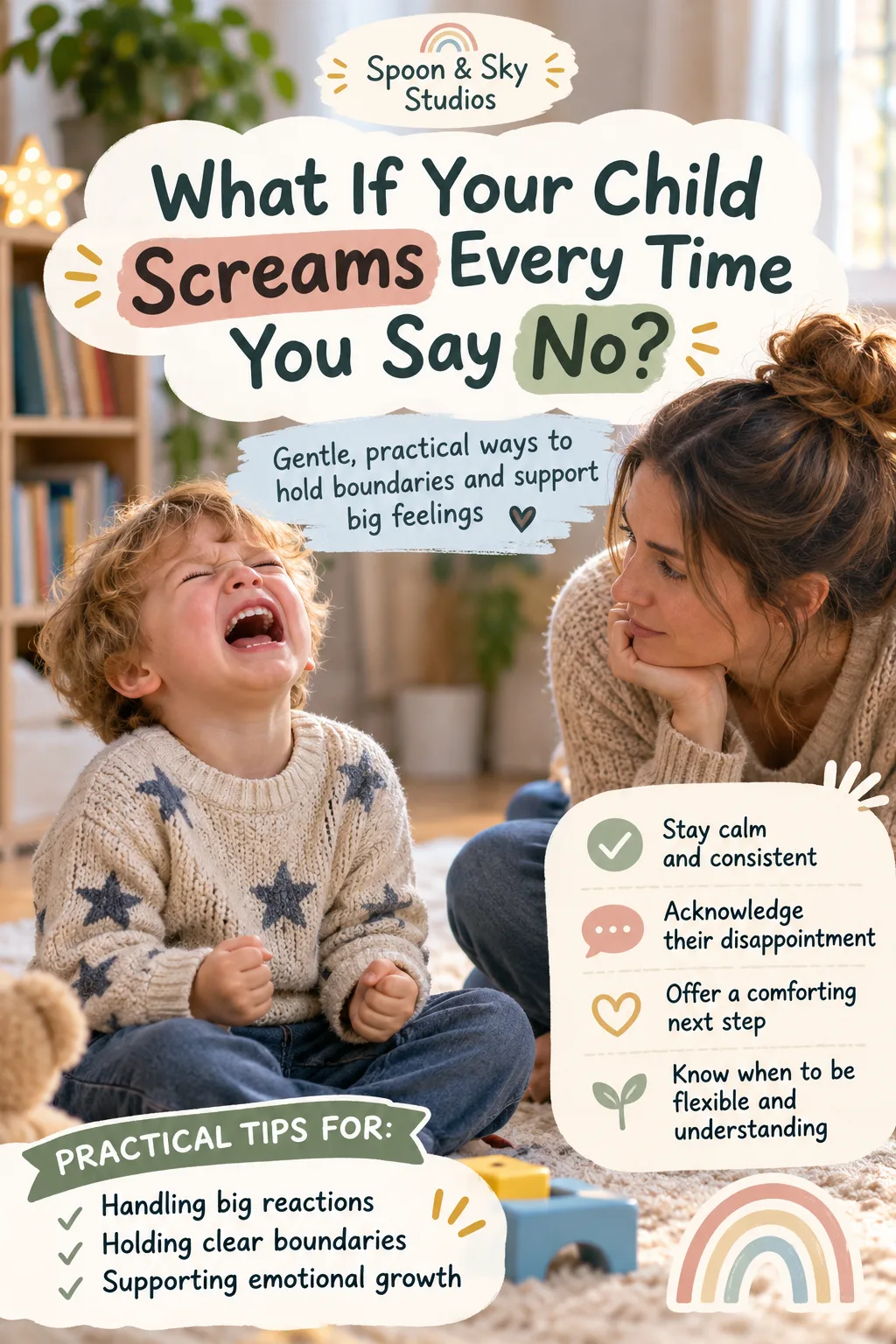
Hearing "no" can be difficult for children, especially when they're tired, excited or strongly attached to what they want.
Imagine your child asks for another episode of their favourite programme.
You say no.
They scream.
You might feel tempted to change your answer just to restore peace.
But if a boundary changes repeatedly because of screaming, children may learn that escalating their reaction sometimes gets them what they want.
Instead, try:
"I know you wanted another episode. Screen time is finished for today."
Then give them time to feel disappointed.
Offer reassurance without reopening the negotiation.
You might add:
"Would you like to build something or choose a book?"
It's also important to distinguish between a child struggling with disappointment and a child experiencing genuine distress or unmet needs.
Not every outburst needs the same response.
Consistency helps, but so does flexibility and understanding.
What to Do When Your Child Has a Meltdown in Public
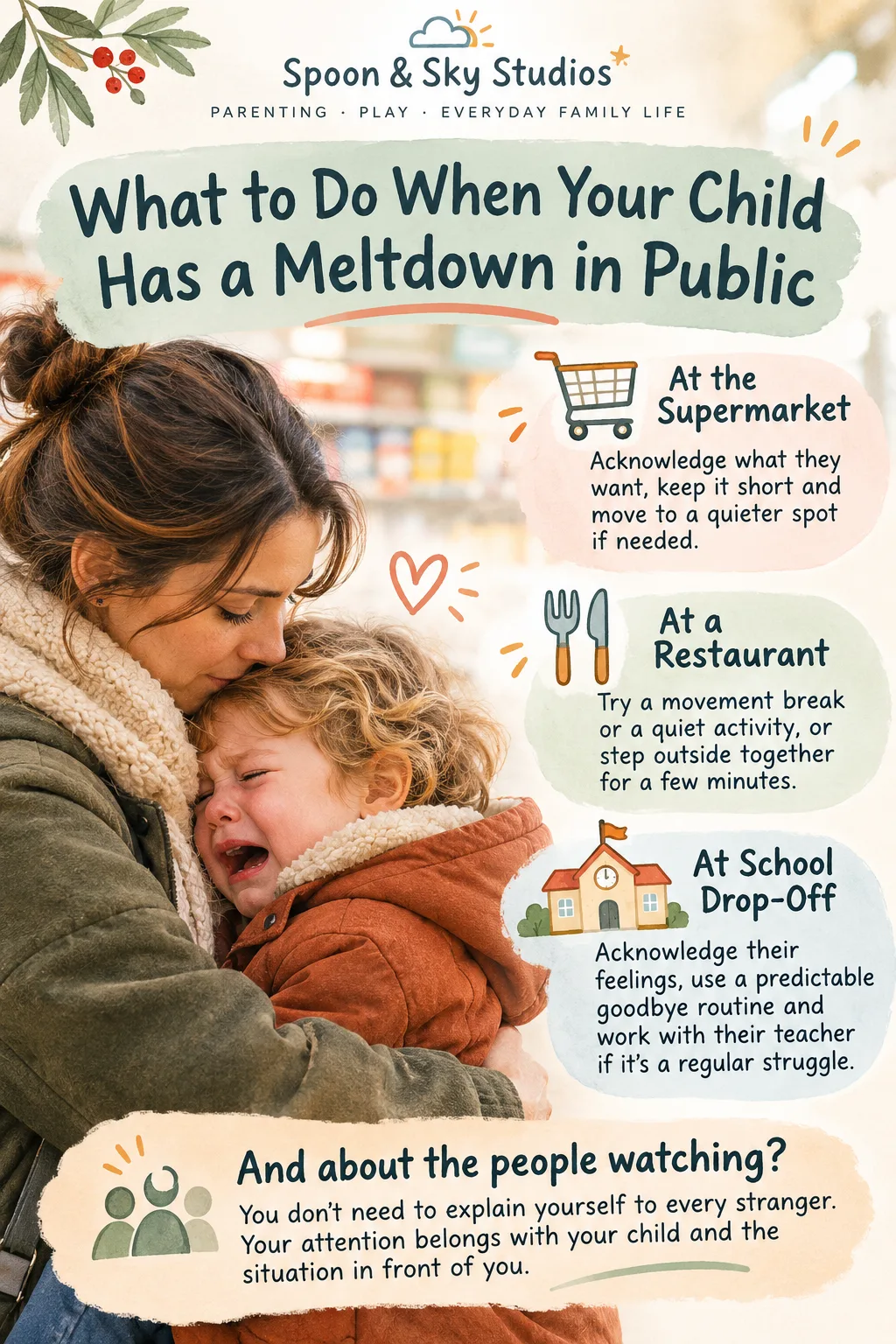
Let's be realistic.
Handling a tantrum in your living room is one thing.
Handling one in the supermarket, at a restaurant or during school drop-off can feel completely different.
There are people watching.
You feel rushed.
And the pressure to make the crying stop can be enormous.
Here's what can help.
At the Supermarket
Your child wants something you're not buying.
Try:
"I know you really wanted that toy. We're not buying it today."
Keep your explanation short.
If the situation becomes overwhelming, move to a quieter spot if possible.
You can finish the shopping later or leave if needed.
There's no requirement to stay and prove you can manage the situation.
At a Restaurant
Your child is tired, restless or finding it difficult to sit still.
Before things escalate, try a movement break or a quiet activity.
If they're already overwhelmed, step outside together for a few minutes.
You might say:
"Let's find somewhere quieter for a little break."
At School Drop-Off
Your child is clinging, crying or refusing to let go.
Acknowledge their feelings and use a predictable goodbye routine.
"It's hard saying goodbye. Your teacher is here to help you. I'll see you after school."
If this is a regular struggle, work with their teacher on a supportive drop-off plan.
Avoid sneaking away without saying goodbye, and seek additional support if the distress is persistent or severe.
And about the people watching?
You don't need to explain yourself to every stranger.
Your attention belongs with your child and the situation in front of you.
After the Storm: What to Do When Everyone Is Calm
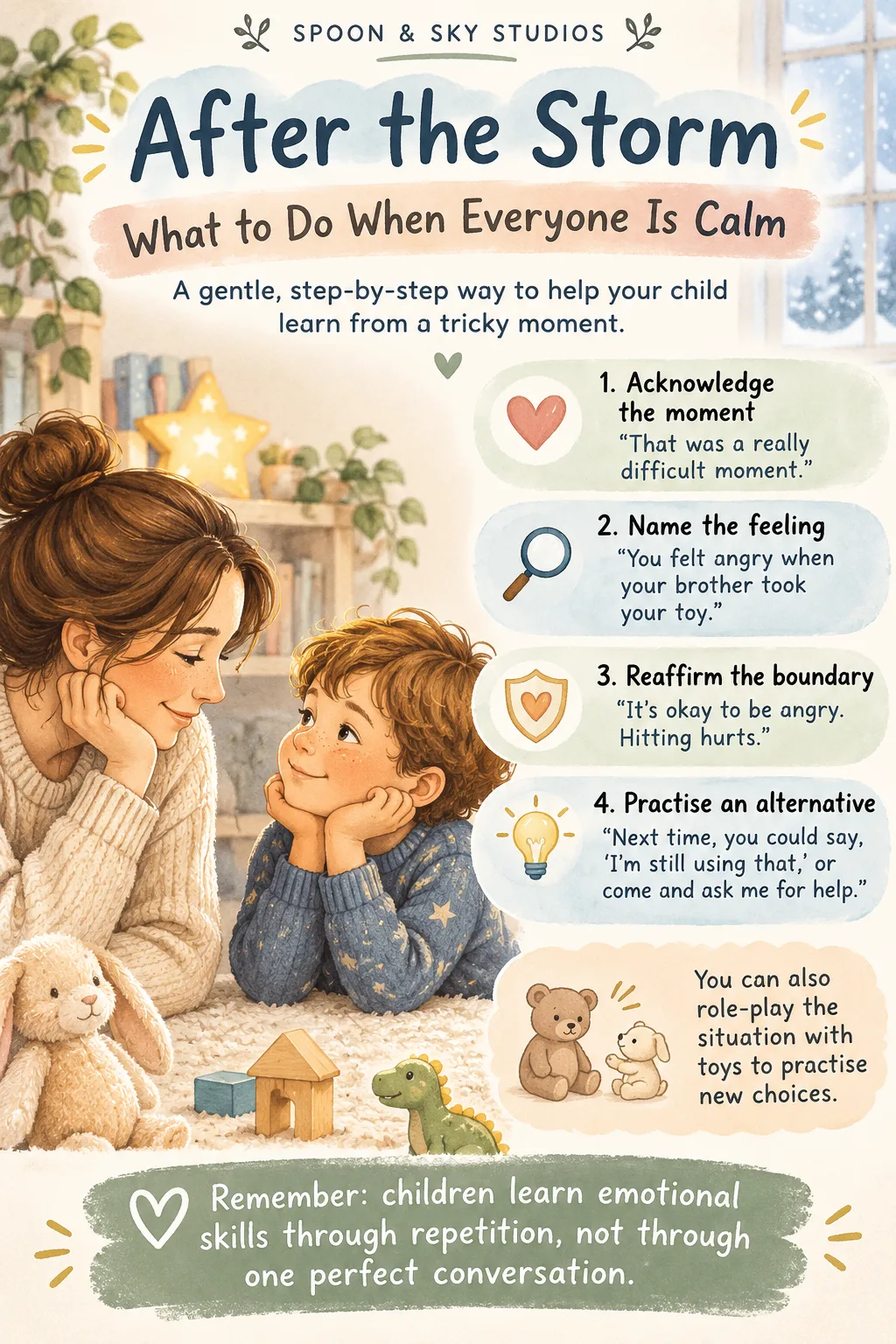
Once the crying has stopped, you have an opportunity to teach.
Not through a long lecture.
Through a short, gentle conversation.
You might begin with:
"That was a really difficult moment."
Then help your child understand what happened.
"You felt angry when your brother took your toy."
Next, explain the boundary.
"It's okay to be angry. Hitting hurts."
Finally, practise an alternative.
"Next time, you could say, 'I'm still using that,' or come and ask me for help."
For younger children, this might be enough.
Older children may be able to reflect more deeply:
"What do you think might help next time?"
"How can we make things right?"
If someone was hurt, support a meaningful repair — checking they're okay, helping rebuild something that was knocked down or offering an apology when your child is ready.
You can even practise the situation with toys or role-play.
Children learn emotional skills through repetition, not through one perfect conversation.
And What If You Lost Your Temper Too?
Parents have difficult moments as well.
Perhaps you shouted.
Perhaps you were impatient.
You can acknowledge that.
"I'm sorry I shouted. I was frustrated, but I should have spoken more calmly."
This doesn't mean giving up your boundary.
It simply models something important:
We can make mistakes, take responsibility and try again.
How to Prevent Some Tantrums Before They Start
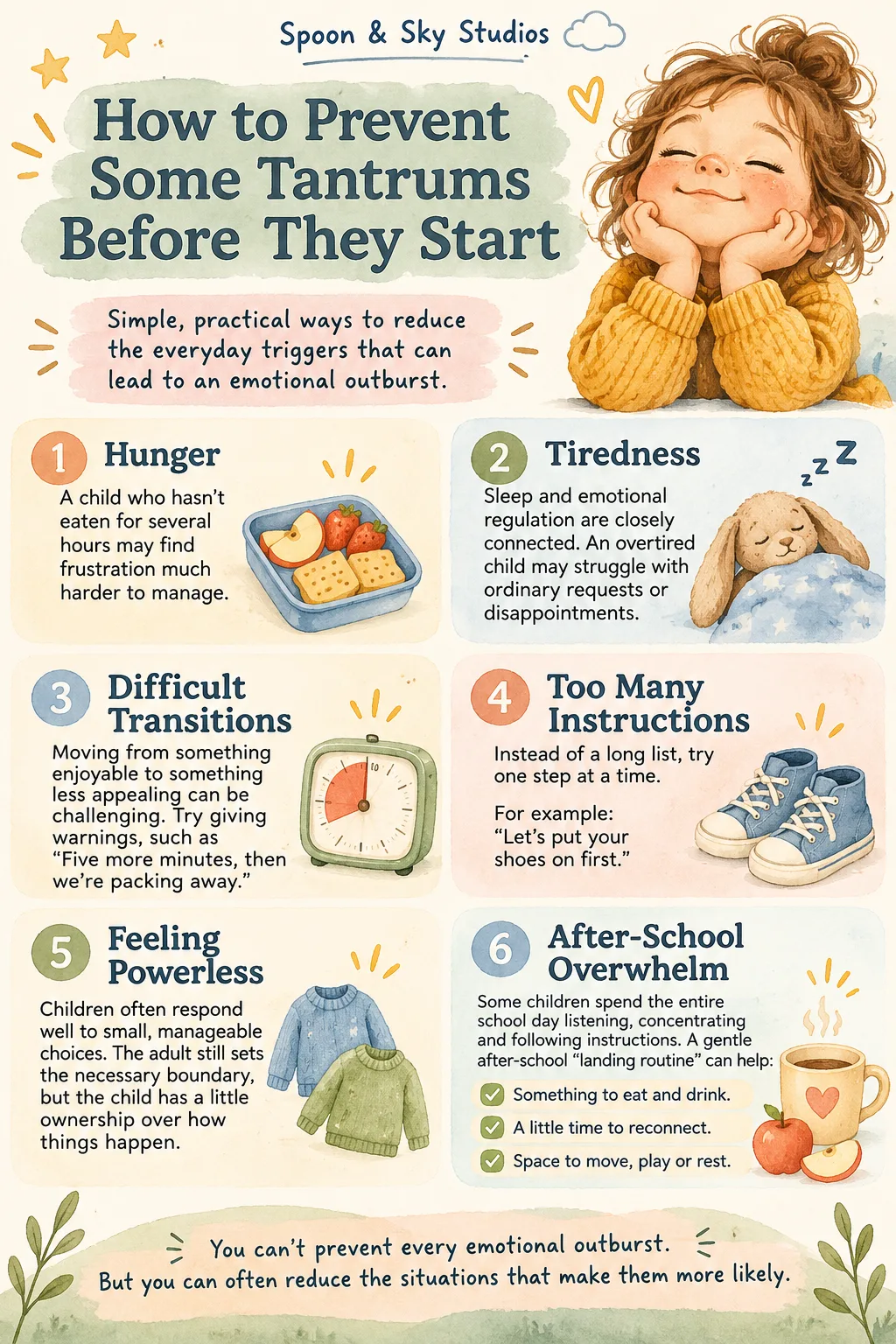
You can't prevent every emotional outburst.
But you can often reduce the situations that make them more likely.
Start by noticing patterns.
1. Hunger
A child who hasn't eaten for several hours may find frustration much harder to manage.
Keep simple snacks available, particularly during busy afternoons.
2. Tiredness
Sleep and emotional regulation are closely connected.
An overtired child may struggle with ordinary requests or disappointments.
A predictable bedtime routine can help support more restful evenings.
3. Difficult Transitions
Moving from something enjoyable to something less appealing can be challenging.
Try giving warnings:
"Five more minutes, then we're packing away."
You can also use a picture routine or simple visual timer.
4. Too Many Instructions
Instead of:
"Put your shoes on, get your bag, find your coat, brush your hair and hurry up!"
Try:
"Let's put your shoes on first."
One step at a time.
5. Feeling Powerless
Children often respond well to small, manageable choices.
"Would you like the blue jumper or the green one?"
"Shall we tidy the cars or the blocks first?"
The adult still sets the necessary boundary, but the child has a little ownership over how things happen.
6. After-School Overwhelm
Some children spend the entire school day listening, concentrating, sharing and following instructions.
When they come home, they may have very little energy left for coping with more demands.
Try a gentle after-school landing routine:
-
Something to eat and drink.
-
A little time to reconnect.
-
Space to move, play or rest.
-
Fewer questions and demands straight away.
Sometimes a simple snack and ten minutes of quiet play can make the afternoon feel very different.
Five Calm-Down Tools Children Can Actually Practise
One thing worth remembering:
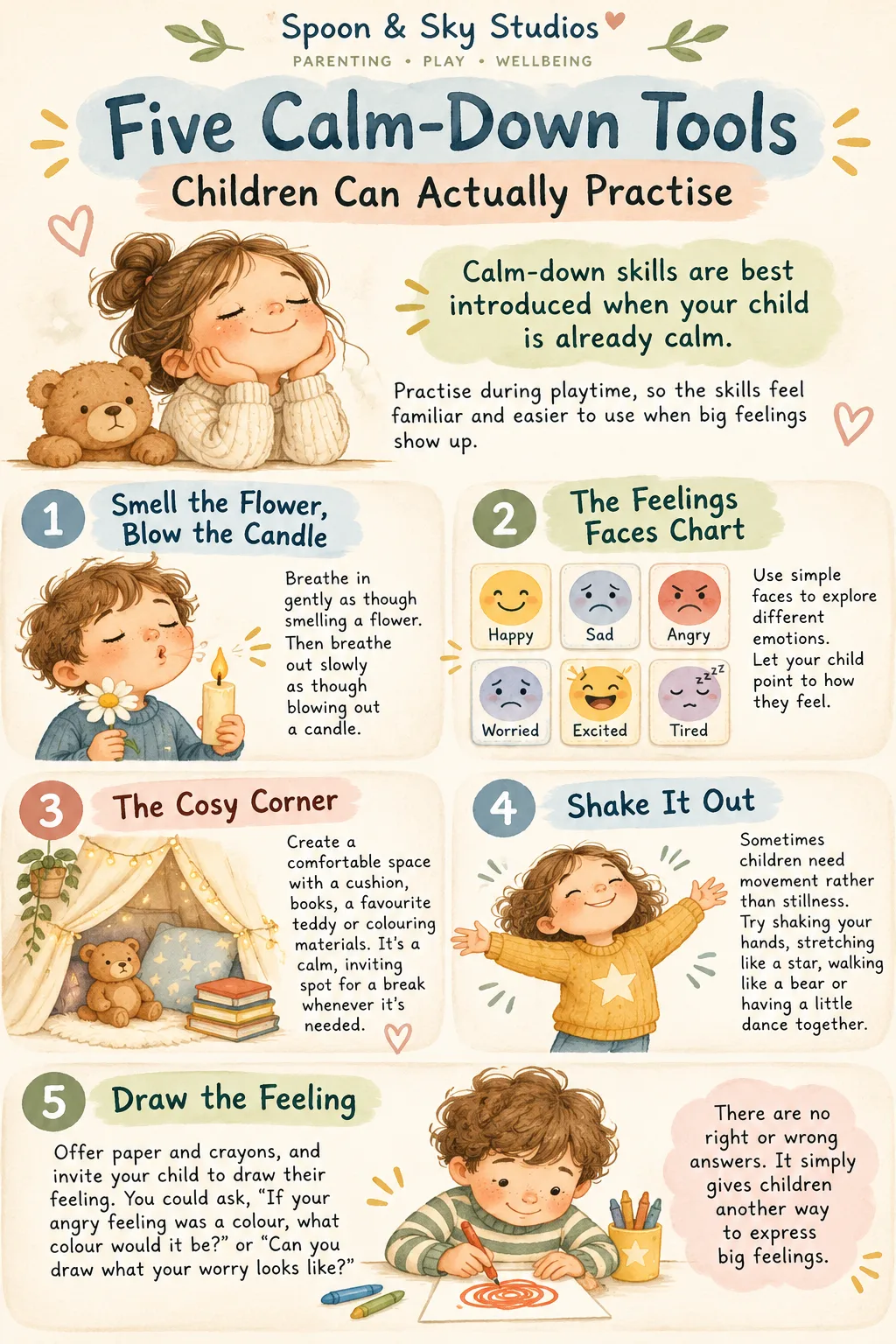
Calm-down skills are best introduced when your child is already calm.
Trying to teach a new breathing exercise in the middle of an intense meltdown is a bit like trying to teach someone to swim while they're already struggling in the water.
Practise during playtime instead.
Here are five gentle activities to explore.
1. Smell the Flower, Blow the Candle
Pretend to hold a flower in one hand and a candle in the other.
Breathe in gently as though smelling the flower.
Then breathe out slowly as though blowing out the candle.
Repeat a few times if your child enjoys it.
Don't force the exercise when they're distressed.
2. The Feelings Faces Chart
Create simple faces showing different emotions:
Happy, sad, angry, worried, excited and tired.
Let your child point to how they feel.
You might ask:
"Which face feels most like you today?"
Over time, this can help children develop the vocabulary to explain their experiences.
3. The Cosy Corner
Choose a comfortable spot with a cushion, a few books, a favourite teddy or some colouring materials.
This isn't a punishment or somewhere your child is sent for being upset.
It's an inviting space where they can take a break when they want one.
Some children enjoy having a parent sit nearby.
Others prefer a little quiet.
Let your child help decide what belongs there.
4. Shake It Out
Sometimes children need movement rather than stillness.
Try shaking your hands, stretching like a star, walking like a bear or having a little dance together.
Moving the body can be a useful way to release tension.
This works particularly well as a playful activity before emotions become overwhelming.
5. Draw the Feeling
Offer some paper and crayons.
Ask:
"If your angry feeling was a colour, what colour would it be?"
Or:
"Can you draw what your worry looks like?"
There are no right or wrong answers.
The activity simply gives children another way to express something that may be difficult to explain in words.
When Should You Seek Extra Support?
Occasional tantrums and emotional outbursts are part of childhood.
But there are times when getting additional support can make a real difference.
Consider speaking to your GP, health visitor or school nurse if:
-
Outbursts are very frequent, prolonged or unusually intense.
-
Your child regularly hurts themselves or other people.
-
Their behaviour is affecting school, friendships or family life.
-
They seem persistently anxious, distressed or unhappy.
-
Emotional difficulties are getting worse rather than gradually improving.
-
Your older child, particularly over age six, is experiencing frequent, severe meltdowns.
There's no single number of tantrums or exact age that automatically means something is wrong.
What matters is the overall pattern, your child's development, their level of distress and the effect on daily life.
Some children may also need individualised support because of differences in communication, sensory processing or development.
Seeking help doesn't mean you've failed as a parent.
It means you're making sure your child has the support they need.
Free Printable: My Feelings & Calm-Down Menu
Sometimes children need something they can see and choose from rather than another explanation.
That's why a simple feelings chart and calm-down menu can be such lovely tools to keep at home.
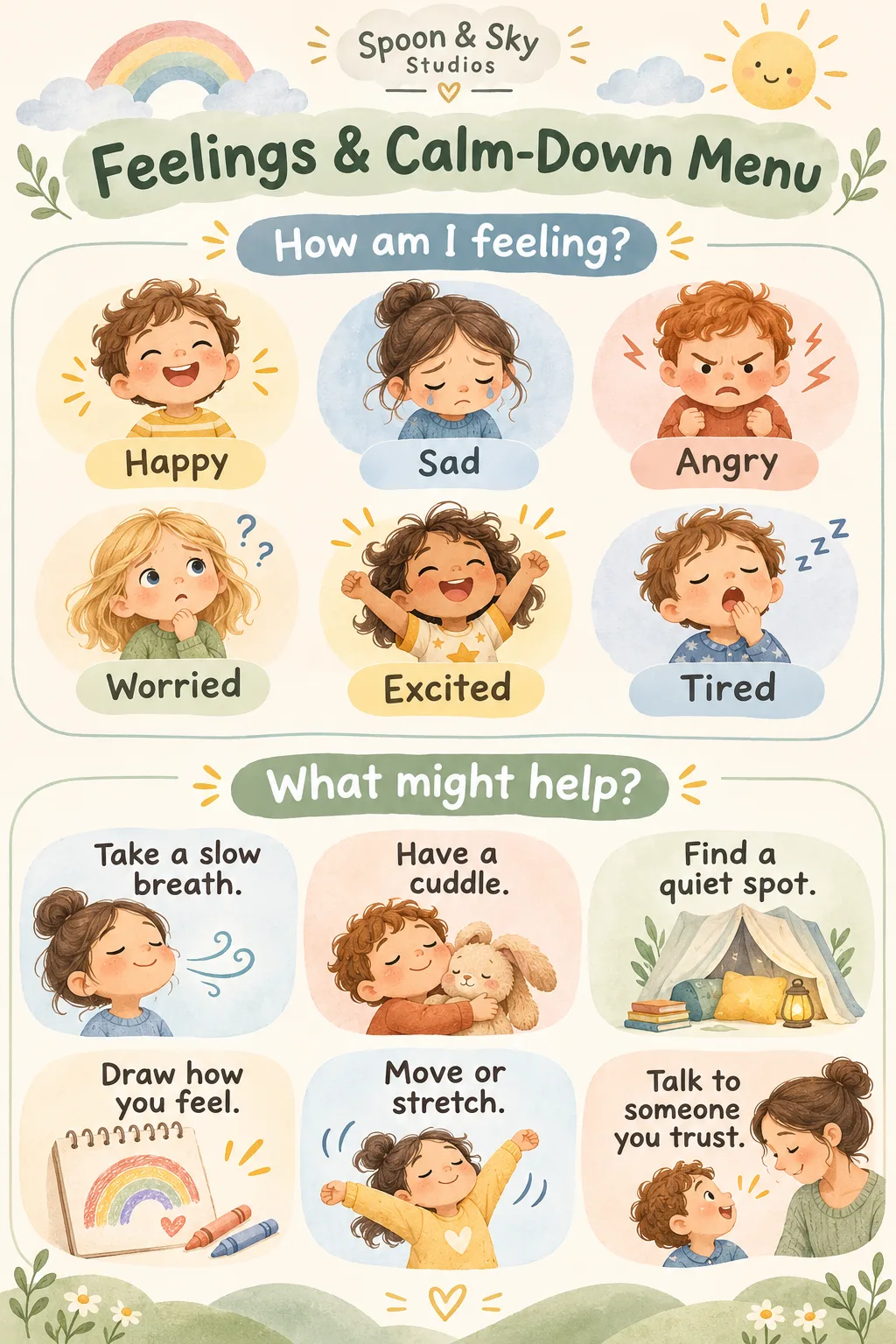
Invite your child to point to a feeling and choose what might help.
Some days they'll want a hug.
Other days they'll want space.
And sometimes they won't want to choose anything at all.
That's okay too.
The purpose isn't to make difficult feelings disappear.
It's to help children discover that there are different ways to work through them.
And little by little, those skills become more familiar.
With love,
Spoon & Sky Studios
Simple ideas. Meaningful moments. Growing together.
This article provides general parenting information, not individual medical or developmental advice. If you have concerns about your child's emotional wellbeing or behaviour, speak with an appropriate healthcare professional.